Cefodil fifth-generation cephalosporins
Source images
1 imagesThe artwork keeps its original Japanese/Chinese lettering. Open “Text in this image” under a picture to read what it says in your language (machine-read, may contain errors).
Text in this image machine-read · may contain errors
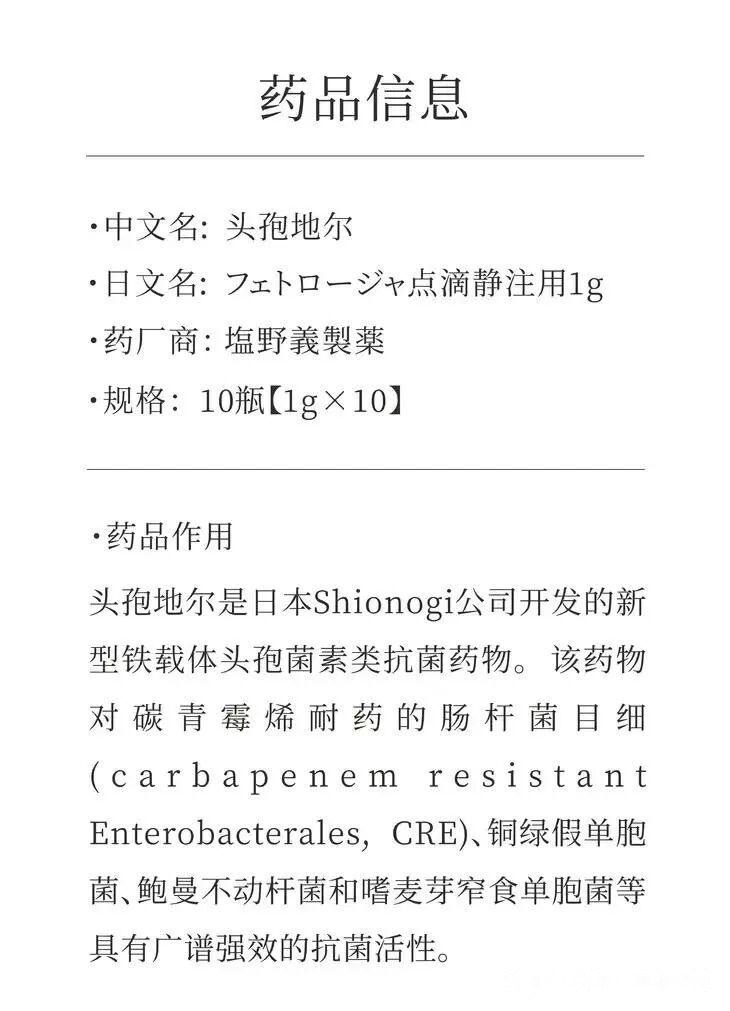
Drug information ·Chinese name: Cefodier · Japanese name: 7 Gongbokou 1 + intravenous drip 1g · Pharmaceutical Manufacturer: Yexi Pharmaceutical Specification: 10 bottles [1g×10] · Drug effects Cefodil is a new product developed by Japan's Shionogi company Type hepherozoporin antibacterial drug. This medication Enterobacteres resistant to carbapenem are fine (carbapenemresistant Enterobacterales, CRE), Pseudomonas verdigino Acinetobacter baumannii, and maltophila Straisomonas, among others It possesses broad-spectrum and potent antibacterial activity
药品信息 ·中文名:头孢地尔 ·日文名:7工卜口一+点滴静注用1g ·药厂商:野羲製藥 规格:10瓶【1g×10】 ·药品作用 头孢地尔是日本Shionogi公司开发的新 型铁载体头孢菌素类抗菌药物。该药物 对碳青霉烯耐药的肠杆菌目细 (carbapenemresistant Enterobacterales,CRE)、铜绿假单胞 菌、鲍曼不动杆菌和嗜麦芽窄食单胞菌等 具有广谱强效的抗菌活性
Drug information ·Chinese name: Cefodier · Japanese name: 7 Gongbokou 1 + intravenous drip 1g · Pharmaceutical Manufacturer: Yexi Pharmaceutical Specification: 10 bottles [1g×10] · Drug effe…