An essential calcium tablet suitable for all ages
日本語原題:天门冬氨酸钙
Source images
2 imagesThe artwork keeps its original Japanese/Chinese lettering. Open “Text in this image” under a picture to read what it says in your language (machine-read, may contain errors).
Text in this image machine-read · may contain errors
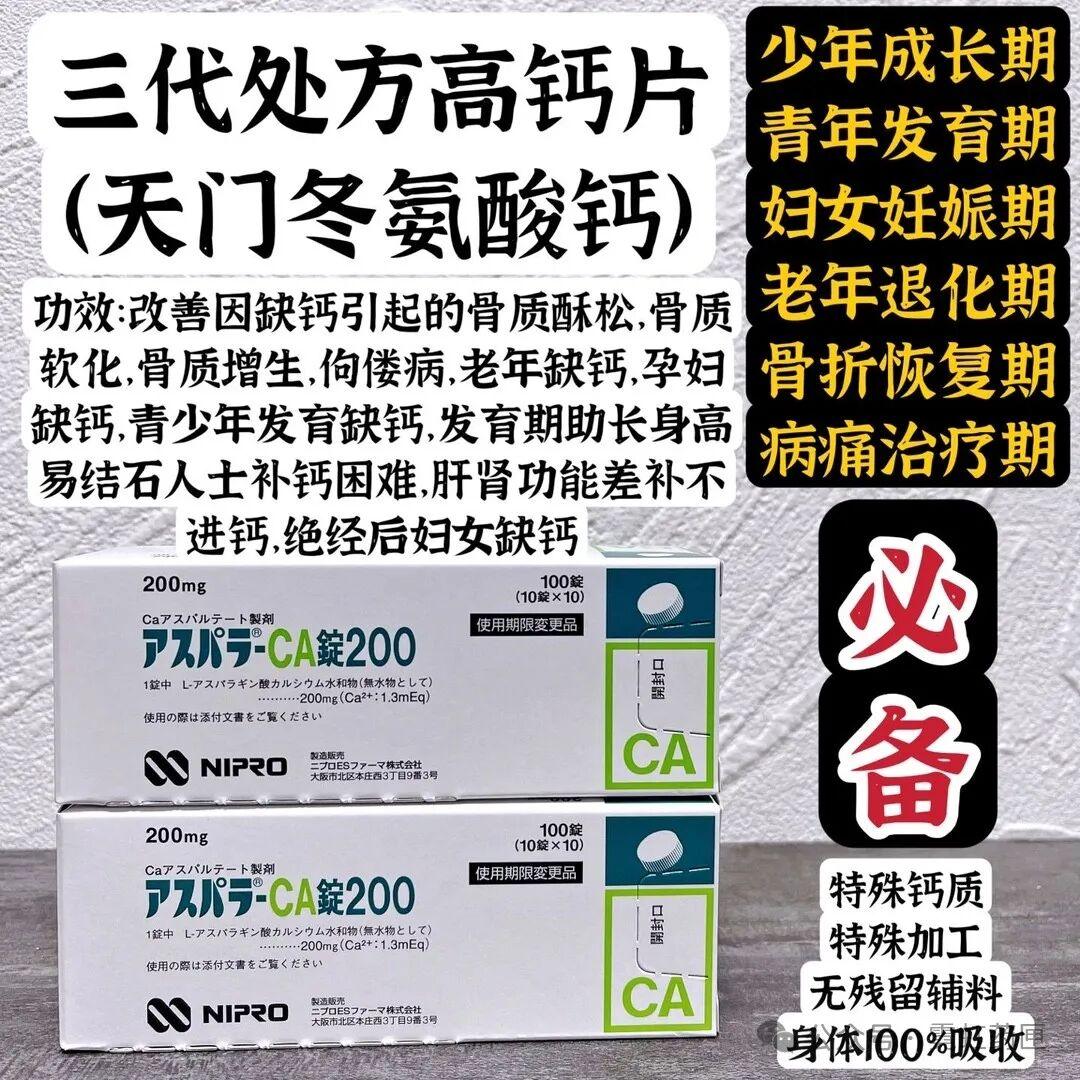
Adolescent growth period Third-generation prescription high-calcium tablets Adolescent development (Calcium Aspartate) Women during pregnancy Aging and degeneration Efficacy: Improves osteoporosis caused by calcium deficiency Fracture recovery period Softening of the skin, osteophytes, Japanese disease, calcium deficiency in the elderly, pregnant women Calcium deficiency: Adolescent development lacks calcium, which promotes height growth during development During the treatment period of illness People prone to stones find calcium supplementation difficult, and poor liver and kidney function cannot supplement calcium calcium intake, but postmenopausal women are calcium deficient 200mg (10 ingots×10) Ca aspartate preparation Items with changed expiration dates - CA ingots 200 200mg(Ca1.3mEq) Please refer to the package insert before use NIPRO Nipro ES Pharma Co., Ltd 3-9-3 Honjo Nishi, Kita-ku, Oban City 100 ingots (10×10) Special calcium CA ingots 200 Medium acid hydrate (water substance) .. 200mg(Ca.3mEq) No residual auxiliary materials 3-3, Honjo Nishi, Kita Ward, Oban City, 3-chome 9-ro The body absorbs 100%.
少年成长期 三代处方高钙片 青年发育期 (天门冬氨酸钙) 妇女妊娠期 老年退化期 功效:改善因缺钙引起的骨质酥松,骨质 骨折恢复期 软化,骨质增生,倭病,老年缺钙,孕妇 缺钙,青少年发育缺钙,发育期助长身高 病痛治疗期 易结石人士补钙困难,肝肾功能差补不 进钙,绝经后妇女缺钙 200mg (10锭×10) Ca アスパルテート製剤 使用期限变更品 -CA锭200 200mg(Ca1.3mEq) 使用の際は添付文書をご覧ください NIPRO ニプロ ES ファーマ株式会社 大版市北区本庄西3丁目9番3号 100锭 (10×10) 特殊钙质 CA锭200 中酸水和物(水物) ..200mg(Ca.3mEq) 无残留辅料 大版市北区本庄西3丁目9路3号 身体100%吸收
Adolescent growth period Third-generation prescription high-calcium tablets Adolescent development (Calcium Aspartate) Women during pregnancy Aging and degeneration Efficacy: Improves osteop…
Text in this image machine-read · may contain errors
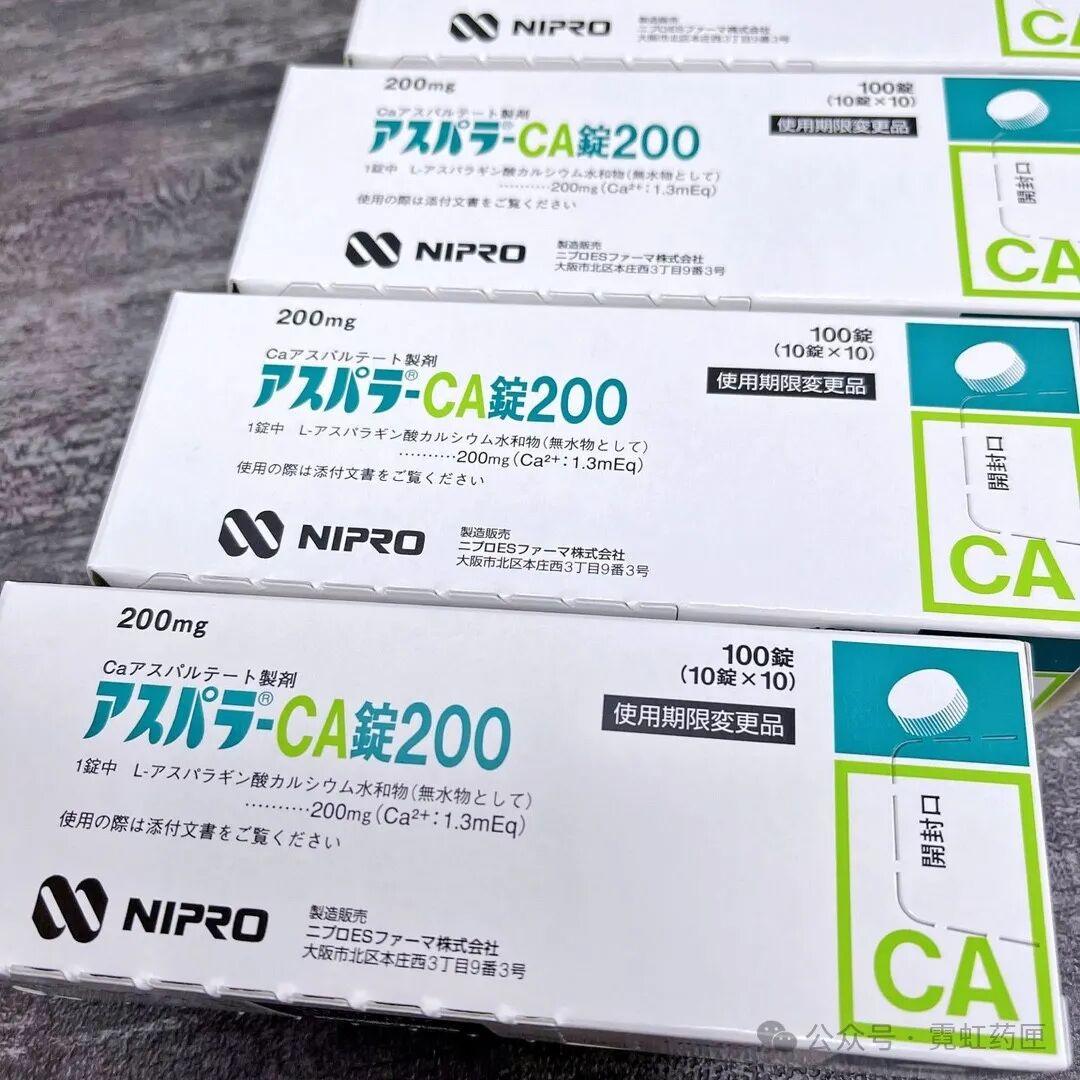
200mg Items with Expiration Date Changes Asulla Residence A Tablets 200 NIPRO No. 3, Zi 9th Road, 3-chome, Benzhuang West, North District, Tianpan City (10 ingots×10) Azulchi CA Tablets 200 1 Acidic or aqueous substance in one ingot ......... 200mg(Ca2+:1.3mEq) Please refer to the package insert before use. Nipro ES Pharma Co., Ltd. Ichimata Co., Ltd. 3-9-3 Honjo Nishi, Kita-ku, Obanshi 100 ingots Ca Asnorelerate Formulation .200mg(Ca2+:1.3mEq) ES Corporation
200mg 使用期限变更品 アスルラ宅 A 錠 200 NIPRO 天版市北区本庄西3丁自9路3号 (10锭×10) アスルチ CA 錠 200 1锭中酸么水和物(無水物) .........200mg(Ca2+:1.3mEq) 使用の際は添付文書をご覧ください ニプロ ES ファーマ株式会社 一又株式会社 大版市北区本庄西3丁目9番3号 100锭 Ca アスノレレテート製剤 .200mg(Ca2+:1.3mEq) ES株式会社
200mg Items with Expiration Date Changes Asulla Residence A Tablets 200 NIPRO No. 3, Zi 9th Road, 3-chome, Benzhuang West, North District, Tianpan City (10 ingots×10) Azulchi CA Tablets 200 …