Musculoskeletal · MUSCULOSKELETAL

The daily physician specializes in rheumatism

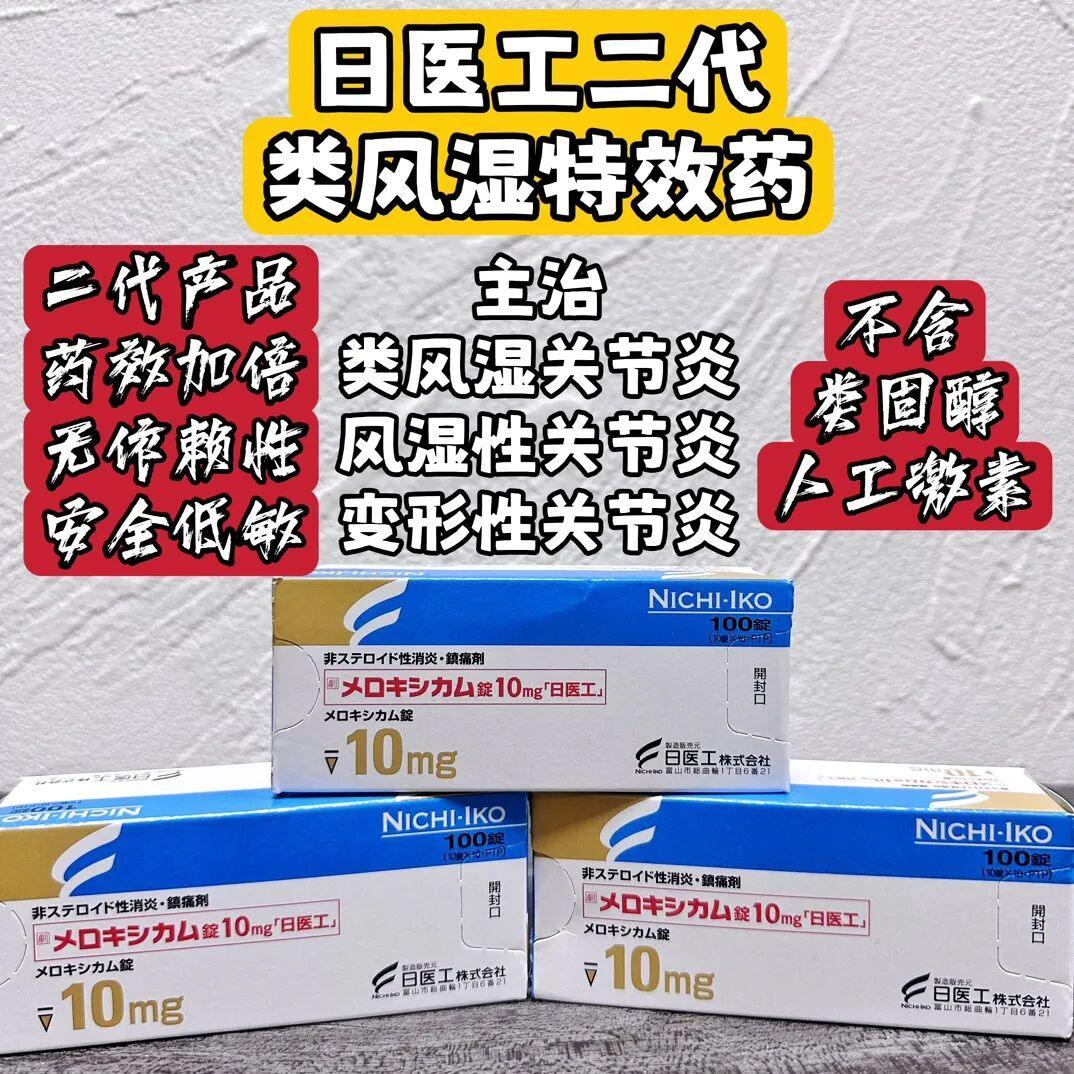
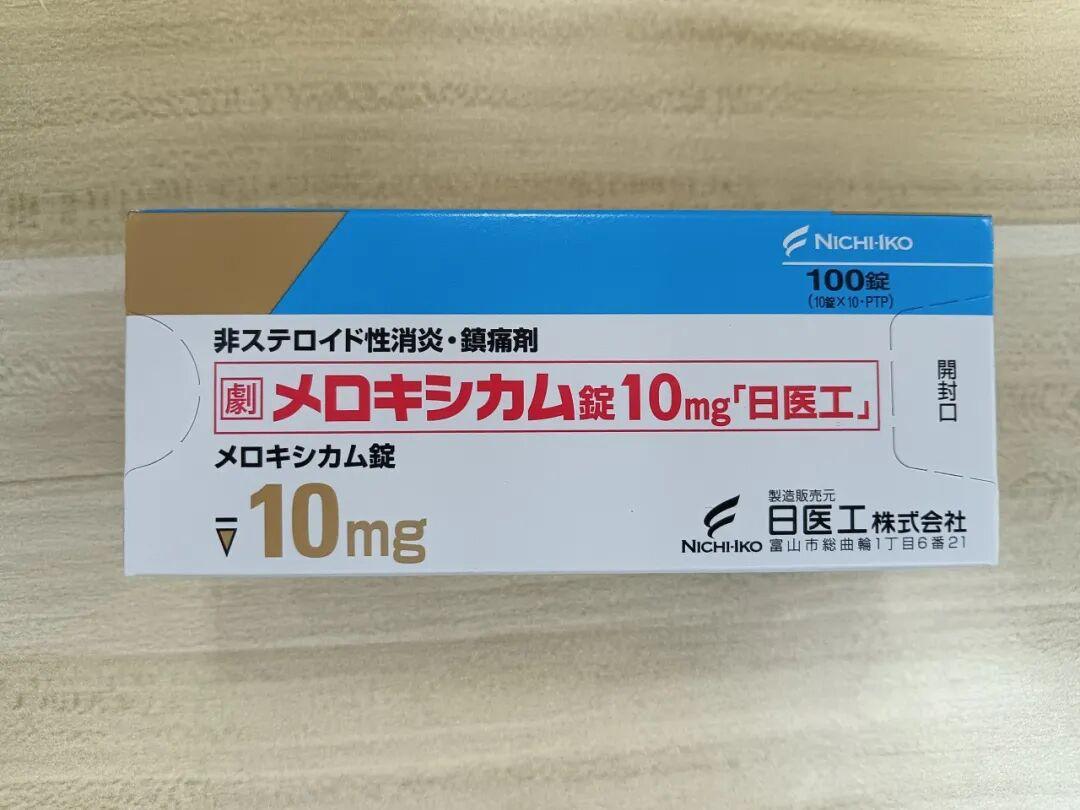
日本語原題:メロキシカム錠10mg「日医工」

Published2025-03-02 11:06 Maker日医工 FormTablet Content9 sections / 2 images Japanese nameメロキシカム錠10mg「日医工」
Ingredients / strength:
1. Active ingredient: 10mg meloxicam per tablet. 2. Additives: lactose hydrate, crystalline cellulose, sodium citrate hydrate, croscarmellose sodium, hydroxypropyl cellulose, magnesium stearate.
English translation of the Japanese package insert is the main text; the Japanese original is shown alongside for verification. Use the language menu (top right) to read the page in another language. This site is for reference only — consult a doctor or pharmacist before use.
Section 1 · Feature description
English translation
Meloxicam suppresses cyclooxygenase (COX) activity (in vitro), inhibits prostaglandin biosynthesis in inflammatory sites (rats, mice), and is thought to exhibit anti-inflammatory and analgesic effects.
Section 2 · Specifications
English translation
100 tablets [10 tablets×10; PTP]
Section 3 · Characteristics
English translation
Light yellow tablets with split lines.
Section 4 · Ingredient Description
English translation
1. Active ingredient: 10mg meloxicam per tablet. 2. Additives: lactose hydrate, crystalline cellulose, sodium citrate hydrate, croscarmellose sodium, hydroxypropyl cellulose, magnesium stearate.
Section 5 · Functions and indications
English translation
Anti-inflammatory and analgesic treatment for the following diseases and symptoms Rheumatoid arthritis, osteoarthritis, lower back pain, periarthritis of the shoulder, and cervical-shoulder-brachial syndrome.
Section 6 · Usage and dosage
English translation
Typically, adults receive 10 mg of meloxicam orally once daily after meals. The dose may be adjusted appropriately depending on age and symptoms, but the maximum daily dose is set at 15 mg.
Section 7 · Important notes
English translation
1. In vitro trials have confirmed that this drug inhibits COX-2 more strongly than cyclooxygenase (COX)-1, but clinical trials in Japanese patients have not confirmed that this drug is safer compared to nonsteroidal anti-inflammatory drugs with lower selectivity for COX-2. In particular, when administering to patients with a high risk factor for gastrointestinal disorders (such as those with a history of peptic ulcers), attention should be paid to the occurrence of side effects and thorough observation should be conducted. 2. It is important to note that treatment with anti-inflammatory analgesics is symptomatic therapy, not causal therapy. Also, consider therapies other than drug therapy. 3. For long-term administration, perform urine tests, blood tests, liver function tests, and fecal occult blood tests regularly and as needed. 4. As there is a risk of asymptomatic infection, observe carefully and administer with caution. 5. Patients receiving this drug may experience neurological symptoms such as eye accommodation disorders and drowsiness; therefore, patients receiving this drug should be strictly advised not to engage in operating dangerous machinery such as driving a vehicle.
Section 8 · Side effects
English translation
1. Peptic ulcers (less than 1%) (may involve perforation), hematemesis (frequency unknown), gastrointestinal bleeding such as hemoptysis (1% or less), colitis (less than 0.1%) 2. Asthma (less than 0.1%) 3. Acute kidney injury (frequency unknown) 4. Agranulocytosis (frequency unknown), thrombocytopenia (less than 1%) 5. Toxic epidermal necrolysis (TEN) (frequency unknown), Stevens-Johnson syndrome (frequency unknown), blisters (frequency unknown), erythema multiforme (frequency unknown) 6. Shock (frequency unknown), anaphylaxis (less than 0.1%), angioedema (less than 0.1%) 7. Hepatitis (frequency unknown), severe liver dysfunction (less than 1%) 8. Aplastic anemia, bone marrow suppression (both frequency unknown) 9. Nephrotic syndrome (frequency unknown) 10. Myocardial infarction and cerebrovascular disorders (both frequency unknown) Cardiovascular thromboembolic events such as myocardial infarction and cerebrovascular disorders may occur.
Section 9 · Taboo
English translation
1. Patients with peptic ulcers [Due to the inhibitory effect of prostaglandin synthesis, the gastric mucosal defense is reduced, which may worsen peptic ulcers]. 2. Patients with severe blood abnormalities. 3. Patients with severe liver dysfunction. 4. Patients with severe renal impairment. 5. Patients with severe heart failure. 6. Patients with severe hypertension. 7. Patients with a history of hypersensitivity to the ingredients of this drug, salicylates (such as aspirin), or other nonsteroidal anti-inflammatory drugs 8. Patients with aspirin-induced asthma (triggered by nonsteroidal anti-inflammatory drugs, analgesics, etc.) or a history of this [may induce severe asthma attacks]. 9. Pregnant women or women who may be pregnant.

Source images

2 images

Need help sourcing Japanese medicines or OEM production?

💬