Cardiovascular · CARDIOVASCULAR

Levodopa: Not very effective for Parkinson's? Then add Enta Capone

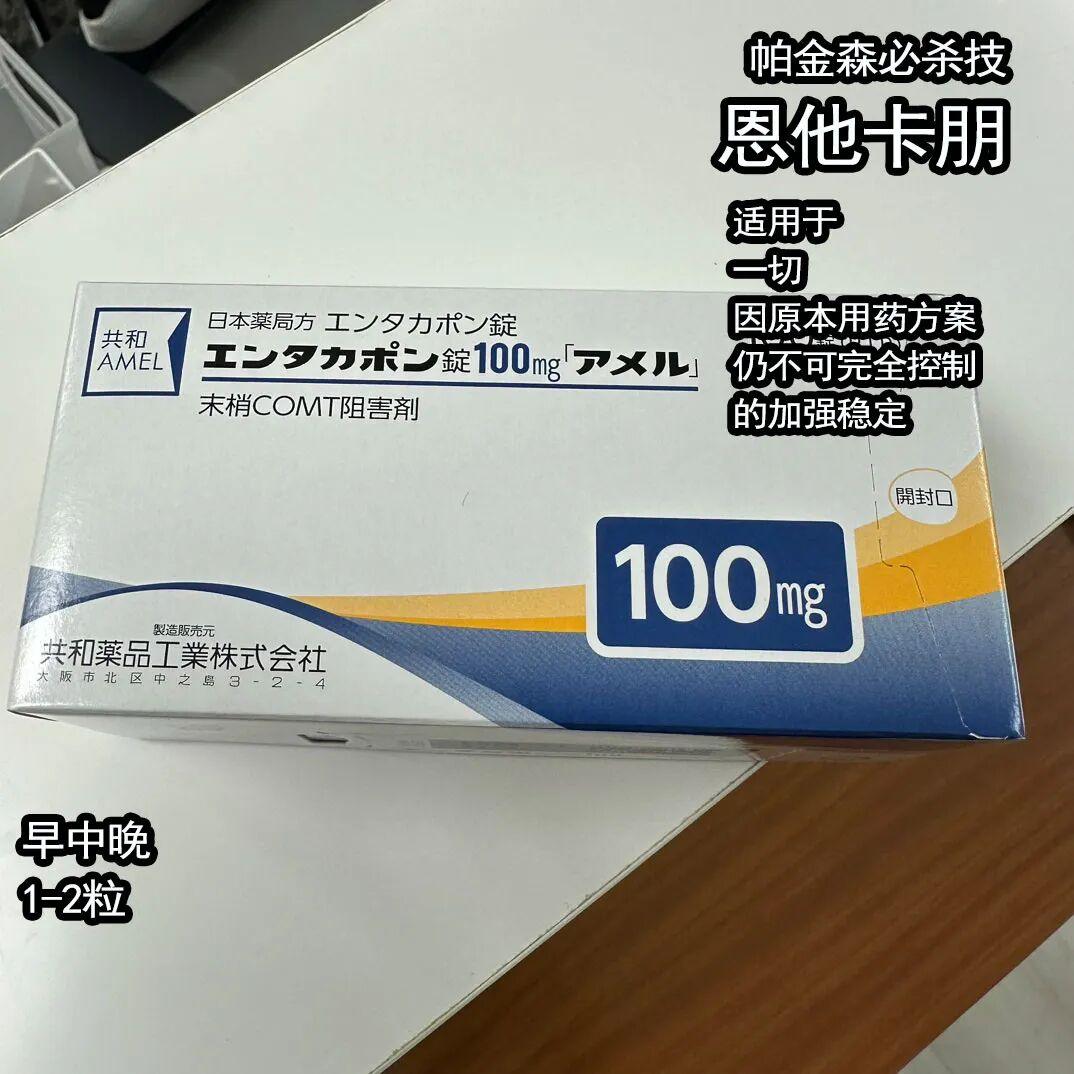
日本語原題:エンタカポン錠 100mg「アメル」

Published2025-03-11 08:13 FormTablet Content9 sections / 2 images Japanese nameエンタカポン錠 100mg「アメル」
Ingredients / strength:
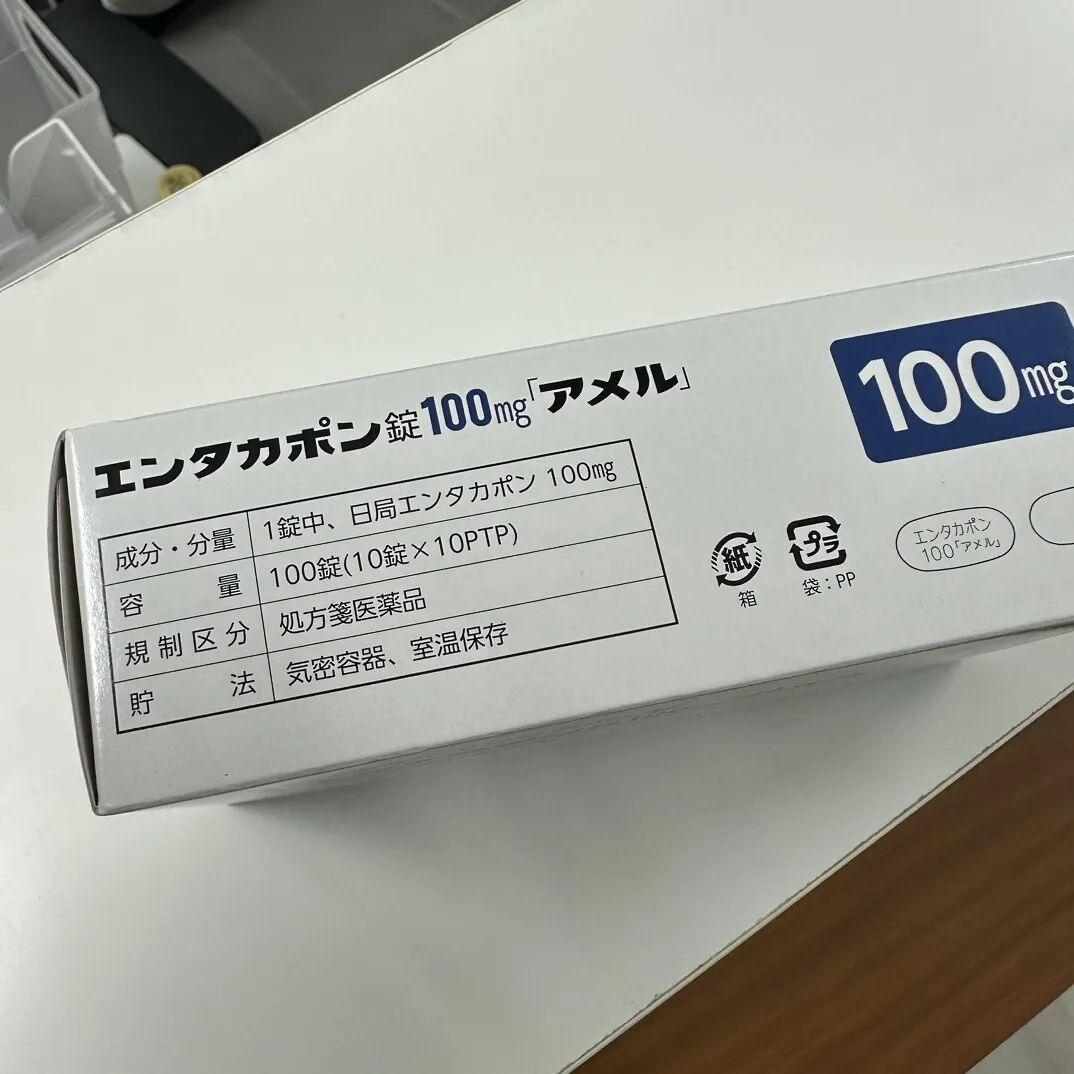
Active ingredient: Each tablet contains 100mg of Japanese-style Entacapone. Additives: D-mannitol, crystalline cellulose, sodium starch glycolate, calcium carmerose, hydroxypropyl cellulose, magnesium stearate, hypromellose, concentrated glycerin, titanium dioxide, ferric trioxide, yellow ferric trioxide, carnauba barrow.
English translation of the Japanese package insert is the main text; the Japanese original is shown alongside for verification. Use the language menu (top right) to read the page in another language. This site is for reference only — consult a doctor or pharmacist before use.
Section 1 · Feature description
English translation
Entacapone is a peripheral COMT inhibitor and is used in combination with levodopa-carbidepa or levodopa-benserazide hydrochloride. Entacapone increases levodopa's bioavailability by inhibiting the metabolic pathway from levodopa to 3-O-methyldopa (3-OMD), thereby improving the efficiency of levodopa translocation into the brain.
Section 2 · Specifications
English translation
100 tablets [10 tablets (PTP)×10]
Section 3 · Characteristics
English translation
Pale yellow-red ~ dull yellow-red, oval-shaped film-coated tablets.
Section 4 · Ingredient Description
English translation
Active ingredient: Each tablet contains 100mg of Japanese-style Entacapone. Additives: D-mannitol, crystalline cellulose, sodium starch glycolate, calcium carmerose, hydroxypropyl cellulose, magnesium stearate, hypromellose, concentrated glycerin, titanium dioxide, ferric trioxide, yellow ferric trioxide, carnauba barrow.
Section 5 · Functions and indications
English translation
Improvement of intraday variability (wearing-off phenomenon) in Parkinson's disease when combined with levodopa-carbidepa or levodopa-benselazide hydrochloride.
Section 6 · Usage and dosage
English translation
This drug should not be used alone; always in combination with levodopa-carbidopa or levodopa-benserazide hydrochloride. Typically, adults are given 100 mg orally once as Entacapone. Depending on symptoms, 200 mg of Entacapon can be administered at once. However, do not exceed 8 times a day.
Section 7 · Important notes
English translation
1. This drug enhances the bioavailability of levodopa, so dopaminergic side effects (such as dyskinesy) may occur due to levodopa. Therefore, when using antiparkinsonian drugs in combination, it is important to carefully monitor the patient's condition and adjust the dosage. 2. When discontinuing this drug, there is a risk of malignant syndrome or rhabdomyolysis seen in Parkinson's disease patients. Therefore, carefully monitor the patient's condition while gradually reducing the dosage, and proceed with caution such as increasing the dose of levodopa/carbidopa or levodopa/benselazide hydrochloride as needed. 3. Sudden sudden sleep without warning, somnolence, or orthostatic hypotension may occur; therefore, patients receiving this drug should be advised not to engage in hazardous work such as driving or working at heights. 4. This drug is always administered orally together with levodopa carbidopa or levodopa benserazide hydrochloride, so always pay attention to the electronic additive of levodopa carbidopa or levodopa benserazide hydrochloride before use. 5. In combination therapy with this drug and levodopa, patients treated with levodopa or dopamine receptor agonists have been reported to have impulse control disorders such as pathological gambling (persistent repeated gambling despite socially adverse outcomes such as personal life collapse), pathological hyperlibido, compulsive buying, and binge eating. If such symptoms occur, Take appropriate measures such as dose reduction or discontinuation of administration. Also, explain the symptoms of impulse control disorders to patients and their families.
Section 8 · Side effects
English translation
1. Malignant syndrome (less than 1%) Rapid dose reduction or discontinuation of this drug may cause high fever, impaired consciousness (coma), severe muscle rigidity, involuntary movements, shock, agitation, tachycardia, unstable blood pressure, etc., and may lead to rhabdomyolysis with increased CK or acute renal injury. In such cases, after re-administering this drug, gradually reduce the dose, and take appropriate measures such as body cooling and hydration. 2. Rhabdomyolysis (frequency unknown) If muscle pain, weakness, increased CK, or increased myoglobin in blood and urine appear, discontinue administration and take appropriate measures. Also, be cautious of the onset of acute kidney damage caused by rhabdomyolysis. 3. Sudden sleep (less than 1%), deep somnia (over 5%) Sudden sleep without warning or somnolence may occur; in such cases, appropriate measures such as dose reduction, discontinuation, or discontinuation of levodopa preparations should be taken. 4. Hallucinations (5% or more), visual hallucinations (less than 1~5%), auditory hallucinations (less than 1~5%), confusion (frequency unknown) If such symptoms appear, appropriate measures such as dose reduction or discontinuation of Levodopa formulations should be taken. 5. Liver dysfunction (frequency unknown) Liver dysfunction such as cholestatic hepatitis may occur.
Section 9 · Taboo
English translation
1. Patients with a history of hypersensitivity to any component of this drug. 2. Patients with malignant syndromes, rhabdomyolysis, or a history thereof.

Source images

2 images

Need help sourcing Japanese medicines or OEM production?

💬