Sawai Urinary Incontinence Treatment (Oxybutynin Hydrochloride Tablets 1mg 'Sawai'), allowing you to control and relax freely, feeling dry and confident
日本語原題:オキシブチニン塩酸塩錠1mg「サワイ」
Active ingredient: [per tablet] Nippon Country oxybutynine hydrochloride 1mg. Additives: Carnauba Low, light anhydrous silica, crystalline cellulose, titanium oxide, magnesium stearate, talc, lactose, hypromellose, macrogol 6000.
Source images
2 imagesThe artwork keeps its original Japanese/Chinese lettering. Open “Text in this image” under a picture to read what it says in your language (machine-read, may contain errors).
Text in this image machine-read · may contain errors
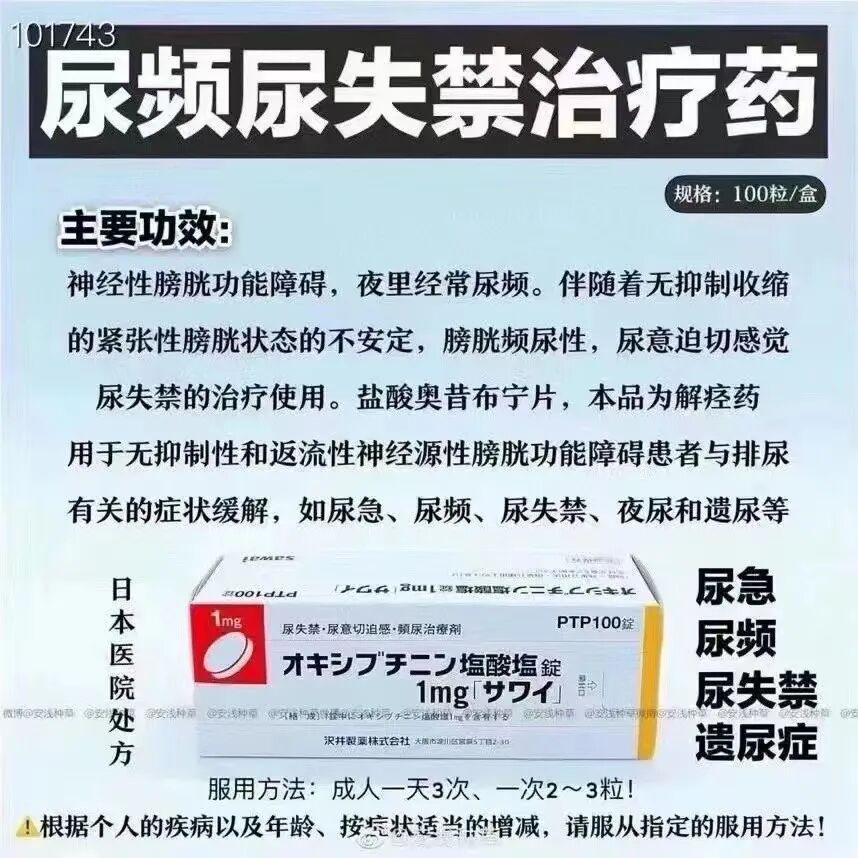
Medication for treating frequent urination and urinary incontinence Specification: 100 capsules/box Main benefits: Neurogenic bladder dysfunction, frequent nighttime urination. Accompanied by uninhibited contractions Tension causes bladder instability, frequent urination, and a feeling of urgency to urinate Treatment and use for urinary incontinence. Oxybutrine hydrochloride tablets are the antidote Used for patients with non-inhibitory and reflux neurogenic bladder dysfunction with urination Symptoms such as urgency, frequent urination, urinary incontinence, nocturia, and enuresis Prescription from a Japanese hospital PTP1OOS 1mg PTP100 blooms Urinary incontinence, urgency to urinate, facial urine treatment Oxyfuti: Hydrochloride tablets Urinary incontinence Enuresis Dosage: Adults take 2~3 capsules three times a day! ! Adjust appropriately according to individual illness and age, and follow the prescribed dosage according to symptoms!
尿频尿失禁治疗药 规格:100粒/盒 主要功效: 神经性膀胱功能障碍,夜里经常尿频。伴随着无抑制收缩 的紧张性膀胱状态的不安定,膀胱频尿性,尿意迫切感觉 尿失禁的治疗使用。盐酸奥昔布宁片,本品为解药 用于无抑制性和返流性神经源性膀胱功能障碍患者与排尿 有关的症状缓解,如尿急、尿频、尿失禁、夜尿和遗尿等 日本医院处方 PTP1OOS 1mg PTP100绽 尿失禁·尿意切迫感·颜尿治剂 オキシフチ : ン塩酸塩錠 尿失禁 遗尿症 服用方法:成人一天3次、一次2~3粒! !根据个人的疾病以及年龄、按症状适当的增减,请服从指定的服用方法!
Medication for treating frequent urination and urinary incontinence Specification: 100 capsules/box Main benefits: Neurogenic bladder dysfunction, frequent nighttime urination. Accompanied b…
Text in this image machine-read · may contain errors
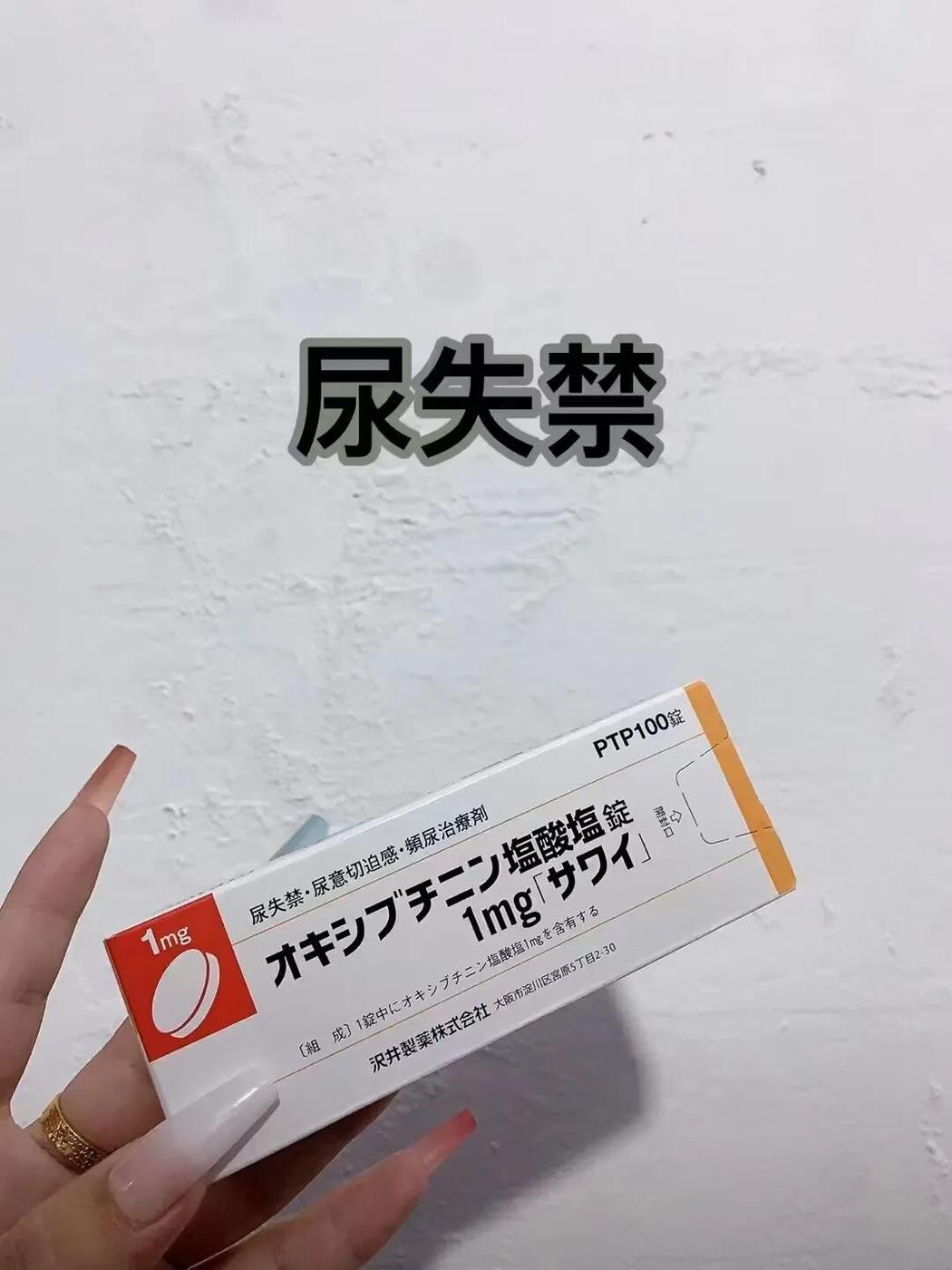
urinary incontinence PTP 100 tablets Oxybutynin Hydrochloride Tablets [Composition] Contains 1 dose of oxyptinine hydrochloride per tablet Iseisai Co., Ltd. 5-2-30 Tomihara, Yodogawa-ku, Oban-shi
尿失禁 PTP100锭 オキシフチニン塩酸塩錠 〔組成〕 1 錠中にオキシプチニン塩酸塩 1 曜を含有する 井製菜株式会社大版市淀川区富原5丁目2-30
urinary incontinence PTP 100 tablets Oxybutynin Hydrochloride Tablets [Composition] Contains 1 dose of oxyptinine hydrochloride per tablet Iseisai Co., Ltd. 5-2-30 Tomihara, Yodogawa-ku, Oba…