Dutasteride
日本語原題:デュタステリドカプセル0.5mgAV「武田テバ」
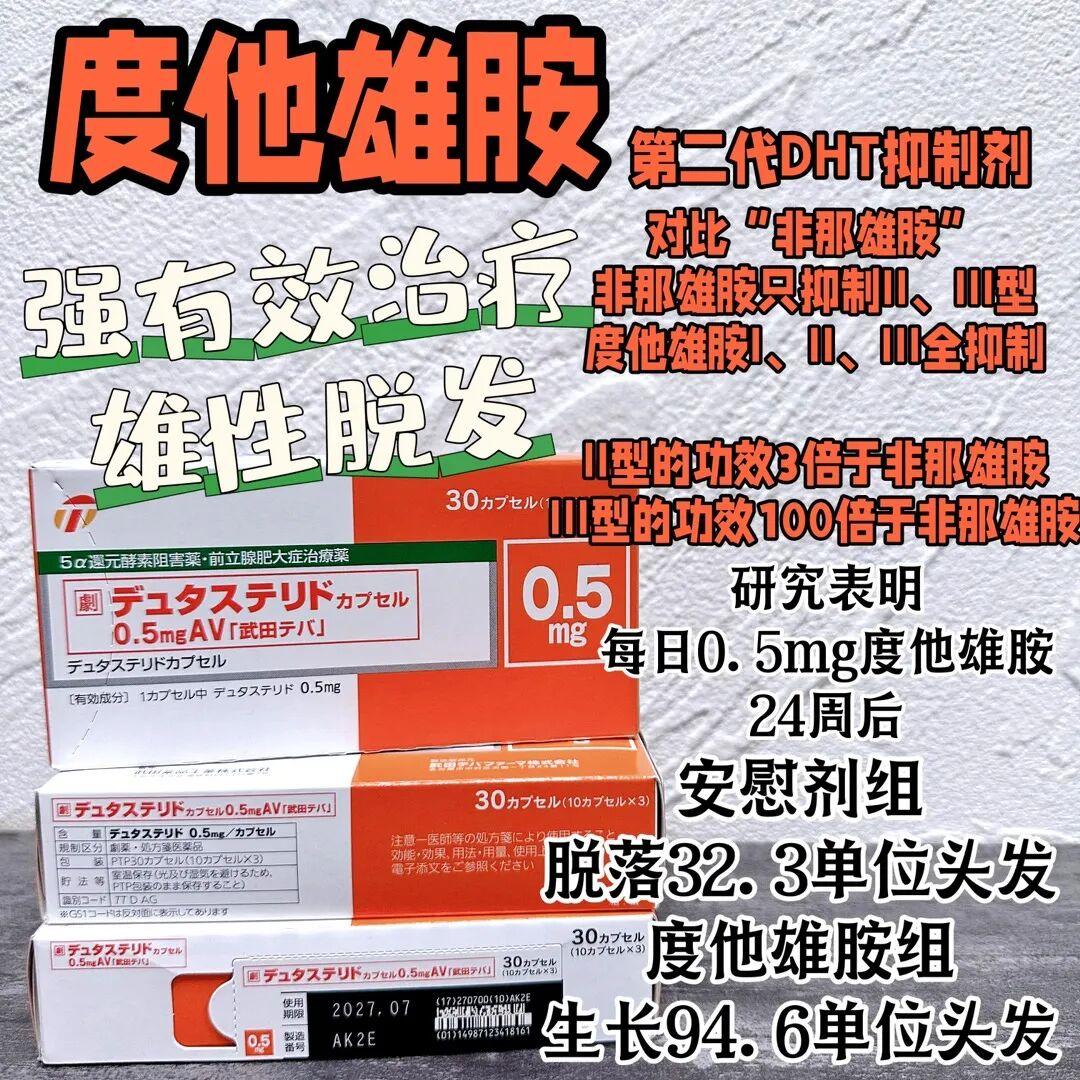
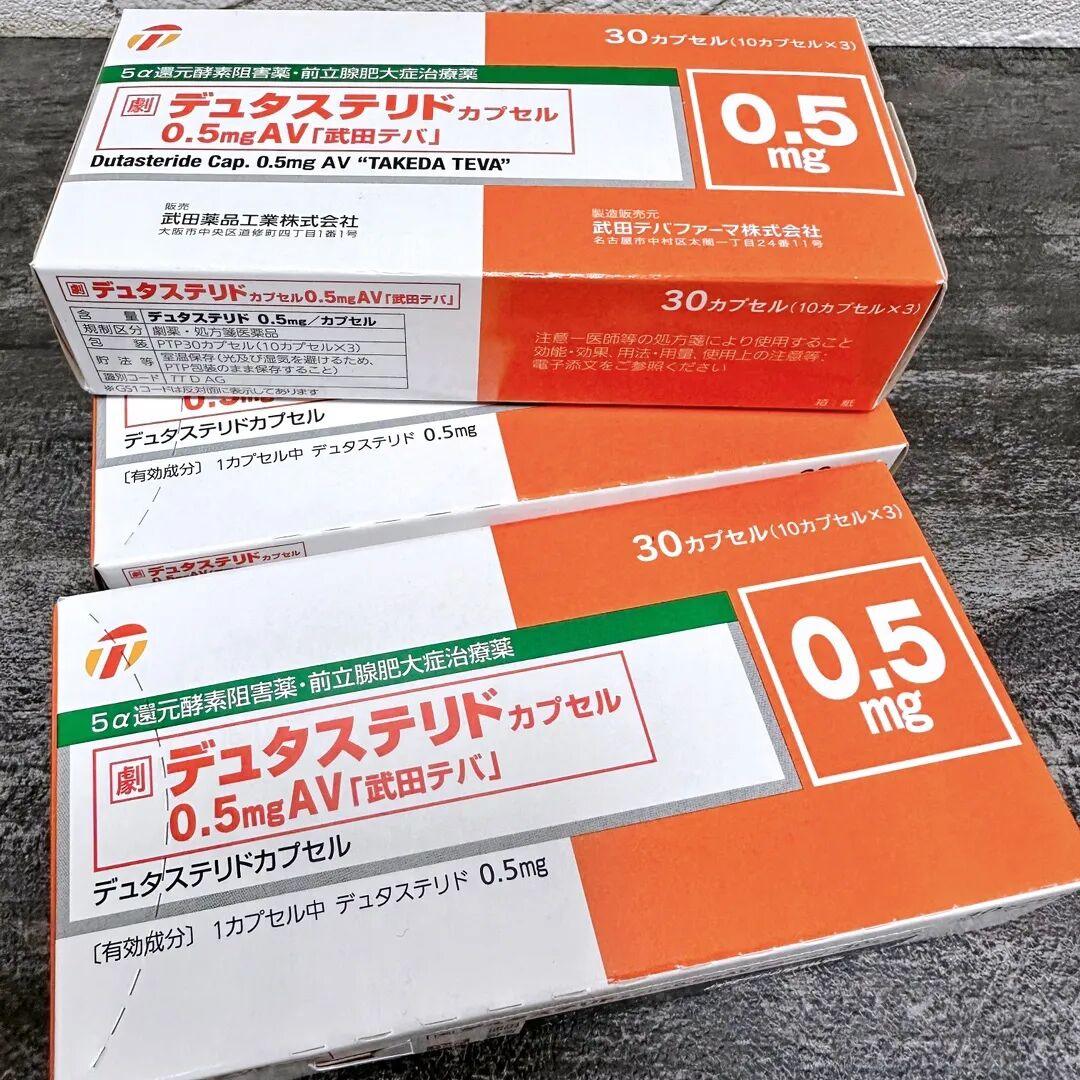
Active ingredient: Dutasteride 0.5mg per capsule. Additives: medium-chain mono-diglycerides, dibutyl hydroxytoluene (capsule body), gelatin, glycerin, titanium oxide, yellow trioxide, medium-chain fatty acid triglycerides, lecithin.
Source images
2 imagesThe artwork keeps its original Japanese/Chinese lettering. Open “Text in this image” under a picture to read what it says in your language (machine-read, may contain errors).
Text in this image machine-read · may contain errors
Second-generation DHT inhibitors Comparison with "finasteride" Strong and effective treatment Finasteride only inhibits and Dutasteride, Chuan, Chuanquan inhibition Male Hair Loss The Sichuan type is three times more effective than finasteride 30 capsules The effectiveness of the Sichuan type is 100 times that of finasteride Wataru Dutasteride Capsules Research shows 0.5mAV "Takeda Kyohachi" 0.5mg dutasteride daily Tutasteride Capsules - Active ingredient] Dutasteride 0.5 me per capsule After 24 weeks Placebo Group 0.5mg AV Takeda/ Amount: 0.5mg/ Lost 32.3 units of hair Strong Energy · Strong Fruit, Usage · Dosage, Usage P35 capsule insertion capsule pull for the package Illuminating the electronic attachment No. 1: -doshinu 0 Dutasteride group 30 capsules Dutasterito-Le Hidden Tutus Delito Fusel 0 Hitting AV "Tsu" Grows 94.6 units of hair AK2E
第二代DHT抑制剂 对比“非那雄胺” 强有效治疗 非那雄胺只抑制、型 度他雄胺、川、川全抑制 雄性脱发 川型的功效3倍于非那雄胺 30 カプセルい 川型的功效100倍于非那雄胺 亘デュタステリドカプセル 研究表明 0.5mAV「武田亍八] 每日0.5mg度他雄胺 テュタステリドカプセル ー有効成分〕 1 カプセル中デュタステリド 0.5me 24周后 安慰剂组 0.5mgAV武田/ 量0.5mg/ 脱落32.3单位头发 劲能·劲果、用法·用量、使用 包の P35 カプセルいりカセル引 電子添乂をこ照くだきい 第 : ードしぬ 0 度他雄胺组 30 カプセル 第デュタステリトぉ癶ル 匿テュタスデリトれフセル 0 当破 AV 「ツ 生长94.6单位头发 AK2E
Second-generation DHT inhibitors Comparison with "finasteride" Strong and effective treatment Finasteride only inhibits and Dutasteride, Chuan, Chuanquan inhibition Male Hair Loss The Sichua…
Text in this image machine-read · may contain errors
5α Zunyuan Enzyme Inhibits Vegetables · Benign Prostatic Hyperplasia Addiction 0.5mg AVr Motopachi Takeda J Dutasteride Cap.0.5mgAV"TAKEDA TEVA" Takeda Vegetable Products Co., Ltd. Takeda Hachi - #株式会社 4-chome 1-ro, Doshomachi, Chuo-ku, Oban City 30(10) Jinneng · Jinguo, usage and dosage, dosage and concentration, etc.: Steride Capsules 5α-Enzyme Inhibits Algae: Treatment of Benign Prostatic Hyperplasia Theride Capsules 0.5mg AV 'Takeda Hachi'
5α遵元酵素阻害菜·前立腺肥大症治瘾 0.5mgAVr武田元八J Dutasteride Cap.0.5mgAV"TAKEDA TEVA" 武田菜品工業株式会社 武田八-#株式会社 大版市中央区道修町四丁目1路1号 30(10) 劲能·劲果、用法·用量、使用上の注度等: ステリドカプセル 5α元酵素阻害藻·前立腺肥大症治療藻 テリドカプセル 0.5mgAV「武田八
5α Zunyuan Enzyme Inhibits Vegetables · Benign Prostatic Hyperplasia Addiction 0.5mg AVr Motopachi Takeda J Dutasteride Cap.0.5mgAV"TAKEDA TEVA" Takeda Vegetable Products Co., Ltd. Takeda Ha…