Musculoskeletal · MUSCULOSKELETAL
Romistin
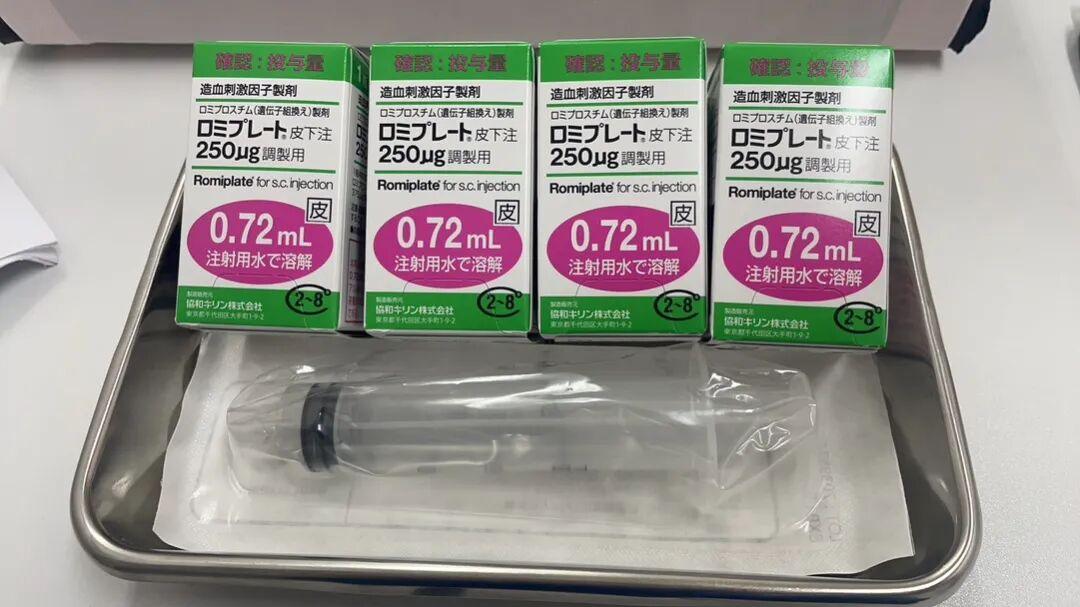
日本語原題:ロミプレート皮下注250μg調製用
Published2025-03-24 09:07 Content9 sections / 1 images
Ingredients / strength:
Active ingredient: Romiprostim (genetically modified) 375μg However, based on the preparation method of this drug, the amount contained in 0.5 mL of solution dissolved in 0.72 mL of water for injection per vial contains 250 μg of lomiprostim (recombinant). Additives: D-mannitol 30mg, refined white sugar 15mg, L-histidine 1.2mg, polysorbate 20 0.03mg, appropriate amount of dilute hydrochloric acid.
English translation of the Japanese package insert is the main text; the Japanese original is shown alongside for verification. Use the language menu (top right) to read the page in another language. This site is for reference only — consult a doctor or pharmacist before use.
Section 1 · Feature description
English translation
This drug acts directly on megakaryocyte progenitor cells and exerts platelet hematopoietic effects. Additionally, this drug binds to and activates thrombopoietin-based receptors, thereby promoting the proliferation and differentiation of megakaryocyte progenitor cells. Furthermore, it acts on bone marrow hematopoietic stem cells and hematopoietic progenitor cells, promoting their proliferation and differentiation.
日本語 Original
本剤は、巨核球系前駆細胞に直接作用し、血小板造血作用を発揮する。また、本剤は、トロンボポエチン受容体に結合し、活性化させることで、巨核球系前駆細胞の増殖及び分化を促進する。さらに、骨髄造血幹細胞及び造血前駆細胞に作用し、これらの細胞の増殖及び分化を促進する。
Section 2 · Specifications
English translation
1 vial.
日本語 Original
1バイアル。
Section 3 · Characteristics
English translation
White lumps (freeze-dried preparations).
日本語 Original
白色の塊(凍結乾燥製剤)。
Section 4 · Ingredient Description
English translation
Active ingredient: Romiprostim (genetically modified) 375μg
However, based on the preparation method of this drug, the amount contained in 0.5 mL of solution dissolved in 0.72 mL of water for injection per vial contains 250 μg of lomiprostim (recombinant).
Additives: D-mannitol 30mg, refined white sugar 15mg, L-histidine 1.2mg, polysorbate 20 0.03mg, appropriate amount of dilute hydrochloric acid.
日本語 Original
有効成分:ロミプロスチム(遺伝子組換え)375μg
ただし、本剤の調製方法に基づき、1バイアルあたり0.72mLの注射用水に溶解した溶液0.5mL中に含まれるロミプロスチム(遺伝子組換え)は250μgである。
添加剤:D-マンニトール 30mg,精製白糖 15mg,L-ヒスチジン 1.2mg,ポリソルベート20 0.03mg,希塩酸適量。
Section 5 · Functions and indications
English translation
1. Chronic idiopathic thrombocytopenic purpura.
2. Aplastic anemia.
日本語 Original
1、慢性特発性血小板減少性紫斑病。
2、再生不良性貧血。
Section 6 · Usage and dosage
English translation
〈Chronic idiopathic thrombocytopenic purpura〉
Typically, adults and children aged one year and older receive an initial subcutaneous dose of 1 μg/kg as lomiprostim (genetically modified). After starting administration, the dosage is adjusted appropriately according to platelet count and symptoms, administered subcutaneously once a week. The maximum dose is 10 μg/kg once a week.
Aplastic Anemia
Typically, adults receive an initial subcutaneous dose of 10 μg/kg as lomiprostim (genetically modified). After starting administration, the dosage is adjusted appropriately according to the patient's condition and administered subcutaneously once a week. The maximum dose is 20 μg/kg once a week.
日本語 Original
〈慢性特発性血小板減少性紫斑病〉
通常、成人及び1歳以上の小児には、ロミプロスチム(遺伝子組換え)として初回投与量1μg/kgを皮下投与する。投与開始後、血小板数、症状に応じて投与量を適宜増減し、週1回皮下投与する。また、最高投与量は週1回10μg/kgとする。
〈再生不良性貧血〉
通常、成人には、ロミプロスチム(遺伝子組換え)として初回投与量10μg/kgを皮下投与する。投与開始後、患者の状態に応じて投与量を適宜増減し、週1回皮下投与する。また、最高投与量は週1回20μg/kgとする。
Section 7 · Important notes
English translation
〈Common Effects〉
1. Use this drug under a physician with sufficient experience in treating blood disorders.
2. Since thrombocytopenia may be observed after discontinuing this drug, perform frequent complete blood counts (red blood cells, white blood cells, and platelets) for about four weeks after discontinuation.
3. Thrombopoietin receptor agonists containing this drug may promote the formation and fibrosis of reticulin fibers in the bone marrow. Therefore, before starting administration of this drug, perform peripheral blood imprints (peripheral blood smear), complete blood count (red blood cells, white blood cells, and platelets), and reticulocyte counts, and carefully monitor for any morphological abnormalities in all hematocyte systems. During administration of this drug, peripheral blood smear specimens, complete blood counts (red blood cells, white blood cells, and platelets), and reticulocyte counts should be performed approximately once every four weeks to observe all hematologic abnormalities and the presence or absence of cytopenia.
4. If platelet count exceeds the normal range, the risk of thrombosis or thromboembolism may increase. Also, even if platelet count is below the normal range, thromboembolism is observed, so attention should be paid to the onset of thrombosis or thromboembolism regardless of platelet count. After administration of this drug, regularly measure platelet counts, and if platelet counts exceed the target levels for treatment, consider reducing or discontinuing the drug as a caution.
5. If decreased responsiveness to this drug is observed or platelet count maintenance becomes difficult, strive to identify the cause (such as production of neutralizing antibodies to this drug or possible myelofibrosis).
6. Thrombopoietin receptor agonists may advance existing hematopoietic tumors such as myelodysplastic syndromes.
Aplastic Anemia
It is known that some patients with aplastic anemia may progress to myelodysplastic syndrome or acute myeloid leukemia during follow-up, and even in overseas clinical trials and international joint clinical trials targeting patients with aplastic anemia, cases of chromosomal abnormalities after administration have been reported, although the causal relationship with this drug is unclear. During administration of this drug, perform regular complete blood counts including white blood cell fraction and peripheral blood smear tests to confirm the presence of juvenile cells and morphological abnormalities, as well as to check for cytopenia. If these abnormalities are observed, consider performing a bone marrow test (including evaluation of chromosomal abnormalities) to determine whether to continue administration of this drug.
日本語 Original
〈効能共通〉
1、本剤は、血液疾患の治療に十分な経験を持つ医師のもとで使用すること。
2、本剤の投与中止により血小板減少を認めることがあるため、本剤の中止後4週間程度は頻回に全血算(赤血球、白血球及び血小板)の検査を実施すること。
3、本剤を含むトロンボポエチン受容体作動薬には、骨髄のレチクリン線維の形成及び線維化を進行させる可能性があるので、本剤の投与開始前には、末梢血液像(末梢血塗抹標本)、全血算(赤血球、白血球及び血小板)及び網状赤血球数の検査を行い、全ての血球系の形態異常の有無を十分観察すること。また、本剤投与中は、末梢血液像(末梢血塗抹標本)、全血算(赤血球、白血球及び血小板)及び網状赤血球数の検査を4週に1回を目安に実施し、全ての血球系の形態異常及び血球減少の存否を観察すること。
4、血小板数が正常範囲を超えると、血栓症又は血栓塞栓症のリスクが増加する可能性がある。また、血小板数が正常範囲以下であっても血栓塞栓症が認められているため、血小板数にかかわらず血栓症又は血栓塞栓症の発現に注意すること。本剤投与後は、定期的に血小板数を測定し、血小板数が治療の目標とするレベルを超えた場合には、本剤の減量又は休薬を考慮するなど注意すること。
5、本剤に対する反応性の低下が認められた場合、又は血小板数の維持が困難になった場合は、原因(本剤に対する中和抗体の産生、又は骨髄線維症等の可能性)の究明に努めること。
6、トロンボポエチン受容体作動薬には、既存の骨髄異形成症候群等の造血器腫瘍を進行させる可能性がある。
〈再生不良性貧血〉
再生不良性貧血患者の一部では経過観察中に骨髄異形成症候群や急性骨髄性白血病に移行することが知られてり、再生不良性貧血患者を対象とした海外臨床試験及び国際共同臨床試験においても、本剤との因果関係は明らかでないものの、本剤投与後に染色体異常が認められた例が報告されている。本剤投与中は、定期的に白血球分画を含む全血算及び末梢血塗抹標本検査を行い、幼若細胞や形態学的異常の発現を確認し、血球減少の有無も確認すること。これらの異常が認められた場合には、骨髄検査(染色体異常の評価を含む)の実施を考慮し、本剤の投与継続の可否を判断すること。
Section 8 · Side effects
English translation
1. Thrombosis and thromboembolism (note)
Pulmonary embolism (0.8%), deep vein thrombosis (0.8%), myocardial infarction (0.6%), thrombophlebitis (0.5%), and others may occur.
Note: Incidence frequency is based on clinical trials up to the initial approval of chronic idiopathic thrombocytopenic purpura.
2. Bone marrow reticlin hyperplasia (1.6%)
Bone marrow reticulin proliferation may be observed, and myelofibrosis may occur. If abnormalities in the hematologic system or cytopenia are observed, discontinue administration of this drug. Also, consider performing bone marrow biopsies, special staining, and similar procedures to confirm fibrosis status.
3. Bleeding (frequency unknown)
Bleeding may occur after discontinuation of this drug.
日本語 Original
1、血栓症・血栓塞栓症注)
肺塞栓症(0.8%)、深部静脈血栓症(0.8%)、心筋梗塞(0.6%)、血栓性静脈炎(0.5%)等があらわれることがある。
注)発現頻度は、慢性特発性血小板減少性紫斑病の初回承認時までの臨床試験に基づく。
2、骨髄レチクリン増生(1.6%)
骨髄レチクリン増生が認められることがあり、骨髄線維化があらわれる可能性がある。血球系の形態異常又は血球減少を認めた場合は、本剤の投与を中止すること。また、線維化状態の確認のため骨髄生検・特殊染色等の実施を考慮すること。
3、出血(頻度不明)
本剤の投与中止後に出血を生じることがある。
Section 9 · Taboo
English translation
Patients with a history of hypersensitivity to any component of this drug.
日本語 Original
本剤の成分に対し過敏症の既往歴のある患者。
Source images
1 imagesThe artwork keeps its original Japanese/Chinese lettering. Open “Text in this image” under a picture to read what it says in your language (machine-read, may contain errors).
Text in this image machine-read · may contain errors
Hematopoietic-stimulating factor splitter Hematopoietic-stimulating factor infant formulation - Subcutaneous injection 250ug for infant use Romiplatefors.c.injection 0.72mL Water for injection dissolves in water
造血刺激因子裂剂 造血刺激因子婴剂 -皮下注 250ug调婴用 Romiplatefors.c.injection 0.72mL 注射用水飞溶解
Hematopoietic-stimulating factor splitter Hematopoietic-stimulating factor infant formulation - Subcutaneous injection 250ug for infant use Romiplatefors.c.injection 0.72mL Water for injecti…