Cardiovascular · CARDIOVASCULAR

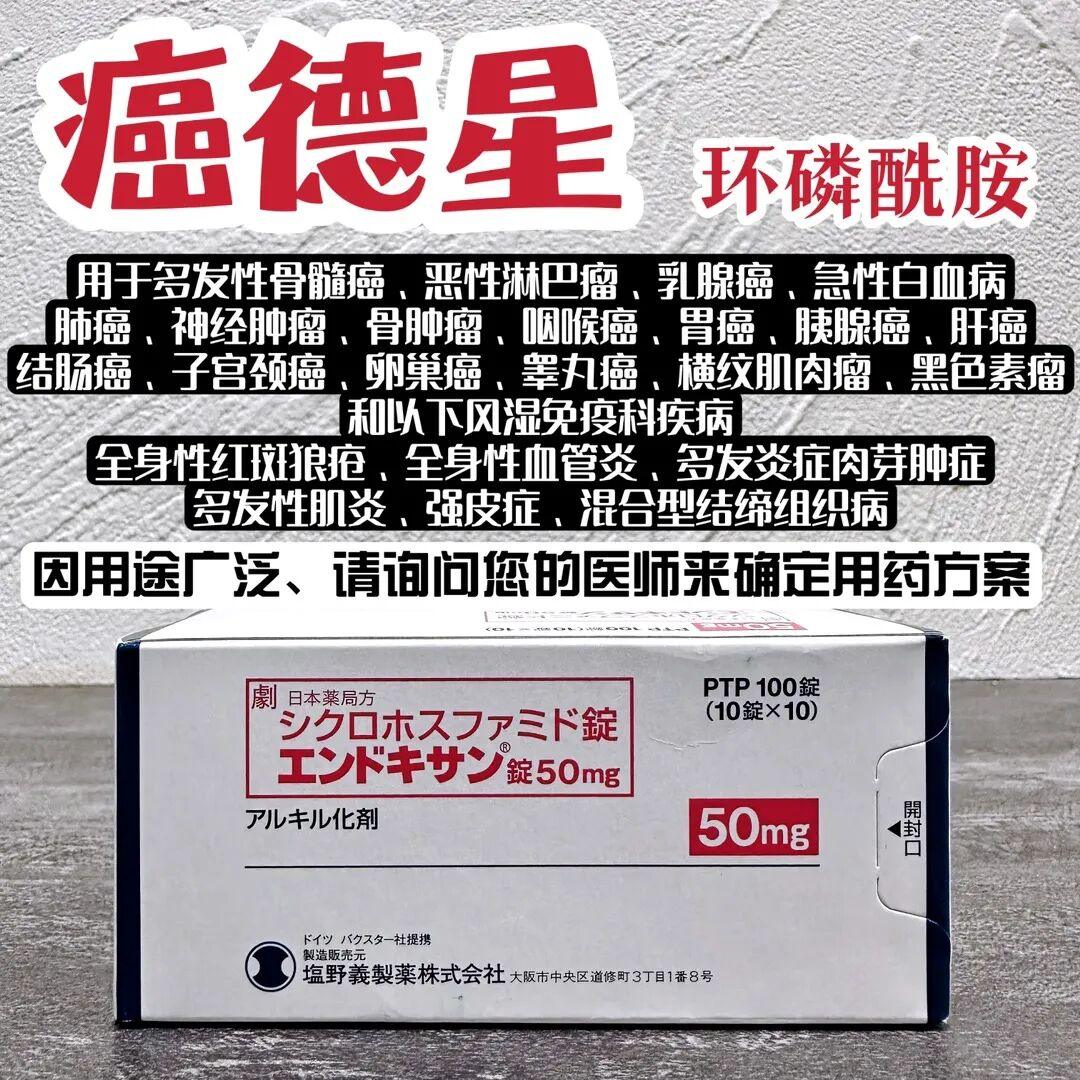
Cancer-Dexing cyclophosphamide

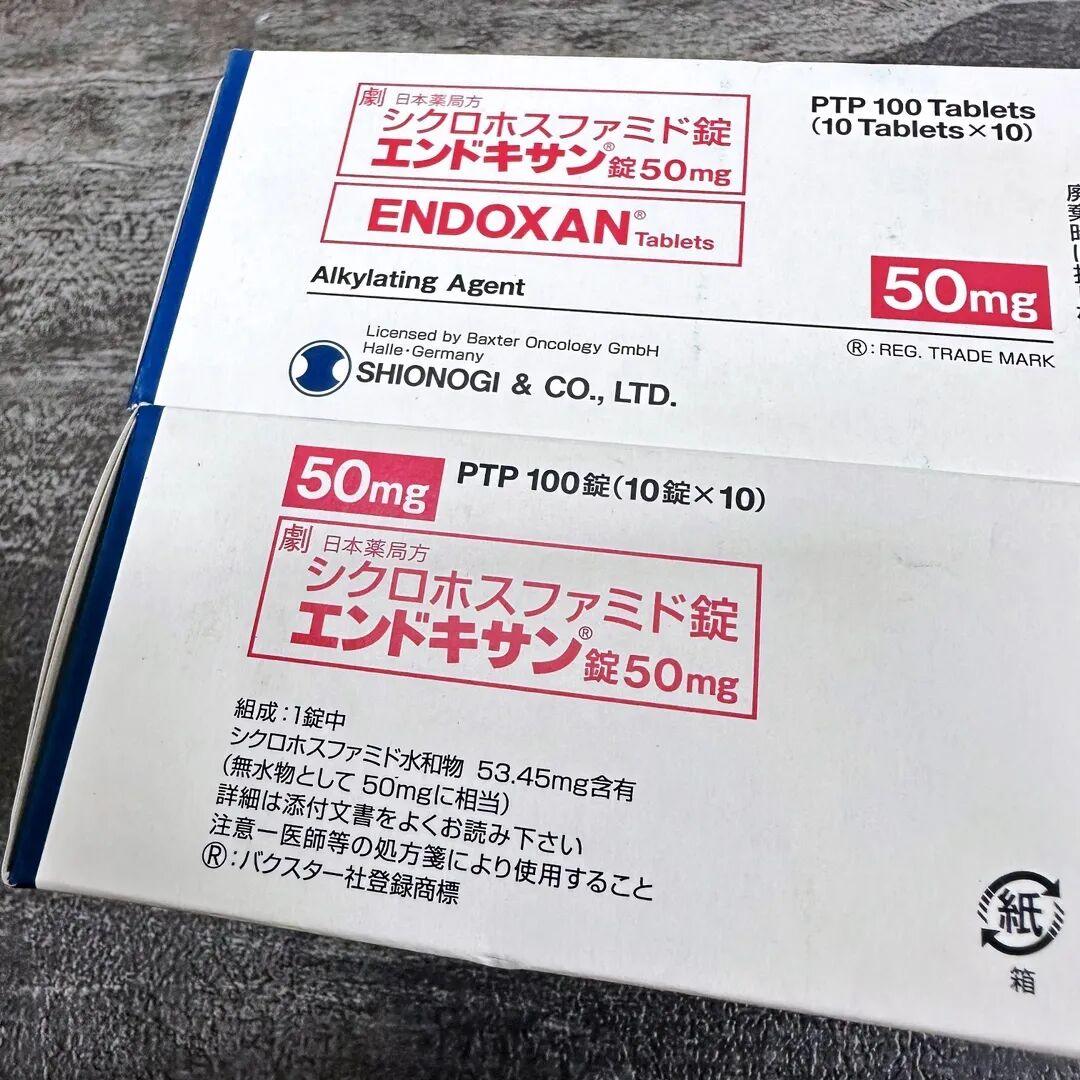
日本語原題:エンドキサン錠50mg

Published2025-03-26 10:07 FormTablet Content10 sections / 2 images Japanese nameエンドキサン錠50mg
Ingredients / strength:
Active ingredient: Cyclophosphamide hydrate 53.45mg per tablet (equivalent to 50mg as anhydrous). Additives: lactose hydrate, corn starch, glycerin, calcium bigen phosphate hydrate, gelatin, talc, magnesium stearate, ester wax with monthanate, polysorbate 20, sodium carmellos, povidone, light anhydrous silica, macrogol 35000, precipitated calcium carbonate, titanium dioxide, refined white sugar.
English translation of the Japanese package insert is the main text; the Japanese original is shown alongside for verification. Use the language menu (top right) to read the page in another language. This site is for reference only — consult a doctor or pharmacist before use.
Section 1 · Feature description
English translation
After activating in vivo, cyclophosphamide has been shown to inhibit DNA synthesis in tumor cells, exhibiting antitumor effects. In mouse Ehrlich carcinoma (ascites type), intraperitoneal administration of 75 mg/kg was observed on nucleic acid synthesis in tumor cells, inhibiting both DNA and RNA synthesis, but significantly suppressing DNA synthesis When 30, 60, and 120 mg/kg intraperitoneally administered to mouse Ehrlich carcinoma (ascitic type), all doses acted on the tumor cell division cycle during the G2 phase (pre-mitotic phase), delaying the transition to the M phase (dividing phase), thereby suppressing cell proliferation. In the 120 mg/kg group, it also acted during the S phase (DNA synthesis phase).
Section 2 · Specifications
English translation
100 tablets [10 tablets (PTP)×10].
Section 3 · Characteristics
English translation
It is a white, round sugar-coated tablet.
Section 4 · Ingredient Description
English translation
Active ingredient: Cyclophosphamide hydrate 53.45mg per tablet (equivalent to 50mg as anhydrous). Additives: lactose hydrate, corn starch, glycerin, calcium bigen phosphate hydrate, gelatin, talc, magnesium stearate, ester wax with monthanate, polysorbate 20, sodium carmellos, povidone, light anhydrous silica, macrogol 35000, precipitated calcium carbonate, titanium dioxide, refined white sugar.
Section 5 · Functions and indications
English translation
1. Relief of both subjective and objective symptoms of the following diseases (1) Multiple myeloma, malignant lymphoma (Hodgkin's disease, lymphosarcoma, reticulosarcoma), breast cancer (2) Acute leukemia, polycythemia vera, lung cancer, neuroneoplasms (neuroblastoma, retinoblastoma), bone tumors (3) However, for the following diseases, it is necessary to use in combination with other antineoplastic agents. Chronic lymphocytic leukemia, chronic myeloid leukemia, pharyngeal cancer, stomach cancer, pancreatic cancer, liver cancer, colon cancer, cervical cancer, endometrial cancer, ovarian cancer, testicular tumors, villous diseases (chorionic carcinoma, destructive cystic wonder fetus, cystic wonder fetus), rhabdomyosarcoma, malignant melanoma. 2. Suppression of immune responses associated with cell transplantation 3. Systemic AL amyloidosis 4. The following rheumatic diseases resistant to treatment Systemic lupus erythematosus, systemic vasculitis (microscopic polyangiitis, polyangiitis granulomatosis, nodosal polyarteritis, eosinophilic polyangiitis granulomatosis, Takayasu arteritis, etc.), polymyositis/dermatomyositis, scleroderma, mixed connective tissue disease, and refractory rheumatic diseases with vasculitis. 5. Nephrotic syndrome (only when adequate treatment with corticosteroids does not show sufficient effect). )
Section 6 · Usage and dosage
English translation
〈Relief of both subjective and external symptoms〉 (1) When used alone Typically, adults are given 100~200 mg orally daily as cyclophosphamide (anhydrous equivalent). Adjust appropriately according to age and symptoms. (2) When used in combination with other antitumor agents Reduce the dose as needed when used alone. 〈Suppression of immune responses associated with cell transplantation〉 Use based on the dosage or method of use for regenerative medicine products. 〈Systemic AL Amyloidosis〉 When used in combination with other drugs, adults are typically given orally as cyclophosphamide (anhydrous equivalent) once a week at 300 mg/m2 (body surface area). The upper dose limit is 500 mg per dose. 〈Treatment-Resistant Rheumatic Diseases〉 Typically, adults are given 50~100 mg orally daily as cyclophosphamide (anhydrous equivalent). Adjust appropriately according to age and symptoms. 〈Nephrotic Syndrome〉 Typically, adults are given orally as cyclophosphamide (anhydrous equivalent) at 50~100 mg of endoxan tablets (2) daily for 8~12 weeks. Adjust appropriately according to age and symptoms. Typically, children are given 2~3 mg/kg orally as cyclophosphamide (anhydrous equivalent) for 8~12 weeks. Adjustments may be made according to age and symptoms, but usually up to 100 mg per day. As a rule, the total dose should be up to 300 mg/kg.
Section 7 · Important notes
English translation
1. Serious side effects such as bone marrow suppression and hemorrhagic cystitis may occur, so frequently perform clinical tests (blood tests, urine tests, liver and kidney function tests, etc.) to closely monitor the patient's condition. Increase urine output to prevent hemorrhagic cystitis. Also, prolonged use can cause severe side effects and prolonged effects, so administration should be done with caution. 2. Be very cautious about the onset or worsening of infections or bleeding tendencies. 3. Since there have been reports of secondary malignancies (acute leukemia, myelodysplastic syndrome, malignant lymphoma, bladder tumors, renal pelvic or ureteral tumors, etc.), caution is advised by monitoring the course for a long period even after discontinuing this drug. There are reports that increasing the total dose of cyclophosphamide raises the risk of cancer.
Section 8 · Side effects
English translation
1. Shock, anaphylaxis (both with unknown frequency) Symptoms such as low blood pressure, difficulty breathing, wheezing, hives, and discomfort may occur. 2. Bone marrow suppression (frequency unknown) Pancytopenia, anemia, leukopenia, thrombocytopenia, and bleeding may occur; therefore, during the administration period, closely monitor peripheral blood and take appropriate measures such as extending the dosing interval, reducing the dose, or discontinuing the drug if abnormalities are observed. 3. Hemorrhagic cystitis, urinary disorders (both frequency unknown) 4. Ileus, gastrointestinal bleeding (less than 0.1~5% of the dose) 5. Interstitial pneumonia, pulmonary fibrosis (less than 0.1~5% note) 6. Myocardial injury, heart failure (less than 0.1~5% notation) 7. Antidiuretic hormone malfunction secretion syndrome (SIADH) (frequency unknown) Antidiuretic hormone malregulation syndrome (SIADH), which may occur with hyponatremia, hypoosmolality, increased urinary sodium excretion, hypertonia, seizures, and impaired consciousness, should be discontinued in such cases. 8. Toxic Epidermal Necrolysis (TEN), Stevens-Johnson syndrome (both frequency unknown) 9. Liver dysfunction and jaundice (both frequency unknown) 10. Acute kidney injury (frequency unknown) Severe kidney damage, such as acute kidney injury, may occur. 11. Rhabdomyolysis (frequency unknown) Rhabdomyolysis, characterized by muscle pain, weakness, increased CK, and elevated myoglobin in blood and urine, may appear.
Section 9 · Taboo
English translation
1. Patients receiving pentostatin 2. Patients with a history of severe hypersensitivity to any component of this drug 3. Patients with severe infectious diseases
Section 10 · Warning
English translation
〈Common Effects〉 1. Do not use this drug together with pentostatin. Cases of cardiotoxicity and death have been reported abroad due to combined use of cyclophosphamide and pentostatin. 2. Cancer chemotherapy containing this drug should only be administered in cases where this therapy is deemed appropriate, provided at medical facilities capable of adequate emergency response under the guidance of physicians with sufficient knowledge and experience in cancer chemotherapy. When selecting eligible patients, please refer to the package inserts of each combination drug and exercise great care. Also, before starting treatment, fully explain the efficacy and risks to the patient or their family, and only administer after obtaining consent. 〈Systemic AL Amyloidosis〉 Use in medical facilities capable of handling emergencies under the guidance of a physician with sufficient knowledge of this drug and experience in treating systemic AL amyloidosis. 〈Treatment-Resistant Rheumatic Diseases〉 Performed in a medical facility capable of adequate emergency response, under the guidance of a physician with sufficient knowledge of this drug and experience in treating treatment-resistant rheumatic diseases. 〈Nephrotic Syndrome〉 Performed at a medical facility capable of adequate emergency response, under the guidance of a physician with sufficient knowledge of this drug and experience in treating nephrotic syndrome.

Source images

2 images

Need help sourcing Japanese medicines or OEM production?

💬