ES - Polytamine
日本語原題:ESポリタミン配合顆粒
Source images
4 imagesThe artwork keeps its original Japanese/Chinese lettering. Open “Text in this image” under a picture to read what it says in your language (machine-read, may contain errors).
Text in this image machine-read · may contain errors
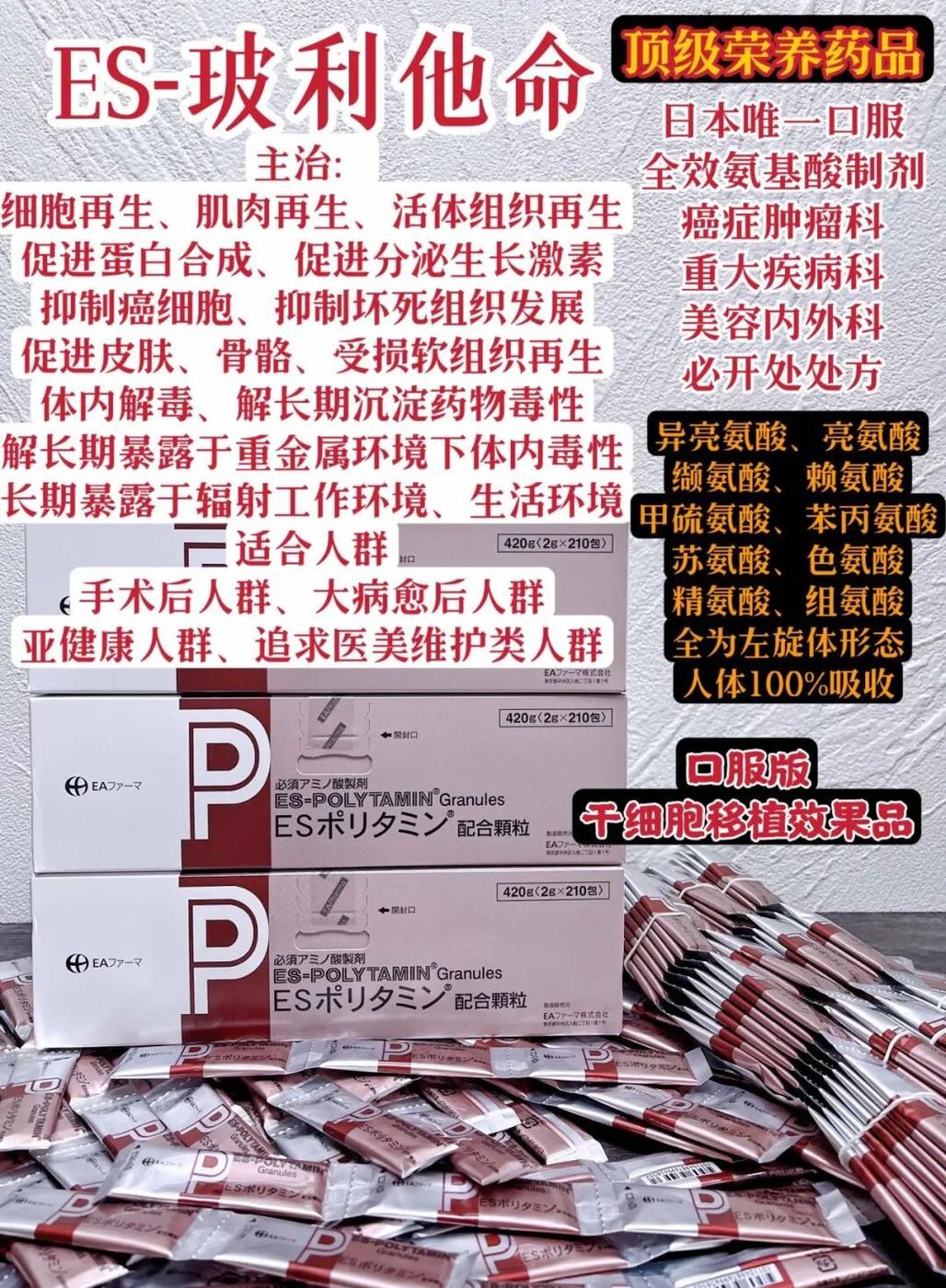
ES - Polytamine Top-tier nourishing medicine The only oral version in Japan A comprehensive amino acid preparation Cell regeneration, muscle regeneration, living tissue regeneration Oncology Department Promotes protein synthesis and promotes the secretion of growth hormone Critical Illness Department Inhibits cancer cells and inhibits the development of necrotic tissue Promotes regeneration of skin, bones, and damaged soft tissues and must be prescribed a prescription Detoxify the body and resolve long-term drug toxicity Isoleucine, leucine Solves toxicity in the body under long-term exposure to heavy metals Acids, lysine Long-term exposure to radiation in work and living environments Methionine, phenylalanine Suitable for 420g (2g ×210 packs) Threonine, tryptophan People who have undergone surgery and those recovering from serious illness Arginine, histidine All are left-rotatory forms Sub-healthy individuals and those pursuing medical aesthetics maintenance 100% absorption by the body Oral version ES-POLYTAMIN'Granules Stem cell transplantation product ES polytamine-infused granules Combined granules 420g(2g×210) EA ファーマ EA Fudema Gadget Updated
ES-玻利他命 顶级荣养药品 日本唯一口服 全效氨基酸制剂 细胞再生、肌肉再生、活体组织再生 癌症肿瘤科 促进蛋白合成、促进分泌生长激素 重大疾病科 抑制癌细胞、抑制坏死组织发展 促进皮肤、骨骼、受损软组织再生 必开处处方 体内解毒、解长期沉淀药物毒性 异亮氨酸、亮氨酸 解长期暴露于重金属环境下体内毒性 氨酸、赖氨酸 长期暴露于辐射工作环境、生活环境 甲硫氨酸、苯丙氨酸 适合人群 420g(2g×210包) 苏氨酸、色氨酸 手术后人群、大病愈后人群 精氨酸、组氨酸 全为左旋体形态 亚健康人群、追求医美维护类人群 人体100%吸收 口服版 ES-POLYTAMIN'Granules 干细胞移植效果品 ES ポリタミン配合顆粒 配合颗粒 420g(2g×210) EA ファーマ EA フデーマ物こを新
ES - Polytamine Top-tier nourishing medicine The only oral version in Japan A comprehensive amino acid preparation Cell regeneration, muscle regeneration, living tissue regeneration Oncology…
Text in this image machine-read · may contain errors
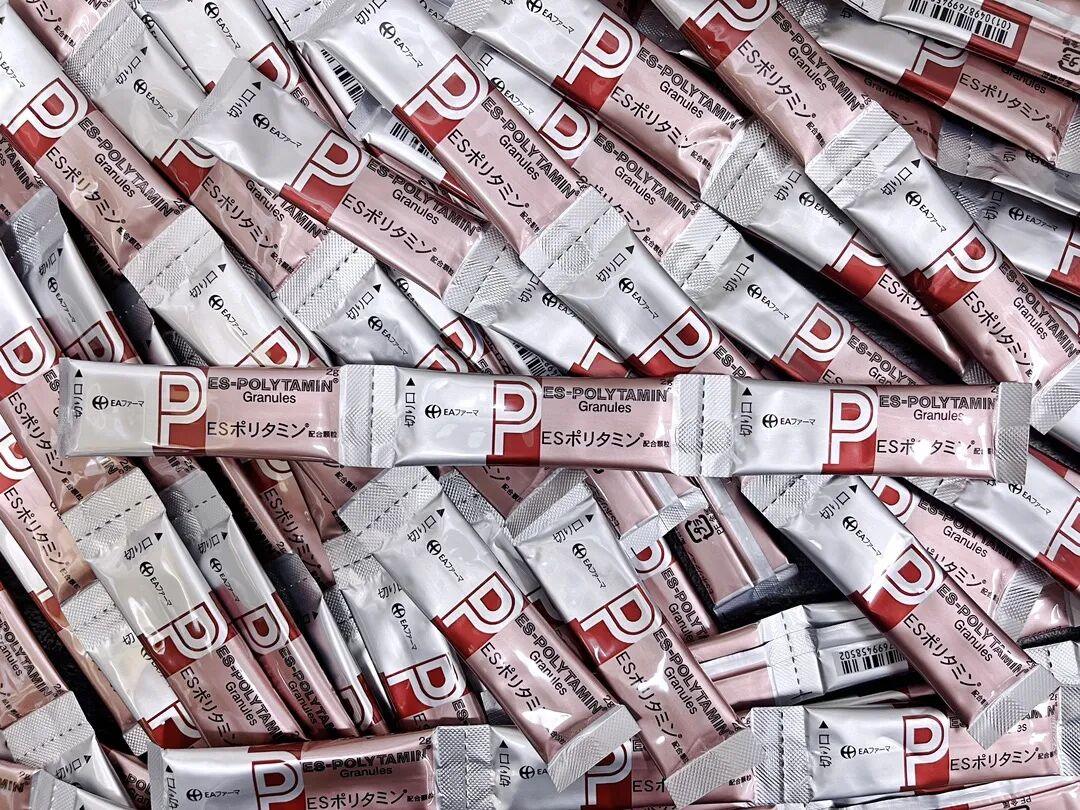
ES-POLYTAMIN Granules ES Polytamine ES-PO Gran LYTAMIR
ES-POLYTAMIN Granules ES ポリタミン ES-PO Gran LYTAMIR
ES-POLYTAMIN Granules ES Polytamine ES-PO Gran LYTAMIR…
Text in this image machine-read · may contain errors
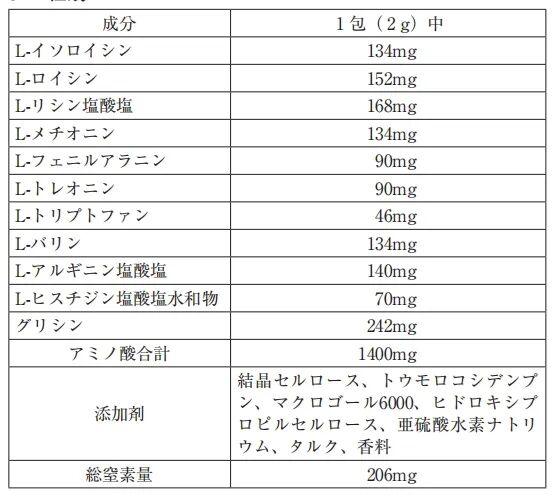
Per 1 pack (2g) 134mg isoleucine 152mg Leucine 168mg Lysine hydrochloride Phenylalanine 90mg tryptophan Shiparin 140mg Arginine hydrochloride 70mg Histidine hydrochloride hydrate glycine 1400mg Additives Me, Yujiu, Spice 206mg
1包(2g)中 134mg しイソロイシン 152mg しロイシン 168mg しリシン塩酸塩 しフェニルアラニン 90mg しトリプトファン しパリン 140mg しアルギニン塩酸塩 70mg しヒスチジン塩酸塩水和物 グリシン 1400mg 添加剂 么、夕久、香料 206mg
Per 1 pack (2g) 134mg isoleucine 152mg Leucine 168mg Lysine hydrochloride Phenylalanine 90mg tryptophan Shiparin 140mg Arginine hydrochloride 70mg Histidine hydrochloride hydrate glycine 140…
Text in this image machine-read · may contain errors
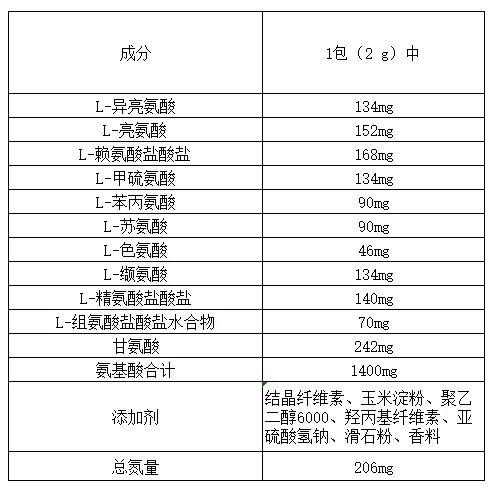
L-Isoleucine L-leucine L-lysine hydrochloride L-methionine L-phenylalanine L-threonine L-tryptophan L-valine L-Arginine hydrochloride L-Histidine Hydrochloride Hydrate Glycine Total amino acids Additives Total nitrogen amount Per 1 pack (2g). 134mg 152mg 168mg 90mg 46mg 140mg 242mg 1400mg Crystalline cellulose, corn starch, polyethylene Diol 6000, hydroxypropyl cellulose, sub-alcohol Sodium bisulfate, talc, fragrance 206mg
L-异亮氨酸 L-亮氨酸 L-赖氨酸盐酸盐 L-甲硫氨酸 L-苯丙氨酸 L-苏氨酸 L-色氨酸 L-缬氨酸 L-精氨酸盐酸盐 L-组氨酸盐酸盐水合物 甘氨酸 氨基酸合计 添加剂 总氮量 1包(2g)中 134mg 152mg 168mg 90mg 46mg 140mg 242mg 1400mg 结晶纤维素、玉米淀粉、聚乙 二醇6000、羟丙基纤维素、亚 硫酸氢钠、滑石粉、香料 206mg
L-Isoleucine L-leucine L-lysine hydrochloride L-methionine L-phenylalanine L-threonine L-tryptophan L-valine L-Arginine hydrochloride L-Histidine Hydrochloride Hydrate Glycine Total amino ac…