Cardiovascular · CARDIOVASCULAR

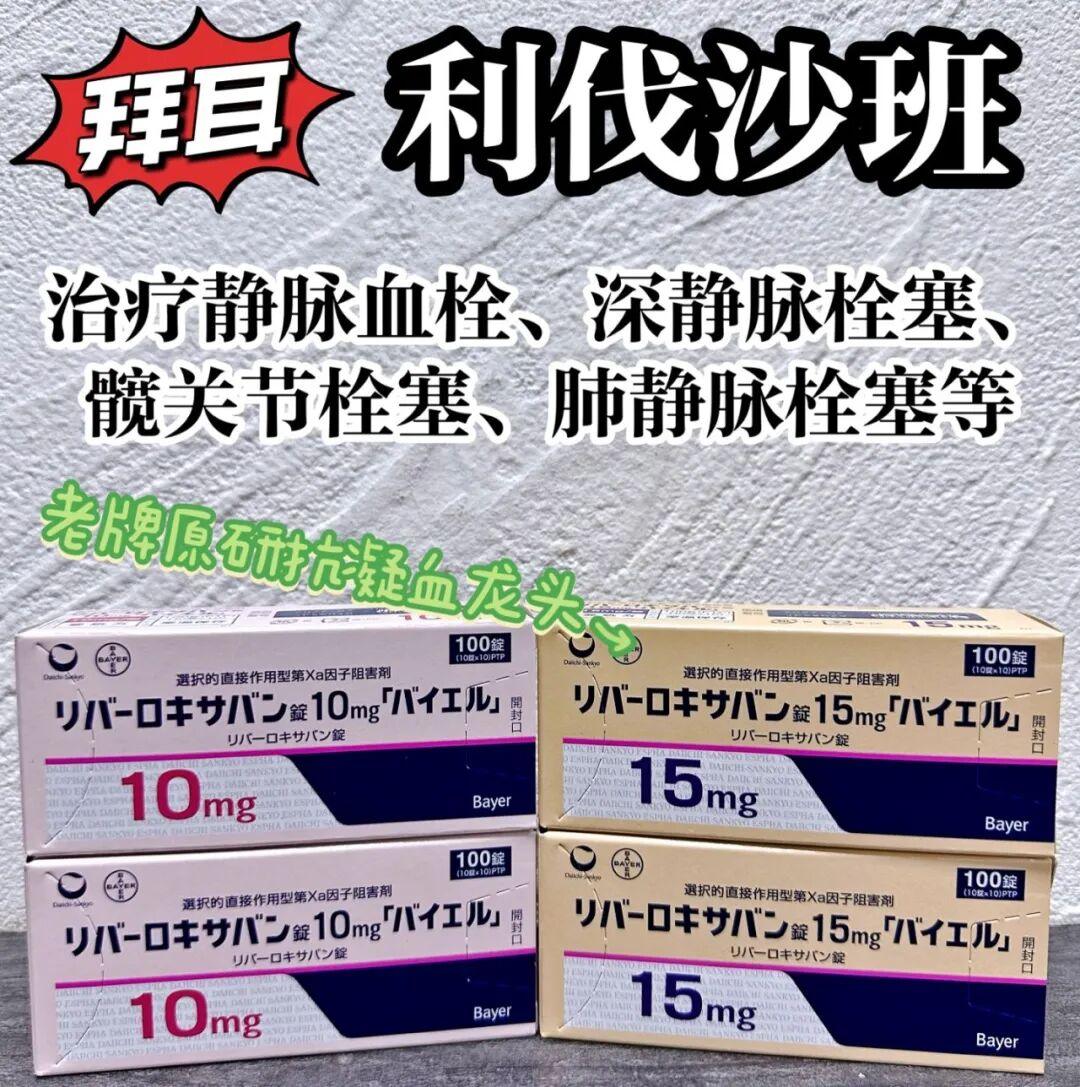
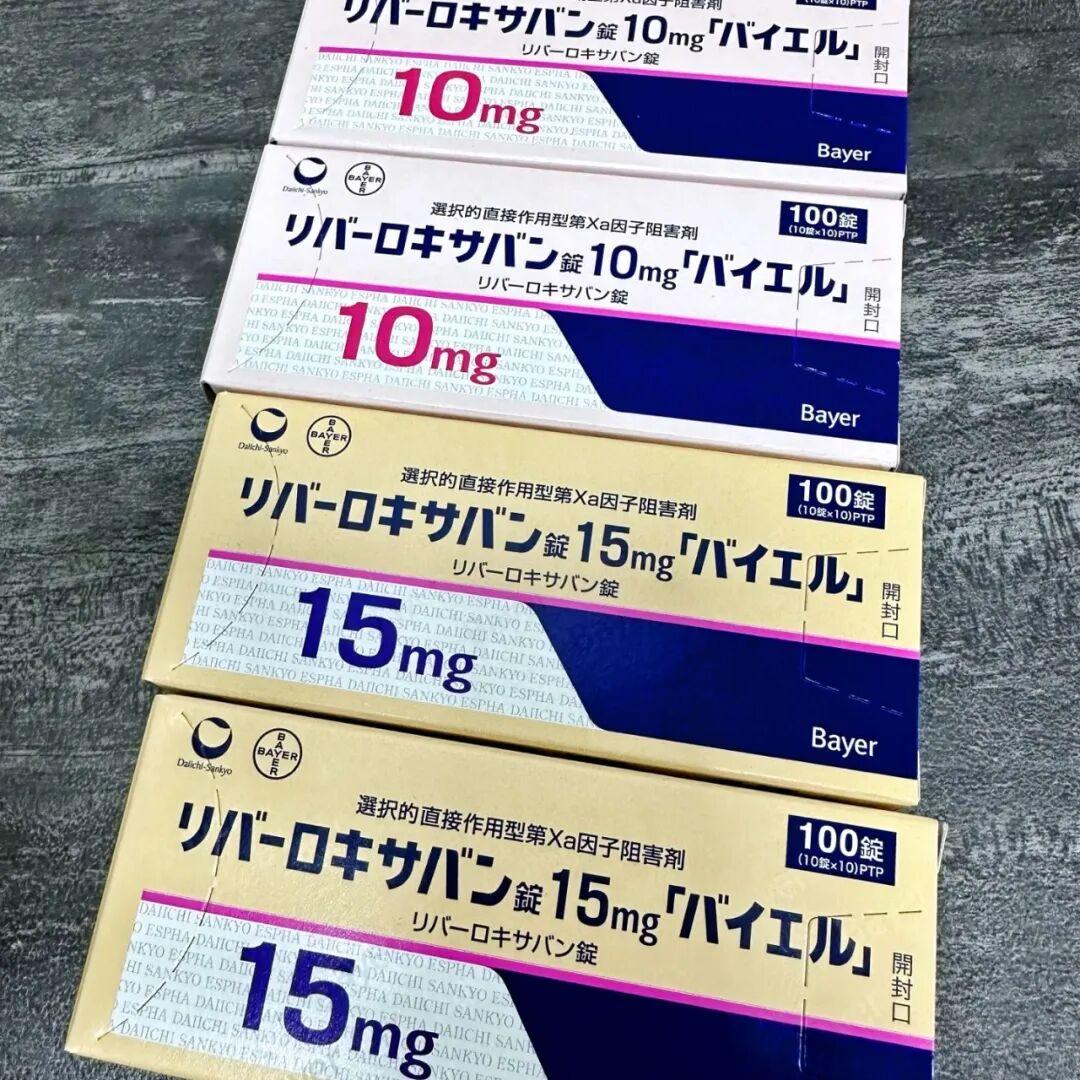
Bayer rivaroxaban 10mg/15mg

日本語原題:リバーロキサバン錠10mg/15mg「バイエル」

Published2025-04-04 10:04 Makerバイエル FormTablet Content10 sections / 2 images Japanese nameリバーロキサバン錠10mg/15mg「バイエル」
Ingredients / strength:
1. Rivaloxaban Tablets 10mg "Bayer" Active ingredient: Each tablet contains 10mg of Rivaloxaban. Additives: crystalline cellulose, crocarmellose sodium, hypromellose, lactose hydrate, magnesium stearate, sodium lauryl sulfate, ferric trioxide, macrogol 4000, titanium dioxide. 2. Rivaloxaban Tablets 15mg "Bayer" Active ingredient: Each tablet contains 15mg of Rivaloxaban. Additives: crystalline cellulose, crocarmellose sodium, hypromellose, lactose hydrate, magnesium stearate, sodium lauryl sulfate, ferric trioxide, macrogol 4000, titanium dioxide.
English translation of the Japanese package insert is the main text; the Japanese original is shown alongside for verification. Use the language menu (top right) to read the page in another language. This site is for reference only — consult a doctor or pharmacist before use.
Section 1 · Feature description
English translation
Mechanism of Action Rivaloxaban is a selective and direct factor Xa inhibitor that shows efficacy when administered orally. Ribaroxaban inhibits factor Xa in both endogenous and exogenous blood coagulation cascades, suppressing thrombin production and thrombosis. Rivaloxaban does not inhibit thrombin and does not have direct action on platelets. Antithrombotic effect Rivaloxaban suppressed thrombosis in dose-dependent manner in venous and arterial thrombosis models of mice, rats, or rabbits. Additionally, in a rabbit venous thrombosis model, the growth of thrombi after thrombosis was suppressed.
Section 2 · Specifications
English translation
100 tablets [10 tablets (PTP)×10]
Section 3 · Characteristics
English translation
1. Rivaloxaban Tablets 10mg "Bayer" Light red, film-coated tablets. 2. Rivaloxaban Tablets 15mg "Bayer" Red, film-coated tablets.
Section 4 · Ingredient Description
English translation
1. Rivaloxaban Tablets 10mg "Bayer" Active ingredient: Each tablet contains 10mg of Rivaloxaban. Additives: crystalline cellulose, crocarmellose sodium, hypromellose, lactose hydrate, magnesium stearate, sodium lauryl sulfate, ferric trioxide, macrogol 4000, titanium dioxide. 2. Rivaloxaban Tablets 15mg "Bayer" Active ingredient: Each tablet contains 15mg of Rivaloxaban. Additives: crystalline cellulose, crocarmellose sodium, hypromellose, lactose hydrate, magnesium stearate, sodium lauryl sulfate, ferric trioxide, macrogol 4000, titanium dioxide.
Section 5 · Functions and indications
English translation
1. Suppression of the onset of ischemic stroke and systemic embolism in patients with non-valvular atrial fibrillation. 2. Treatment and recurrence suppression of venous thromboembolism (deep vein thrombosis and pulmonary thromboembolism).
Section 6 · Usage and dosage
English translation
〈Suppression of Ischemic Stroke and Systemic Embolism in Patients with Nonvalvular Atrial Fibrillation〉 Typically, adults are given 15 mg of ribaroxaban orally once daily after meals. For patients with renal impairment, the dose should be reduced to 10 mg once daily according to the degree of renal function. 〈Treatment and Recurrence Suppression of Venous Thromboembolism〉 Typically, adults are given 15 mg orally twice daily after meals as ribaroxaban during the first three weeks after onset of deep vein thrombosis or pulmonary thromboembolism, followed by 15 mg once daily after meals.
Section 7 · Important notes
English translation
〈Common Effects〉 1. The International Standard Ratio for Prothrombin Time (PT-INR) is not a standardized indicator of the anticoagulant effect of this drug, and coagulation tests such as activated partial thromboplastin time (aPTT) are not recommended as indicators for monitoring the anticoagulant effect of this drug. 2. Side effects such as bleeding may occur, so if necessary, perform tests such as blood count (hemoglobin level) and fecal occult blood. If signs of bleeding such as sudden hemoglobin or blood pressure drop are observed, appropriate treatment should be taken. 3. If patients experience abnormal bleeding signs such as nosebleeds, subcutaneous bleeding, gum bleeding, hematuria, hemoptysis, hematemesis, or bloody stools, instruct them to contact a doctor. 4. When used together with two antiplatelet agents, the risk of bleeding may increase significantly; therefore, consider this drug with extra caution and only use these drugs if the therapeutic benefits outweigh the risks. 5. If surgery or invasive procedures are performed during administration of this drug, it is preferable to do so at least 24 hours after administration if clinically feasible. If you cannot delay the start of surgery or invasive procedures, assess urgency and bleeding risk. Administration of this drug should be resumed as soon as possible after confirming that the patient's clinical condition is stable and there is no bleeding after surgery or invasive procedures. 6. When switching this drug with other anticoagulants, please pay attention to the following points. (1) If switching from warfarin to this drug is necessary, discontinue warfarin administration, perform blood coagulation tests such as PT-INR, confirm that the drug is below the lower limit of the therapeutic range, and then start administration of this drug as soon as possible. (2) When switching from an injectable anticoagulant (such as heparin) to this drug, start administration of this drug 0~2 hours before the scheduled time for the next intravenous or subcutaneous administration, or after discontinuing continuous intravenous infusion. (3) It has been suggested that the anticoagulant effect may be insufficient when switching from this drug to warfarin, so care should be taken to maintain the anticoagulant effect, and until blood coagulability test values such as PT-INR exceed the lower limit of the therapeutic range, warfarin and this drug should be used together. Note that PT-INR does not accurately reflect the anticoagulant effect of warfarin until 24 hours have passed since completion of this drug. (4) When switching from this drug to an injectable anticoagulant, discontinue administration of this drug and start intravenous or subcutaneous administration of the anticoagulant at the scheduled time for the next dose. 7. Interstitial lung disease may occur, so if symptoms such as cough, bloody sputum, difficulty breathing, or fever appear, instruct patients to promptly contact their primary care physician. 8. If you forget to take this medication, instruct the patient to take this medication immediately and take it once daily starting the next day. Even if they forget to take a dose, instruct patients not to take two doses at once and to allow at least 12 hours before the next dose. 9. If a patient undergoing this drug needs to neutralize its anticoagulant effect when life-threatening bleeding or bleeding difficult to stop bleeding occurs, be sure to refer to the electronic addendum of the neutralizing agent Andexanet Alpha (genetically modified), and confirm the descriptions of contraindications, precautions related to administration and dosage, important basic precautions, cautions for patients with specific backgrounds, and precautions regarding side effects. 〈Treatment and Recurrence Suppression of Venous Thromboembolism〉 1. The duration of administration should be determined considering the risk of recurrence and bleeding of deep vein thrombosis and pulmonary thromboembolism for each case, and do not continue administration indiscriminately. 2. Especially during the first three weeks after the onset of deep vein thrombosis or pulmonary thromboembolism, when administering 15mg twice daily with sufficient caution, be very careful about the risk of bleeding. 3. During the first three weeks after onset of deep vein thrombosis or pulmonary thromboembolism, avoid switching from warfarin to this drug. After the initial 3 weeks of treatment, carefully consider the possibility that the anticoagulant effect may be insufficient when switching from warfarin to this drug. 4. If you forget to take this drug at 15mg twice daily for 3 weeks after onset of deep vein thrombosis or pulmonary thromboembolism, take it immediately and instruct the patient to maintain a daily dose of 30mg on the same day. In such cases, two doses may be given at once. From the next day onward, patients should be instructed to take the medication twice daily.
Section 8 · Side effects
English translation
1. Bleeding Intracranial hemorrhage (0.09%), cerebral hemorrhage (0.06%), hemorrhagic stroke (0.06%), ocular hemorrhage (0.23%), retinal hemorrhage (0.08%), rectal hemorrhage (1.25%), gastrointestinal hemorrhage (0.74%), melena (0.53%), upper gastrointestinal bleeding (0.36%), lower gastrointestinal bleeding (0.21%), hemorrhagic gastric ulcer (0.14%), intra-articular bleeding (0.16%), Severe bleeding, such as intramuscular hemorrhage (0.01%) with compartment syndrome, can occur, and fatal cases have been reported. If severe bleeding or other abnormalities are observed, discontinue administration. Complications associated with bleeding may include shock, renal failure, dyspnea, edema, headache, floating dizziness, pallor, and weakness. In some cases, symptoms such as chest pain or angina-like ischemic symptoms may appear as a result of anemia. 2. Liver dysfunction and jaundice Elevated ALT, liver dysfunction with AST elevation (less than 0.1~1%), and jaundice (frequency unknown) may occur. 3. Interstitial lung disease (frequency unknown) Since bloody sputum or alveolar hemorrhage may be present, if cough, bloody sputum, shortness of breath, difficulty breathing, fever, or abnormal lung sounds are observed, promptly perform chest X-ray, chest CT, serum markers, and other tests. If interstitial lung disease is suspected, discontinue administration and begin administering corticosteroids or similar treatments. 4. Thrombocytopenia (frequency unknown) 5. Acute kidney injury (frequency unknown) Acute renal injury may appear after administration of oral anticoagulants. Among acute kidney injuries following oral anticoagulant administration, some cases show hematuria, and kidney biopsies show numerous red blood cell columns in the renal tubules.
Section 9 · Taboo
English translation
〈Common Effects〉 Patients with a history of hypersensitivity to any component of this drug or patients with bleeding (clinically significant bleeding such as intracranial bleeding or gastrointestinal bleeding) [may promote bleeding. ] Patients with liver disease accompanied by coagulation disorders. Patients with moderate or higher liver impairment (equivalent to Child-Pugh classification B or C). Pregnant women or women who may be pregnant. Patients receiving preparations containing ritonavir, atazanavir, darnavir, and fosamprenavir. Patients receiving preparations containing cobicistat. Patients receiving oral or injectable forms of itraconazole, posaconazole, voriconazole, miconazole, or ketoconazole. Patients receiving ensitrelvir. Patients with acute bacterial endocarditis [may present thromboembolic symptoms associated with thrombosis dissolution. ] 〈Suppression of Ischemic Stroke and Systemic Embolism in Patients with Nonvalvular Atrial Fibrillation〉 Patients with renal failure (creatinine clearance below 15 mL/min). 〈Treatment and Recurrence Suppression of Venous Thromboembolism〉 Patients with severe renal impairment (creatinine clearance below 30 mL/min).
Section 10 · Warning
English translation
〈Common Effects〉 Administration of this drug can cause bleeding, and in cases of severe bleeding, there is a risk of death. When using this drug, carefully consider the risk of bleeding and determine the suitability of administration. Since there is no established indicator to accurately assess bleeding risk from this drug, during administration of this drug, it is important to carefully observe not only blood clotting test results but also signs such as bleeding and anemia. If these signs are observed, take appropriate action immediately. 〈Treatment and Recurrence Suppression of Venous Thromboembolism〉 When administering 15 mg twice daily during the first three weeks after the onset of deep vein thrombosis or pulmonary thromboembolism, the risk of bleeding may increase, and the risk of bleeding should be fully considered. In particular, there is a risk of increased bleeding in patients with kidney impairment, elderly, or low body weight, and in patients taking antiplatelet agents in combination, there is a risk of increased bleeding tendency. For these patients, administer this drug only if the therapeutic benefits outweigh the risks. When combined with spinal or epidural anesthesia or lumbar puncture, hematomas may form at the puncture site, leading to paralysis due to nerve compression. If the patient is in an epidural catheter placement or if the period is too late after spinal or epidural anesthesia or lumbar puncture, refrain from administration of this drug.

Source images

2 images

Need help sourcing Japanese medicines or OEM production?

💬