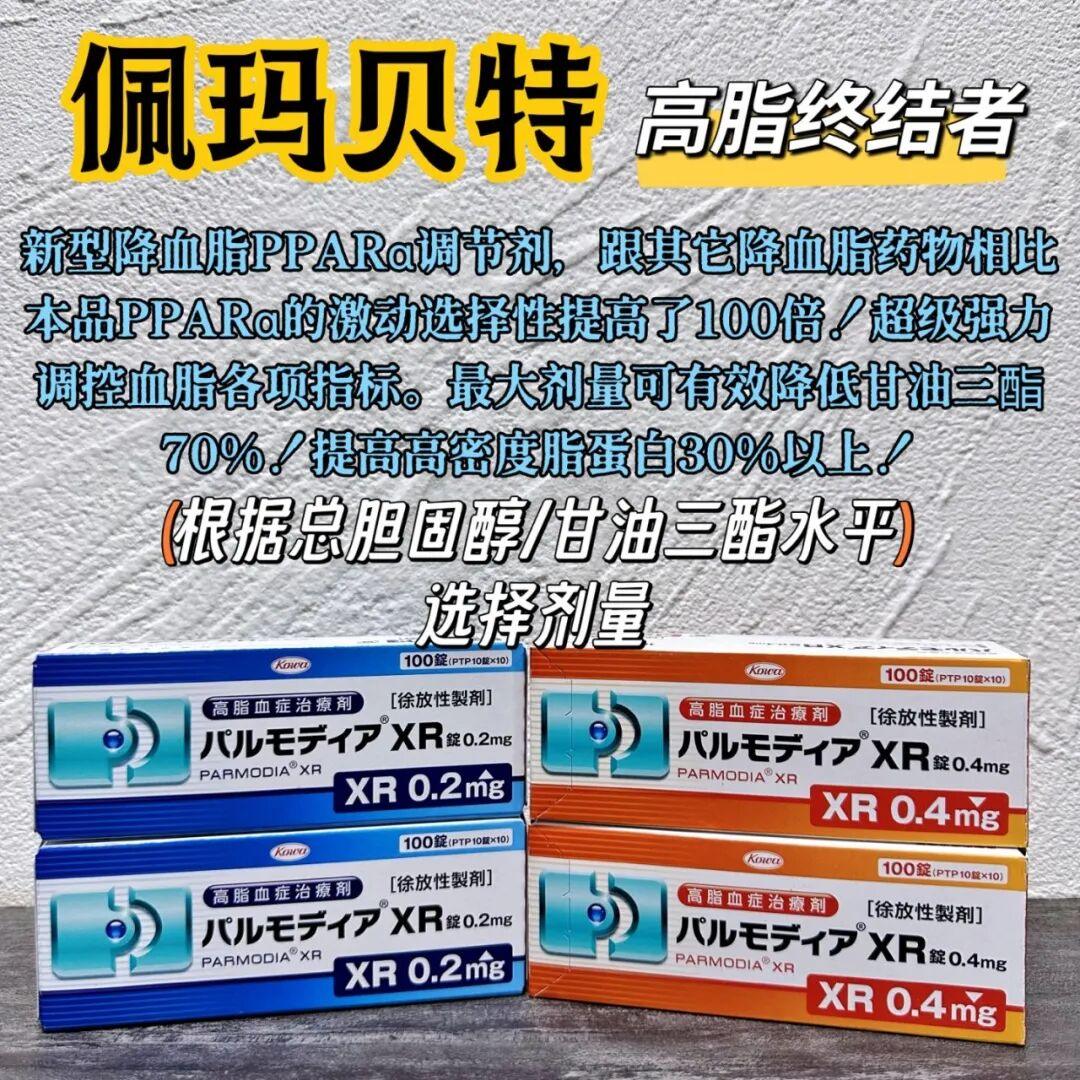
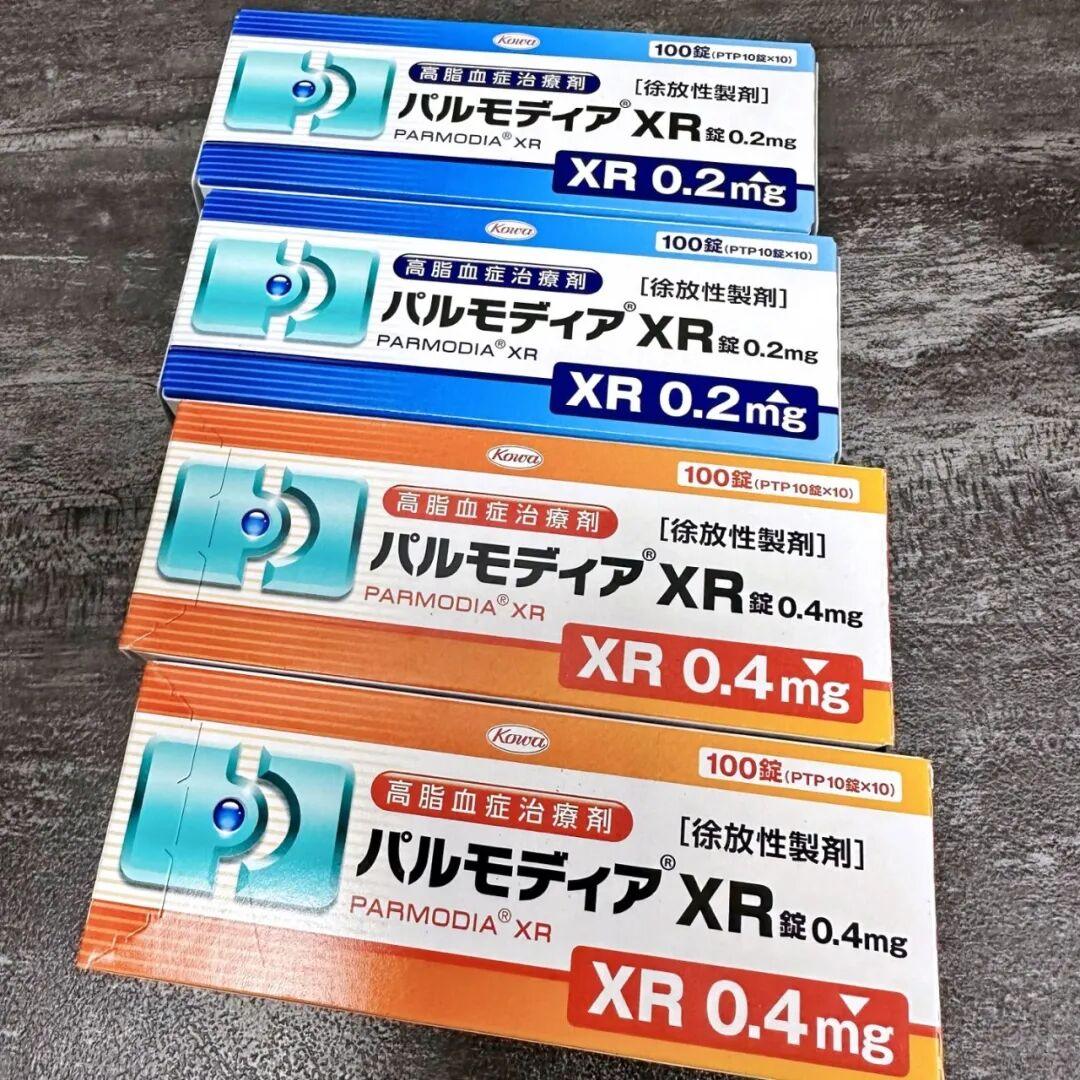
Cardiovascular · CARDIOVASCULAR Pemafirate XR 0.2mg/0.4mg
日本語原題:パルモディアXR錠0.2mg/0.4mg
Published2025-04-10 10:50 FormTablet Content9 sections / 2 images Japanese nameパルモディアXR錠0.2mg/0.4mg
Ingredients / strength:
1. Palmodia XR Tablets 0.2mg
Active ingredient: 0.20mg of pemafibrato per tablet.
Additives: crystalline cellulose (granules), hydrated silicon dioxide, hypromellose, methacrylate copolymer L, ethyl cellulose, magnesium stearate, D-mannitol, crystalline cellulose, crospovidone, hydroxypropyl cellulose, titanium oxide, triethyl citrate, light anhydrous silica, yellow trioxide, carnauba barrow.
2. Palmodia XR Tablets 0.4mg
Active ingredient: 0.40mg pemafibrato per tablet.
Additives: crystalline cellulose (granules), hydrated silicon dioxide, hypromellose, methacrylate copolymer L, ethyl cellulose, magnesium stearate, D-mannitol, crystalline cellulose, crospovidone, hydroxypropyl cellulose, titanium oxide, triethyl citrate, light anhydrous silica, yellow trioxide, carnauba barrow.
Admin WeChat original article →
Section 1 · Feature description
English translation
Pemafibrate binds to PPARα and regulates the expression of target genes, resulting in effects such as lowering plasma TG concentration and increasing HDL cholesterol.
1. Activity against PPARα was stronger than against PPARγ and PPARδ, showing selective activation effects on PPARα.
2. Inhibited TG synthesis in the liver (rats).
3. Significantly reduced the rate of TG secretion from the liver into the bloodstream (rats).
4. Increased LPL activity (rats).
5. Significantly reduced plasma concentrations of ApoC-III and Angiopoietin-like Protein3, which negatively regulate LPL activity, and suppressed the expression of genes (Apoc3, Angptl3) in the liver. Additionally, the expression of genes involved in the β oxidation of free fatty acids that inhibit LPL activity (Aco, Cpt1a) was enhanced (rats).
6. Plasma TG clearance was enhanced (rat).
7. Increased plasma concentration of FGF21, a protein that lowers TG and increases HDL cholesterol (rats).
日本語 Original
ペマフィブラートはPPARαに結合し、標的遺伝子の発現を調節することで、血漿TG濃度の低下、HDL-コレステロールの増加等の作用を示す。
1、PPARαに対する活性は、PPARγ及びPPARδに対する活性に比べ強く、PPARαに対する選択的な活性化作用を示した。
2、肝臓でのTGの合成を抑制した(ラット)。
3、TGの肝臓から血中への分泌速度を有意に低下させた(ラット)。
4、LPL活性を増加させた(ラット)。
5、LPL活性を負に制御する因子であるApoC-Ⅲ及びAngiopoietin-Like Protein3の血漿中濃度を有意に低下させ、肝臓における遺伝子(Apoc3、Angptl3)の発現を抑制した。また、LPL活性を阻害する遊離脂肪酸のβ酸化に関わる遺伝子(Aco、Cpt1a)の発現を亢進させた(ラット)。
6、血漿TGクリアランスを亢進させた(ラット)。
7、TG濃度を低下させHDL-コレステロール濃度を増加させる蛋白であるFGF21の血漿中濃度を増加させた(ラット)。
Section 2 · Specifications
English translation
PTP: 100 tablets (10 tablets × 10)
日本語 Original
PTP:100錠(10錠×10)
Section 3 · Characteristics
English translation
It is a pale yellow, round film-coated tablet (slow-release tablet).
日本語 Original
淡黄色、円形のフィルムコーティング錠(徐放錠)である。
Section 4 · Ingredient Description
English translation
1. Palmodia XR Tablets 0.2mg
Active ingredient: 0.20mg of pemafibrato per tablet.
Additives: crystalline cellulose (granules), hydrated silicon dioxide, hypromellose, methacrylate copolymer L, ethyl cellulose, magnesium stearate, D-mannitol, crystalline cellulose, crospovidone, hydroxypropyl cellulose, titanium oxide, triethyl citrate, light anhydrous silica, yellow trioxide, carnauba barrow.
2. Palmodia XR Tablets 0.4mg
Active ingredient: 0.40mg pemafibrato per tablet.
Additives: crystalline cellulose (granules), hydrated silicon dioxide, hypromellose, methacrylate copolymer L, ethyl cellulose, magnesium stearate, D-mannitol, crystalline cellulose, crospovidone, hydroxypropyl cellulose, titanium oxide, triethyl citrate, light anhydrous silica, yellow trioxide, carnauba barrow.
日本語 Original
1、パルモディアXR錠0.2mg
有効成分:1錠中ペマフィブラート0.20mg。
添加剤:結晶セルロース(粒)、含水二酸化ケイ素、ヒプロメロース、メタクリル酸コポリマーL、エチルセルロース、ステアリン酸Mg、D-マンニトール、結晶セルロース、クロスポビドン、ヒドロキシプロピルセルロース、酸化チタン、クエン酸トリエチル、軽質無水ケイ酸、黄色三二酸化鉄、カルナウバロウ。
2、パルモディアXR錠0.4mg
有効成分:1錠中ペマフィブラート0.40mg。
添加剤:結晶セルロース(粒)、含水二酸化ケイ素、ヒプロメロース、メタクリル酸コポリマーL、エチルセルロース、ステアリン酸Mg、D-マンニトール、結晶セルロース、クロスポビドン、ヒドロキシプロピルセルロース、酸化チタン、クエン酸トリエチル、軽質無水ケイ酸、黄色三二酸化鉄、カルナウバロウ。
Section 5 · Functions and indications
English translation
Hyperlipidemia (including familial cases)
日本語 Original
高脂血症(家族性を含む)
Section 6 · Usage and dosage
English translation
Typically, adults receive 0.2 mg orally once daily as pemafibrate. However, depending on the degree of triglyceride elevation, the dose can be increased to 0.4 mg per dose up to once daily.
日本語 Original
通常、成人にはペマフィブラートとして1回0.2mgを1日1回経口投与する。ただし、トリグリセライド高値の程度により、1回0.4mgを1日1回まで増量できる。
Section 7 · Important notes
English translation
1. Dietary therapy, which is fundamental for treating hyperlipidemia, should be implemented in advance, and further considering exercise therapy and the reduction of risk factors for ischemic heart disease such as hypertension and smoking.
2. During administration, regularly monitor serum lipid levels, and if no effect is observed, do not administer indiscriminately and discontinue administration.
3. This drug may affect liver function and liver function test results; therefore, perform regular liver function tests during administration.
4. Since LDL cholesterol levels may rise during administration of this drug, regularly monitor LDL cholesterol levels during administration.
日本語 Original
1、あらかじめ高脂血症治療の基本である食事療法を行い、更に運動療法や、高血圧・喫煙等の虚血性心疾患のリスクファクターの軽減も十分考慮すること。
2、投与中は血清脂質値を定期的に検査し、本剤の効果が認められない場合には漫然と投与せず、中止すること。
3、本剤は肝機能及び肝機能検査値に影響を及ぼすことがあるので、投与中は定期的に肝機能検査を行うこと。
4、本剤投与中にLDL-コレステロール値上昇の可能性があるため、投与中はLDL-コレステロール値を定期的に検査すること。
Section 8 · Side effects
English translation
1. Rhabdomyolysis (frequency unknown)
Rhabdomyolysis, characterized by muscle pain, weakness, elevated CK, and elevated myoglobin in blood and urine, may be accompanied by severe kidney damage such as acute kidney injury. In such cases, discontinue administration immediately and provide appropriate treatment.
2. Liver dysfunction and jaundice (both of unknown frequency)
ALT elevation, gallstone disease, liver dysfunction, AST elevation.
3. Muscles
Increased CK, muscle pain, and increased blood myoglobin levels
4. Skin
Rash, itching.
5. Others
Diabetes (including exacerbations), increased glycohemoglobin, increased low-density lipoprotein, and increased blood uric acid.
日本語 Original
1、横紋筋融解症(頻度不明)
筋肉痛、脱力感、CK上昇、血中及び尿中ミオグロビン上昇を特徴とする横紋筋融解症があらわれ、これに伴って急性腎障害等の重篤な腎障害があらわれることがあるので、このような場合には直ちに投与を中止し、適切な処置を行うこと。
2、肝機能障害、黄疸(いずれも頻度不明)
ALT上昇,胆石症、肝機能異常、AST上昇。
3、筋肉
CK上昇、筋肉痛,血中ミオグロビン増加
4、皮膚
発疹,そう痒。
5、その他
糖尿病(悪化を含む),グリコヘモグロビン増加、低比重リポ蛋白増加、血中尿酸増加。
Section 9 · Taboo
English translation
1. Patients with a history of hypersensitivity to any component of this drug
2. Patients with severe liver impairment, cirrhosis classified as Child-Pugh B or C, or patients with biliary obstruction
3. Patients with gallstones [gallstone formation has been reported. ]
4. Pregnant women or women who may be pregnant
5. Patients receiving cyclosporine or rifampicin
日本語 Original
1、本剤の成分に対し過敏症の既往歴のある患者
2、重篤な肝障害、Child-Pugh分類B又はCの肝硬変のある患者あるいは胆道閉塞のある患者
3、胆石のある患者[胆石形成が報告されている。]
4、妊婦又は妊娠している可能性のある女性
5、シクロスポリン、リファンピシンを投与中の患者