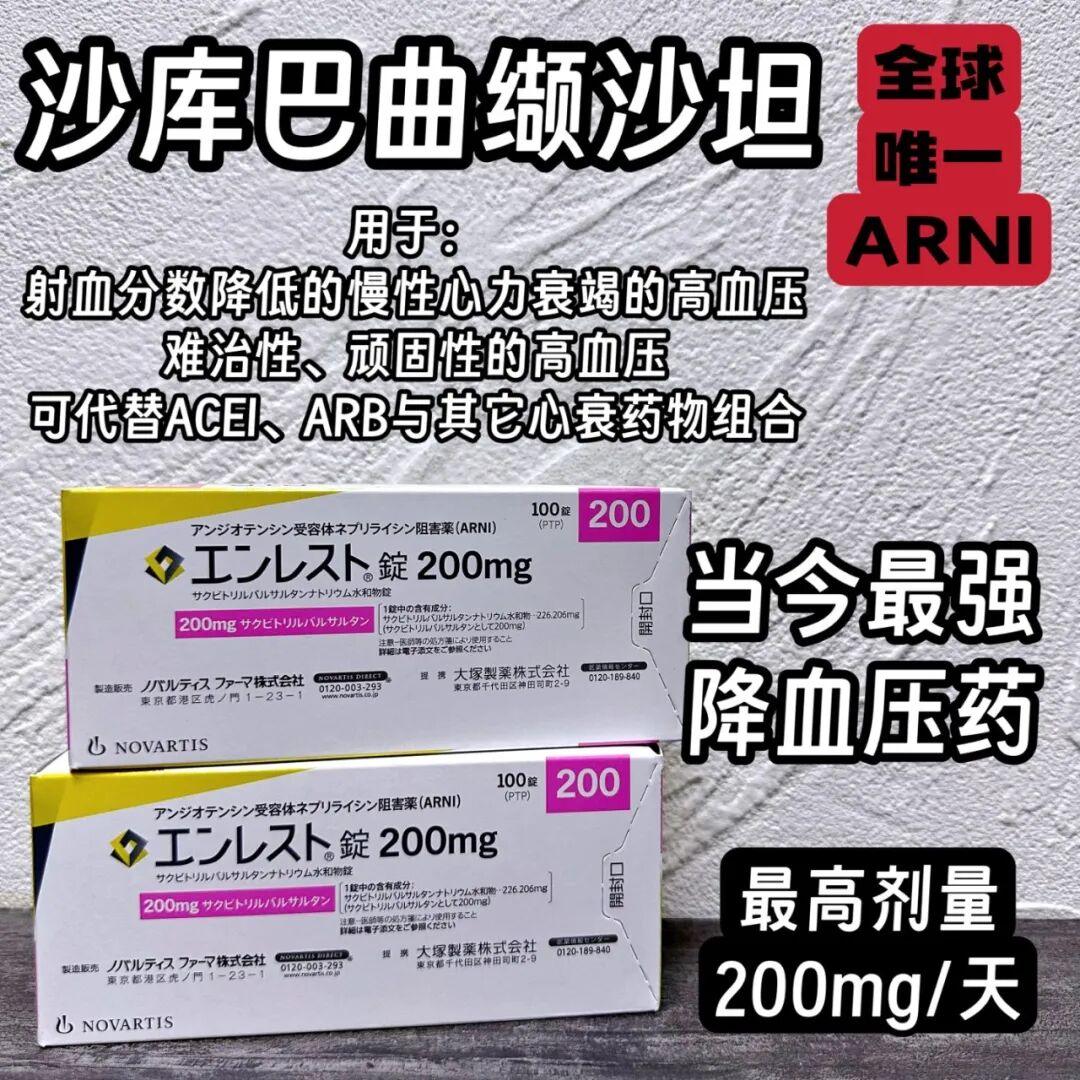
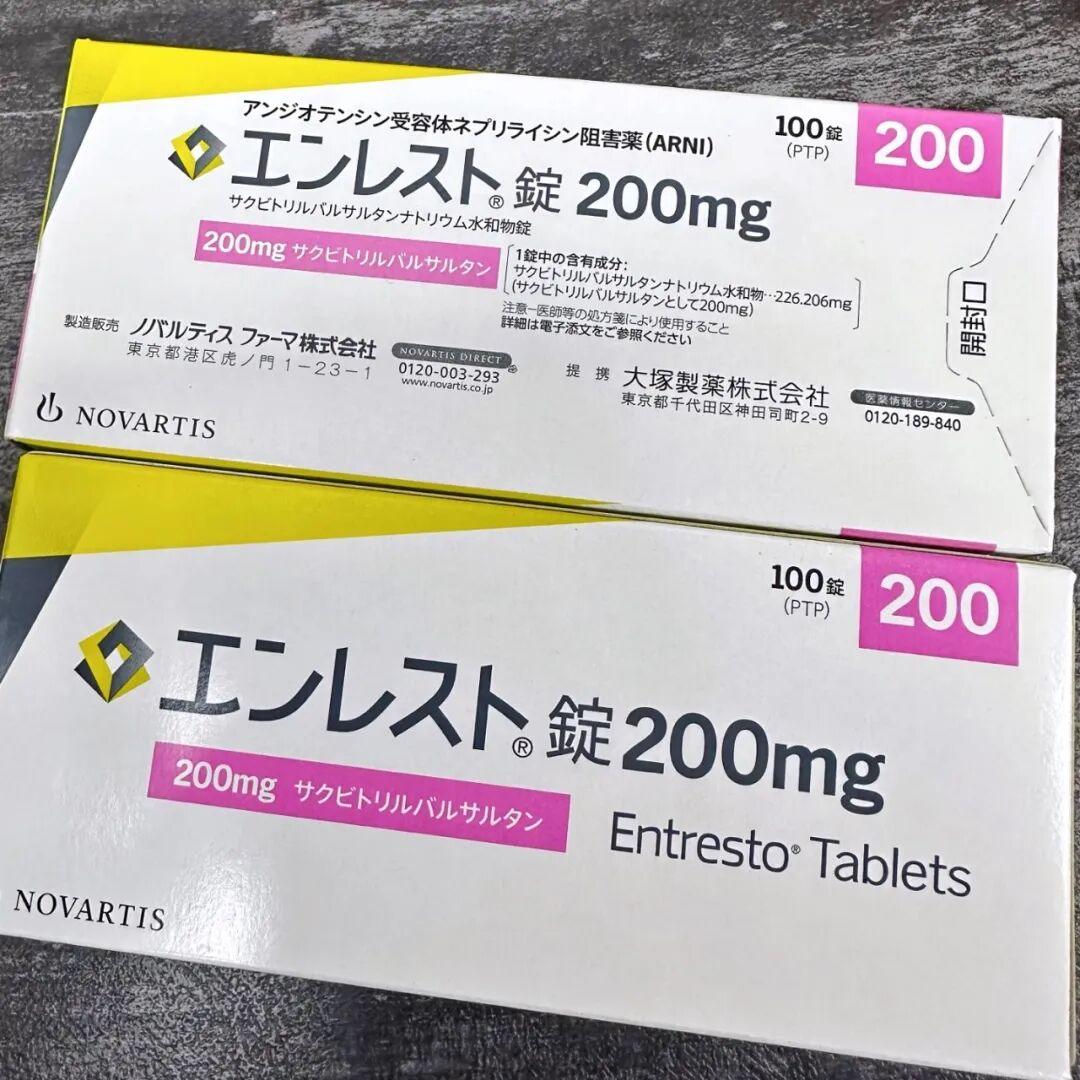
Sacubatravalsartan 200mg
日本語原題:エンレスト錠200mg
Active ingredient: 226.206mg sodium hydrate of sacvirtril valsartan sodium hydrate per tablet (equivalent to 200mg as sacvirtril valsartan and 102.8mg sacvirtan). Additives: cellulose, hydroxypropyl cellulose, cropovidone, magnesium stearate, talc, anhydrous silica, hypromellose, polyethylene glycol, titanium oxide, ferric trioxide, iron oxide.
Source images
4 imagesThe artwork keeps its original Japanese/Chinese lettering. Open “Text in this image” under a picture to read what it says in your language (machine-read, may contain errors).
Text in this image machine-read · may contain errors
Shacubatrasartan ARNI Hypertension with Chronic Heart Failure with Reduced Ejection Fraction Refractory and stubborn hypertension Can replace ACE, ARB, and other heart failure drug combinations Receptor Block Case (ARNI) (PTP) 0 Konnrest Tablets 200mg The strongest today "Sakuhiri" and balsartan sodium hydrate 200Eg Sakhi Tril Bal Sultan Antihypertensive drugs 2-9 Kanda Tokitoki, Chiyoda-ku, Izumikyo Tora, Minato-ku, Tokyo) Monday 1-23-1 UNOVARTIS Receptor Inhibiter Vegetable (ARNI) Tsubitril Harsa Tan Sodium Hydration Maximum Maximum dose Random Incident: 0 200n1g Saku ni Trilval Sultan Ridge-only company 2-9 Kanda Tsukasamai, Chiyoda-ku, Kyoto 200mg/day Tokyo Tigers / Mon 1-23-1
沙库巴曲沙坦 ARNI 射血分数降低的慢性心力衰竭的高血压 难治性、顽固性的高血压 可代替ACE、ARB与其它心衰药物组合 才受容体阻害案(ARNI) (PTP) 0 工ンレスト錠 200mg 当今最强 サクヒトリ」しバルサルタンナトリウム水和物蹊 200Eg サクヒトリルバルサルタン 降血压药 泉京都千代田区神田时时2-9 東京都港区虎)月1-23-1 UNOVARTIS 才受容体阻害菜(ARNI) つクビトリルハルサれタンナトリウム水和第盛 最高剂量 リクヒトリれハルっルタンナトリウム事第物マル : 0 場 200n1g サクにトリルバルサルタン 仅栋式会社 来京都千代田区神田司街2-9 200mg/天 东京都港虎/月1-23-1
Shacubatrasartan ARNI Hypertension with Chronic Heart Failure with Reduced Ejection Fraction Refractory and stubborn hypertension Can replace ACE, ARB, and other heart failure drug combinati…
Text in this image machine-read · may contain errors
Plasmoreceptor Blockade (ARNI) 100 ingots 0 Konnrest Tablets 200mg Sacbitril Valsartan Sodium Hydrate Tablets Ingredients per tablet: 200mg sacbitril valsartan Caution: Use only by physicians or similar personnel For details, please refer to the electronic attachment. Note: Use according to the prescription notes prescribed by doctors or others. 1-23-1 Tora/Mon, Minato-ku, Tokyo NONARTIS DIRECT www.novartis.co.jp U NOVARTIS 2-9 Kanda Tsukasamachi, Chiyoda-ku, Tokyo Entresto'Tablets NOVARTIS
才受容体阻害(ARNI) 100锭 0 工ンレスト錠 200mg サクビトリルバルサルタンナトリウム水和物錠 1锭中の含有成分: 200mg サクビトリルバルサルタン 注意一医師等の方第使用 詳第は電子添文をご参照ください 注ー医師等の迅方箋によリ使用すること 东京都港区虎/门1-23-1 NONARTIS DIRECT www.novartis.co.jp U NOVARTIS 东京都千代田区神田司町2-9 Entresto'Tablets NOVARTIS
Plasmoreceptor Blockade (ARNI) 100 ingots 0 Konnrest Tablets 200mg Sacbitril Valsartan Sodium Hydrate Tablets Ingredients per tablet: 200mg sacbitril valsartan Caution: Use only by physician…
Text in this image machine-read · may contain errors
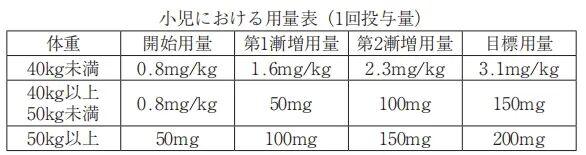
Xiaojian Yisao Usage Scale (1 Reinvestment Amount) Step 1: Gradually increase the dosage Second, gradually increase the dosage Less than 40kg 1.6mg/kg 0.8mg/kg 2.3mg/kg 3.lmg/kg Over 40kg 50mg 100mg 150mg Less than 50kg Over 50kg 200mg
小见亿扫用量表(1回投量) 第1渐增用量 第2渐增用量 40kg未满 1.6mg/kg 0.8mg/kg 2.3mg/kg 3.lmg/kg 40kg以上 50mg 100mg 150mg 50kg未满 50kg以上 200mg
Xiaojian Yisao Usage Scale (1 Reinvestment Amount) Step 1: Gradually increase the dosage Second, gradually increase the dosage Less than 40kg 1.6mg/kg 0.8mg/kg 2.3mg/kg 3.lmg/kg Over 40kg 50…
Text in this image machine-read · may contain errors
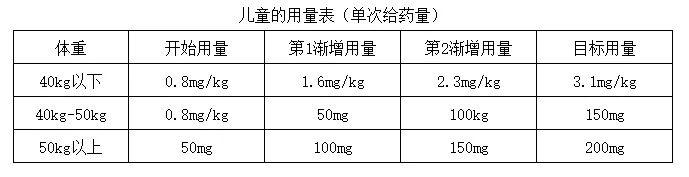
Dosage Sheet for Children (Single Dose) Step 1: Gradually increase the dosage Start dosage Second, gradually increase the dosage Target amount Below 40kg 0.8mg/kg 3. 1mg/kg 1. 6mg/kg 2.3mg/kg 150mg 100kg 40kg-50kg Over 50kg 200mg 100mg
儿童的用量表(单次给药量) 第1渐增用量 开始用量 第2渐增用量 目标用量 40kg以下 0.8mg/kg 3. 1mg/kg 1. 6mg/kg 2.3mg/kg 150mg 100kg 40kg-50kg 50kg以上 200mg 100mg
Dosage Sheet for Children (Single Dose) Step 1: Gradually increase the dosage Start dosage Second, gradually increase the dosage Target amount Below 40kg 0.8mg/kg 3. 1mg/kg 1. 6mg/kg 2.3mg/k…