Special treatment agent for cervical spondylitis
日本語原題:オナール錠50mg
Active ingredient: 50mg of eperysone hydrochloride per tablet. Additives: Carnauba Wax, Carmelose, Silicon Hydrate, Crystalline Cellulose, Titanium Oxide, Stearic Acid, Calcium Stearate, Refined White Sugar, Talc, Precipitated Calcium Carbonate, Corn Starch, White Seraq, Hydroxypropyl Cellulose, Pullulan, Povidone, Macrogol 6000.
Source images
2 imagesThe artwork keeps its original Japanese/Chinese lettering. Open “Text in this image” under a picture to read what it says in your language (machine-read, may contain errors).
Text in this image machine-read · may contain errors
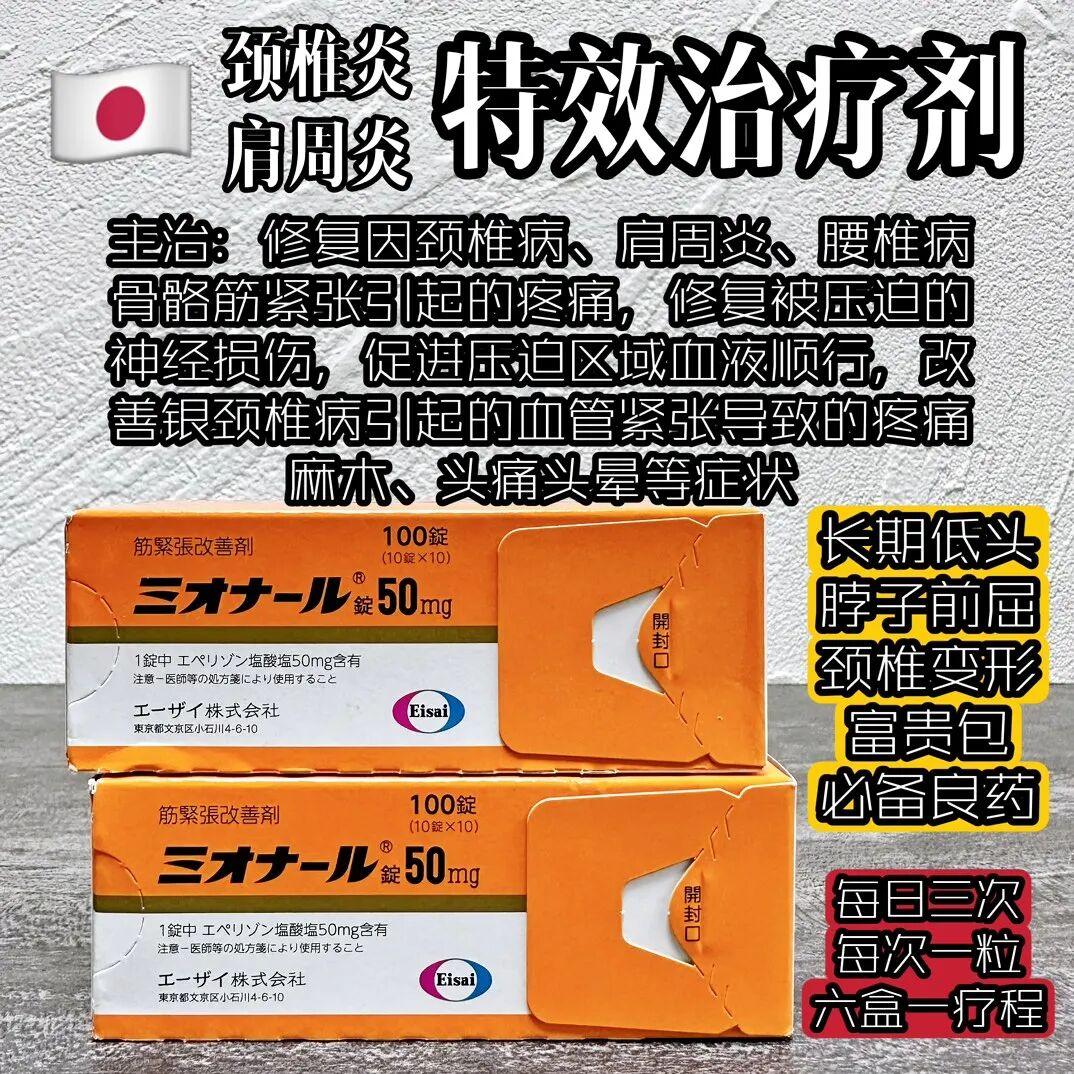
Specific therapeutic agents Cervical spondylitis Indications: Repair of cervical spondylosis, periarthritis of the shoulder, and lumbar spondylosis Pain caused by skeletal muscle tension repairs compressed areas Nerve damage promotes blood flow in compressed areas, correcting progress Pain caused by vascular tension caused by cervical spondylosis anesthesia, headache, dizziness, and other symptoms Keep your head down for a long time Tendon Extension Corrector (10 Unified × 10) Cervical vertebrae deformities Contains 1 tablet of Chuko Perison hydrochloride 50mg Note: Use urgently—use according to a prescription from a guest or similar physician Koichi Co., Ltd Eisai Wealth and Honor Package 4-6-10 Koishikawa, Bunkyo-ku, Tokyo Essential medicine (10 ingots×10) One at a time Use prescribed by a cautionary physician or others Twenty joint-stock companies Six boxes per treatment course
特效治疗剂 颈椎炎 主治:修复因颈椎病、肩周炎、腰椎病 骨骼筋紧张引起的疼痛,修复被压迫的 神经损伤,促进压迫区域血液顺行,改 善银颈椎病引起的血管紧张导致的疼痛 麻术、头痛头晕等症状 长期低头 筋繁张改善剂 (10统×10) 颈椎变形 1 錠中工ペリゾン塩酸塩 50mg 含有 注急ー客師等の処方箋により使用すること 工一株式会社 Eisai 富贵包 东京都文京区小石川4-6-10 必备良药 (10锭×10) 每次一粒 注意医師等の处方使用 工一廿个株式会社 六盒一疗程
Specific therapeutic agents Cervical spondylitis Indications: Repair of cervical spondylosis, periarthritis of the shoulder, and lumbar spondylosis Pain caused by skeletal muscle tension rep…
Text in this image machine-read · may contain errors
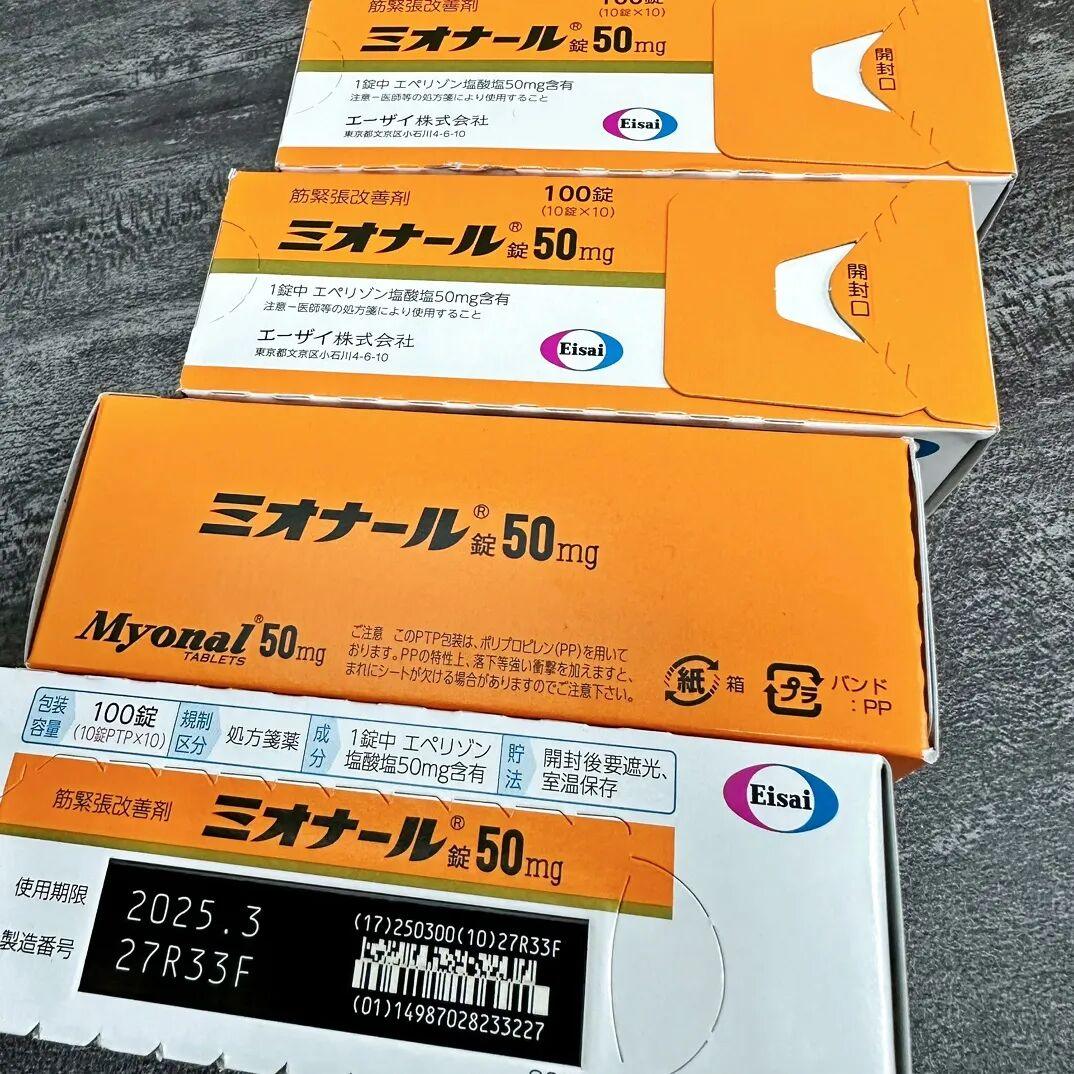
(10 Promotion ×10) 1 Shinchuko Perison Salt 50n0g included Koichi Joju Co., Ltd. Eisai 4-6-10 Koishikawa, Bunkyo-ku, Kyoto 100 ingots Muscle tone reducer Thirty to 50mg 1 tablet contains 50mg of Zhonggong^Y Acid 1 Contains Yochuko Perison Hydrochloride 50 Koichi Saya Co., Ltd. Ezai Shushi Company Sannaral Tablets 50mg Myonal 50mg Note that PTP packaging is in use, (PP) 。 Due to the characteristics of PP, the drop strength is equal to the L Hengshu add. TABLETS (10 tablets PTP×10) Kaifeng Jun wants to block out light, 50mg of xuic acid contains Store at room temperature Muscle tone reducer Expiration Date (17)250300(10)27R33F Serial Number 27R33F (01)14987028233227
(10促×10) 1 新中工ペリゾン塩塩 50n0g 含 工一女十株式会社 Eisai 集京都文京区小石川4-6-10 100锭 筋紧张改善剂 三十-50mg 1锭中工^y酸50mg含有 1 養中工ペリゾン塩酸塩 50 含有 工一サ丫株式会社 ェーザイ殊式会社 三ナーアル錠 50mg Myonal 50mg 注意PTP包装休、(PP)在用 。PPの特性上、落下等强L衡墅加 TABLETS (10锭PTP×10) 開封俊要遮光、 墟酸50mg含有 室温保存 筋紧张改善劑 使用期限 (17)250300(10)27R33F 造番号 27R33F (01)14987028233227
(10 Promotion ×10) 1 Shinchuko Perison Salt 50n0g included Koichi Joju Co., Ltd. Eisai 4-6-10 Koishikawa, Bunkyo-ku, Kyoto 100 ingots Muscle tone reducer Thirty to 50mg 1 tablet contains 50m…