Japanese Meisman placenta extract
日本語原題:メルスモン
1 ampoule (2mL) Active ingredient: 100mg of water-soluble placental chorionic leachate (human placenta derived component). Additive: 0.03 mL benzyl alcohol.
Source images
2 imagesThe artwork keeps its original Japanese/Chinese lettering. Open “Text in this image” under a picture to read what it says in your language (machine-read, may contain errors).
Text in this image machine-read · may contain errors
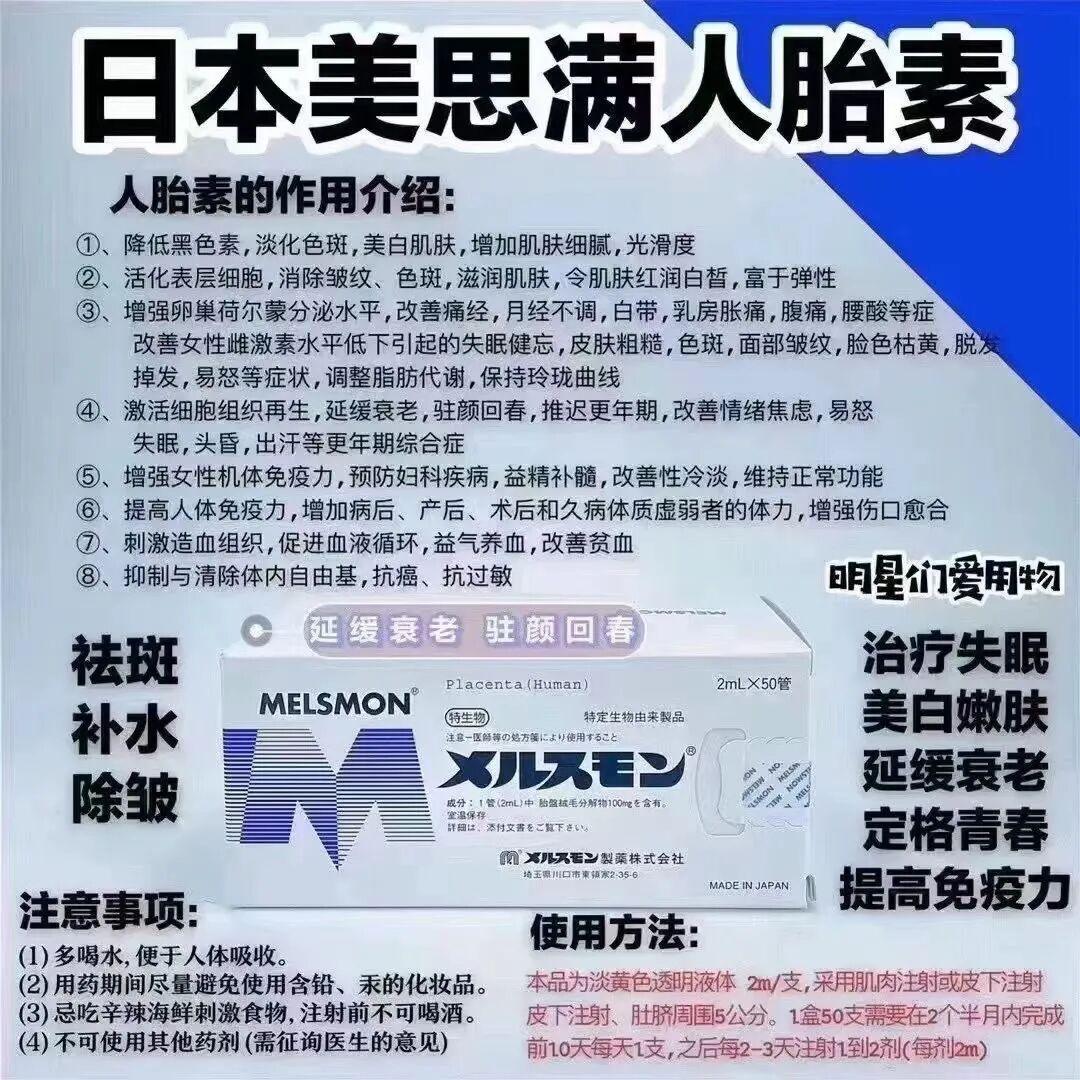
Japanese Meisman placenta extract Introduction to the effects of human placenta extract: (1) Reduces melanin, fades dark spots, whitens skin, and increases skin smoothness and fineness (2) Activates surface cells, eliminates wrinkles and dark spots, moisturizes the skin, and makes it rosy, fair, and elastic (3) Enhances ovarian hormone secretion, improves dysmenorrhea, irregular menstruation, leukorrhea, breast distension and pain, abdominal pain, lower back soreness, and other symptoms Improves insomnia and forgetfulness caused by low estrogen levels in women, rough skin, pigmentation, facial wrinkles, sallow complexion, and hair loss Hair loss, irritability, and other symptoms, regulate fat metabolism and maintain a slim curve (4) Activates cell tissue regeneration, delays aging, rejuvenates youthful complexion, delays menopause, improves emotional anxiety, and irritability Menopausal syndromes such as insomnia, dizziness, and sweating 5. Enhances female immunity, prevents gynecological diseases, nourishes essence and marrow, improves low libido, and maintains normal function (3) Enhances immunity, boosts physical strength in post-illness, post-childbirth, post-surgery, and those with chronic illness and weakness, enhancing wound healing (1) Stimulates hematopoietic tissue, promotes blood circulation, boosts qi and nourishes blood, and improves anemia Celebrities love to use objects (3) Inhibits and eliminates free radicals in the body, anti-cancer and anti-allergy Delaying aging, preserving youthful beauty, and restoring youth Treats insomnia 2mL × 50 tubes Placenta(Human) MELSMON Whitening and skin rejuvenation Endemic organisms Several items derived from specific organisms Caution – Do not use on dirty paper such as in public offices Delays aging In the component tube (2mL), Taimeng Anti-Hair Decomposition 100mg is always included. Freeze youth MADEINJAPAN How to use: (1) Drink plenty of water to facilitate absorption by the body. This product is a pale yellow transparent liquid 2 mL per vial, administered by intramuscular injection or subcutaneous injection 2) Try to avoid using cosmetics containing lead or mercury during medication. ((3)) Avoid spicy seafood and irritating foods, and do not drink alcohol before injection. Subcutaneous injection, 5 cm around the navel. A box of 50 tubes needs to be completed within two and a half months (4) Do not use other medications (consult a doctor) One vial daily for the first 10 days, then 1 to 2 doses every 2-3 days (each dose 2m)
日本美思满人胎素 人胎素的作用介绍: ①、降低黑色素,淡化色斑,美白肌肤,增加肌肤细腻,光滑度 ②、活化表层细胞,消除皱纹、色斑,滋润肌肤,令肌肤红润白皙,富于弹性 ③、增强卵巢荷尔蒙分泌水平,改善痛经,月经不调,白带,乳房胀痛,腹痛,腰酸等症 改善女性雌激素水平低下引起的失眠健忘,皮肤粗糙,色斑,面部皱纹,脸色枯黄,脱 掉发,易怒等症状,调整脂肪代谢,保持玲珑曲线 ④、激活细胞组织再生,延缓衰老,驻颜回春,推迟更年期,改善情绪焦虑,易怒 失眠,头昏,出汗等更年期综合症 5、增强女性机体免疫力,预防妇科疾病,益精补髓,改善性冷淡,维持正常功能 ③、提高人体免疫力,增加病后、产后、术后和久病体质虚弱者的体力,增强伤口愈合 ①、刺激造血组织,促进血液循环,益气养血,改善贫血 明星们爱用物 ③、抑制与清除体内自由基,抗癌、抗过敏 延缓衰老驻颜回春 治疗失眠 2mL×50管 Placenta(Human) MELSMON 美白嫩肤 特生物 特定生物由来数品 注意ー広第等の汚箋によ社使用すること 延缓衰老 成分管(2mL)中胎盟抗毛分解物100mg老含有。 定格青春 MADEINJAPAN 使用方法: (1)多喝水,便于人体吸收。 本品为淡黄色透明液体2m/支,采用肌肉注射或皮下注射 2)用药期间尽量避免使用含铅、汞的化妆品。 (③)忌吃辛辣海鲜刺激食物,注射前不可喝酒。 皮下注射、肚脐周围5公分。1盒50支需要在2个半月内完成 (4)不可使用其他药剂(需征询医生的意见) 前10天每天1支,之后每2-3天注射1到2剂(每剂2m)
Japanese Meisman placenta extract Introduction to the effects of human placenta extract: (1) Reduces melanin, fades dark spots, whitens skin, and increases skin smoothness and fineness (2) A…
Text in this image machine-read · may contain errors
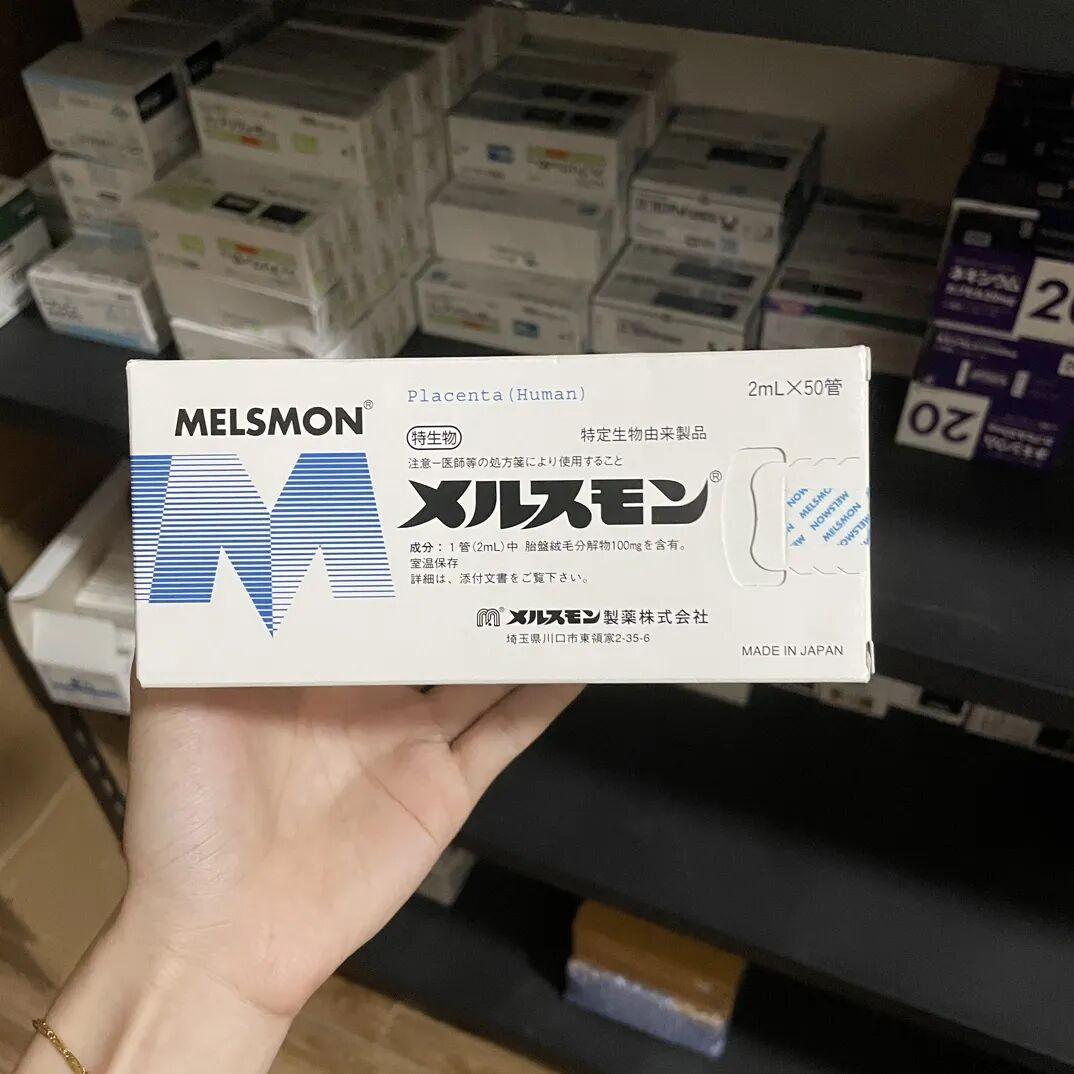
2mLX50 tube Placenta(Human) MELSMON Products derived from specified biological organisms Note: Use with prescriptions from a physician or others Ingredients: 1 tube (2mL) of the middle basket hair-cutting decomposed product 100mg kit contains. Store at room temperature 2-35-6 Higashiryeongjia, Kawaguchi City, Qiangyuo MADEINJAPAN
2mLX50管 Placenta(Human) MELSMON 特定生物由来製品 注意一医等の处方落使用 成分:1管(2mL)中胎篮裁毛分解物100mg套含有。 室温保存 墙玉果川口市东领家2-35-6 MADEINJAPAN
2mLX50 tube Placenta(Human) MELSMON Products derived from specified biological organisms Note: Use with prescriptions from a physician or others Ingredients: 1 tube (2mL) of the middle baske…