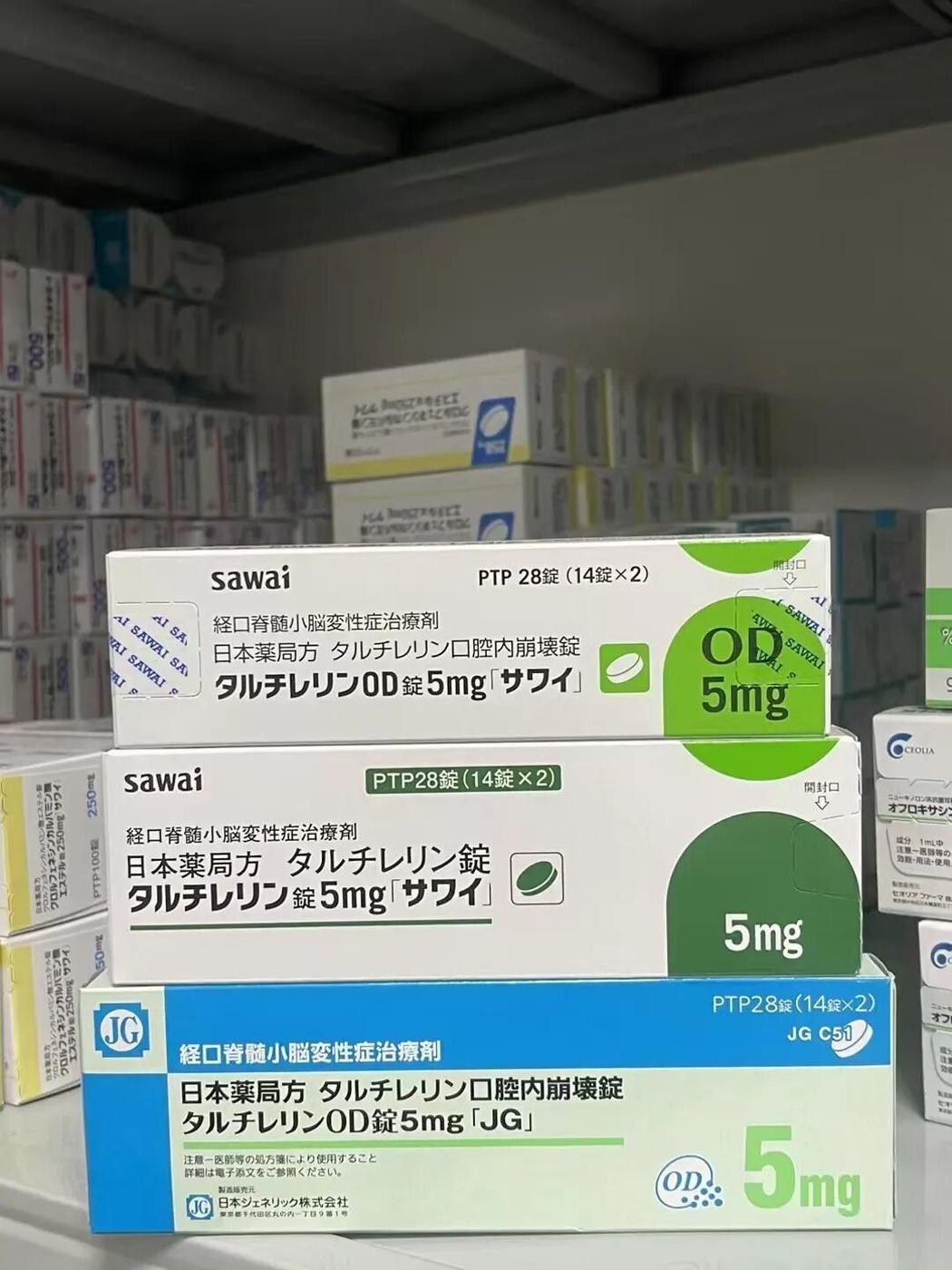
Neuro & Psychiatric · NERVOUS

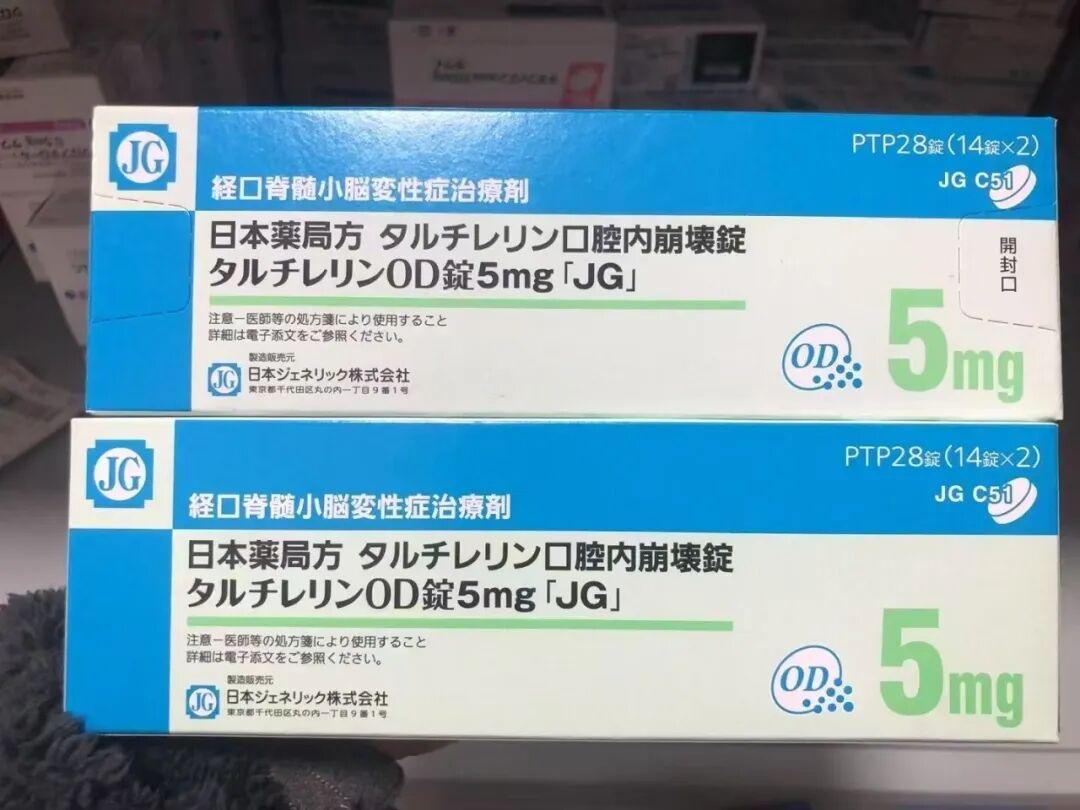
Cerebellar atrophy JG version

日本語原題:タルチレリンOD錠5mg「JG」

Published2025-04-29 10:17 MakerJG FormTablet Content8 sections / 2 images Japanese nameタルチレリンOD錠5mg「JG」
Ingredients / strength:
Active ingredient (per tablet): Japanese Tak Tartirelin Hydrate 5.0mg. Additives: anhydrous calcium hydrogen phosphate, crystalline cellulose, calcium carmerose, light anhydrous silica, sucralose, magnesium stearate.
English translation of the Japanese package insert is the main text; the Japanese original is shown alongside for verification. Use the language menu (top right) to read the page in another language. This site is for reference only — consult a doctor or pharmacist before use.
Section 1 · Feature description
English translation
1. In the study of the affinity of tartirelin hydrate for various receptors and ion channels, affinity was shown only for TRH receptors. 2. In the study of the effects of tartirelin hydrate on the release and metabolic rotation of various neurotransmitters, it was found that intraperitoneal administration of acetylcholine and dopamine at levels of 0.1 mg/kg or more and 1 mg/kg or more in the brain of rats was sustainably promoted, and further promoted the metabolic rotation or synthesis of neurotransmitters.
Section 2 · Specifications
English translation
28 tablets [14 tablets (PTP)× 2 ]
Section 3 · Characteristics
English translation
A white nug with a split line.
Section 4 · Ingredient Description
English translation
Active ingredient (per tablet): Japanese Tak Tartirelin Hydrate 5.0mg. Additives: anhydrous calcium hydrogen phosphate, crystalline cellulose, calcium carmerose, light anhydrous silica, sucralose, magnesium stearate.
Section 5 · Functions and indications
English translation
Improvement of ataxia in spinocerebellar degeneration.
Section 6 · Usage and dosage
English translation
Typically, adults are given 5 mg of tartirelin hydrate orally twice daily (morning and dinner) after meals. Adjust appropriately according to age and symptoms.
Section 7 · Important notes
English translation
1. Patients with endocrine abnormalities It is advisable to observe clinical symptoms and, if necessary, measure blood hormone levels (TSH, prolactin, etc.). 2. Patients with renal impairment In one patient with severe renal impairment, plasma concentrations increased by approximately 4.2 times. 3. Pregnant women Administer to pregnant women or women who may be pregnant only when the therapeutic benefits outweigh the risks. 4. Nursing Women It is preferable not to breastfeed. Animal experiments (rats) have confirmed transition to milk. 5. Children, etc. No clinical trials have been conducted on children or others. 6. Elderly Administer with caution in the dosage. This drug is mainly excreted by the kidneys, but since kidney function is often declining in elderly patients, high blood concentrations may persist.
Section 8 · Side effects
English translation
1. Convulsions (less than 1%) 2. Malignant syndrome (less than 1%) Fever, apathetic silence, muscle rigidity, weakness, tachycardia, and blood pressure fluctuations may occur; if such symptoms appear, discontinue administration and take appropriate measures such as body cooling and hydration. Additionally, at the onset of this disease, increased white blood cells and elevated serum CK often occur, and renal function decline accompanied by myoglobinuria may also occur. 3. Liver dysfunction and jaundice (both less than 1%) Liver dysfunction or jaundice accompanied by elevated AST, ALT, ALP, LDH, and γ-GTP may occur. 4. Shock-like symptoms (frequency unknown) Transient hypotension and loss of consciousness may cause shock-like symptoms. 5. Thrombocytopenia (frequency unknown) 6. Blood: decreased red blood cells, decreased hemoglobin 7. Cardiovascular system: fluctuations in blood pressure and pulse rate, palpitations 8. Digestive system: nausea, vomiting, diarrhea, loss of appetite, stomach discomfort, gastritis, abdominal pain, dry mouth, constipation, glossitis 9. Liver: AST, ALT, γ-GTP, ALP, LDH, triglycerides, and elevated total cholesterol 10. Kidneys: Increased BUN 11. Nervous system: headache, dizziness, dizziness, tremors, numbness, drowsiness, drowsiness, drowsiness, insomnia 12. Hypersensitivity: rash, itching 13. Endocrine system: TSH fluctuations, thyroid hormones (T3, T4), increased prolactin, gynecomastia 14. Others: increased CK, elevated blood sugar, fever, fatigue, frequent urination, hair loss

Source images

2 images

Need help sourcing Japanese medicines or OEM production?

💬