Digestive · DIGESTIVE

Disulfiram

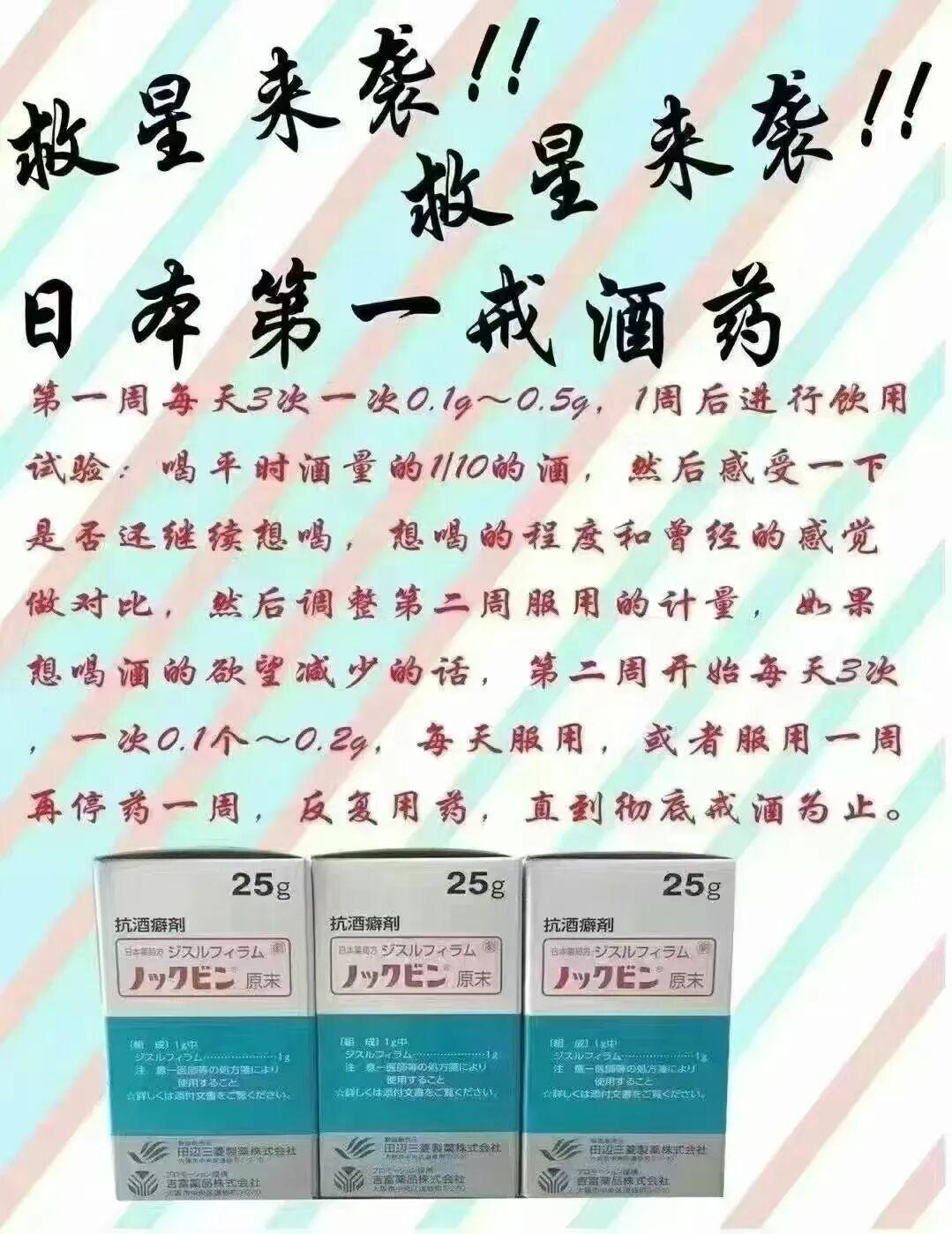
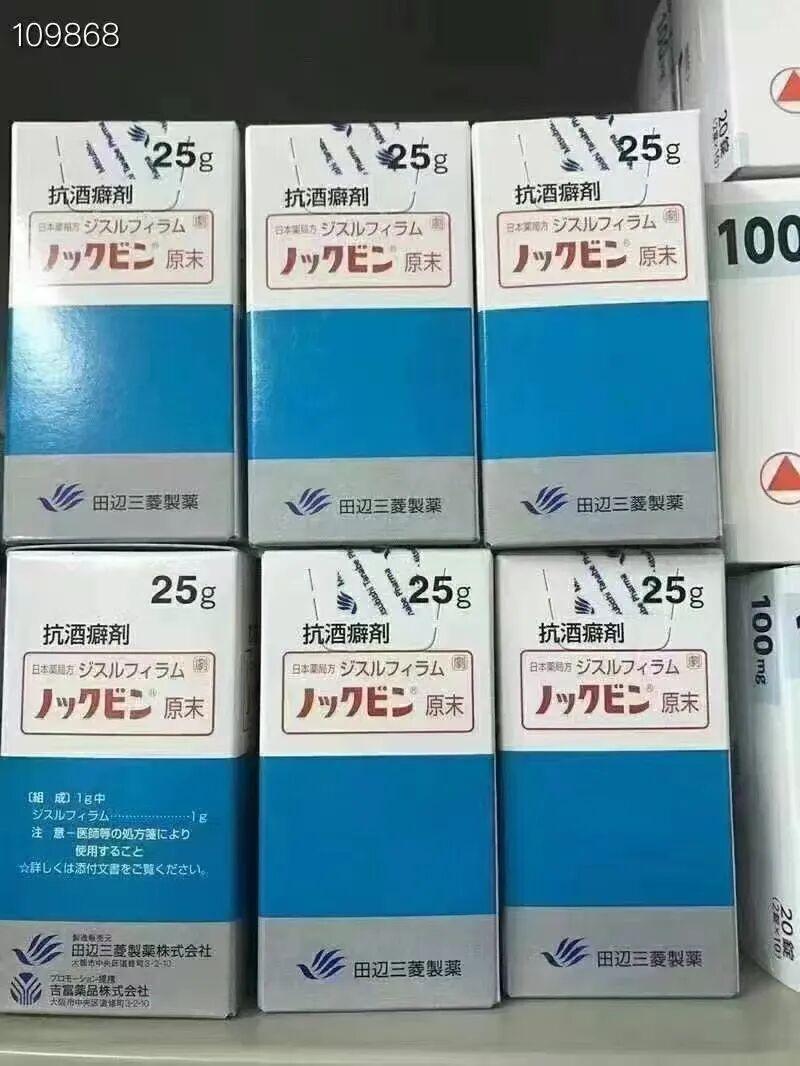
日本語原題:ノックビン原末

Published2025-05-30 13:50 Maker田辺三菱 Content9 sections / 2 images
English translation of the Japanese package insert is the main text; the Japanese original is shown alongside for verification. Use the language menu (top right) to read the page in another language. This site is for reference only — consult a doctor or pharmacist before use.
Section 1 · 01
English translation
Feature Description 1. By inhibiting aldehyde dehydrogenase in the liver, it increases blood acetaldehyde levels during drinking. 2. Acute symptoms such as facial flushing, fever, headache, nausea, and vomiting appear 5~10 minutes after alcohol consumption. 3. Sensitivity to alcohol persists for at least 14 days after taking disulfilam.
Section 2 · 02
English translation
Specifications 25g。
Section 3 · 03
English translation
Characteristics White ~ with a yellowish-white tint, crystalline powder.
Section 4 · 04
English translation
Ingredient Information Active ingredient (per 1g): Nippon Disulfiram 1g.
Section 5 · 05
English translation
Indications Anti-alcohol therapy for chronic alcoholism.
Section 6 · 06
English translation
Dosage and Administration As disulfiram, it is usually administered orally in divided doses of 0.1~0.5g per day, divided into 1~3 doses. For the usual alcohol consumption test conducted after one week of administration of this drug, the patient's normal alcohol intake is reduced to less than one-tenth of their usual alcohol consumption. Adjust the dosage and maintain the dose according to the severity of symptoms presented by the alcohol test. The maintenance dose is usually 0.1~0.2g, and the medication is either continued daily or with a one-week break every week.
Section 7 · 07
English translation
Notes 1. Before treatment with this drug, explain the reactions to alcohol consumption while taking this drug and obtain the consent of the patient and their family. Also, hospitalization is preferable until the sobriety test is completed. 2. Before administration, check for any alcohol residue in the body. 3. Do not consume alcohol without a doctor's instructions while taking this medication. 4. While taking this drug, thoroughly instruct the patient to avoid consuming foods containing alcohol (such as Nara-zuke) and cosmetics containing alcohol (such as after-shave lotions). 5. During the alcohol test, sudden disulfilam-alcohol reactions (facial flushing, blood pressure drop, chest tightness, palpitations, dyspnea, fainting, headache, nausea or vomiting, dizziness, hallucinations, confusion, convulsions, etc.) may occur. Therefore, conduct the alcohol test carefully, considering individual differences in dosage, amount of alcohol intake, and drinking speed. If symptoms are severe, appropriate measures such as oxygen therapy, vasopressors, and intravenous fluids should be taken. 6. Do not conduct a breathalyzer test for one week after starting administration of this drug. 7. Regularly perform liver function tests during administration of this drug. 8. Drowsiness, decreased attention, concentration, and reflex motor skills may occur, so patients receiving this drug should be careful not to engage in operating dangerous machinery such as driving a car.
Section 8 · 08
English translation
Side Effects 1. Psychiatric and nervous system (less than 0.1%) There have been reports of severe brain damage (disorientation, memory impairment, confusion, etc.). 2. Liver dysfunction and jaundice (both of unknown frequency) Liver dysfunction accompanied by elevated levels of AST, ALT, γ-GTP, LDH, ALP, and bilirubin may occur, as well as jaundice. 3. Other side effects (1) Neuropsychiatric system: depression, emotional instability, hallucinations, confusion, delirium (sometimes due to alcohol withdrawal), headache, dizziness, tinnitus, drowsiness, sleep disturbances. (2) Hypersensitivity: rash. (3) Peripheral nervous system: carpal tunnel syndrome, polyneuritis, peripheral neuritis (in cases of long-term administration). (4) Eyes: Optic neuritis (in cases of long-term administration). (5) Digestive system: loss of appetite, diarrhea, abdominal pain, abdominal tension, constipation. (6) Others: fatigue, impotence, heat sensation, joint pain.
Section 9 · 09
English translation
taboo 1. Patients with severe heart impairment [There is a risk of worsening of the underlying disease. ] 2. Patients with severe liver or kidney dysfunction 3. Patients with severe respiratory diseases [there is a risk of worsening of the underlying disease. ] 4. Patients using or consuming alcohol-containing pharmaceuticals (elixirs, medicinal liquors, etc.), food products (such as Nara-pickle), or cosmetics (such as after-shave lotions) 5. Pregnant women or women who may be pregnant

Source images

2 images

Need help sourcing Japanese medicines or OEM production?

💬