Ketotifen
日本語原題:ケトチフェンカプセル1mg「NIG」
In one capsule, 1.38 mg of ketotifen fumarate (equivalent to 1 mg of ketotifen).
Source images
2 imagesThe artwork keeps its original Japanese/Chinese lettering. Open “Text in this image” under a picture to read what it says in your language (machine-read, may contain errors).
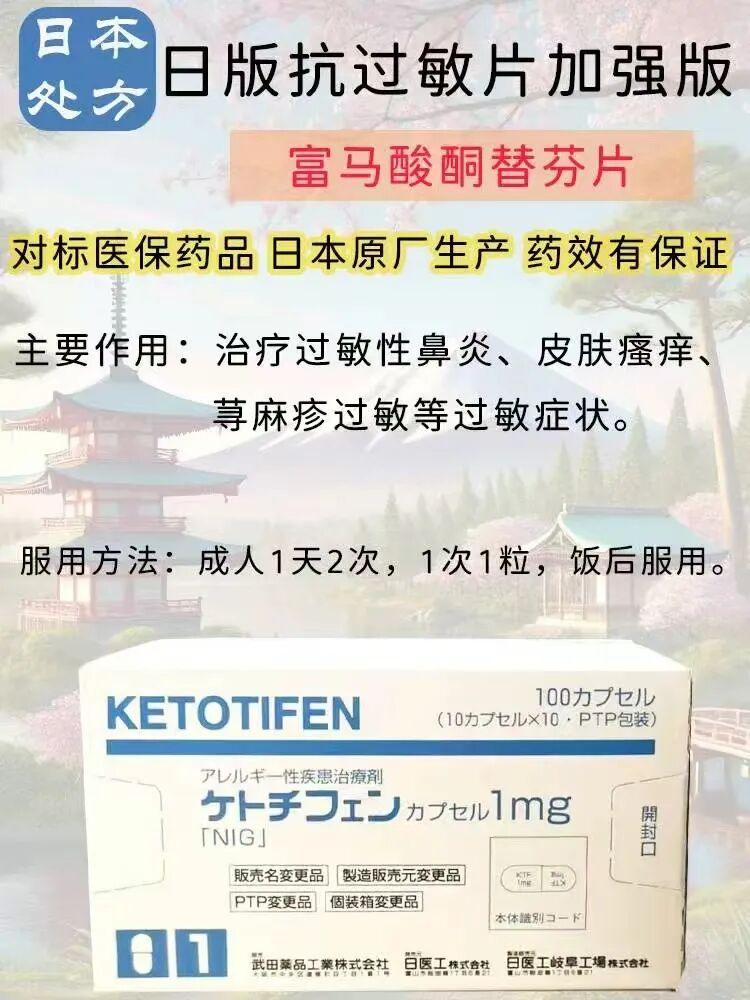
Text in this image machine-read · may contain errors
Japanese version of the anti-allergy tablet enhanced version Ketotifen Fumarate Tablets Guaranteed efficacy in Japanese factory production of medically insured drugs Main effects: Treats allergic rhinitis and skin itching Allergic symptoms such as urticaria. Directions for administration: Adults take 1 capsule twice a day, after meals. 1C0 Capsule KETOTIFEN (10 Li Qi'er X10· PTP packaging) Allerky Disease Treatments Ketochikoen Capsules 1 mg Open Infant Shell Variant Shell Name Change Product Packaging Changes PTP Variant Takeda Vegetable Craft Co., Ltd. Hyakuiko Kikan Factory Core Company
日版抗过敏片加强版 富马酸酮替芬片 对标医保药品日本原厂生产药效有保证 主要作用:治疗过敏性鼻炎、皮肤瘙痒 荨麻疹过敏等过敏症状。 服用方法:成人1天2次,1次1粒,饭后服用。 1C0 カプセル KETOTIFEN (10力七儿X10·PTP包装) アレルキー性疾患治療剤 ケトチコェンカプセル 1 mg 開 婴造壳元变更品 壳名变更品 圖装箱变更品 PTP变更品 武田菜品工菜株式会社 百医工岐旱工场核式会社
Japanese version of the anti-allergy tablet enhanced version Ketotifen Fumarate Tablets Guaranteed efficacy in Japanese factory production of medically insured drugs Main effects: Treats all…
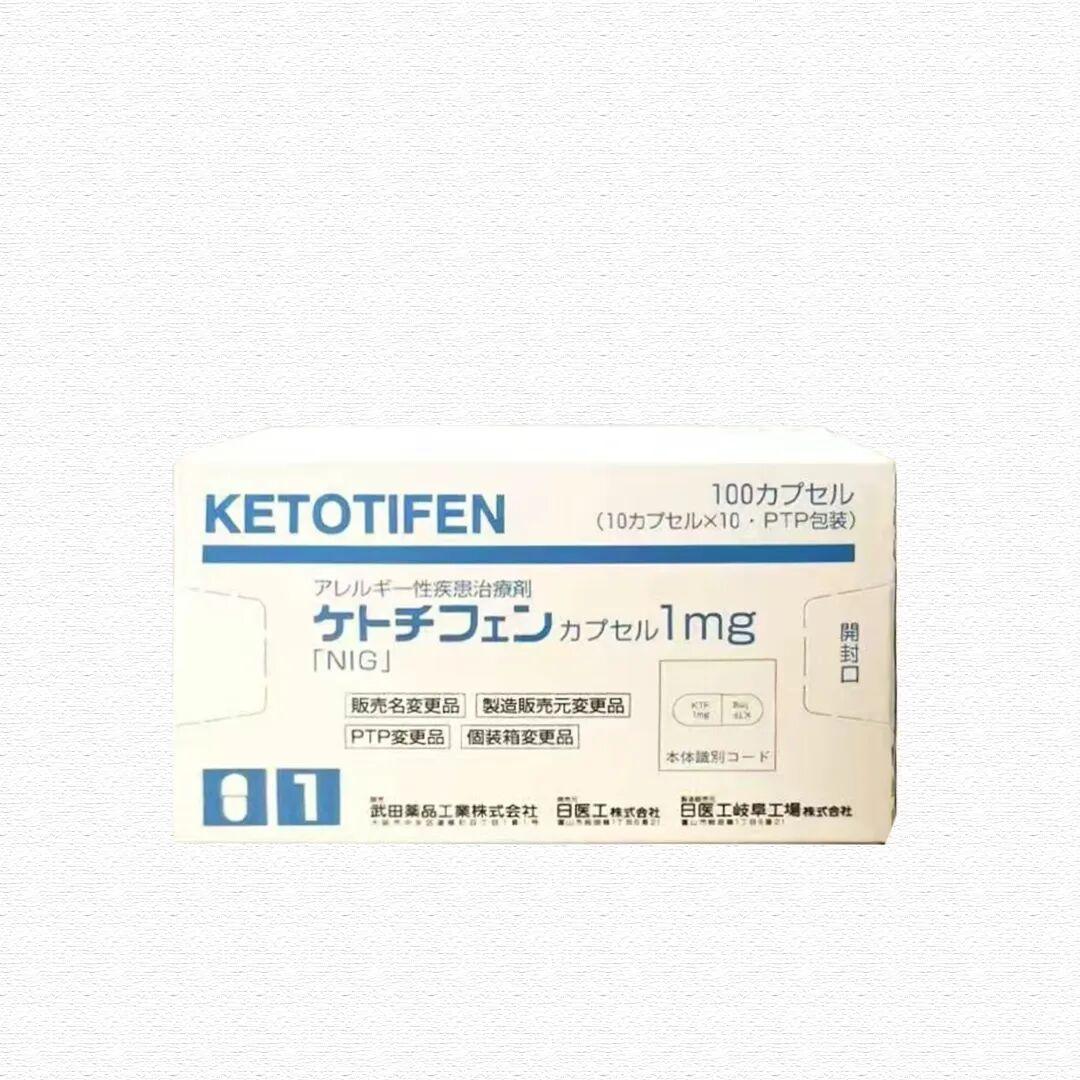
Text in this image machine-read · may contain errors
1 round capsule KETOTIFEN (10 Liqi x 10 PTP packaging) Allerky Disease Treatments Ketochikoen Capsules LMG Open Shell Name Change Product Baby Edition Shell Unit Modification Packing Changes PTP Upgrade Takeda Tea Products Co., Ltd.
1 圓カプセル KETOTIFEN (10力七X10PTP包装) アレルキー性疾患治療剤 ケトチコェンカプセル lmg 開 版壳名变更品 婴造版壳元变更品 装箱变更品 PTP更品 武田茶品工業株式会社
1 round capsule KETOTIFEN (10 Liqi x 10 PTP packaging) Allerky Disease Treatments Ketochikoen Capsules LMG Open Shell Name Change Product Baby Edition Shell Unit Modification Packing Changes…