Loxoprofen Sodium
日本語原題:ロキソプロフェンNa錠 60mg「トーワ」
Japanese Bureau Loxoprofen Sodium Hydrate 68.1mg (60mg as anhydrous).
Source images
6 imagesThe artwork keeps its original Japanese/Chinese lettering. Open “Text in this image” under a picture to read what it says in your language (machine-read, may contain errors).
Text in this image machine-read · may contain errors
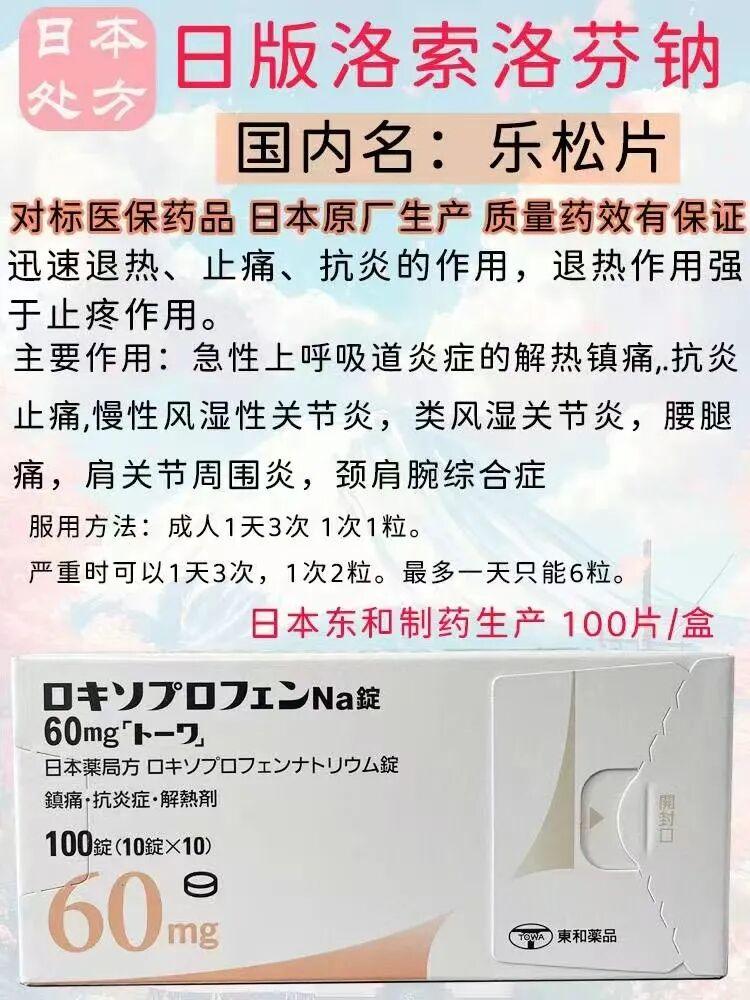
Japanese version of loxoprofen sodium Domestic name: Lesong Tablets Guaranteed quality and efficacy are guaranteed in accordance with the original Japanese production of medical insurance drugs Rapid fever-relieving, pain-relieving, and anti-inflammatory effects, with strong fever-reducing effects For analgesic effects. Main effects: Antipyretic and analgesic for acute upper respiratory tract inflammation, anti-inflammatory Pain relief for chronic rheumatoid arthritis, rheumatoid arthritis, waist and legs Pain, periarthritis of the shoulder, neck-shoulder-wrist syndrome Dosage: Adults, 1 capsule three times a day. In severe cases, two capsules can be taken three times a day. Maximum 6 capsules per day. Towa Pharmaceutical in Japan produces 100 tablets/box 60mg-7 Japanese prescription loxoprofen sodium tablets 100 ingots (10 ingots ×10)
日版洛索洛芬钠 国内名:乐松片 对标医保药品日本原厂生产质量药效有保证 迅速退热、止痛、抗炎的作用,退热作用强 于止疼作用。 主要作用:急性上呼吸道炎症的解热镇痛,抗炎 止痛慢性风湿性关节炎,类风湿关节炎,腰腿 痛,肩关节周围炎,颈肩腕综合症 服用方法:成人1天3次1次1粒。 严重时可以1天3次,1次2粒。最多一天只能6粒。 日本东和制药生产100片/盒 60mg-7 日本局方ロキソプロフェンナトリウム錠 100锭(10锭×10)
Japanese version of loxoprofen sodium Domestic name: Lesong Tablets Guaranteed quality and efficacy are guaranteed in accordance with the original Japanese production of medical insurance dr…
Text in this image machine-read · may contain errors
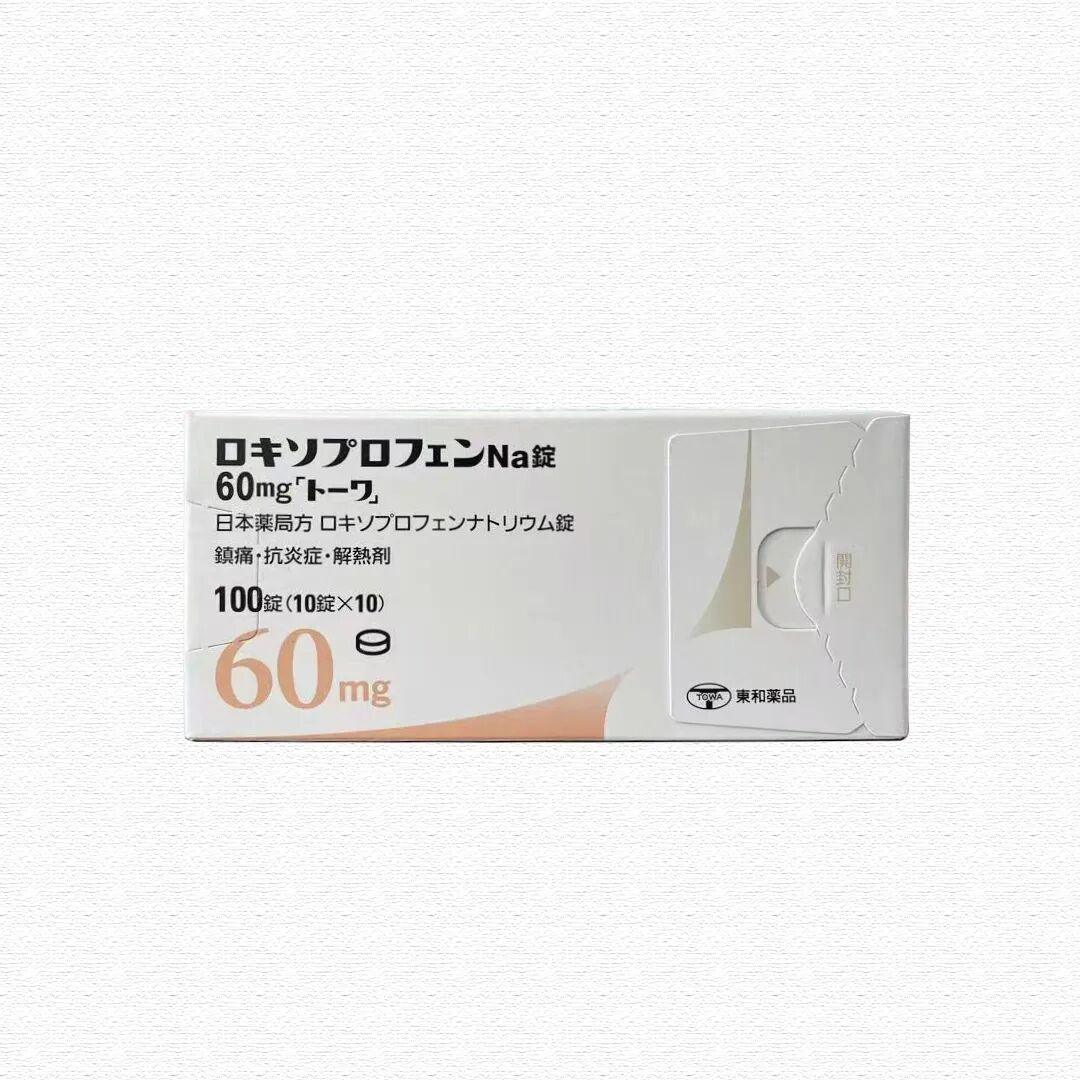
Loxoprofen Na Tablets 60mg-7 Japanese Pharmacopoeia Loxoprofen Sodium Tablets Pain · Anti-inflammatory · Anti-ripening Agent 100 ingots (10 ingots ×10)
ロキソプロフェン Na 錠 60mg-7 日本薬局方ロキソプロフェンナトリウム錠 痛·抗炎症·解熟劑 100锭(10锭×10)
Loxoprofen Na Tablets 60mg-7 Japanese Pharmacopoeia Loxoprofen Sodium Tablets Pain · Anti-inflammatory · Anti-ripening Agent 100 ingots (10 ingots ×10)…
Text in this image machine-read · may contain errors
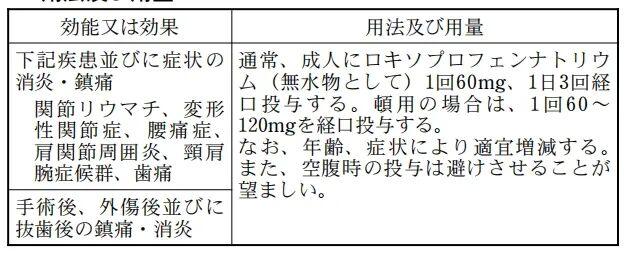
Usage and dosage for women Mo (Anhydrous 7L) 60mg per dose, three times a day Anti-inflammatory and analgesic 120mg is administered orally as an inch. Threshold myosis, low back pain, Record 0 for bookkeeping, age, and symptoms, and adjust accordingly. Arm syndrome, bacterial pain Bakinjunjun's analgesic and anti-inflammatory effects
用法及女用量 么(無水物七L)1回60mg、1日3回释 消炎·镇痛 120mg在释口投与寸了。 性阈筋症、腰痛症、 办书、年龄、症状记上0適宜增减了。 腕症候群、菌痛 拔菌俊の镇痛·消炎
Usage and dosage for women Mo (Anhydrous 7L) 60mg per dose, three times a day Anti-inflammatory and analgesic 120mg is administered orally as an inch. Threshold myosis, low back pain, Record…
Text in this image machine-read · may contain errors
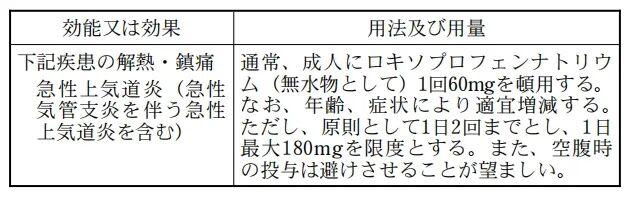
Dosage and Administration for Women Decoupling and pain relief for the following diseases (Anhydrous 7L) 60mg per application is used at once. Acute upper hydrogenitis (acute , year, and symptoms should be adjusted appropriately. Ductitis with 5 acute accompaniments , Hara, twice a day, 1 day The maximum 180mg is at the limit 7. , On an empty stomach It is desirable to avoid administration.
用法及女用量 下記疾患の解熟·镇痛 么(無水物七L)1回60mg顿用寸了。 急性上氢道炎(急性 、年、症状匕0適宜增减。 管支炎走伴5急性 、原1日2回、1日 最大180mg在限度七了。、空腹时 の投与は避けさせることが望ましい。
Dosage and Administration for Women Decoupling and pain relief for the following diseases (Anhydrous 7L) 60mg per application is used at once. Acute upper hydrogenitis (acute , year, and sym…
Text in this image machine-read · may contain errors
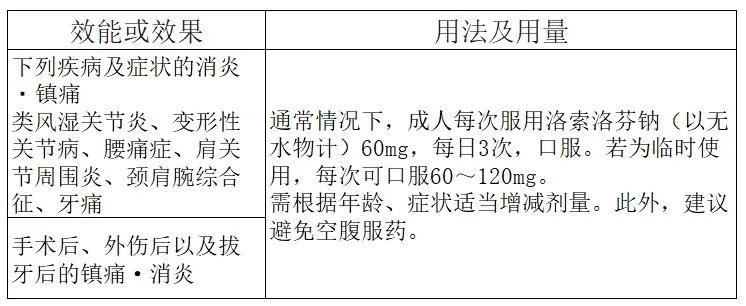
Performance or effect Usage and dosage Anti-inflammatory treatment for the following diseases and symptoms Typically, adults take loxoprofen sodium each time (without Rheumatoid arthritis, deformities Water calculation) 60mg, three times daily, oral. as if serving as a temporary envoy Joint diseases, lower back pain, shoulder joints Oral administration of 60~120mg per dose. Periarthritis of the ganglia, combined neck, shoulder, and wrist Zheng, toothache Dosage should be adjusted appropriately according to age and symptoms. Additionally, the suggestion Avoid taking the medicine on an empty stomach. Post-surgery, post-trauma, and extraction Pain relief and anti-inflammatory effects behind the teeth
效能或效果 用法及用量 下列疾病及症状的消炎 通常情况下,成人每次服用洛索洛芬钠(以无 类风湿关节炎、变形性 水物计)60mg,每日3次,口服。若为临时使 关节病、腰痛症、肩关 用,每次可口服60~120mg。 节周围炎、颈肩腕综合 征、牙痛 需根据年龄、症状适当增减剂量。此外,建议 避免空腹服药。 手术后、外伤后以及拔 牙后的镇痛·消炎
Performance or effect Usage and dosage Anti-inflammatory treatment for the following diseases and symptoms Typically, adults take loxoprofen sodium each time (without Rheumatoid arthritis, d…
Text in this image machine-read · may contain errors
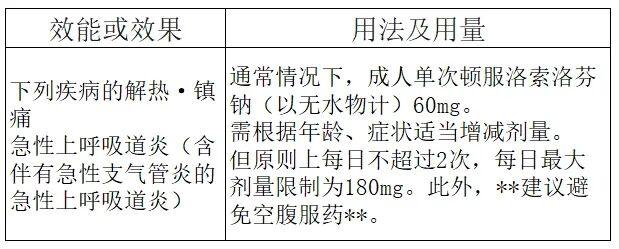
Performance or effect Usage and dosage Typically, adults take a single single dose of losoprofen Fever reduction and calming for the following diseases Sodium (as anhydrous) 60mg. Dosage should be adjusted appropriately according to age and symptoms. Acute upper respiratory tract infection (including: But in principle, no more than twice a day, with a maximum of one per day Accompanied by acute bronchitis The dosage limit is 180 mg. Additionally, ** it is recommended to avoid it Acute upper respiratory tract infection) Avoid taking the medicine on an empty stomach**.
效能或效果 用法及用量 通常情况下,成人单次顿服洛索洛芬 下列疾病的解热·镇 钠(以无水物计)60mg。 需根据年龄、症状适当增减剂量。 急性上呼吸道炎(含 但原则上每日不超过2次,每日最大 伴有急性支气管炎的 剂量限制为180mg。此外,**建议避 急性上呼吸道炎) 免空腹服药**。
Performance or effect Usage and dosage Typically, adults take a single single dose of losoprofen Fever reduction and calming for the following diseases Sodium (as anhydrous) 60mg. Dosage sho…