Urology & Kidney · URINARY

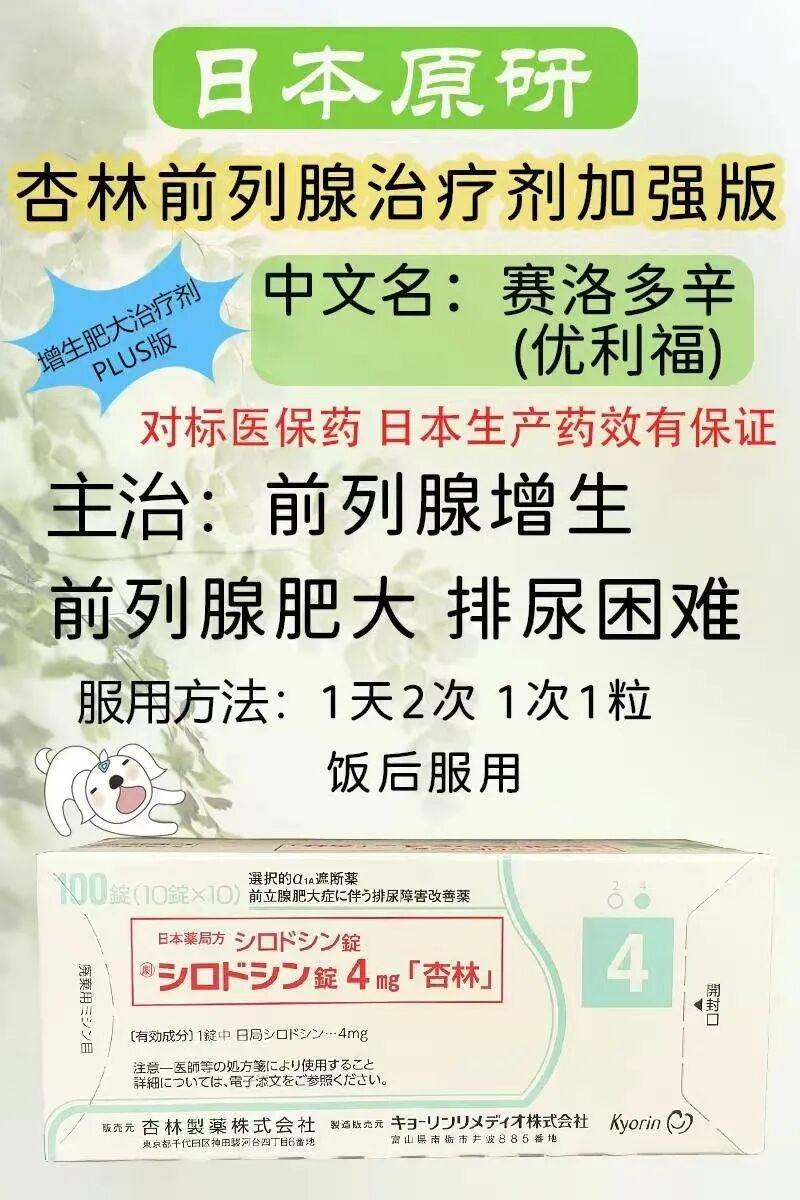
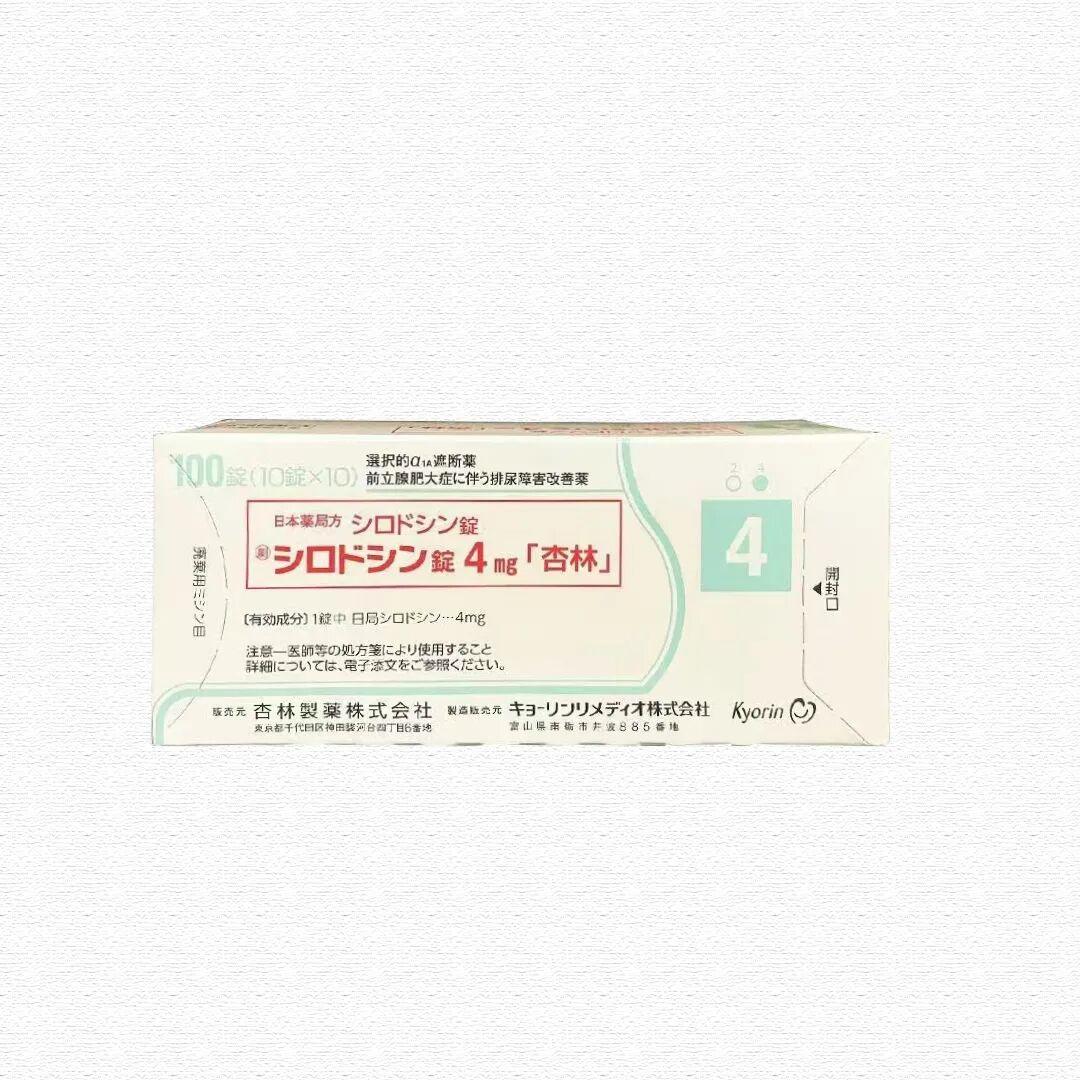
Silodosin

日本語原題:シロドシン錠4mg「杏林」

Published2025-06-09 02:44 Maker杏林 FormTablet Content9 sections / 2 images
English translation of the Japanese package insert is the main text; the Japanese original is shown alongside for verification. Use the language menu (top right) to read the page in another language. This site is for reference only — consult a doctor or pharmacist before use.
Section 1 · 01
English translation
Feature Description By blocking the sympathetic nervous system mediated by the α1A-adrenergic receptor subtype distributed in the lower urinary tract tissues such as the prostate, urethra, and bladder triangle, it relieves tension in the smooth muscle of lower urinary tract tissues, suppresses the increase in urethral pressure, and improves urinary disorders associated with benign prostatic hyperplasia.
Section 2 · 02
English translation
Specifications 100 tablets [10 tablets (PTP)×10].
Section 3 · 03
English translation
Characteristics White ~ slightly yellowish-white, film-coated tablets with a split line.
Section 4 · 04
English translation
Ingredient Information Active ingredient (per tablet): Nippon Shilodosin 4mg. Additives: D-mannitol, partially alpha-starch, hydroxypropyl cellulose, talc, magnesium stearate, hypromellose, titanium oxide, carnauballow.
Section 5 · 05
English translation
Indications Urinary disorders associated with benign prostatic hyperplasia.
Section 6 · 06
English translation
Dosage and Administration Typically, adults are given 4 mg of psilodocine orally twice daily after breakfast and dinner. Dose reduction is appropriately adjusted according to symptoms.
Section 7 · 07
English translation
Notes 1. This drug has a high incidence of side effects, and ejaculation disorders are frequently observed as a characteristic side effect. Therefore, when using this drug, carefully assess the risks of this drug and thoroughly explain the side effects to the patient. 2. Orthostatic hypotension may occur, so pay attention to blood pressure changes caused by changing position. 3. Dizziness and other symptoms may occur, so caution is advised when engaging in hazardous tasks such as working at heights or driving a car. 4. At the start of this drug, conduct a medical examination regarding the presence or absence of antihypertensive drugs. If antihypertensive drugs are being administered, monitor blood pressure changes, and if blood pressure drops, take appropriate measures such as reducing the dose or discontinuing the medication.
Section 8 · 08
English translation
Side Effects 1. Fainting or loss of consciousness (frequency unknown) Transient loss of consciousness due to low blood pressure may occur. 2. Liver dysfunction (frequency unknown), jaundice (frequency unknown) Liver dysfunction accompanied by elevated AST and ALT may occur, and jaundice may occur. 3. Other side effects (1) Urinary and reproductive organs: ejaculation disorders (such as retrograde ejaculation) (17.2%), impotence, urinary incontinence. (2) Digestive system: dry mouth, stomach discomfort, diarrhea, soft stools, constipation, vomiting, nausea, loss of appetite, stomach pain, abdominal pain, abdominal bloating, upper abdominal discomfort, lower abdominal pain, gastric ulcers, gastritis, atrophic gastritis, heartburn, stomach heaviness, duodenal ulcers, increased flatulence, increased frequency of bowel movements, feeling of residual stool, anal discomfort, stomatitis. (3) Neuropsychiatric system: dizziness, lightheadedness, unsteadiness, headache, stiff shoulders, feeling dull in the head, drowsiness, decreased libido, heaviness in the head, numbness. (4) Respiratory: nosebleeds, nasal obstruction, nasal discharge, cough. (5) Cardiovascular system: atrial fibrillation, palpitations, tachycardia, arrhythmia, supraventricular ecsystoles, orthostatic hypotension, hypotension, elevated blood pressure. (6) Hypersensitivity: rash, rash, eczema, urticaria, itching, lip swelling, tongue swelling, pharyngeal edema, facial swelling, eyelid edema. (7) Eyes: Eye redness, eye itching, conjunctival hemorrhage, intraoperative hypotonic syndrome (IFIS), blurred vision. (8) Liver: increased AST, increased ALT, increased γ-GTP, increased total bilirubin, increased AlP, increased LDH. (9) Kidneys: increased BUN, increased creatinine. (10) Blood: decreased white blood cell count, decreased red blood cell count, decreased hemoglobin count, decreased hematocrit value, increased white blood cell count, decreased platelet count. (11) Others: elevated triglycerides, fatigue, increased CRP, increased total cholesterol, increased urine glucose, increased urine sediment, facial flushing, tinnitus, bitter taste, chest pain, lower back pain, weakness in the lower limbs, sweating, hot flashes, malaise, elevated serum potassium, decreased total protein, increased prostate-specific antigen, increased uric acid, increased uric protein, edema, gynecomastia.
Section 9 · 09
English translation
taboo Patients with a history of hypersensitivity to any component of this drug.

Source images

2 images

Need help sourcing Japanese medicines or OEM production?

💬