Ambroxol Hydrochloride
日本語原題:アンブロキソール塩酸塩錠 15mg「ZE」
Source images
2 imagesThe artwork keeps its original Japanese/Chinese lettering. Open “Text in this image” under a picture to read what it says in your language (machine-read, may contain errors).
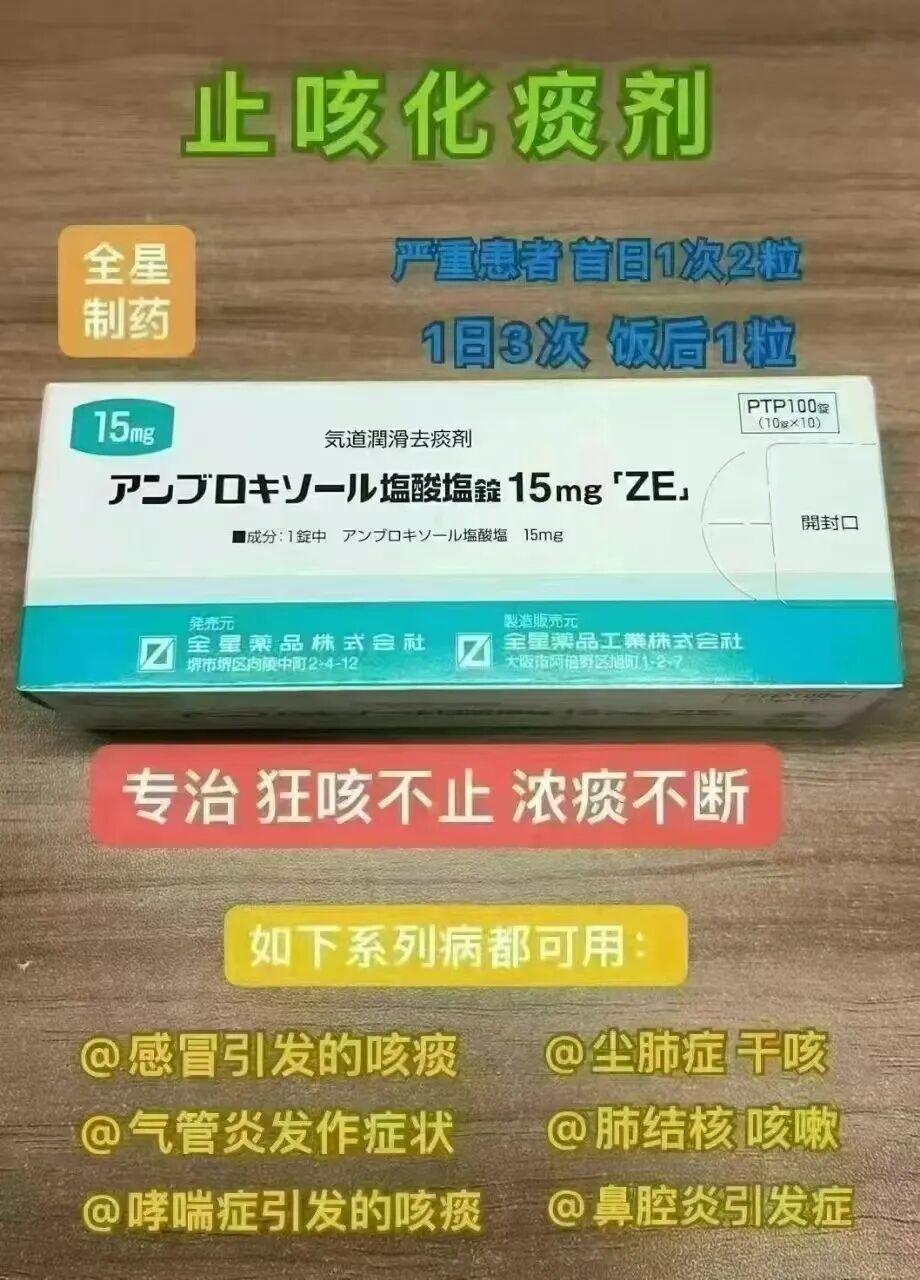
Text in this image machine-read · may contain errors
Cough Suppressant and Phlegm Agent Severe patients take 2 capsules once on the first day Take 1 capsule after meals, three times a day PTP100 15mg Daolu Expectorant Acopropel Kosan Kou Tablets 15mg rZEJ Ingredients: 1 Shin Naka Amploxol Hydrochloride 15n1g Zenboshi Vegetable Co., Ltd. Zensei Vegetable Industry Co., Ltd. 2-4-12 Xiangryo Nakacho, Zuishi Urban District Specialized for Persistent Severe Cough with Persistent Phlegm The following series of diseases can be used @尘肺症干咳 @感冒引发的咳痰 @肺结核咳嗽 @气管炎发作症状 @鼻腔炎引发症 @哮喘症引发的咳痰
止咳化痰剂 严重患者首日1次2粒 1日3次饭后1粒 PTP100 15mg 道滑去痰剂 アコプロキソール煌酸煌錠 15mg rZEJ 成分 : 1 新中アンプロキソール塩酸塩 15n1g 全星菜品株式会社 全星菜品工業株式会社 瑞市城区向陵中町2-4-12 专治狂咳不止浓痰不断 如下系列病都可用 @尘肺症干咳 @感冒引发的咳痰 @肺结核咳嗽 @气管炎发作症状 @鼻腔炎引发症 @哮喘症引发的咳痰
Cough Suppressant and Phlegm Agent Severe patients take 2 capsules once on the first day Take 1 capsule after meals, three times a day PTP100 15mg Daolu Expectorant Acopropel Kosan Kou Table…
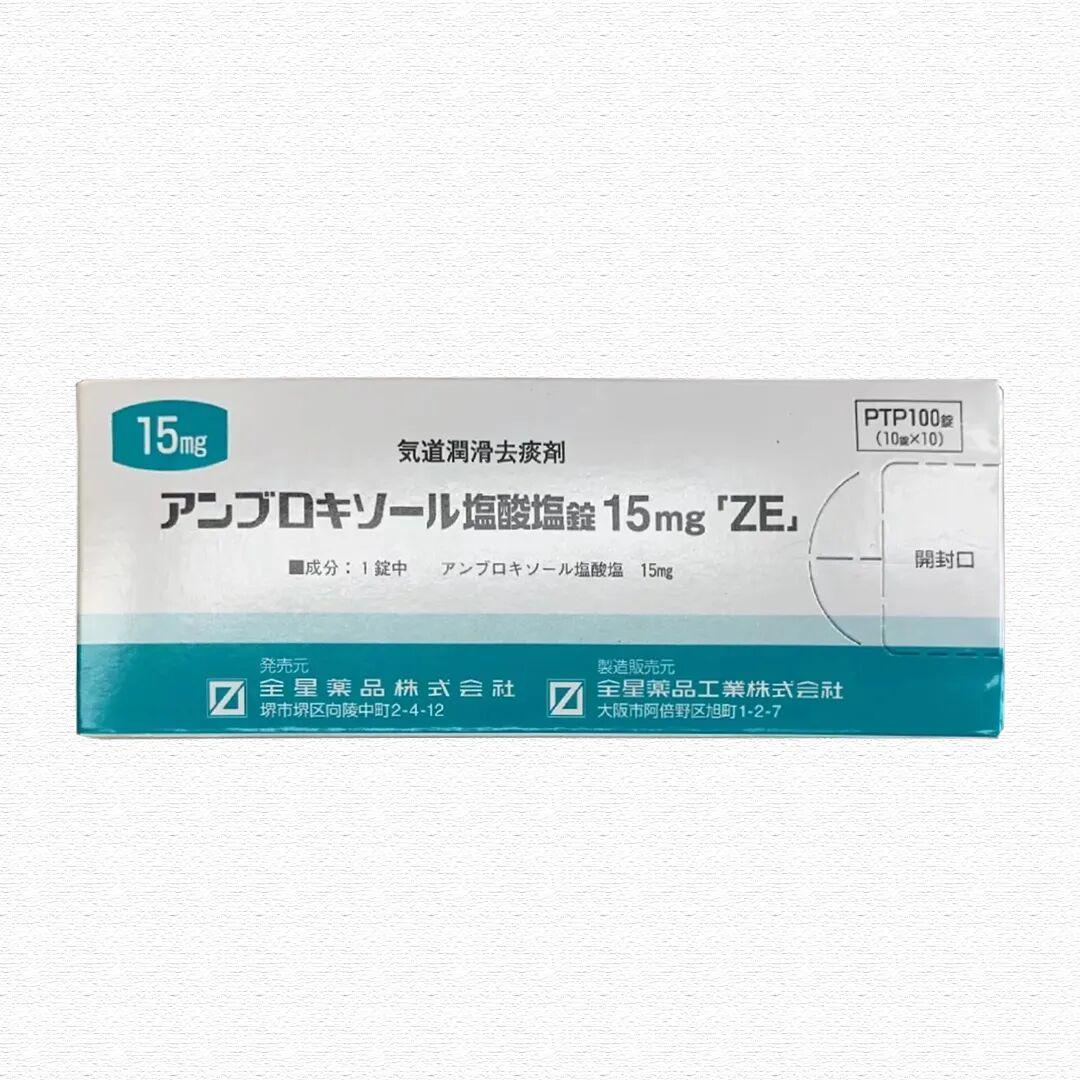
Text in this image machine-read · may contain errors
PTP100 Line 15mg open the seal Ingredients: - Amploxol Hydrochloride in tablets 15 Zenseishin Co., Ltd. Zensei Vegetable Industry Co., Ltd. 2-4-12 Mukoryo Nakacho, Shita Ward 1-2-7 Asahicho, Abeno-ku, Oban City
PTP100线 15mg 開封口 成分 : ー錠中アンプロキソール塩酸塩 15 全星品株式会社 全星菜品工業株式会社 市塔区向陵中町2-4-12 大版市阿倍野区旭町1-2-7
PTP100 Line 15mg open the seal Ingredients: - Amploxol Hydrochloride in tablets 15 Zenseishin Co., Ltd. Zensei Vegetable Industry Co., Ltd. 2-4-12 Mukoryo Nakacho, Shita Ward 1-2-7 Asahicho,…