Cardiovascular · CARDIOVASCULAR

Cabozantinib

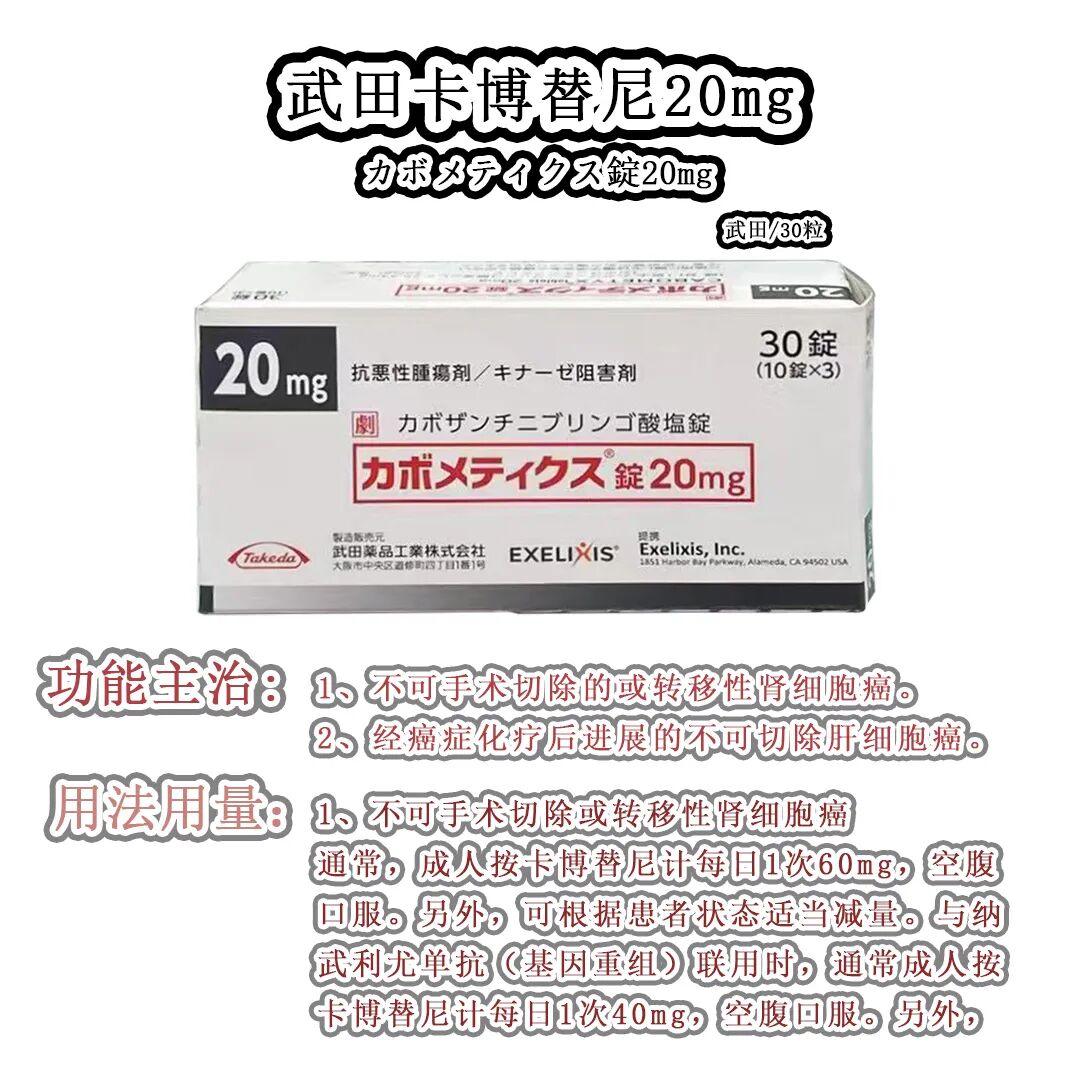
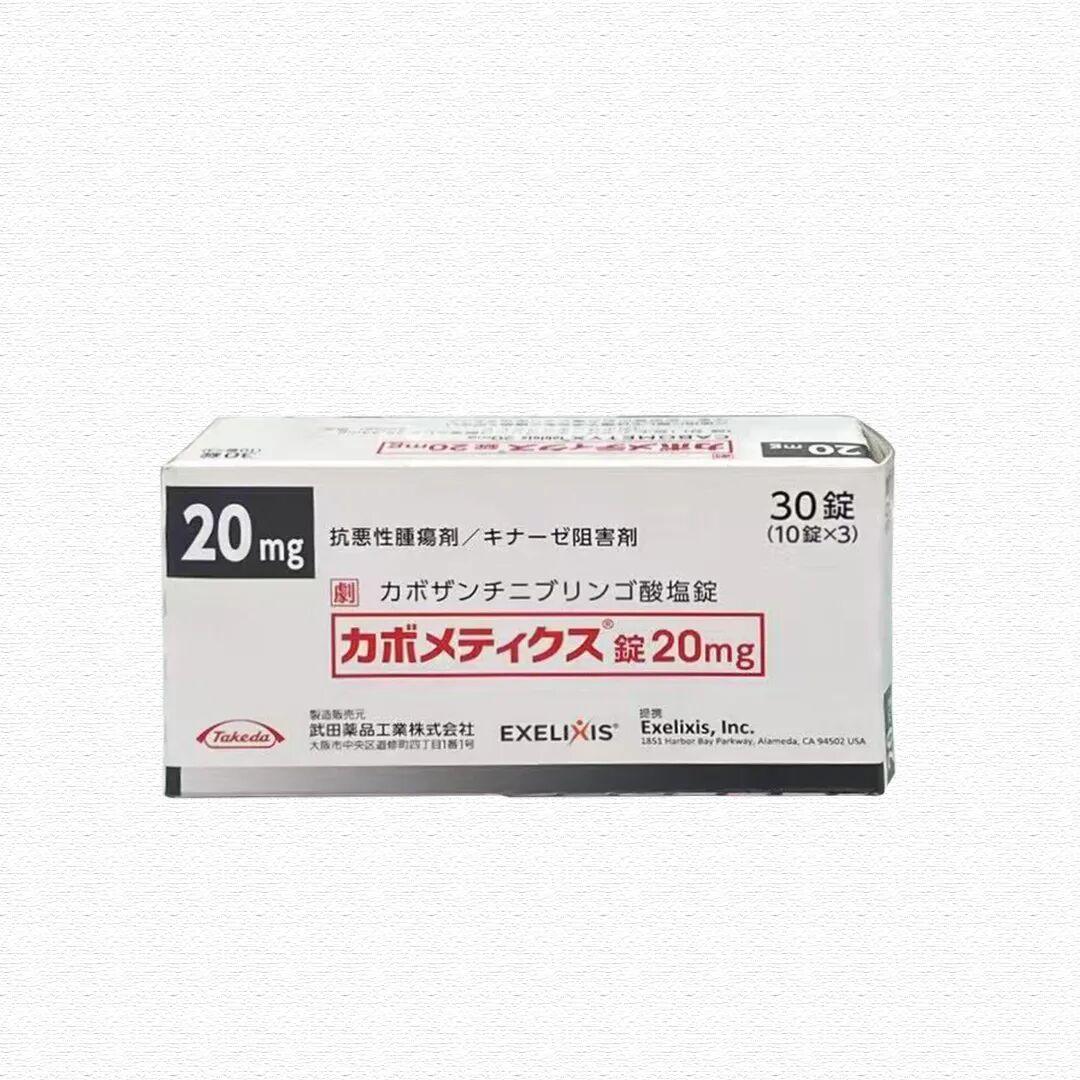
日本語原題:カボメティクス錠20mg

Published2025-06-26 19:30 Maker武田 FormTablet Content10 sections / 2 images
Ingredients / strength:
Each tablet contains 25.34 mg of cabozantinibrate (20 mg as cabozantinib).
English translation of the Japanese package insert is the main text; the Japanese original is shown alongside for verification. Use the language menu (top right) to read the page in another language. This site is for reference only — consult a doctor or pharmacist before use.
Section 1 · 01
English translation
Feature Description Cabozantinib is a small molecule compound that inhibits kinases such as vascular endothelial growth factor receptor 2 (VEGFR2), hepatocyte growth factor receptor (MET), and AXL. Cabozantinib is believed to exhibit tumor growth suppression by inhibiting signaling mediated by VEGFR2 and other enzymes.
Section 2 · 02
English translation
Specifications PTP 30 tablets (10 tablets ×3).
Section 3 · 03
English translation
Characteristics Round film-coated locks.
Section 4 · 04
English translation
Ingredient Information Active ingredient: 25.34 mg per tablet as cabozantinib (20 mg as cabozantinib). Additives: crystalline cellulose, anhydrous lactose, hydroxypropyl cellulose, croscarmellose sodium, light anhydrous silica, magnesium stearate, hypromellose, titanium dioxide, triacetin, yellow ferric oxide.
Section 5 · 05
English translation
Indications 1. Unresectable or metastatic renal cell carcinoma. 2. Unresectable hepatocellular carcinoma that has progressed after cancer chemotherapy.
Section 6 · 06
English translation
Dosage and Administration 1. Unresectable or metastatic renal cell carcinoma Typically, adults are given 60 mg once daily orally as cabozantinib on an empty stomach. Dose reduction is adjusted as needed depending on the patient's condition. When used in combination with nivolumab (recombinant), adults are typically given 40 mg once daily orally as cabozantinib on an empty stomach. Dose reduction is adjusted as needed depending on the patient's condition. 2. Unresectable hepatocellular carcinoma that has worsened after cancer chemotherapy Typically, adults are given 60 mg once daily orally as cabozantinib on an empty stomach. Dose reduction is adjusted as needed depending on the patient's condition.
Section 7 · 07
English translation
Notes 1. Hypertension may occur, so regularly measure blood pressure before starting and during the treatment period. 2. Proteinuria may occur, so regularly monitor urine protein before and during the start of administration with this drug. 3. Liver failure or liver dysfunction may occur, so regular liver function tests should be performed before and during the start and duration of administration of this drug. Since hepatic encephalopathy has been reported mainly in hepatocellular carcinoma patients, clinical symptoms such as consciousness impairment should be closely monitored. 4. Elevated serum amylase and serum lipase may occur; therefore, perform regular tests containing pancreatic enzymes before and during the treatment period. [See 11.1.7] 5. If surgical treatment is scheduled, discontinue administration of this drug before surgery, as it may delay wound healing. Resumption of administration after surgical procedures should be determined according to the patient's condition. 6. Jawbone necrosis may occur. Many reported cases are associated with invasive dental procedures on the jawbone, such as tooth extraction, or local infections. Before starting administration of this drug, check the oral management status and, if necessary, have patients undergo appropriate dental examinations and instruct them to complete invasive dental procedures as much as possible. If dental procedures become necessary during administration of this drug, instruct them to receive non-invasive dental procedures whenever possible. Also, thoroughly explain to patients the importance of keeping the oral cavity clean, undergoing regular dental check-ups, informing the dentist about the use of this drug during dental visits, and avoiding invasive dental procedures as much as possible. If any abnormalities are detected, instruct them to immediately seek dental or oral surgery consultation. ] 7. Since bone marrow suppression may occur, regularly perform hematological tests before and during the start of administration to closely monitor the patient's condition.
Section 8 · 08
English translation
Side Effects 1. Gastrointestinal perforation (0.9%), fistula (0.7%) 2. Bleeding (7.7%) Bleeding such as gastrointestinal bleeding (0.9%) and cerebral hemorrhage (0.2%) may occur. 3. Thromboembolism (4.1%) Thromboembolism may occur in cases such as pulmonary embolism (1.7%), deep vein thrombosis (0.7%), and ischemic stroke (0.2%). 4. High blood pressure (32.6%) Hypertension and hypertensive crises (frequency unknown) may occur. Take appropriate measures, such as administering antihypertensive drugs if necessary. If severe, persistent, or uncontrollable hypertension with standard antihypertensive treatment occurs, reduce the dose, discontinue the medication, or discontinue administration. If hypertensive crisis appears, discontinue administration and take appropriate measures. ] 5. Reversible Postleukoencephalopathy Syndrome (frequency unknown) If convulsions, headache, confusion, visual impairment, cortical blindness, etc. are observed, discontinue administration and take appropriate measures, including blood pressure control. 6. Jawbone necrosis (0.2%) 7. Pancreatitis (0.6%) 8. Kidney impairment (13.6%) Kidney damage such as acute renal injury (1.3%) and proteinuria (8.7%) may occur. 9. Liver failure (0.1%), liver dysfunction (34.8%) Liver failure, liver dysfunction with elevated AST and ALT, hepatic encephalopathy (0.7%), and cholestatic hepatitis (0.1%) may occur. 10. Bone marrow suppression Bone marrow suppression may occur, such as anemia (9.2%), neutropenia (8.1%), thrombocytopenia (13.3%), and lymphopenia (2.5%). 11. Ischemic heart disease (0.1%), arrhythmia (1.3%), heart failure (0.2%) 12. Rhabdomyolysis (0.2%) If muscle pain, weakness, increased CK, or increased myoglobin in blood and urine are observed, discontinue administration. Also, be cautious of the onset of acute kidney damage caused by rhabdomyolysis. 13. Interstitial lung disease (1.4%) 14. Hand-foot syndrome (44.3%) 15. Delayed wound healing (0.6%) Discontinue administration of this drug until the wound heals. 16. Severe diarrhea (8.7%) 17. Arterial dissection (frequency unknown): Arterial dissection, including aortic dissection, may occur. 18. Other side effects (1) Digestive system: diarrhea (57.2%), loss of appetite, nausea, stomatitis, vomiting, abdominal pain, indigestion, constipation, tongue pain. (2) Skin: rash, dry skin, hair loss, acne-like dermatitis, hair discoloration, erythema, hyperkeratosis, and cutaneous vasculitis. (3) Others: fatigue, taste disturbances, weight loss, hypothyroidism, voice disorders, mucosal inflammation, asthenia, floating dizziness, headache, muscle spasms, limb pain, joint pain, dehydration, peripheral neuropathy, swallowing disorders, hypomagnesemia, hypophosphatemia, hypokalemia, hypocalcemia, hypoalbuminemia, elevated amylase, elevated lipase, abscess.
Section 9 · 09
English translation
taboo Patients with a history of hypersensitivity to any component of this drug.
Section 10 · 10
English translation
Warning When administering this drug, administer it only in cases where it is deemed appropriate for cancer chemotherapy, under the care of a physician with sufficient knowledge and experience in cancer chemotherapy, at a medical institution capable of providing sufficient emergency response. Also, before starting treatment, fully explain the efficacy and risks to the patient or their family, and only administer after obtaining consent.

Source images

2 images

Need help sourcing Japanese medicines or OEM production?

💬