Respiratory · RESPIRATORY

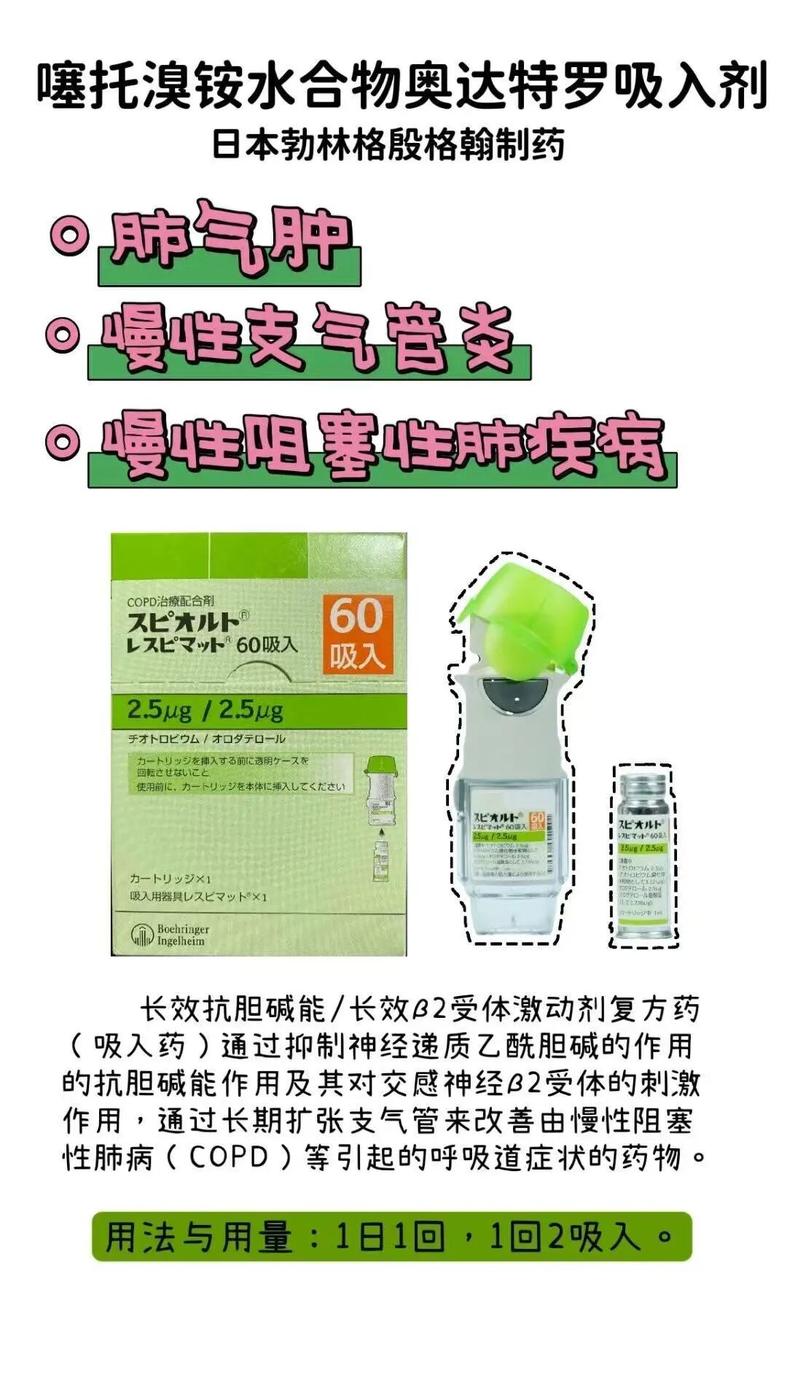
Thiotroponium bromide + Odaterol

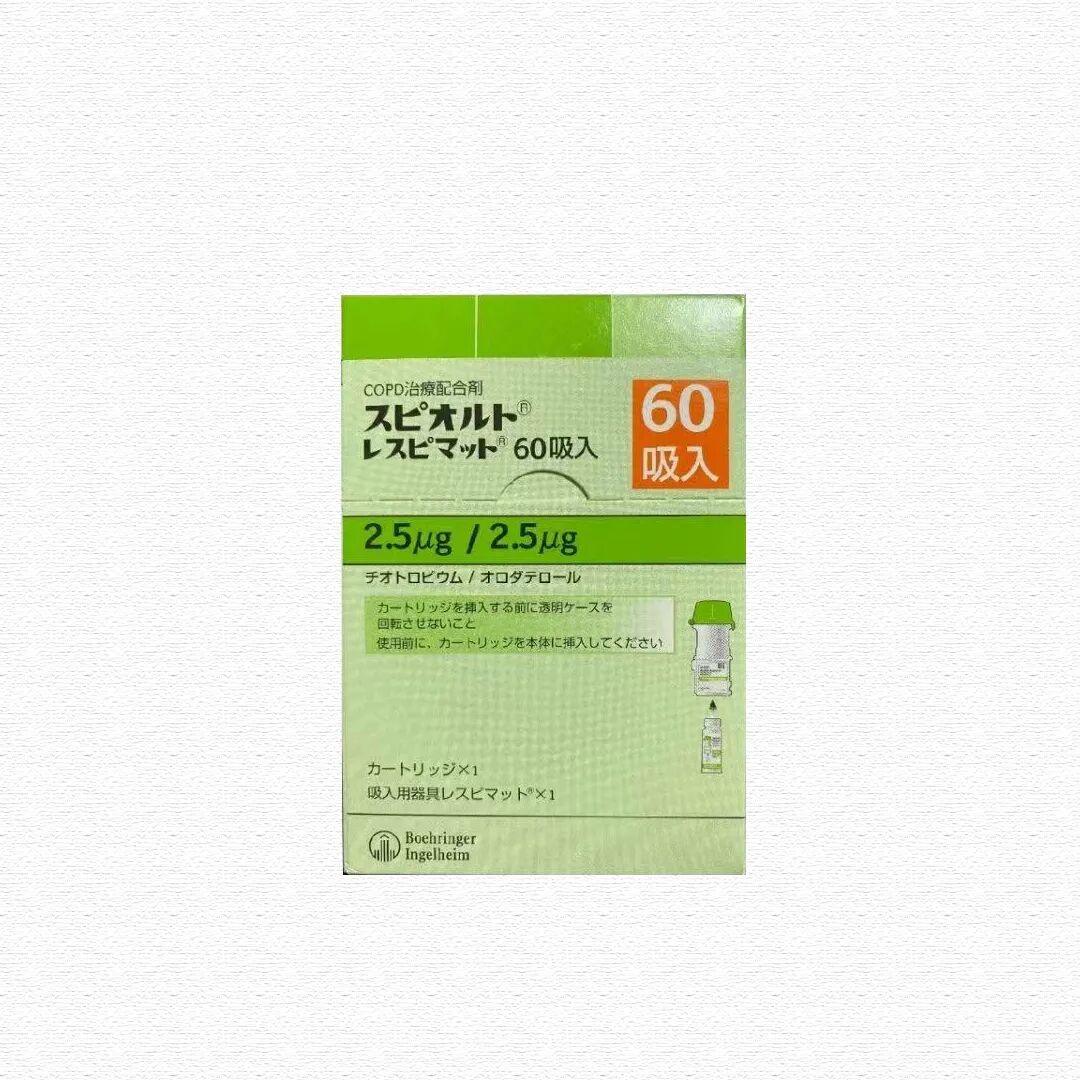
日本語原題:スピオルトレスピマット60吸入

Published2025-07-04 12:10 Content9 sections / 2 images
Ingredients / strength:
In one spray, 2.5 μg of thiotropium (3.124 μg as thiotropium bromide hydrate) and 2.5 μg of orodatarol (2.736 μg as orodaterol hydrochloride).
English translation of the Japanese package insert is the main text; the Japanese original is shown alongside for verification. Use the language menu (top right) to read the page in another language. This site is for reference only — consult a doctor or pharmacist before use.
Section 1 · 01
English translation
Feature Description Thiotropium is a long-acting selective muscarinic receptor antagonist and exhibits roughly similar affinity to the M1~M5 receptor subtypes. In the airways, it inhibits the binding of acetylcholine to M3 receptors in airway smooth muscle, thereby exerting an inhibitory effect on bronchoconstriction.
Section 2 · 02
English translation
Specifications One Respimat and one cartridge (1mL: 60 sprays [30 doses]).
Section 3 · 03
English translation
Characteristics The cartridge contains a colorless, clear liquid.
Section 4 · 04
English translation
Ingredient Information Active ingredients: 1 spray contains 2.5 μg of thiotropium (3.124 μg as thiotropium bromide hydrate) and 2.5 μg of olodaterol (2.736 μg as orodaterol hydrochloride). Additives: benzalkonium chloride, sodium edetate hydrate, purified water, hydrochloric acid.
Section 5 · 05
English translation
Indications Relief of symptoms based on airway obstructive disorders in chronic obstructive pulmonary disease (chronic bronchitis, emphysema) (when combination of long-acting inhaled anticholinergic agents and long-acting inhaled β2 agonists is required).
Section 6 · 06
English translation
Dosage and Administration Typically, adults are given two inhalations per day (5 μg of thiotropium and 5 μg of orodatarol) once daily.
Section 7 · 07
English translation
Notes 1. If no effect is observed even when used correctly according to the instructions and dosages, this drug is considered inappropriate; do not continue administration indiscriminately and discontinue it. 2. To alleviate acute symptoms, instruct patients to use other appropriate medications such as short-acting inhaled β2 agonists. Also, if the amount of medication used increases or its effectiveness is no longer sufficient, disease management may be inadequate, so patients should be advised to visit medical institutions and seek treatment from a doctor as soon as possible. 3. When using short-acting inhaled β2 agonists during administration of this drug, caution patients to use them only for relief of acute respiratory symptoms such as acute bronchospasm. 4. For inhaled medications, inhalation may induce bronchospasm; if abnormalities are observed, discontinue administration and take appropriate measures. 5. When administering this drug, instruct the patient to avoid getting it into the eyes. Additionally, if red eyes accompanied by conjunctival congestion and corneal edema accompanied by eye pain, discomfort, fog, visual halo, or irises may indicate acute angle-closure glaucoma. If these symptoms appear, advise patients to seek medical attention as soon as possible. 6. Excessive use may cause arrhythmia or, in some cases, cardiac arrest, so be careful not to overuse it. Additionally, patients should be informed about the risks of overuse of this drug, inhaled once daily, at the same time as possible, and cautioned not to administer more than once per day.
Section 8 · 08
English translation
Side Effects 1. Heart failure (frequency unknown), atrial fibrillation (less than 1%), premature contractions (less than 1%) 2. Ileus (frequency unknown) 3. Angle-closure glaucoma (frequency unknown) If vision loss, eye pain, headache, or eye redness occurs, discontinue administration and take appropriate measures. 4. Anaphylaxis (frequency unknown) Anaphylaxis (such as urticaria, angioedema, and difficulty breathing) may occur. 5. Other side effects (1) Eyes: Foggy vision, increased intraocular pressure. (2) Skin: itching, hives, hair loss, rashes, skin infections, skin ulcers, dry skin. (3) Central nervous system: Floating dizziness, insomnia. (4) Sensory organs: Taste disorders, olfactory errors. (5) Digestive system: dry mouth (1.3%) constipation, indigestion, stomatitis, glossitis, swallowing disorders, gastroesophageal reflux disease, gingivitis. (6) Metabolism: hyperuricemia, dehydration. (7) Circulatory system: palpitations, tachycardia, supraventricular tachycardia, hypertension. (8) Blood: eosinophils increase, white blood cell count. (9) Respiratory: voice disorders, cough, nosebleeds, pharyngitis, nasopharyngitis, laryngitis, oropharyngitis, throat irritation, difficulty breathing, wheezing, sinusitis, bronchospasm. (10) Urinary system: urinary disorders, urinary retention, hematuria, nocturia, increased creatinine, renal dysfunction, urinary tract infections. (11) Musculoskeletal system: joint pain, back pain, joint swelling. (12) General systemic disorders: hypersensitivity (including angioedema).
Section 9 · 09
English translation
taboo 1. Patients with angle-closure glaucoma [May increase intraocular pressure and worsen symptoms. ] 2. Patients with urinary disorders due to benign prostatic hyperplasia or similar conditions [It can also make urination difficult. ] 3. Patients with a history of hypersensitivity to atropine, its related substances, or any components of this drug

Source images

2 images

Need help sourcing Japanese medicines or OEM production?

💬