Fudosteine
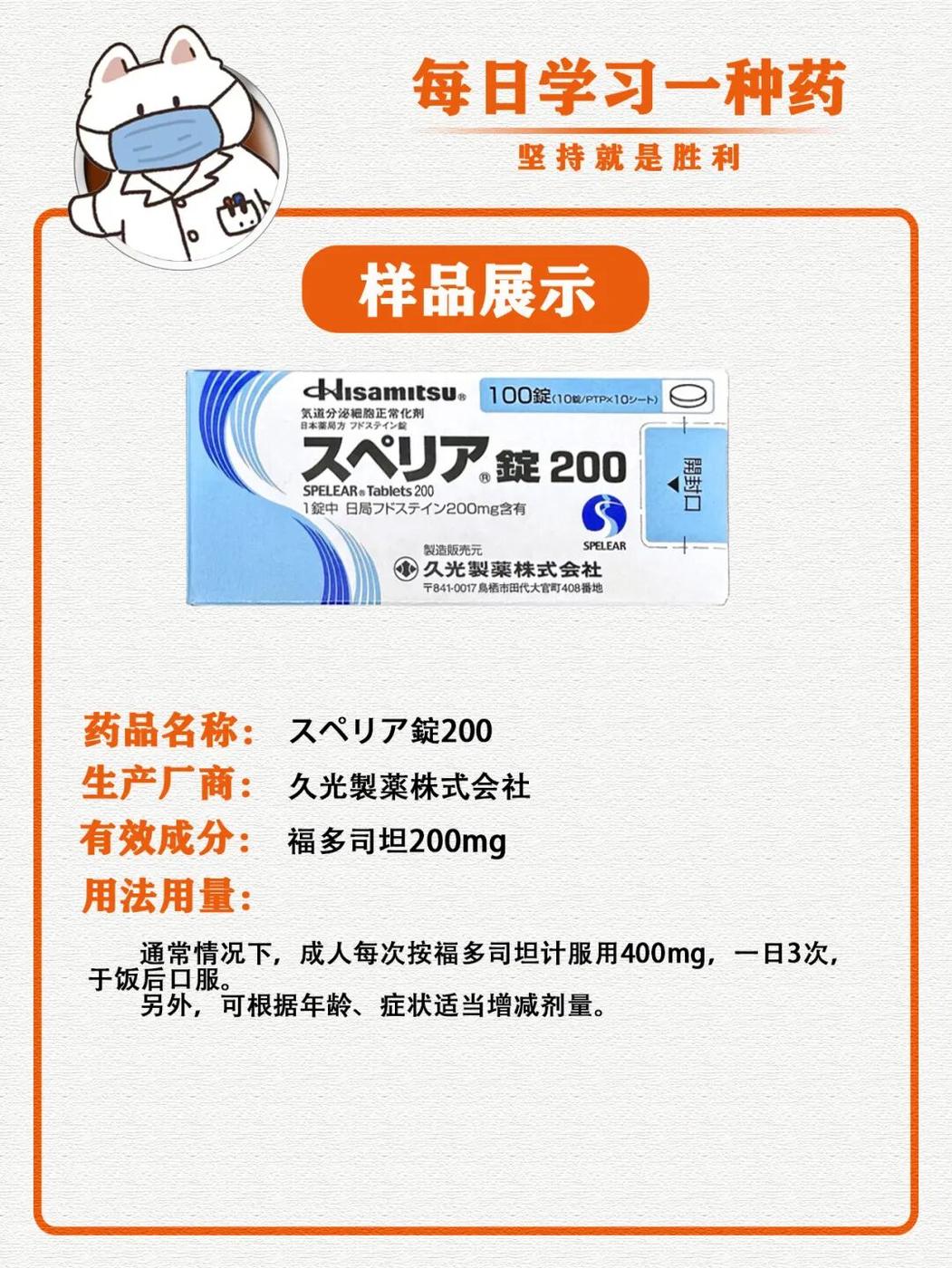
日本語原題:スペリア錠200
One tablet contains Chunichi Pharmaceuticals Fudostein 200mg.
Source images
2 imagesThe artwork keeps its original Japanese/Chinese lettering. Open “Text in this image” under a picture to read what it says in your language (machine-read, may contain errors).
Text in this image machine-read · may contain errors
isamitsu 100 tablets (10% / PTP x 10%-) Japan Bureau Kafdostein Tsuyoshi Superior Tablets 200 SPELEARTablets200 1 tablet contains Chunichi Bureau Fudostin 200Eg SPELEAR Hisamitsu Seisai Co., Ltd. Shita 841-0017 408 Tashiro Okancho, Shimasu City Drug Name: Manufacturer: Active ingredients: Fudostein 200mg Dosage and administration: Typically, adults take 400mg of Fudostein three times a day, Take orally after meals. Additionally, dosage can be adjusted appropriately according to age and symptoms.
isamitsu 100锭(10%/PTPX10%-) 日本第局カフドスタイン毅 スペリア錠 200 SPELEARTablets200 1 錠中日局フドスティン 200Eg 含有 SPELEAR 久光製菜株式会社 下841-0017岛栖市田代大官町408番地 药品名称: 生产厂商: 有效成分: 福多司坦200mg 用法用量: 通常情况下,成人每次按福多司坦计服用400mg,一日3次, 于饭后口服。 另外,可根据年龄、症状适当增减剂量。
isamitsu 100 tablets (10% / PTP x 10%-) Japan Bureau Kafdostein Tsuyoshi Superior Tablets 200 SPELEARTablets200 1 tablet contains Chunichi Bureau Fudostin 200Eg SPELEAR Hisamitsu Seisai Co.,…
Text in this image machine-read · may contain errors
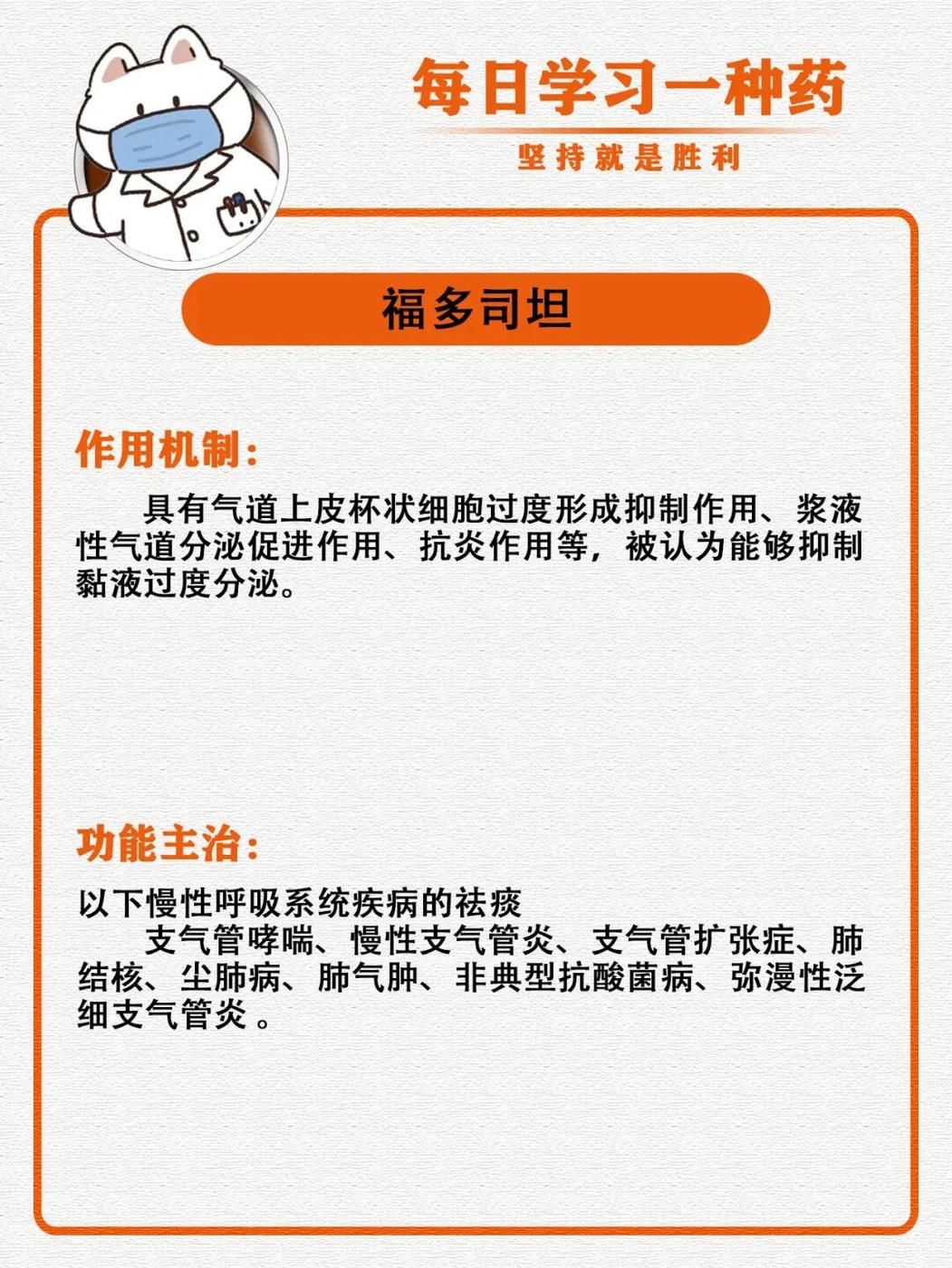
Mechanism of action: It inhibits the excessive formation of goblet cells in the airway epithelium, and has serous effects It is believed to inhibit airway secretion promotion and anti-inflammatory effects Excessive mucus secretion. Functions and indications: The following are expectorants for chronic respiratory diseases Bronchial asthma, chronic bronchitis, bronchiectasis, lungs Tuberculosis, pneumoconiosis, emphysema, atypical acid-fast bacterial disease, diffuse pantycosis Bronchiolitis. Fudostan
作用机制: 具有气道上皮杯状细胞过度形成抑制作用、浆液 性气道分泌促进作用、抗炎作用等,被认为能够抑制 黏液过度分泌。 功能主治: 以下慢性呼吸系统疾病的祛痰 支气管哮喘、慢性支气管炎、支气管扩张症、肺 结核、尘肺病、肺气肿、非典型抗酸菌病、弥漫性泛 细支气管炎。 福多司坦
Mechanism of action: It inhibits the excessive formation of goblet cells in the airway epithelium, and has serous effects It is believed to inhibit airway secretion promotion and anti-inflam…