Ethyl chlorobenzoate
日本語原題:クロルフェネシンカルバミン酸エステル錠250mg「サワイ」
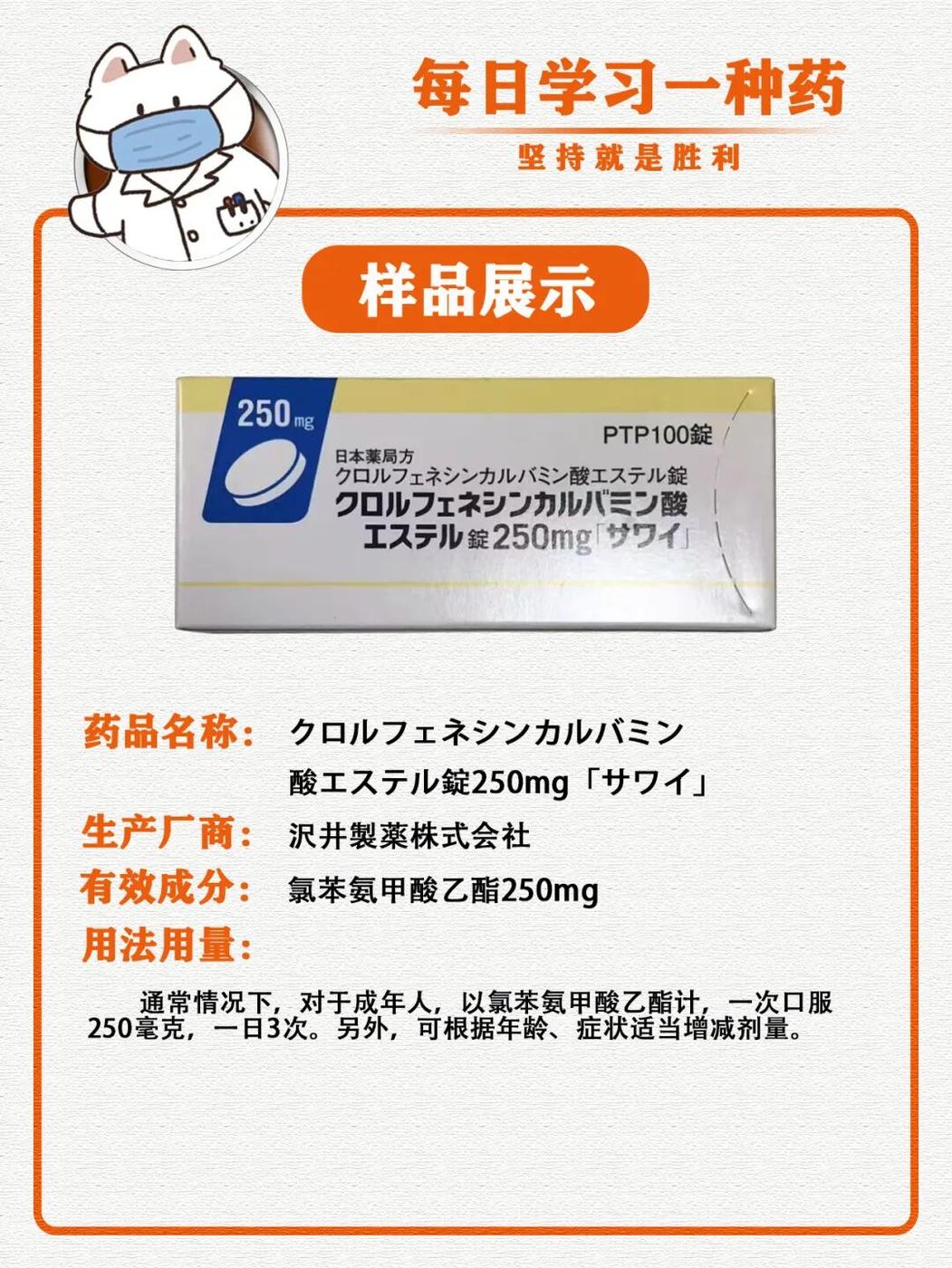
[Per tablet] Japanese Source Chlorphenesine Carbamate 250mg.
Source images
2 imagesThe artwork keeps its original Japanese/Chinese lettering. Open “Text in this image” under a picture to read what it says in your language (machine-read, may contain errors).
Text in this image machine-read · may contain errors
250mg PTP 100 tablets Japan Bureaus Chlorphenesine Carbamate Engineer Tablets Chlorphenesine Calhamic Acid Drug Name: Chlorphenesine carbamine Suangong'er Tablets 250mg [+7 tablets] Manufacturer: I Pharmaceutical Co., Ltd. Active ingredients: Ethyl chlorobenzoate 250mg Dosage and administration: Generally, for adults, a single oral dose is measured as ethyl chlorobenzoate. 250 mg, three times a day. Additionally, dosage can be adjusted appropriately according to age and symptoms.
250mg PTP100锭 日本局方 クロルフェネシンカルバミン酸工ステル錠 クロルフェネシンカルハミン酸 药品名称: クロルフェネシンカルバミン 酸工亍儿锭250mg「+7个」 生产厂商: 井製藥株式会社 有效成分: 氯苯氨甲酸乙酯250mg 用法用量: 通常情况下,对于成年人,以氯苯氨甲酸乙酯计,一次口服 250毫克,一日3次。另外,可根据年龄、症状适当增减剂量。
250mg PTP 100 tablets Japan Bureaus Chlorphenesine Carbamate Engineer Tablets Chlorphenesine Calhamic Acid Drug Name: Chlorphenesine carbamine Suangong'er Tablets 250mg [+7 tablets] Manufact…
Text in this image machine-read · may contain errors
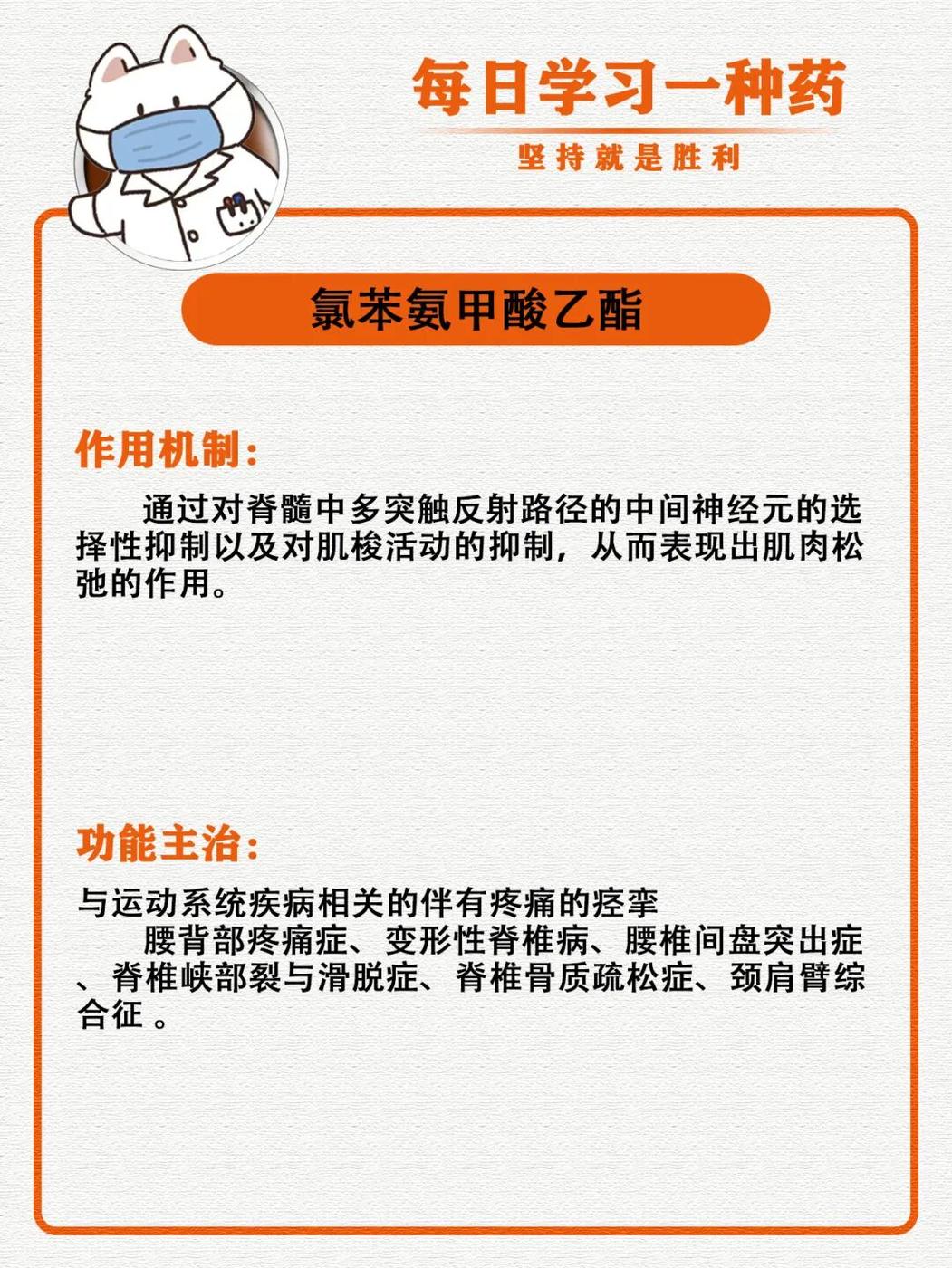
Ethyl chlorobenzoate Mechanism of action: By selecting interneurons in the multisynaptic reflex pathway in the spinal cord selective inhibition and suppression of muscle spindle activity, resulting in muscle relaxation The effect of relaxation. Functions and indications: Spasms associated with musculoskeletal system diseases are accompanied by pain Lumbar and back pain, degenerative spondylosis, lumbar disc herniation Spinal isthmus fissure and spondylolisthesis, spinal osteoporosis, cervical, shoulder-brachial combos and to jointly lead the campaign.
氯苯氨甲酸乙酯 作用机制: 通过对脊髓中多突触反射路径的中间神经元的选 择性抑制以及对肌梭活动的抑制,从而表现出肌肉松 弛的作用。 功能主治: 与运动系统疾病相关的伴有疼痛的痉挛 腰背部疼痛症、变形性脊椎病、腰椎间盘突出症 脊椎峡部裂与滑脱症、脊椎骨质疏松症、颈肩臂综 合征。
Ethyl chlorobenzoate Mechanism of action: By selecting interneurons in the multisynaptic reflex pathway in the spinal cord selective inhibition and suppression of muscle spindle activity, re…