Carbidopa Hydrate
日本語原題:メネシット配合錠100
Japanese Pharmacopoeia Levodopa / Japanese Pharmacopoeia Carbidopa Hydrate.
Source images
3 imagesThe artwork keeps its original Japanese/Chinese lettering. Open “Text in this image” under a picture to read what it says in your language (machine-read, may contain errors).
Text in this image machine-read · may contain errors
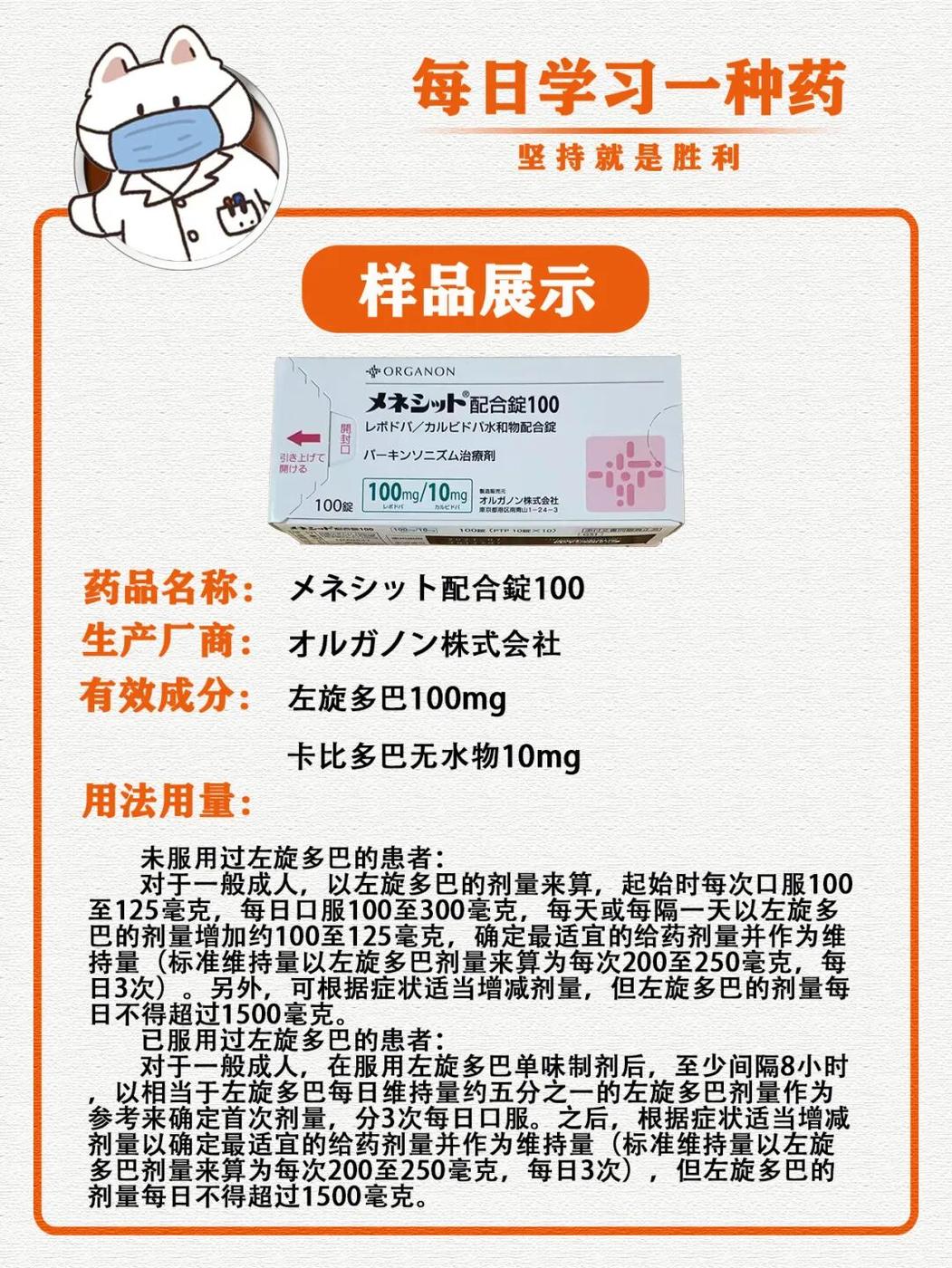
ORGANON Menesit-containing tablets 100 Repodoha / Calbidoha hydrated tablets A treatment for Birkinsonism 100N19 / 10m9 Ollun Milling Company Saijiriki Co., Ltd Drug Name: × Bu Combined Tablets 100 Manufacturer: Caierli / Co., Ltd Active ingredients: Levodopa 100mg Carbidopa anhydrous 10mg Dosage and administration: Patients who have never taken levodopa: For most adults, the dose of levodopa is calculated at the start of 100 doses orally each time Up to 125 mg, take 100 to 300 mg orally daily, daily or every other day, with more L-scarf The dose of Bar is increased by about 100 to 125 mg to determine the optimal dosage and serve as a vitamin Maintenance dose (standard maintenance dose calculated as levodopa dose, 200 to 250 mg per dose, per dose Three times a day). Additionally, the dosage can be adjusted appropriately based on symptoms, but the dose of levodopa is always Daily intake must not exceed 1500 mg. Patients who have taken levodopa: For most adults, there should be at least an 8-hour interval after taking the monosyllabic levodopa preparation The levodopa dose is about one-fifth of the daily maintenance dose of levodopa Refer to the first dose to determine the initial dose, divided into three daily oral doses. Afterwards, adjust the amount appropriately according to symptoms Dosage is used to determine the most appropriate dosage and serves as the maintenance dose (standard maintenance dose is L-rotation Dopa dosage is calculated as 200 to 250 mg each time, three times daily), but levodopa is used The daily dose must not exceed 1500 mg.
ORGANON メネシット配合錠 100 レポドハ / カルビドハ水和物配合錠 バーキンソニズム治療剤 100n19 / 10m9 ォルルン礪会社 才儿力株式会社 药品名称:×卜配合锭100 生产厂商:才儿力/株式会社 有效成分: 左旋多巴100mg 卡比多巴无水物10mg 用法用量: 未服用过左旋多巴的患者: 对于一般成人,以左旋多巴的剂量来算,起始时每次口服100 至125毫克,每日口服100至300毫克,每天或每隔一天以左旋多 巴的剂量增加约100至125毫克,确定最适宜的给药剂量并作为维 持量(标准维持量以左旋多巴剂量来算为每次200至250毫克,每 日3次)。另外,可根据症状适当增减剂量,但左旋多巴的剂量每 日不得超过1500毫克。 已服用过左旋多巴的患者: 对于一般成人,在服用左旋多巴单味制剂后,至少间隔8小时 以相当于左旋多巴每日维持量约五分之一的左旋多巴剂量作为 参考来确定首次剂量,分3次每日口服。之后,根据症状适当增减 剂量以确定最适宜的给药剂量并作为维持量(标准维持量以左旋 多巴剂量来算为每次200至250毫克,每日3次),但左旋多巴的 剂量每日不得超过1500毫克。
ORGANON Menesit-containing tablets 100 Repodoha / Calbidoha hydrated tablets A treatment for Birkinsonism 100N19 / 10m9 Ollun Milling Company Saijiriki Co., Ltd Drug Name: × Bu Combined Tabl…
Text in this image machine-read · may contain errors
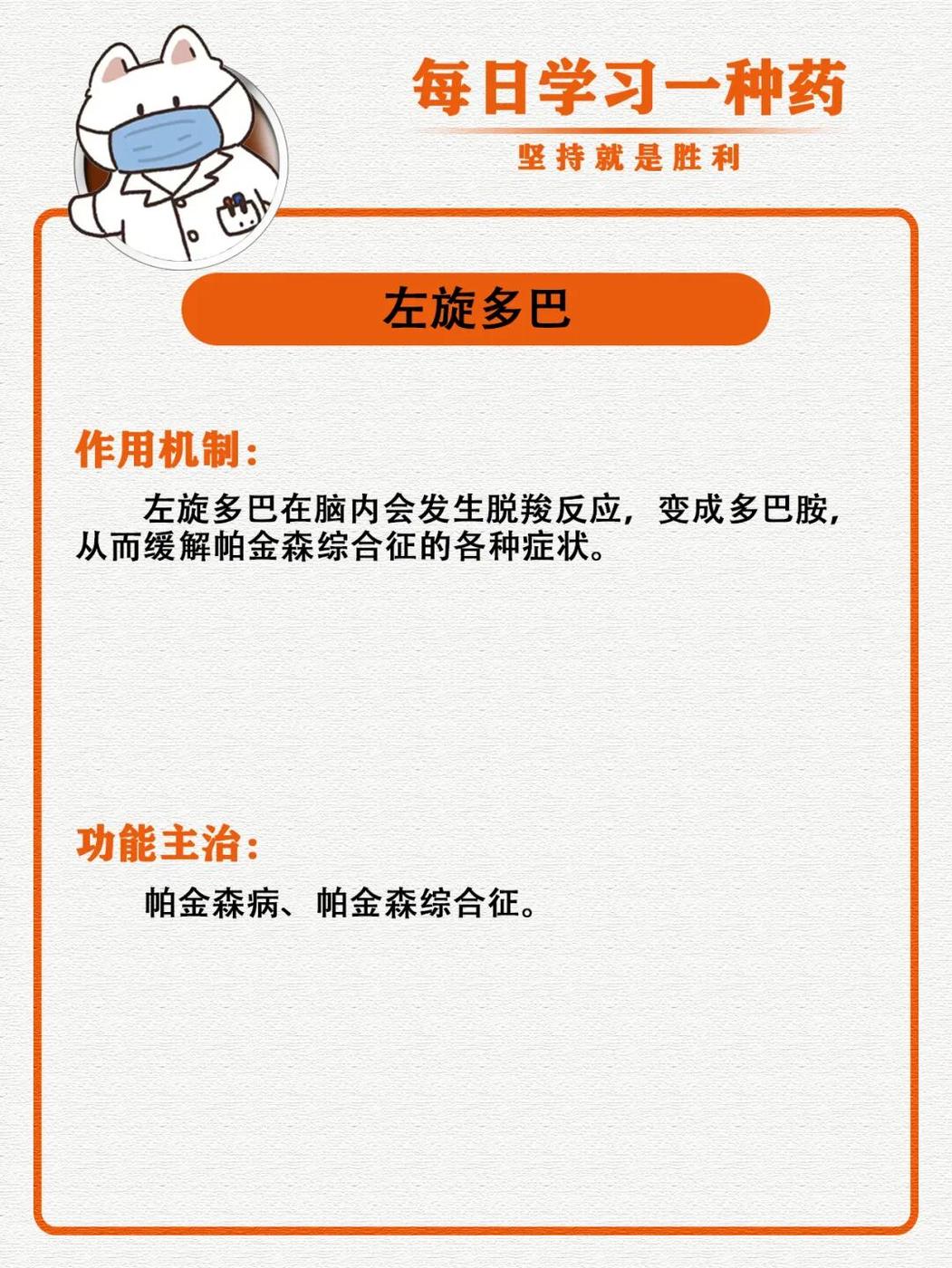
Mechanism of action: Levodopa undergoes a decarboxylation reaction in the brain, converting it into dopamine This alleviates various symptoms of Parkinson's syndrome. Functions and indications: Parkinson's disease, Parkinson's syndrome. Levodopa
作用机制: 左旋多巴在脑内会发生脱羧反应,变成多巴胺 从而缓解帕金森综合征的各种症状。 功能主治: 帕金森病、帕金森综合征。 左旋多巴
Mechanism of action: Levodopa undergoes a decarboxylation reaction in the brain, converting it into dopamine This alleviates various symptoms of Parkinson's syndrome. Functions and indicatio…
Text in this image machine-read · may contain errors
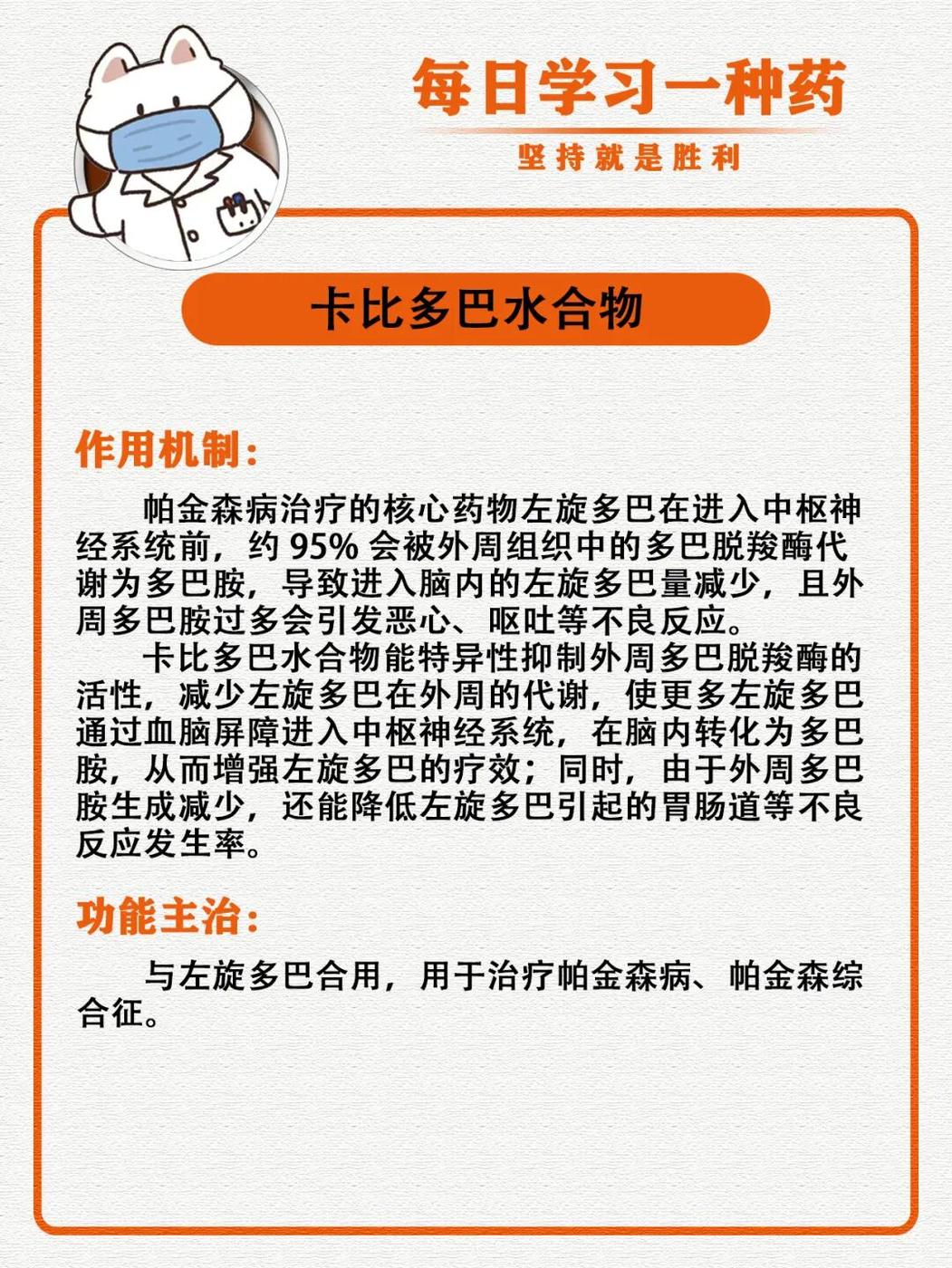
Carbidoba hydrate Mechanism of action: The core drug for Parkinson's disease treatment, levodopa, enters the central nervous system Before transit, about 95% is replaced by dopa decarboxylase in peripheral tissues Xie is dopamine, which reduces the amount of levodopa entering the brain and is also affected Excess peridopamine can cause adverse reactions such as nausea and vomiting. Carbidopa hydrate can specifically inhibit peripheral dopa decarboxylase Activity reduces levodopa metabolism in the periphery, increasing levodopa It crosses the blood-brain barrier and enters the central nervous system, where it is converted into dopa in the brain Amines, thereby enhancing the efficacy of levodopa; At the same time, due to peripheral dopa Reduced amine production can also alleviate gastrointestinal and other adverse effects caused by levodopa Reaction occurrence rate. Functions and indications: Used in combination with levodopa for the treatment of Parkinson's disease and Parkinsonian combination
卡比多巴水合物 作用机制: 帕金森病治疗的核心药物左旋多巴在进入中枢神 经系统前,约95%会被外周组织中的多巴脱羧酶代 谢为多巴胺,导致进入脑内的左旋多巴量减少,且外 周多巴胺过多会引发恶心、呕吐等不良反应。 卡比多巴水合物能特异性抑制外周多巴脱羧酶的 活性,减少左旋多巴在外周的代谢,使更多左旋多巴 通过血脑屏障进入中枢神经系统,在脑内转化为多巴 胺,从而增强左旋多巴的疗效;同时,由于外周多巴 胺生成减少,还能降低左旋多巴引起的胃肠道等不良 反应发生率。 功能主治: 与左旋多巴合用,用于治疗帕金森病、帕金森综
Carbidoba hydrate Mechanism of action: The core drug for Parkinson's disease treatment, levodopa, enters the central nervous system Before transit, about 95% is replaced by dopa decarboxylas…