Theophylline
日本語原題:テオドール錠100mg/200mg
Japanese Bureau Theophylline contains 100mg per tablet.
Source images
3 imagesThe artwork keeps its original Japanese/Chinese lettering. Open “Text in this image” under a picture to read what it says in your language (machine-read, may contain errors).
Text in this image machine-read · may contain errors
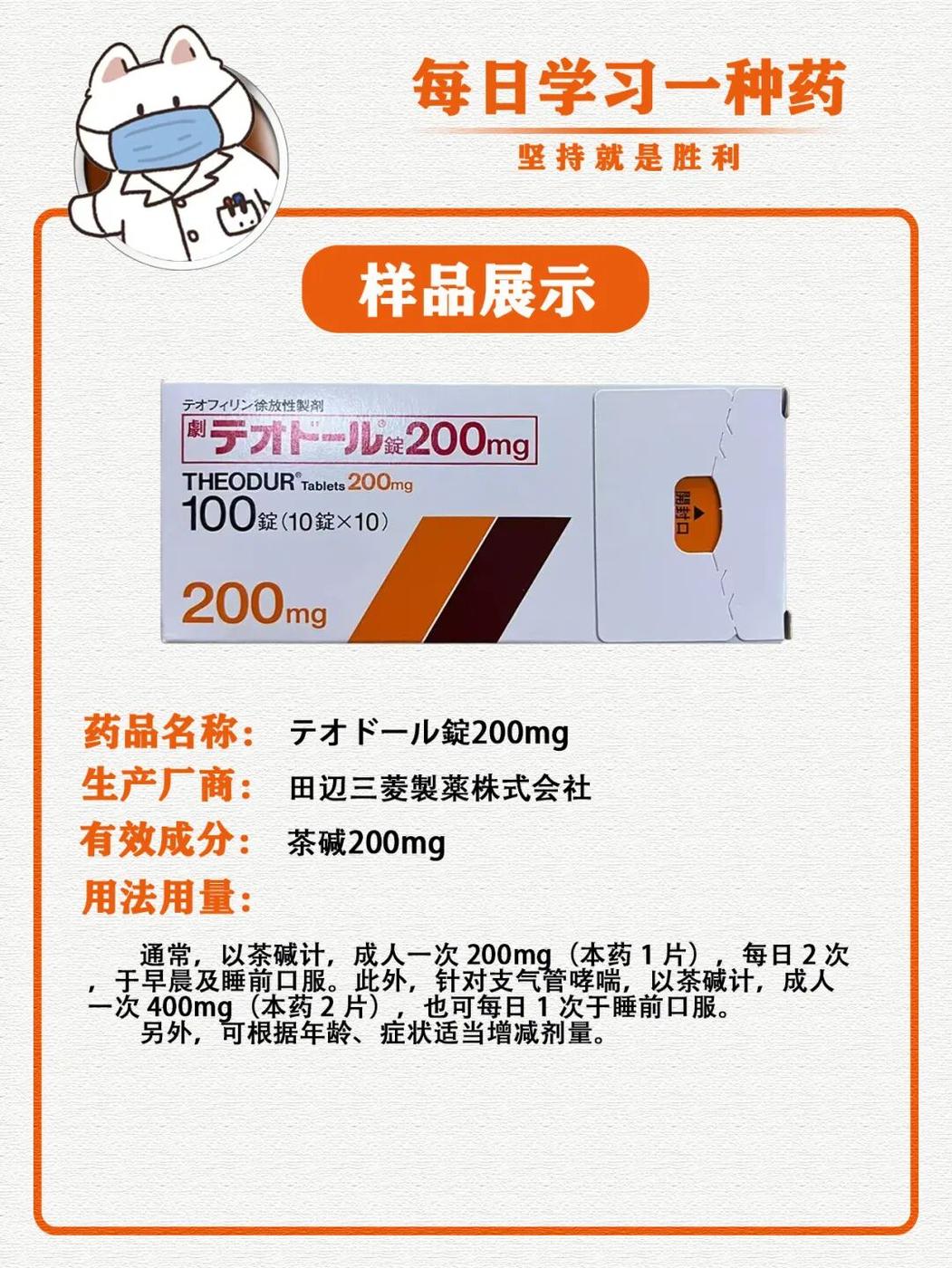
Theophylline Sustained-Release Formulation Gekitheotol Tablets 200mg THEODURTablets20Omg 100 ingots (10 ingots ×10) 200mg Theodor Tablets 200mg Drug Name: Tian Manufacturer: Tamitsubishi Pharmaceutical Co., Ltd. Active ingredients: Theophylline 200mg Dosage and administration: Typically, based on theophylline, adults take 200mg per dose (1 tablet), twice daily Take orally in the morning and before bedtime. Additionally, for bronchial asthma, measured in theophylline, adults 400mg per dose (2 tablets of this drug), orally once daily before bedtime. Additionally, dosage can be adjusted appropriately according to age and symptoms.
テオフィリン徐放性製剤 劇テオトール錠 200mg THEODURTablets20Omg 100锭(10锭×10) 200mg テオドール錠 200mg 药品名称:天 生产厂商: 田三菱藥株式会社 有效成分: 茶碱200mg 用法用量: 通常,以茶碱计,成人一次200mg(本药1片),每日2次 于早晨及睡前口服。此外,针对支气管哮喘,以茶碱计,成人 一次400mg(本药2片),也可每日1次于睡前口服。 另外,可根据年龄、症状适当增减剂量。
Theophylline Sustained-Release Formulation Gekitheotol Tablets 200mg THEODURTablets20Omg 100 ingots (10 ingots ×10) 200mg Theodor Tablets 200mg Drug Name: Tian Manufacturer: Tamitsubishi Pha…
Text in this image machine-read · may contain errors
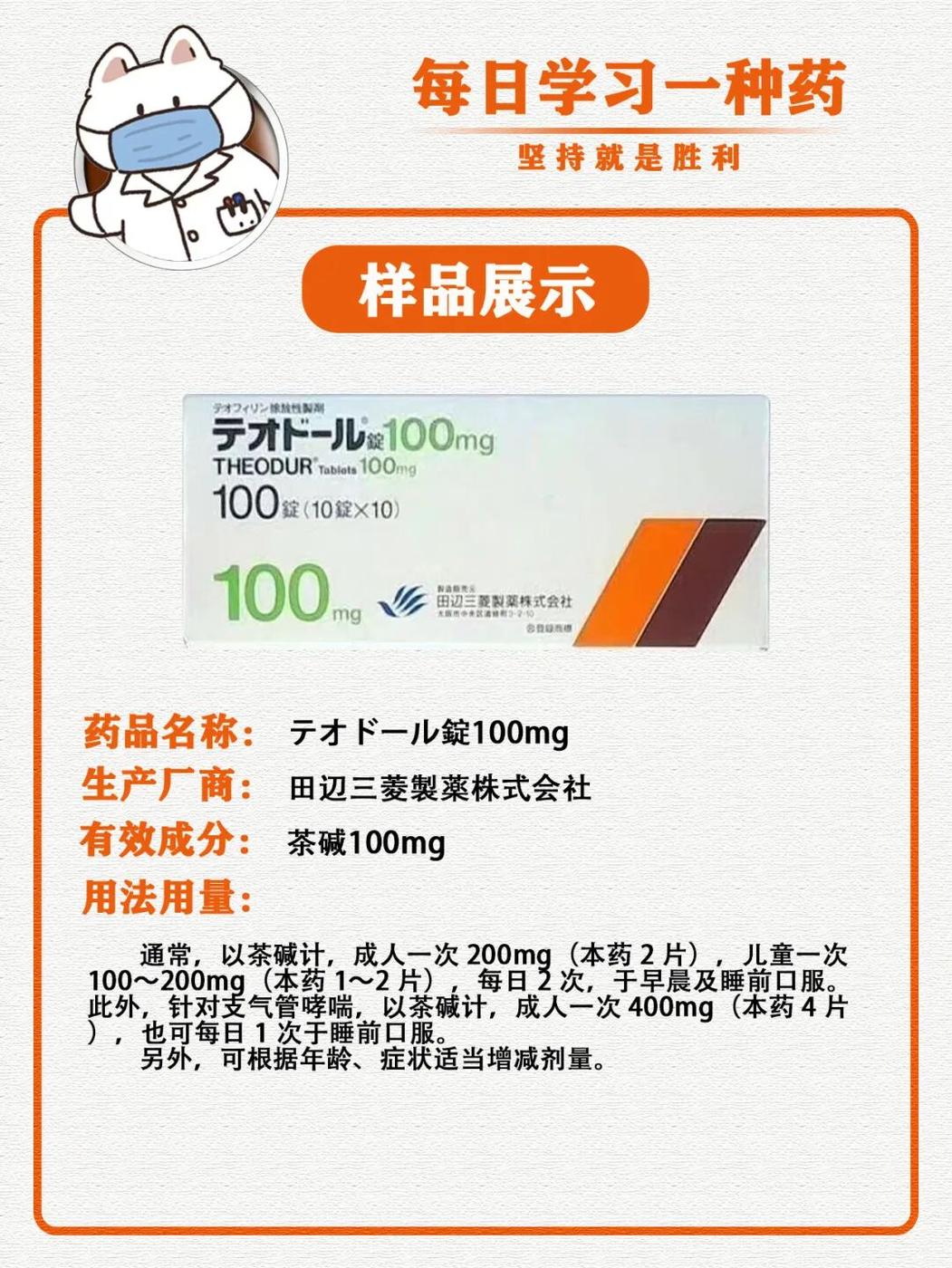
Titsu Ilin is a product of the first place THEODURTablot10Omg 100 ingots (10 ingots ×10) Tanabe Mitsubishi Pear Rack Co., Ltd Theodor tablets 100mg Drug name: Tian Manufacturer: Tanabe Mitsubishi Vegetable Co., Ltd Active ingredients: Theophylline 100mg Dosage and administration: Typically, in theophylline, adults take 200mg per dose (2 tablets of this drug), and children take one dose 100~200mg (12 tablets of this drug), taken orally twice daily, in the morning and before bedtime. Additionally, for bronchial asthma, adults take 400mg per dose (4 tablets of this drug) in theophylline ), or orally once daily before bedtime. Additionally, dosage can be adjusted appropriately according to age and symptoms.
ティつイリンを物物製第 THEODURTablot10Omg 100锭(10锭×10) 田边三菱梨架株式会社 テオドール錠 100mg 药品名称:天 生产厂商: 田边三菱菜株式会社 有效成分: 茶碱100mg 用法用量: 通常,以茶碱计,成人一次200mg(本药2片),儿童一次 100~200mg(本药12片),每日2次,于早晨及睡前口服。 此外,针对支气管哮喘,以茶碱计,成人一次400mg(本药4片 ),也可每日1次于睡前口服。 另外,可根据年龄、症状适当增减剂量。
Titsu Ilin is a product of the first place THEODURTablot10Omg 100 ingots (10 ingots ×10) Tanabe Mitsubishi Pear Rack Co., Ltd Theodor tablets 100mg Drug name: Tian Manufacturer: Tanabe Mitsu…
Text in this image machine-read · may contain errors
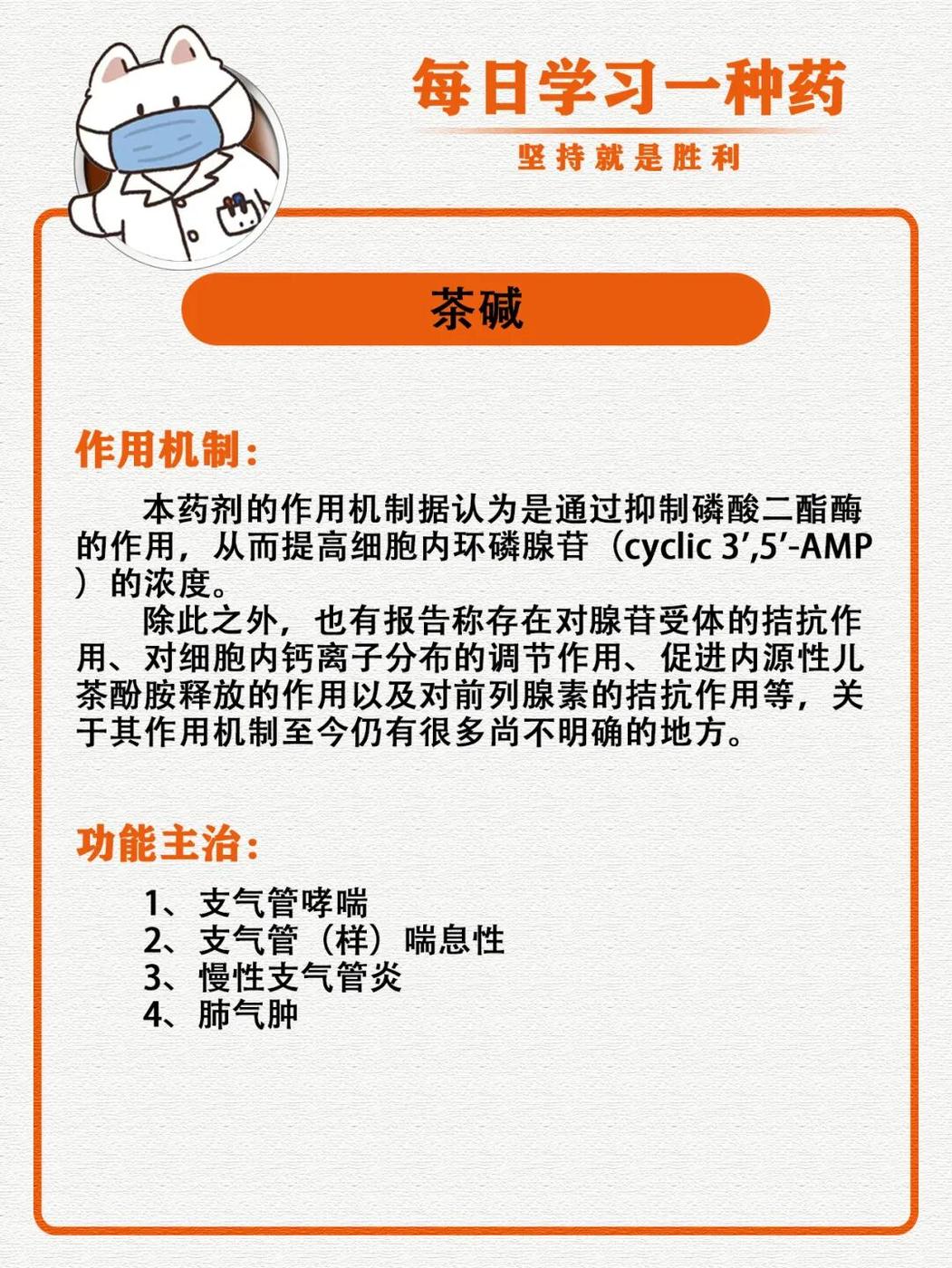
Mechanism of action: The mechanism of action of this drug is believed to be by inhibiting phosphodiesterase thereby increasing the level of cyclic adenosine (cyclic 3',5'-AMP). ) concentration. In addition, there have been reports of antagonism to adenosine receptors It regulates intracellular calcium ion distribution and promotes endogenous infants The release of theophenolamines and antagonism of prostaglandins, among other effects Its mechanism of action remains largely unclear to this day. Functions and indications: 1. Bronchial asthma 2. Bronchial (resemble) wheezing 3. Chronic bronchitis Emphysema
作用机制: 本药剂的作用机制据认为是通过抑制磷酸二酯酶 的作用,从而提高细胞内环磷腺苷(cyclic3',5'-AMP )的浓度。 除此之外,也有报告称存在对腺苷受体的拮抗作 用、对细胞内钙离子分布的调节作用、促进内源性儿 茶酚胺释放的作用以及对前列腺素的拮抗作用等,关 于其作用机制至今仍有很多尚不明确的地方。 功能主治: 1、支气管哮喘 2、支气管(样)喘息性 3、慢性支气管炎 肺气肿
Mechanism of action: The mechanism of action of this drug is believed to be by inhibiting phosphodiesterase thereby increasing the level of cyclic adenosine (cyclic 3',5'-AMP). ) concentrati…