Cardiovascular · CARDIOVASCULAR

Eplerenone

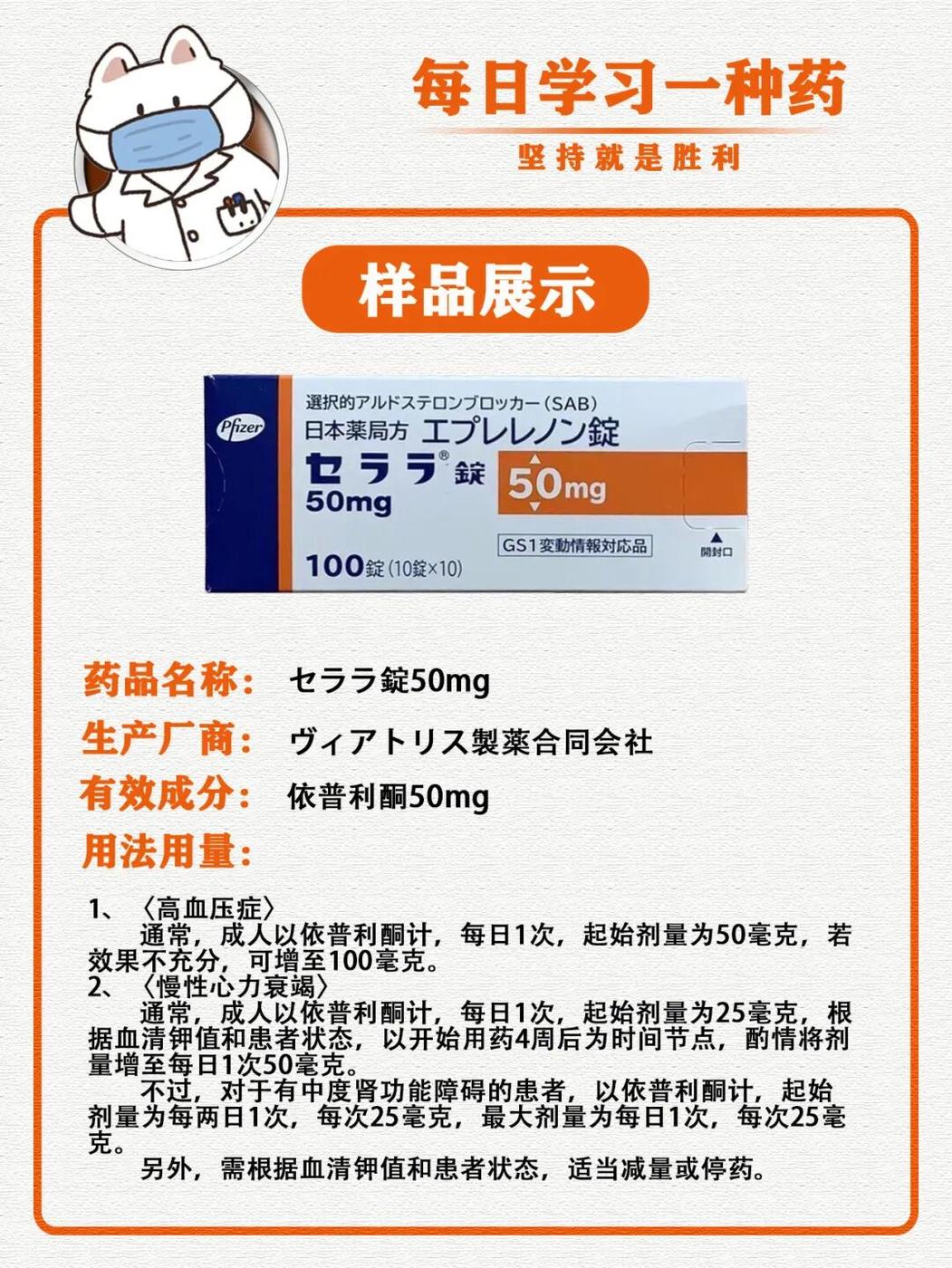
日本語原題:セララ錠50mg

Published2025-08-11 12:37 FormTablet Content9 sections / 2 images
English translation of the Japanese package insert is the main text; the Japanese original is shown alongside for verification. Use the language menu (top right) to read the page in another language. This site is for reference only — consult a doctor or pharmacist before use.
Section 1 · 01
English translation
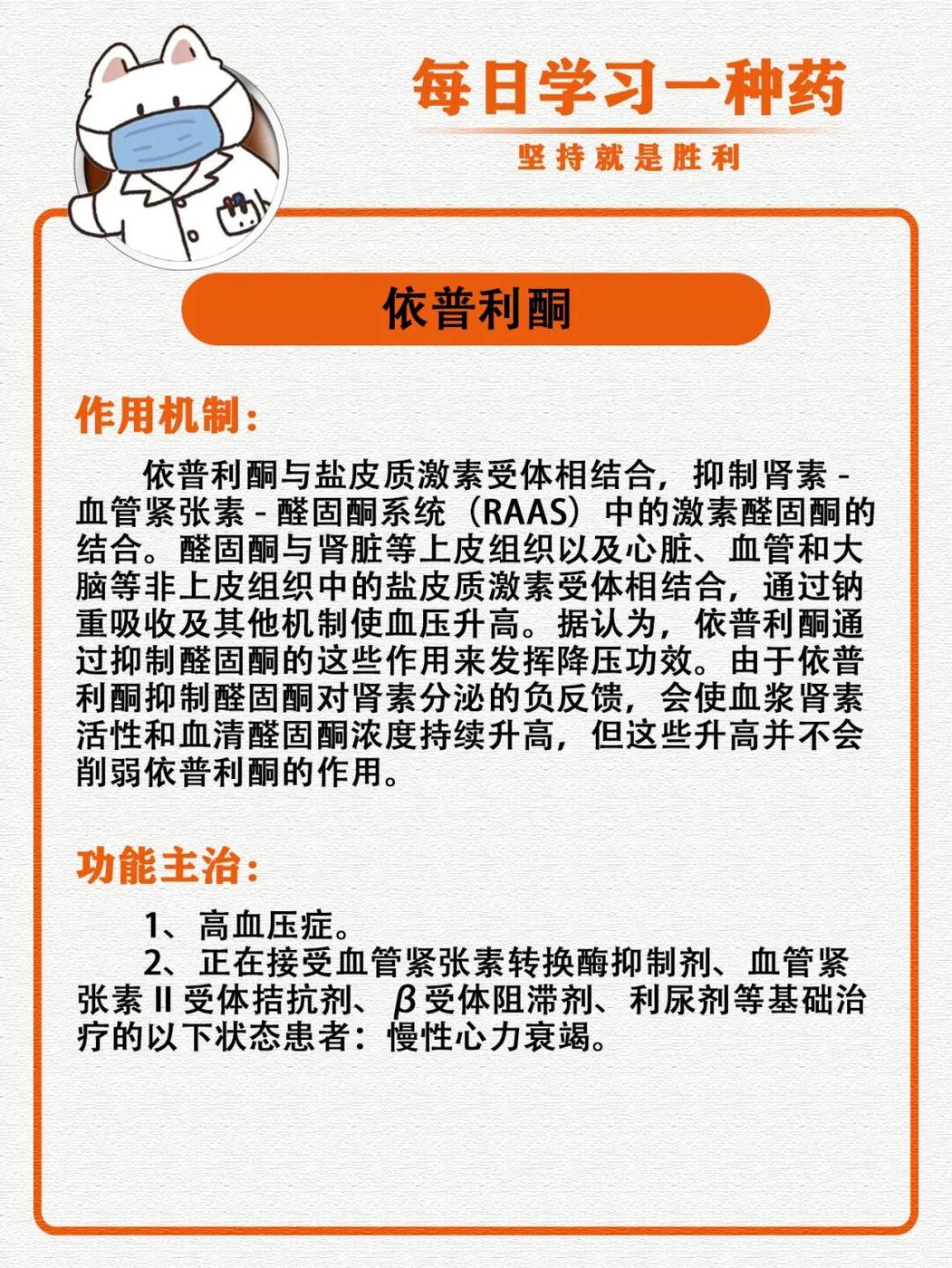
Feature Description Eplerenone binds to mineral-corticoid receptors and inhibits the binding of aldosterone, a hormone in the renin-angiotensin-aldosterone (RAAS) system. Aldosterone binds to mineral-corticoid receptors in epithelial tissues such as the kidneys, as well as non-epithelial tissues such as the heart, blood vessels, and brain, raising blood pressure through sodium reabsorption and other mechanisms. Eplerenone is thought to exert its antihypertensive effect by inhibiting the action of these aldosterones. Eplerenone suppresses the negative feedback from aldosterone on renin secretion, thereby continuously increasing plasma renin activity and serum aldosterone levels, but these increases do not diminish the effects of eplerenone.
Section 2 · 02
English translation
Specifications 100 tablets [10 tablets (PTP)×10].
Section 3 · 03
English translation
Characteristics Pale red film-coated tablets.
Section 4 · 04
English translation
Ingredient Information Active ingredient (content): 1 Chung Nichi Copa Eplerenone (50.00mg). Additives: lactose hydrate, crystalline cellulose, croscarmellose sodium, hypromellose, sodium lauryl sulfate, talc, magnesium stearate, titanium oxide, macrogol 400, polysolvent 80, ferric oxide.
Section 5 · 05
English translation
Indications 1. Hypertension. 2. Patients receiving basic treatment such as angiotensin-converting enzyme inhibitors, angiotensin II receptor blockers, β blockers, or diuretics under the following conditions: chronic heart failure.
Section 6 · 06
English translation
Dosage and Administration 1. Hypertension Typically, adults start with 50 mg of eplerenone once daily, and if efficacy is insufficient, the dose can be increased up to 100 mg. 2. "Chronic Heart Failure" Typically, adults start with 25 mg of eplerenone once daily, and depending on serum potassium levels and patient condition, the dose is increased to 50 mg once daily starting four weeks or later. However, for patients with moderate renal impairment, dosing should start with 25 mg every other day, with a maximum dose of 25 mg once daily. Dose reduction or discontinuation should be adjusted as needed according to serum potassium levels and the patient's condition.
Section 7 · 07
English translation
Notes 1. Hyperkalemia may occur, so serum potassium levels should generally be monitored before starting administration, within one week after starting administration (or after dose adjustment), and one month afterward, and continuing regular monitoring thereafter. 2. Since liver function abnormalities may be observed, liver function test values should be monitored approximately one month after starting administration, and regular follow-up is advised thereafter. 3. Hyponatremia may occur, so regularly monitor serum sodium levels. 4. Dizziness and other symptoms caused by blood pressure-lowering may occur, so caution is advised when operating machinery involving hazards such as working at heights or driving a car.
Section 8 · 08
English translation
Side Effects 1. Hyperkalemia (1.7% in hypertension, 7.3% in chronic heart failure). 2. Other side effects 〈Hypertension〉 (1) Blood and lymphatic system disorders: anemia, hemorrhagic spots. (2) Metabolic and nutritional disorders: hyperuricemia, hypertriglyceridemia, hyperglycemia, dry mouth, gout, hypercalcemia, dehydration, worsening diabetes, hyponatremia, increased appetite. (3) Mental disorders: insomnia, depression, nervousness, anxiety. (4) Nervous system disorders: headache, dizziness, abnormal sensations, orthostatic hypotension, drowsiness, decreased perception, dizziness, migraines, fainting, amnesia. (5) Cardiac disorders: increased palpitations, tachycardia, premature contractions, arrhythmia, angina. (6) Vascular disorders: hypotension, cerebrovascular disorders. (7) Respiratory, thoracic and mediastinal disorders: cough, cold symptoms / upper respiratory tract infection, difficulty breathing, pharyngitis, rhinitis, sinusitis, nosebleeds, asthma, wheezing. (8) Gastrointestinal disorders: nausea, indigestion, diarrhea, abdominal pain, constipation, vomiting, dry mouth, gastroesophageal reflux, bloating and flatulence, and dysgeustia. (9) Hepatobiliary system disorders: fatty liver, abnormal liver function. (10) Skin and subcutaneous tissue disorders: rash, excessive sweating, pruritus, skin diseases, urticaria, dry skin, angioneurotic edema. (11) Musculoskeletal and connective tissue disorders: muscle spasms, joint pain, muscle pain, limb pain, back pain, muscle weakness, spasms. (12) Renal and urinary tract disorders: frequent urination, polyuria, proteinuria, nocturia, hematuria, urinary tract infection. (13) General and systemic disorders and administration site conditions: fatigue, peripheral edema, weakness, chest pain, flushing, hot flashes, pain, fatigue. (14) Clinical tests: increased ALT, increased γ-GTP, increased AST, increased CK, increased BUN; abnormal ECG; increased blood creatinine; increased monocytes; increased cholesterol; decreased urine specific gravity; increased Al-P; increased eosinophils; decreased prothrombin; increased urine specific gravity; increased lymphocytes; increased basophils; increased LDH; increased white blood cells; increased urine glucose; increased bilirubin; increased hemoglobin. (15) Eye disorders: eye pain, visual abnormalities, dry eyeballs, foggy vision. (16) Ear and labyrinth disorders: tinnitus. (17) Reproductive system and breast disorders: erectile dysfunction, gynecomastia, decreased libido, menstrual irregularities. 〈Chronic Heart Failure〉 (1) Infectious and parasitic infections: localized infections, viral infections, ear infections, upper respiratory tract infections, pharyngitis. (2) Blood and lymphatic system disorders: anemia, eosinophilia. (3) Endocrine disorders: hypothyroidism. (4) Metabolic and nutritional disorders: dehydration, gout, hyperuricemia, loss of appetite, hypercalcemia, diabetes, hypertriglyceridemia, hyponatremia, hypercholesterolemia. (5) Mental disorders: insomnia, depression. (6) Nervous system disorders: dizziness, headache, fainting, sensory dullness, peripheral neuropathy, pimping, memory impairment. (7) Cardiac disorders: worsening heart failure, palpitations, bradycardia, ventricular fibrillation, atrial fibrillation, tachycardia, left ventricular insufficiency. (8) Vascular disorders: hypotension, orthostatic hypotension, venous disorders. (9) Respiratory, thoracic, and mediastinal disorders: difficulty breathing, coughing. (10) Gastrointestinal disorders: abdominal pain, nausea, diarrhea, abdominal discomfort, vomiting, gastritis, stomatitis, constipation, dry mouth, and flatulence. (11) Hepatobiliary system disorders: abnormal liver function, cholecystitis. (12) Skin and subcutaneous tissue disorders: pruritus, hyperhidrosis, rash, angioedema. (13) Musculoskeletal and connective tissue disorders: musculoskeletal pain, muscle spasticity, back pain. (14) Renal and urinary tract disorders: renal dysfunction, renal failure, frequent urination, chronic kidney disease. (15) General and systemic disorders and conditions at the site of administration: fatigue, pain, tiredness, chest pain, fever, asthenia. (16) Clinical tests: increased blood creatinine, increased BUN, decreased epidermal growth factor receptor, decreased glomerular filtration rate, weight gain, and increased blood glucose. (17) Ear and labyrinth disorders: tinnitus. (18) Reproductive system and breast disorders: gynecomastia. (19) Benign, malignant, and unexplained neoplasms (including cysts and polyps): bladder neoplasms.
Section 9 · 09
English translation
taboo 〈Common Effects〉 1. Patients with a history of hypersensitivity to any component of this drug 2. Patients with hyperkalemia or those whose serum potassium levels exceed 5.0 mEq/L at the start of administration [may worsen hyperkalemia. ] 3. Patients with severe renal impairment (creatinine clearance less than 30 mL/min). 4. Patients with severe hepatic impairment (equivalent to cirrhosis classified as Child-Pugh class C). 5. Patients currently receiving potassium-sparing diuretics and mineral-corticoid receptor antagonists. 6. Patients receiving itraconazole, ritonavir-containing preparations, and ensitrelvir fumaric acid. 〈Hypertension〉 1. Diabetic patients with microalbuminuria or proteinuria [may induce hyperkalemia. ] 2. Patients with moderate or greater renal impairment (creatinine clearance less than 50mL/min). 3. Potassium preparations (excluding potassium iodide used to prevent or reduce internal thyroid exposure to radioactive iodine). ) in patients currently administering the medication.

Source images

2 images

Need help sourcing Japanese medicines or OEM production?

💬