L-Arginine
日本語原題:アルギU配合顆粒
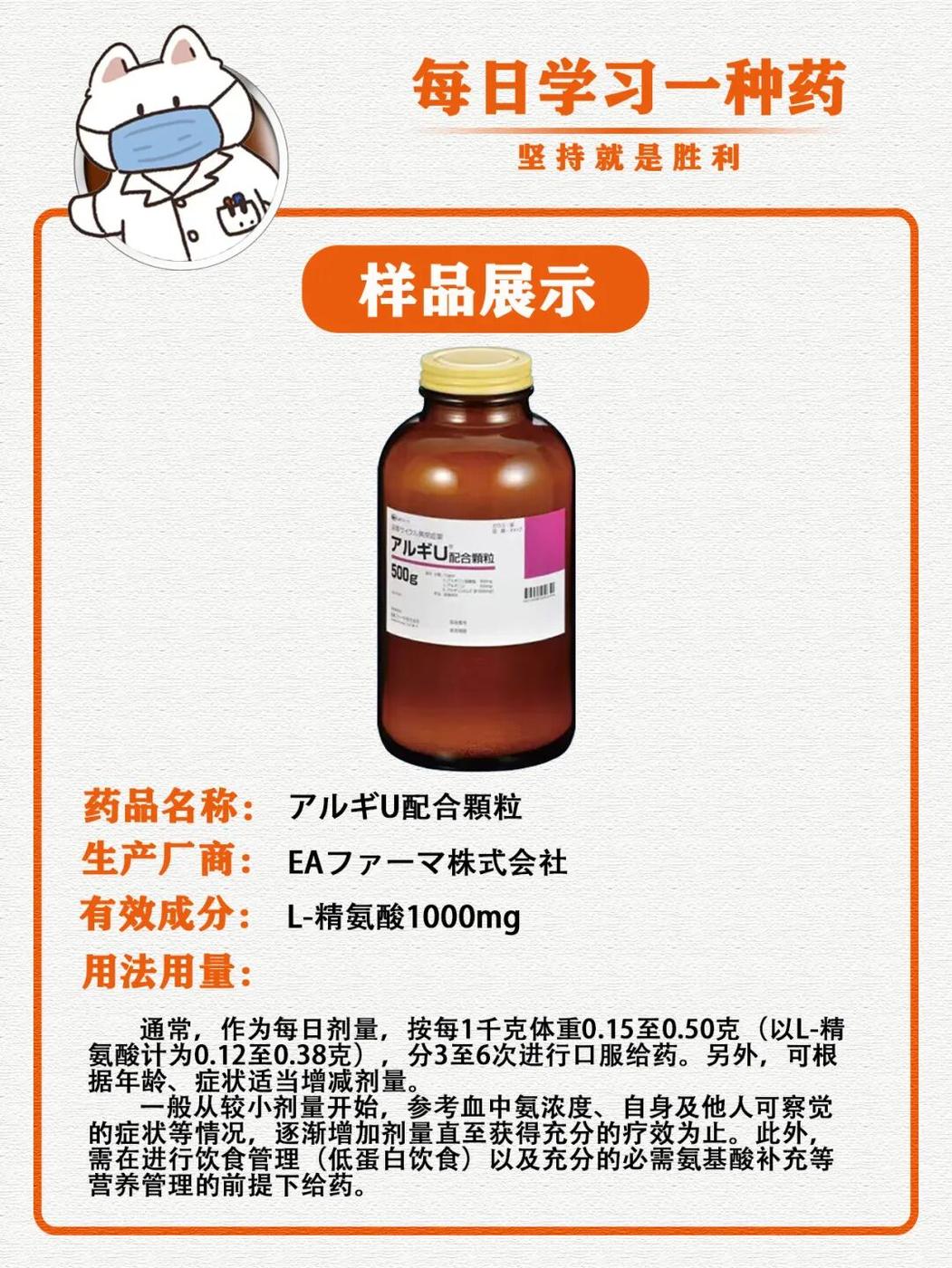
In 1.3g of this drug, there are 605mg L-arginine hydrochloride and 500mg L-arginine (total L-arginine is 1000mg).
Source images
2 imagesThe artwork keeps its original Japanese/Chinese lettering. Open “Text in this image” under a picture to read what it says in your language (machine-read, may contain errors).
Text in this image machine-read · may contain errors
500g Drug Name: Combine granules with U Manufacturer: EA Pharma Inc Active ingredient: L-Spermic acid 1000mg Dosage and administration: Typically, as a daily dose, it is 0.15 to 0.50 grams per 1 kilogram of body weight (as L-sperm). Acid is calculated as 0.12 to 0.38 g), administered orally in 3 to 6 doses. Additionally, it can be rooted Adjust the dosage appropriately according to age and symptoms. Generally starting with a lower dose, referring to blood ammonia concentration, detectable by oneself and others Gradually increase the dosage until full efficacy is achieved. In addition, It is necessary to manage your diet (low-protein diet) and ensure adequate supplementation of essential amino acids Administration under the premise of nutritional management.
500g 药品名称: 了儿U配合颗粒 生产厂商: EA ファーマ株式会社 有效成分:L-精酸1000mg 用法用量: 通常,作为每日剂量,按每1千克体重0.15至0.50克(以L-精 氨酸计为0.12至0.38克),分3至6次进行口服给药。另外,可根 据年龄、症状适当增减剂量。 一般从较小剂量开始,参考血中氨浓度、自身及他人可察觉 的症状等情况,逐渐增加剂量直至获得充分的疗效为止。此外 需在进行饮食管理(低蛋白饮食)以及充分的必需氨基酸补充等 营养管理的前提下给药。
500g Drug Name: Combine granules with U Manufacturer: EA Pharma Inc Active ingredient: L-Spermic acid 1000mg Dosage and administration: Typically, as a daily dose, it is 0.15 to 0.50 grams p…
Text in this image machine-read · may contain errors
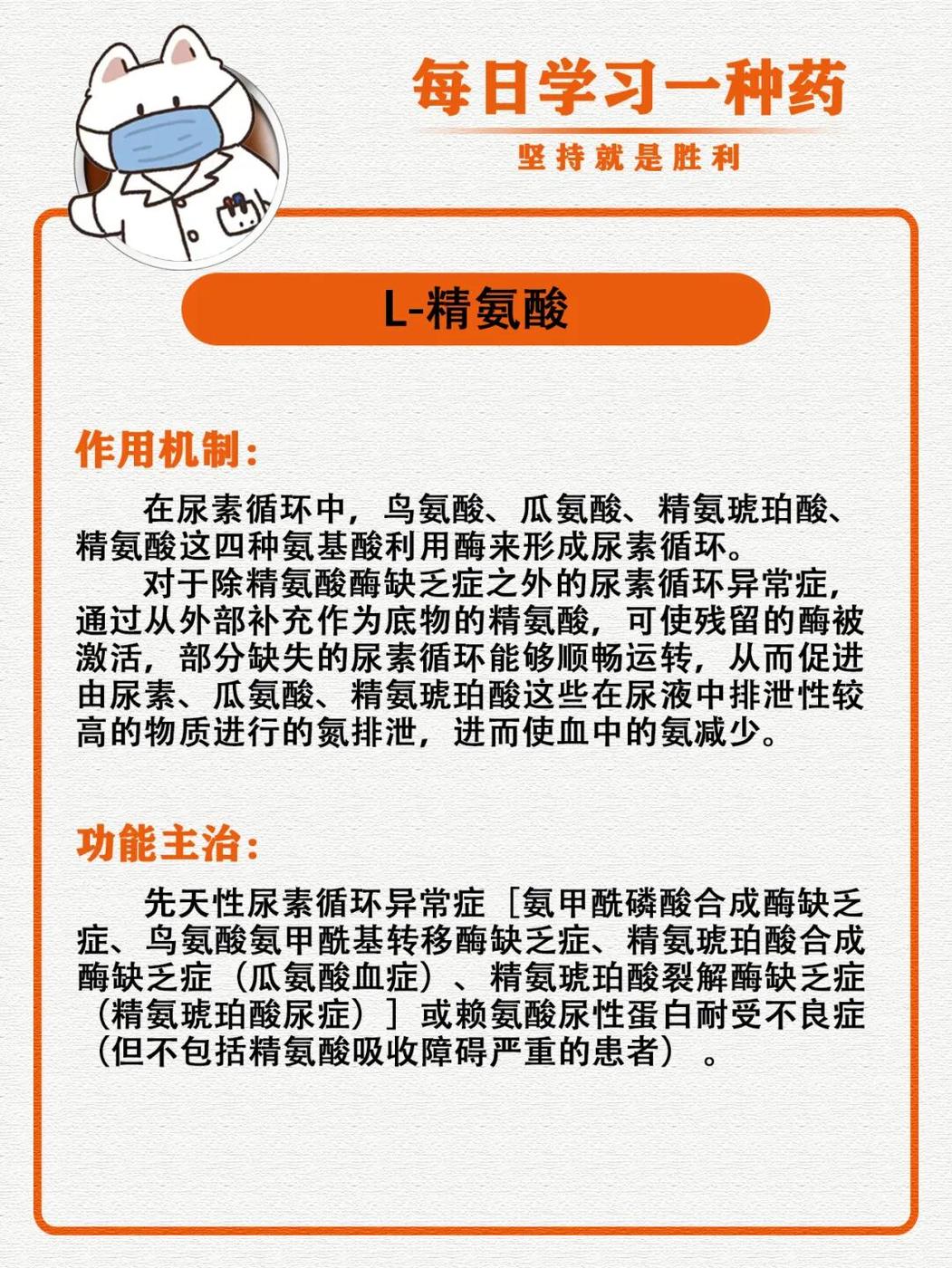
Mechanism of action: In the urea cycle, ornithine, citrulline, arginine succinic acid, Arginine, these four amino acids, use enzymes to form the urea cycle. For urea cycle disorders other than arginase deficiency By externally supplementing arginine as a substrate, residual enzymes can be removed activated to allow the partially missing urea circulation to function smoothly, thereby promoting Urea, citrulline, and arginine succinic acid are relatively excreted in urine Nitrogen excretion occurs at high concentrations, thereby reducing ammonia in the blood. Functions and indications: Congenital urea cycle disorder: carbamyl phosphate synthase deficiency ornithine carbamyltransferase deficiency, and arginine succinate synthesis Enzyme deficiency (citrullinemia), argina-succinate lyase deficiency (Argininosuccinateuria) or lysinuria protein intolerance (But this does not include patients with severe arginine absorption disorders.) L-Arginine
作用机制: 在尿素循环中,鸟氨酸、瓜氨酸、精氨琥珀酸、 精氨酸这四种氨基酸利用酶来形成尿素循环。 对于除精氨酸酶缺乏症之外的尿素循环异常症 通过从外部补充作为底物的精氨酸,可使残留的酶被 激活,部分缺失的尿素循环能够顺畅运转,从而促进 由尿素、瓜氨酸、精氨琥珀酸这些在尿液中排泄性较 高的物质进行的氮排泄,进而使血中的氨减少。 功能主治: 先天性尿素循环异常症「氨甲酰磷酸合成酶缺乏 症、鸟氨酸氨甲酰基转移酶缺乏症、精氨琥珀酸合成 酶缺乏症(瓜氨酸血症)、精氨琥珀酸裂解酶缺乏症 (精氨琥珀酸尿症)或赖氨酸尿性蛋白耐受不良症 (但不包括精氨酸吸收障碍严重的患者)。 L-精氨酸
Mechanism of action: In the urea cycle, ornithine, citrulline, arginine succinic acid, Arginine, these four amino acids, use enzymes to form the urea cycle. For urea cycle disorders other th…