Cardiovascular · CARDIOVASCULAR

Rivaroxaban

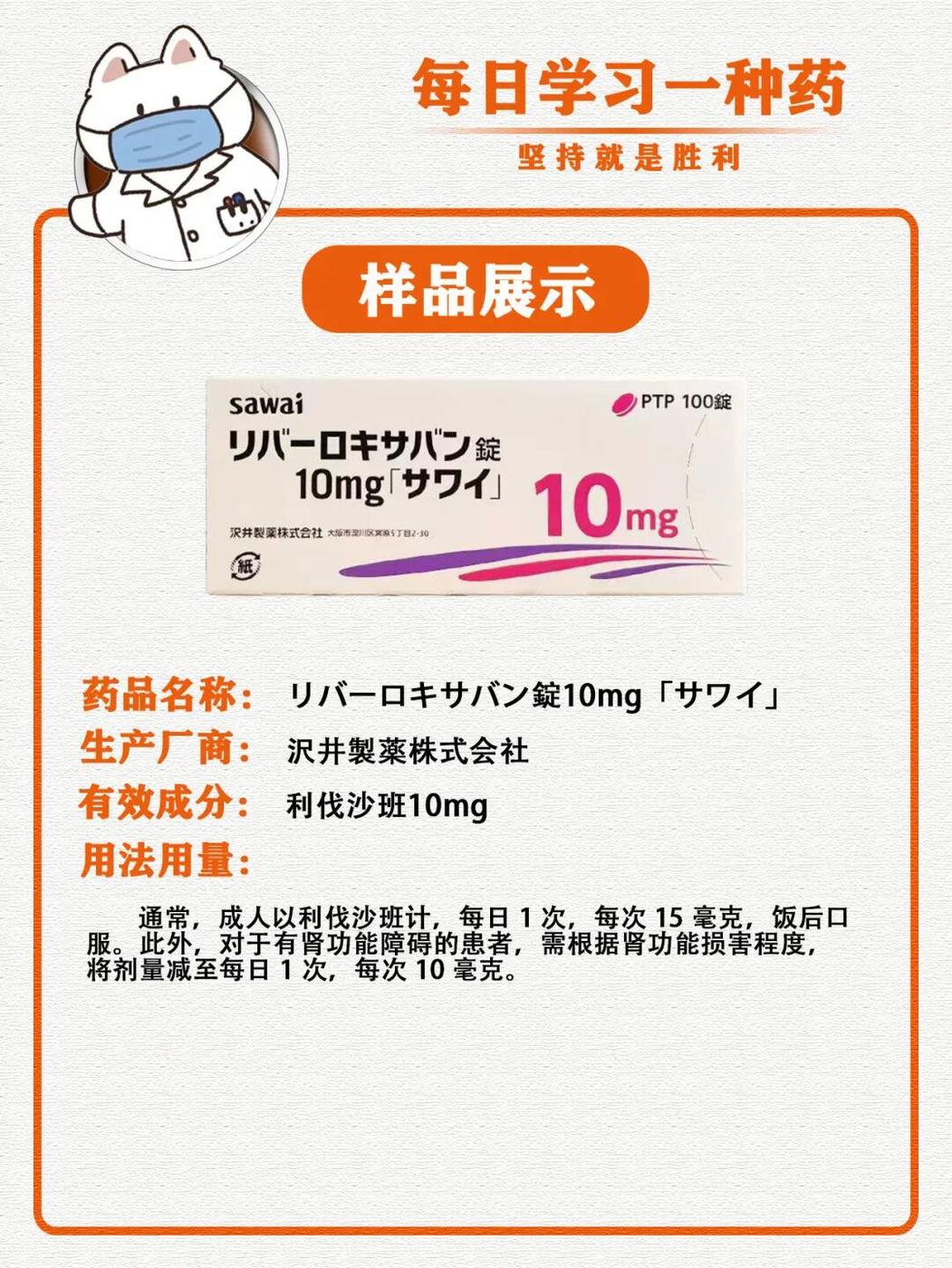
日本語原題:リバーロキサバン錠10mg「サワイ」

Published2025-09-18 10:17 Maker沢井 FormTablet Content10 sections / 2 images
English translation of the Japanese package insert is the main text; the Japanese original is shown alongside for verification. Use the language menu (top right) to read the page in another language. This site is for reference only — consult a doctor or pharmacist before use.
Section 1 · 01
English translation
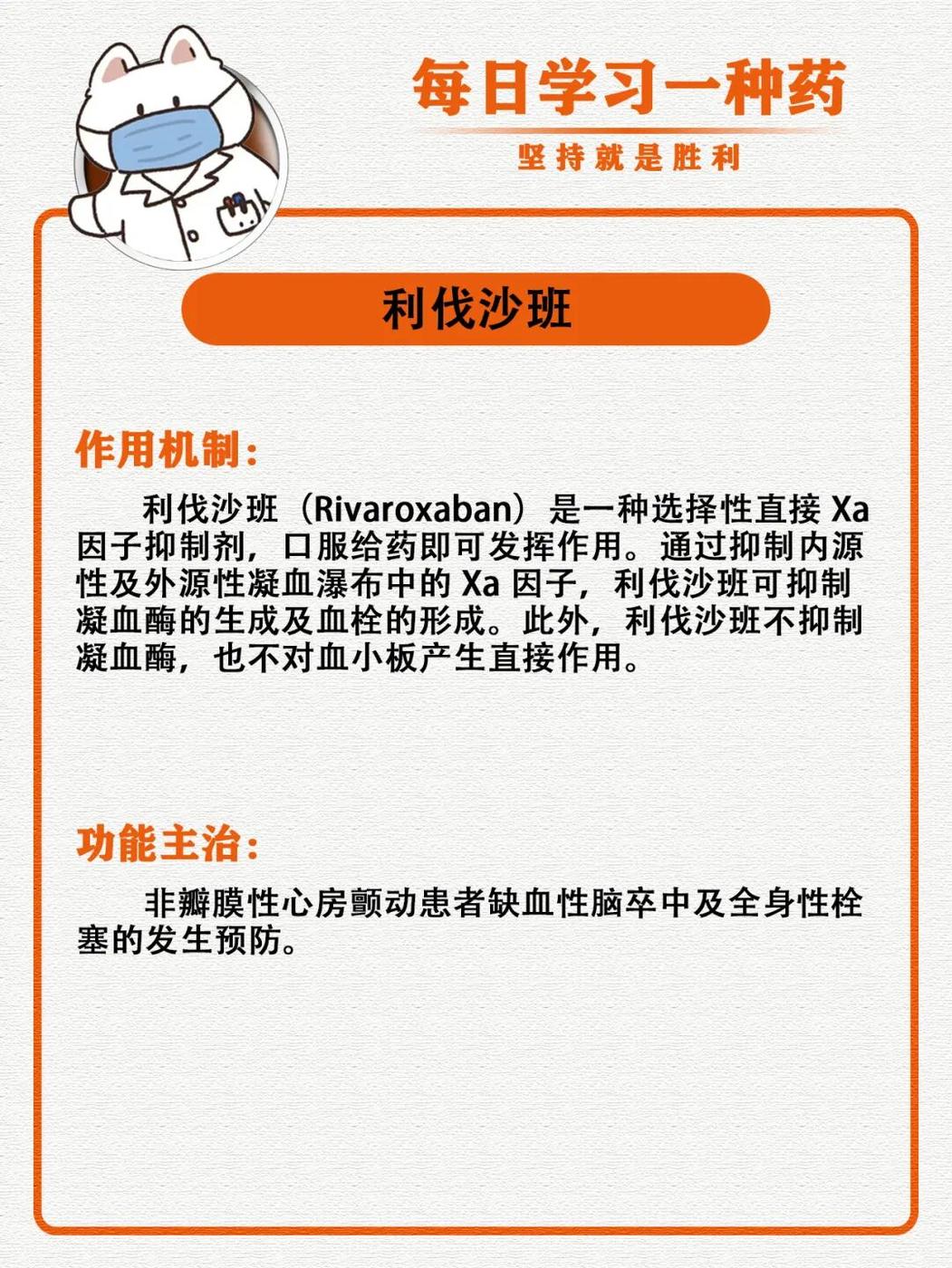
Feature Description Rivaloxaban is a selective and direct factor Xa inhibitor that shows efficacy when administered orally. Ribaroxaban inhibits factor Xa in both endogenous and exogenous blood coagulation cascades, suppressing thrombin production and thrombosis. Rivaloxaban does not inhibit thrombin and does not have direct action on platelets.
Section 2 · 02
English translation
Aluminum-plastic blister packaging (PTP): 100 tablets (10 tablets × 10 blisters).
Section 3 · 03
English translation
Characteristics Light red, film-coated tablets.
Section 4 · 04
English translation
Ingredient Information Active ingredient [per tablet]: Rivaloxavan 10mg. Additives: Carnauba Low, Sodium Clostcarmellos, Light Anhydrous Silicate, Crystalline Cellulose, Titanium Oxide, Ferric Oxide, Mg Stearate, Talc, Lactose, Hypromellose, Macrogol 6000, Sodium Lauryl Sulfate.
Section 5 · 05
English translation
Indications Suppression of the onset of ischemic stroke and systemic embolism in patients with non-valvular atrial fibrillation.
Section 6 · 06
English translation
Dosage and Administration Typically, adults are given 15 mg of ribaroxaban orally once daily after meals. For patients with renal impairment, the dose should be reduced to 10 mg once daily according to the degree of renal function.
Section 7 · 07
English translation
Notes 1. The International Standard Ratio for Prothrombin Time (PT-INR) is not a standardized indicator of the anticoagulant effect of this drug, and coagulation tests such as activated partial thromboplastin time (aPTT) are not recommended as indicators for monitoring the anticoagulant effect of this drug. 2. Side effects such as bleeding may occur, so if necessary, perform tests such as blood count (hemoglobin level) and fecal occult blood. If signs of bleeding such as sudden hemoglobin or blood pressure drop are observed, appropriate treatment should be taken. 3. If patients experience abnormal bleeding signs such as nosebleeds, subcutaneous bleeding, gum bleeding, hematuria, hemoptysis, hematemesis, or bloody stools, instruct them to contact a doctor. 4. When used together with two antiplatelet agents, the risk of bleeding may increase significantly; therefore, consider this drug with extra caution and only use these drugs if the therapeutic benefits outweigh the risks. 5. If surgery or invasive procedures are performed during administration of this drug, it is preferable to do so at least 24 hours after administration if clinically feasible. If you cannot delay the start of surgery or invasive procedures, assess urgency and bleeding risk. Administration of this drug should be resumed as soon as possible after confirming that the patient's clinical condition is stable and there is no bleeding after surgery or invasive procedures. 6. When switching this drug with other anticoagulants, please pay attention to the following points. (1) If switching from warfarin to this drug is necessary, discontinue warfarin administration, perform blood coagulation tests such as PT-INR, confirm that the drug is below the lower limit of the therapeutic range, and then start administration of this drug as soon as possible. (2) When switching from an injectable anticoagulant (such as heparin) to this drug, start administration of this drug 0~2 hours before the scheduled time for the next intravenous or subcutaneous administration, or after discontinuing continuous intravenous infusion. (3) It has been suggested that the anticoagulant effect may be insufficient when switching from this drug to warfarin, so care should be taken to maintain the anticoagulant effect, and until blood coagulability test values such as PT-INR exceed the lower limit of the therapeutic range, warfarin and this drug should be used together. Note that PTINR does not accurately reflect the anticoagulant effect of warfarin until 24 hours have passed since completion of this drug. (4) When switching from this drug to an injectable anticoagulant, discontinue administration of this drug and start intravenous or subcutaneous administration of the anticoagulant at the scheduled time for the next dose. 7. Interstitial lung disease may occur, so if symptoms such as cough, bloody sputum, difficulty breathing, or fever appear, instruct patients to promptly contact their primary care physician. 8. If you forget to take this medication, instruct the patient to take this medication immediately and take it once daily starting the next day. Even if they forget to take a dose, instruct patients not to take two doses at once and to allow at least 12 hours before the next dose. 9. If a patient undergoing this drug needs to neutralize its anticoagulant effect when life-threatening bleeding or bleeding difficult to stop bleeding occurs, be sure to refer to the electronic addendum of the neutralizing agent Andexanet Alpha (genetically modified), and confirm the descriptions of contraindications, precautions related to administration and dosage, important basic precautions, cautions for patients with specific backgrounds, and precautions regarding side effects.
Section 8 · 08
English translation
Side Effects 1. Bleeding Intracranial hemorrhage (0.09%), cerebral hemorrhage (0.06%), hemorrhagic stroke (0.06%), ocular hemorrhage (0.23%), retinal hemorrhage (0.08%), rectal hemorrhage (1.25%), gastrointestinal hemorrhage (0.74%), melena (0.53%), upper gastrointestinal bleeding (0.36%), lower gastrointestinal bleeding (0.21%), hemorrhagic gastric ulcer (0.14%), intra-articular bleeding (0.16%), Severe bleeding, such as intramuscular hemorrhage (0.01%) with compartment syndrome, can occur, and fatal cases have been reported. If severe bleeding or other abnormalities are observed, discontinue administration. Complications associated with bleeding may include shock, renal failure, dyspnea, edema, headache, floating dizziness, pallor, and weakness. In some cases, symptoms such as chest pain or angina-like ischemic symptoms may appear as a result of anemia. 2. Liver dysfunction and jaundice Elevated ALT, liver dysfunction with AST elevation (less than 0.1~1%), and jaundice (frequency unknown) may occur. 3. Interstitial lung disease (frequency unknown) Since bloody sputum or alveolar hemorrhage may be present, if cough, bloody sputum, shortness of breath, difficulty breathing, fever, or abnormal lung sounds are observed, promptly perform chest X-ray, chest CT, serum markers, and other tests. If interstitial lung disease is suspected, discontinue administration and begin administering corticosteroids or similar treatments. 4. Thrombocytopenia (frequency unknown) 5. Acute kidney injury (frequency unknown) Acute renal injury may appear after administration of oral anticoagulants. Among acute kidney injuries following oral anticoagulant administration, some cases show hematuria, and kidney biopsies show numerous red blood cell columns in the renal tubules. 6. Other side effects (1) Neuropsychiatric system: headache, floating dizziness, insomnia and fainting, sensory organs, conjunctival hemorrhage, ear bleeding. (2) Gastrointestinal: bleeding gums, anal bleeding, diarrhea, nausea, oral bleeding, bloody stool, abdominal pain, occult blood in the stool, upper abdominal pain, indigestion, constipation, vomiting, hematemesis, dry mouth, gastroesophageal reflux disease, gastritis, hemorrhoids, elevated amylase, elevated lipase. (3) Circulatory system: hematoma, tachycardia, hypotension, formation of vascular pseudoaneurysm. (4) Respirator: nosebleeds, coughing up blood, difficulty breathing. (5) Blood: Anemia with increased INR, decreased hemoglobin, iron-deficiency anemia, and thrombocytosis (such as increased platelet count). (6) Liver: ALT elevation, AST elevation, blood bilirubin increase, Al-P increase, γ-GTP increase, direct bilirubin increase, LDH elevation. (7) Kidneys: hematuria, positive blood in urine, urinary tract bleeding, decreased renal creatinine clearance, increased blood creatinine, renal dysfunction, elevated BUN. (8) Genitals: excessive menstruation, genital bleeding. (9) Musculoskeletal system: limb pain, joint pain, intramuscular bleeding. (10) Skin: spotted hemorrhage, subcutaneous bleeding, subcutaneous hematoma, hair loss, skin lacerations, and abrasion wounds. (11) Hypersensitivity: rash, itching, allergic dermatitis, urticaria (such as systemic pruritus), allergic reactions, angioedema. (12) Others: bruises, wound bleeding, post-procedure bleeding, asthenia, peripheral edema, loss of appetite, fatigue, localized edema, fatigue, wound secretion, fever, subdural hematoma.
Section 9 · 09
English translation
taboo 1. Patients with a history of hypersensitivity to any component of this drug 2. Patients with bleeding (clinically significant bleeding such as intracranial hemorrhage or gastrointestinal bleeding) [may promote bleeding. ] 3. Patients with liver disease accompanied by coagulation disorders 4. Patients with moderate or severe liver impairment (equivalent to Child-Pugh classification B or C) 5. Pregnant women or women who may be pregnant 6. Patients receiving ritonavir formulations, such as atazanavir, darnavir, or fosamprenavir 7. Patients receiving preparations containing cobicistat 8. Patients receiving oral or injectable medications such as Itraconazole, Posaconazole, Voriconazole, Miconazole, or Ketoconazole 9. Patients receiving encitrevir 10. Patients with acute bacterial endocarditis [There is a risk of presenting thromboembolic symptoms associated with thrombosis dissolution.] ] 11. Patients with renal failure (creatinine clearance below 15mL/min)
Section 10 · 10
English translation
Warning Administration of this drug can cause bleeding, and in cases of severe bleeding, there is a risk of death. When using this drug, carefully consider the risk of bleeding and determine the suitability of administration. Since there is no established indicator to accurately assess bleeding risk from this drug, during administration of this drug, it is important to carefully observe not only blood clotting test results but also signs such as bleeding and anemia. If these signs are observed, take appropriate action immediately.

Source images

2 images

Need help sourcing Japanese medicines or OEM production?

💬