Calcitriol
日本語原題:ロカルトロールカプセル0.25
Calcitriol per capsule: 0.25 μg.
Source images
2 imagesThe artwork keeps its original Japanese/Chinese lettering. Open “Text in this image” under a picture to read what it says in your language (machine-read, may contain errors).
Text in this image machine-read · may contain errors
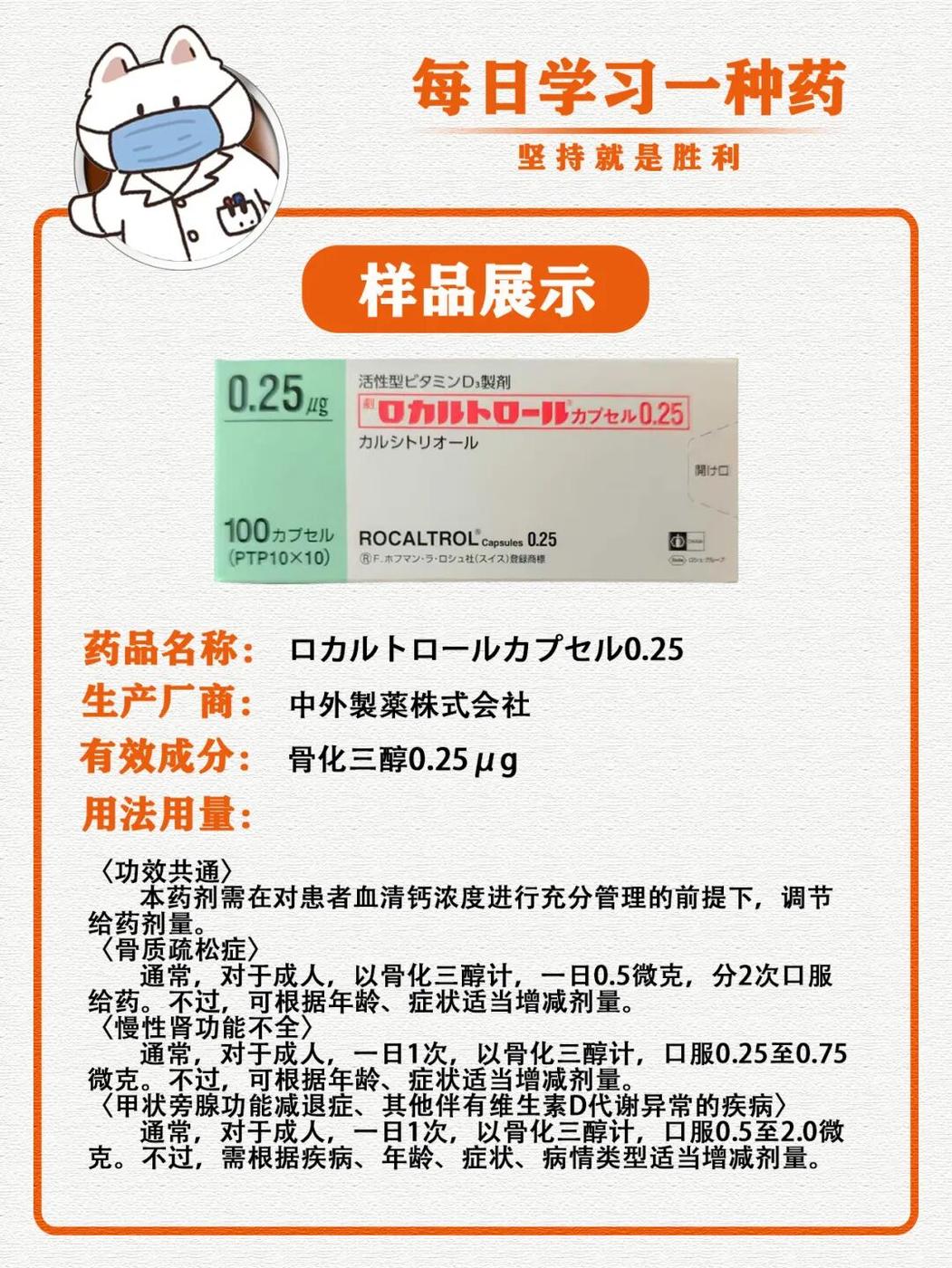
カルシトリオール ROCALTROLcapsules0.25 (PTP10X10) Drug Name: Lower mouth force is one cun of 0.25 Manufacturer: Chugai Seisai Co., Ltd Active ingredients: Calcitriol 0.25μg Dosage and administration: "Universal Effects." This drug must be adjusted under the premise of adequate management of patients' serum calcium levels Dosage. Osteoporosis Typically, for adults, calcitriol is taken orally at 0.5 micrograms per day, divided into two doses Medication. However, dosage can be adjusted appropriately according to age and symptoms. "Chronic Renal Insufficiency" Typically, for adults, take once daily as calcitriol, with an oral dose of 0.25 to 0.75 micrograms. However, dosage can be adjusted appropriately according to age and symptoms. "Hypoparathyroidism and other diseases accompanied by abnormal vitamin D metabolism Typically, for adults, take once daily as calcitriol, with 0.5 to 2.0 microglycosis orally Grams. However, dosage should be adjusted appropriately according to the disease, age, symptoms, and type of condition.
カルシトリオール ROCALTROLcapsules0.25 (PTP10X10) 药品名称: 口力下口一力寸七0.25 生产厂商: 中外製菜株式会社 有效成分: 骨化三醇0.25μg 用法用量: 《功效共通 本药剂需在对患者血清钙浓度进行充分管理的前提下,调节 给药剂量。 《骨质疏松症》 通常,对于成人,以骨化三醇计,一日0.5微克,分2次口服 给药。不过,可根据年龄、症状适当增减剂量。 《慢性肾功能不全》 通常,对于成人,一日1次,以骨化三醇计,口服0.25至0.75 微克。不过,可根据年龄、症状适当增减剂量。 《甲状旁腺功能减退症、其他伴有维生素D代谢异常的疾病 通常,对于成人,一日1次,以骨化三醇计,口服0.5至2.0微 克。不过,需根据疾病、年龄、症状、病情类型适当增减剂量。
カルシトリオール ROCALTROLcapsules0.25 (PTP10X10) Drug Name: Lower mouth force is one cun of 0.25 Manufacturer: Chugai Seisai Co., Ltd Active ingredients: Calcitriol 0.25μg Dosage and administration…
Text in this image machine-read · may contain errors
Mechanism of action: This drug is an active metabolite of vitamin D3 in the body. Therefore, this drug does not require hydroxylation in the liver or kidneys, and its It can promote calcium absorption in the intestines and also in the kidneys calcium reabsorption, thereby raising serum calcium levels. In addition, it can provoke Activate osteoclasts and osteoblasts, improve bone metabolism and turnover, and promote bone metabolism Formation. Functions and indications: 1. Osteoporosis 2. Improves various conditions associated with abnormal vitamin D metabolism in the following conditions Symptoms (hypocalcemia, numbness, hand and foot twitches, paresthesia, muscle strength). descent, bone pain, bone lesions, etc.) Chronic renal insufficiency. Hypoparathyroidism Renal osteodystrophy (renal bone disease), osteomalacia. Calcitriol
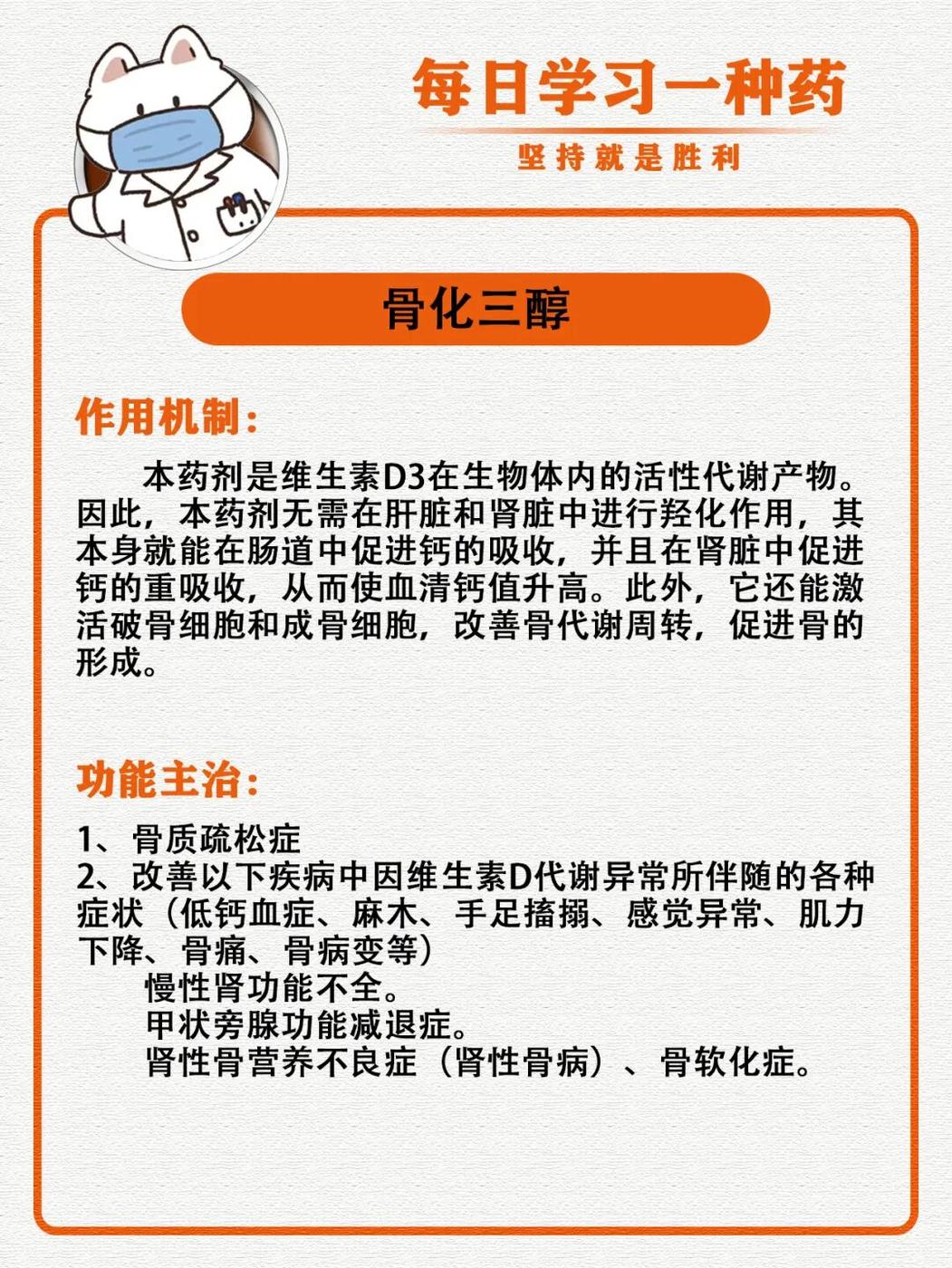
作用机制: 本药剂是维生素D3在生物体内的活性代谢产物。 因此,本药剂无需在肝脏和肾脏中进行羟化作用,其 本身就能在肠道中促进钙的吸收,并且在肾脏中促进 钙的重吸收,从而使血清钙值升高。此外,它还能激 活破骨细胞和成骨细胞,改善骨代谢周转,促进骨的 形成。 功能主治: 1、骨质疏松症 2、改善以下疾病中因维生素D代谢异常所伴随的各种 症状(低钙血症、麻木、手足搐、感觉异常、肌力 下降、骨痛、骨病变等) 慢性肾功能不全。 甲状旁腺功能减退症 肾性骨营养不良症(肾性骨病)、骨软化症。 骨化三醇
Mechanism of action: This drug is an active metabolite of vitamin D3 in the body. Therefore, this drug does not require hydroxylation in the liver or kidneys, and its It can promote calcium …