Respiratory · RESPIRATORY

Levocetirizine

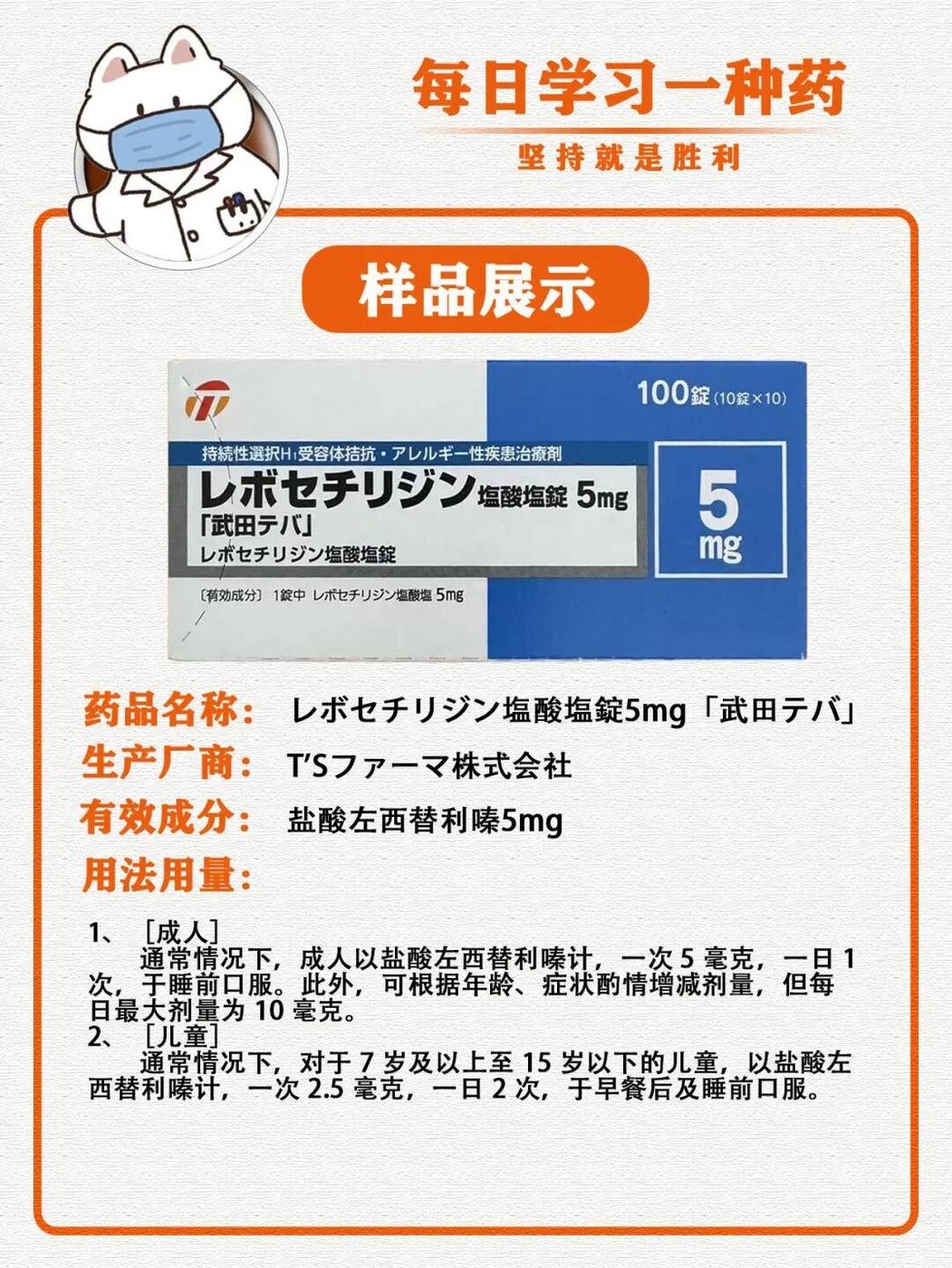
日本語原題:レボセチリジン塩酸塩錠5mg「武田テバ」

Published2025-09-25 16:21 Maker武田 FormTablet Content9 sections / 2 images
Ingredients / strength:
Each tablet contains 5mg of levocetirizine hydrochloride.
English translation of the Japanese package insert is the main text; the Japanese original is shown alongside for verification. Use the language menu (top right) to read the page in another language. This site is for reference only — consult a doctor or pharmacist before use.
Section 1 · 01
English translation
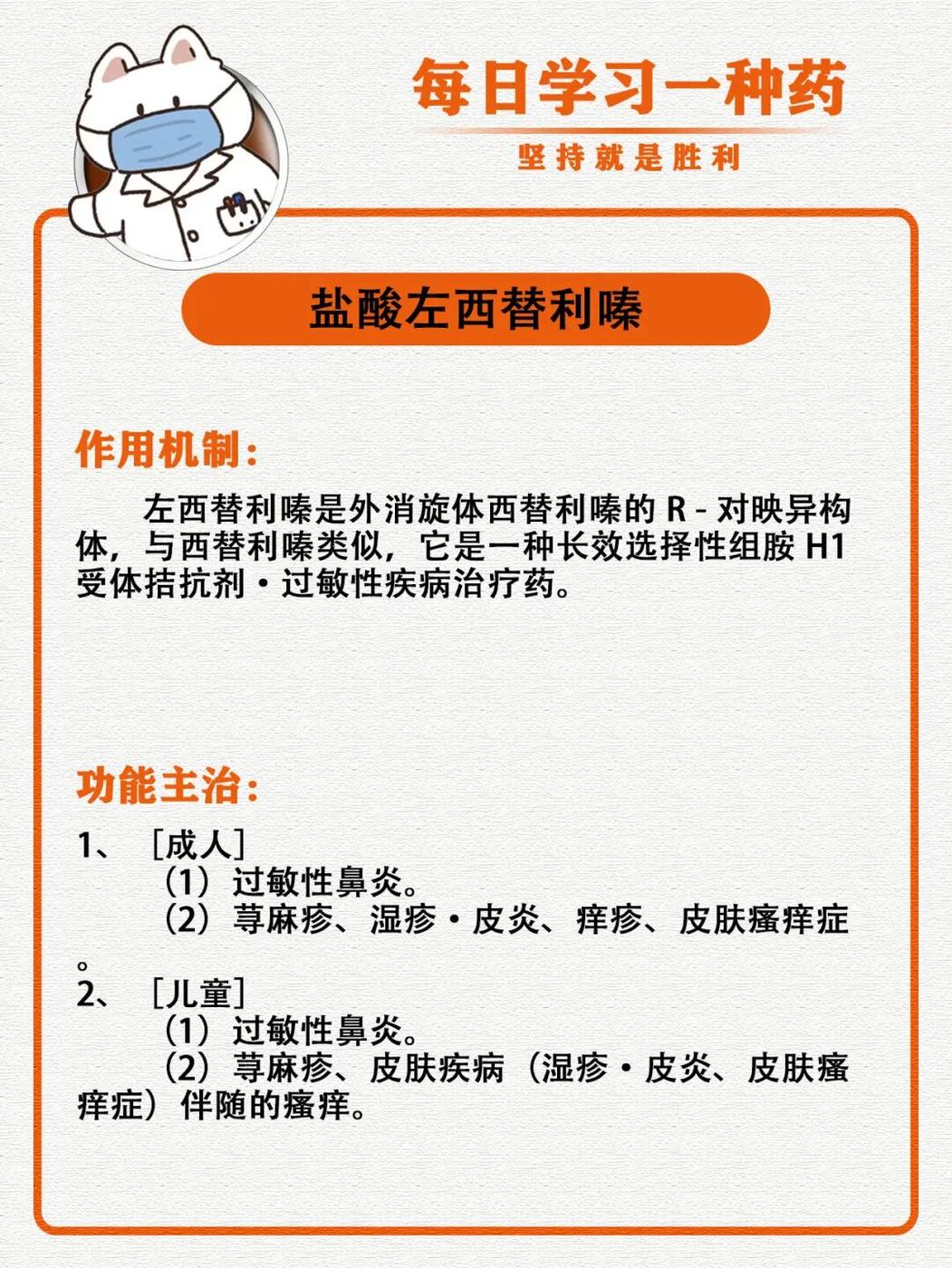
Feature Description Levocetirizine is the R-enantiomer of racemic cetirizine, and like cetirizine, it is a long-acting histamine H1 receptor antagonist and a treatment for allergic diseases.
Section 2 · 02
English translation
100 tablets [10 tablets (aluminum-plastic blister packaging) ×10 blisters].
Section 3 · 03
English translation
Characteristics A white double-sided film-coated lock with dividing lines.
Section 4 · 04
English translation
Ingredient Information Active ingredient: 5mg levocetiridine hydrochloride per tablet. Additives: crystalline cellulose, light anhydrous silica, lactose hydrate, magnesium stearate, hypromellose, titanium oxide, macrogol 400.
Section 5 · 05
English translation
Indications 1. [Adult] (1) Allergic rhinitis. (2) Urticaria, eczema and dermatitis, prurigo, pruritus. 2. [Children] (1) Allergic rhinitis. (2) Itching associated with urticaria and skin diseases (eczema, dermatitis, pruritus).
Section 6 · 06
English translation
Dosage and Administration 1. [Adult] Typically, adults receive 5 mg of levocetirizine hydrochloride orally once daily before bedtime. Adjustments may be made according to age and symptoms, but the maximum dose is set at 10 mg per day. 2. [Children] Typically, children aged 7 to under 15 years are given orally as levocetirizine hydrochloride at 2.5 mg twice daily, after breakfast and before bedtime.
Section 7 · 07
English translation
Notes 1. "Common Efficacy" (1) Since drowsiness may occur, patients receiving this drug must be strictly advised not to engage in operating dangerous machinery such as driving a car. (2) If no effect is observed, be careful not to administer indiscriminately for a long period. 2. 〈Allergic Rhinitis〉 When administering to seasonal patients, it is desirable to start administration just before the peak season and continue until the end of the peak season.
Section 8 · 08
English translation
Side Effects 1. Shock, anaphylaxis (both with unknown frequency) Shock and anaphylaxis (difficulty breathing, low blood pressure, urticaria, redness, etc.) may occur. 2. Convulsions (frequency unknown) 3. Liver dysfunction (0.6%), jaundice (frequency unknown) Liver dysfunction such as elevated AST, ALT, γ-GTP, LDH, and Al-P (initial symptoms: general fatigue, loss of appetite, fever, nausea, etc.) and jaundice may appear. 4. Thrombocytopenia (frequency unknown) 5. Other side effects (1) Neuropsychiatric system: drowsiness, fatigue, headache, heaviness in the head, lightheadedness, numbness, dizziness, floating sensation, insomnia, tremors, depression, agitation, aggression, somnolence, fatigue, weakness, sleep disorders, illusions, hallucinations, suicidal thoughts, fainting, amnesia, involuntary movements, loss of consciousness, nightmares. (2) Digestive system: dry mouth, nausea, loss of appetite, stomach discomfort, diarrhea, indigestion, abdominal pain, stomach pain, cheilitis, constipation, dry lips, vomiting, taste disturbances, stomatitis, abdominal bloating, increased appetite. (3) Circulatory: palpitations, elevated blood pressure, arrhythmias (atrioventricular block, premature contractions, tachycardia, paroxysmal supraventricular tachycardia, atrial fibrillation). (4) Blood: eosinophils, neutrophils, lymphocytosis, leukocytosis, leukopenia, monocytosis, thrombocytosis, thrombocytopenia. (5) Hypersensitivity: rash, urticaria, edema, rash, itching, angioedema, erythema multiforme, drug-induced eye rash, conjunctival congestion, fog-opa, visual disturbances, ocular rhovulation. (6) Liver: increased ALT, increased AST, increased total bilirubin, increased Al-P. (7) Kidneys and urinary system: elevated protein, BUN in urine, abnormal urine glucose, urobilinogen, frequent urination, hematuria, difficulty urinating, urinary retention, enuresis. (8) Others: tinnitus, menstrual irregularities, chest pain, hot flashes, shortness of breath, joint pain, stiffness in limbs, abnormal smell, nosebleeds, hair loss, coughing, weight gain, muscle pain, difficulty breathing.
Section 9 · 09
English translation
taboo 1. Patients with a history of hypersensitivity to any component of this drug or piperazine derivatives (including cetirizine and hydroxyzine) 2. Patients with severe renal impairment (creatinine clearance less than 10 mL/min)

Source images

2 images

Need help sourcing Japanese medicines or OEM production?

💬