Taltirelin
日本語原題:OD锭
Source images
3 imagesThe artwork keeps its original Japanese/Chinese lettering. Open “Text in this image” under a picture to read what it says in your language (machine-read, may contain errors).
Text in this image machine-read · may contain errors
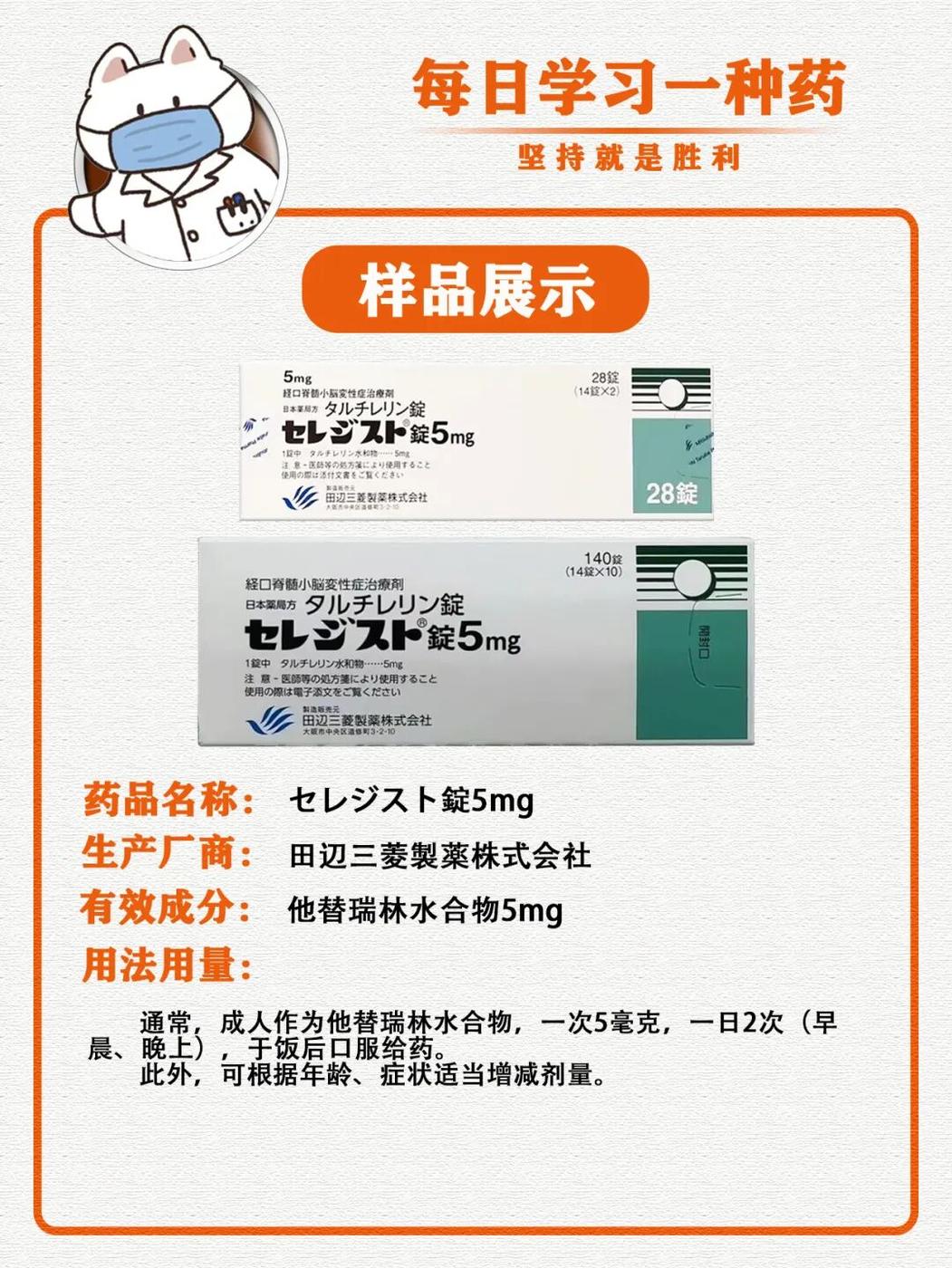
5mg (14×2) Tartirelin Tablets Tanabe Mitsubishi Sucha Co., Ltd. (14×10) Oral spine and cerebellar degeneration treatment ointment "Fangtaltirelin Tablets 5mg tablets Please refer to the electronic text when using Tanabe Mitsubishi Infant Vegetable Co., Ltd. Drug Name: Cereste Tablets 5mg Manufacturer: Tanabe Mitsubishi Vegetable Co., Ltd. Active ingredients: Tatiraline hydrate 5mg Dosage and administration: Typically, adults take 5 mg of tatirelin hydrate at once, twice daily (morning Morning and evening), take orally after meals. Additionally, dosage can be adjusted appropriately according to age and symptoms.
5mg (14×2) タルチレリン錠 田边三菱数茶株式会社 (14×10) 释口脊随小脑变性症治擦剂 “ 方タルチレリン錠 锭5mg 使用の際は電子文をご覧ください 田边三菱婴菜株式会社 药品名称: セレジスト錠 5mg 生产厂商: 田边三菱製菜株式会社 有效成分: 他替瑞林水合物5mg 用法用量: 通常,成人作为他替瑞林水合物,一次5毫克,一日2次(早 晨、晚上),于饭后口服给药。 此外,可根据年龄、症状适当增减剂量。
5mg (14×2) Tartirelin Tablets Tanabe Mitsubishi Sucha Co., Ltd. (14×10) Oral spine and cerebellar degeneration treatment ointment "Fangtaltirelin Tablets 5mg tablets Please refer to the elec…
Text in this image machine-read · may contain errors
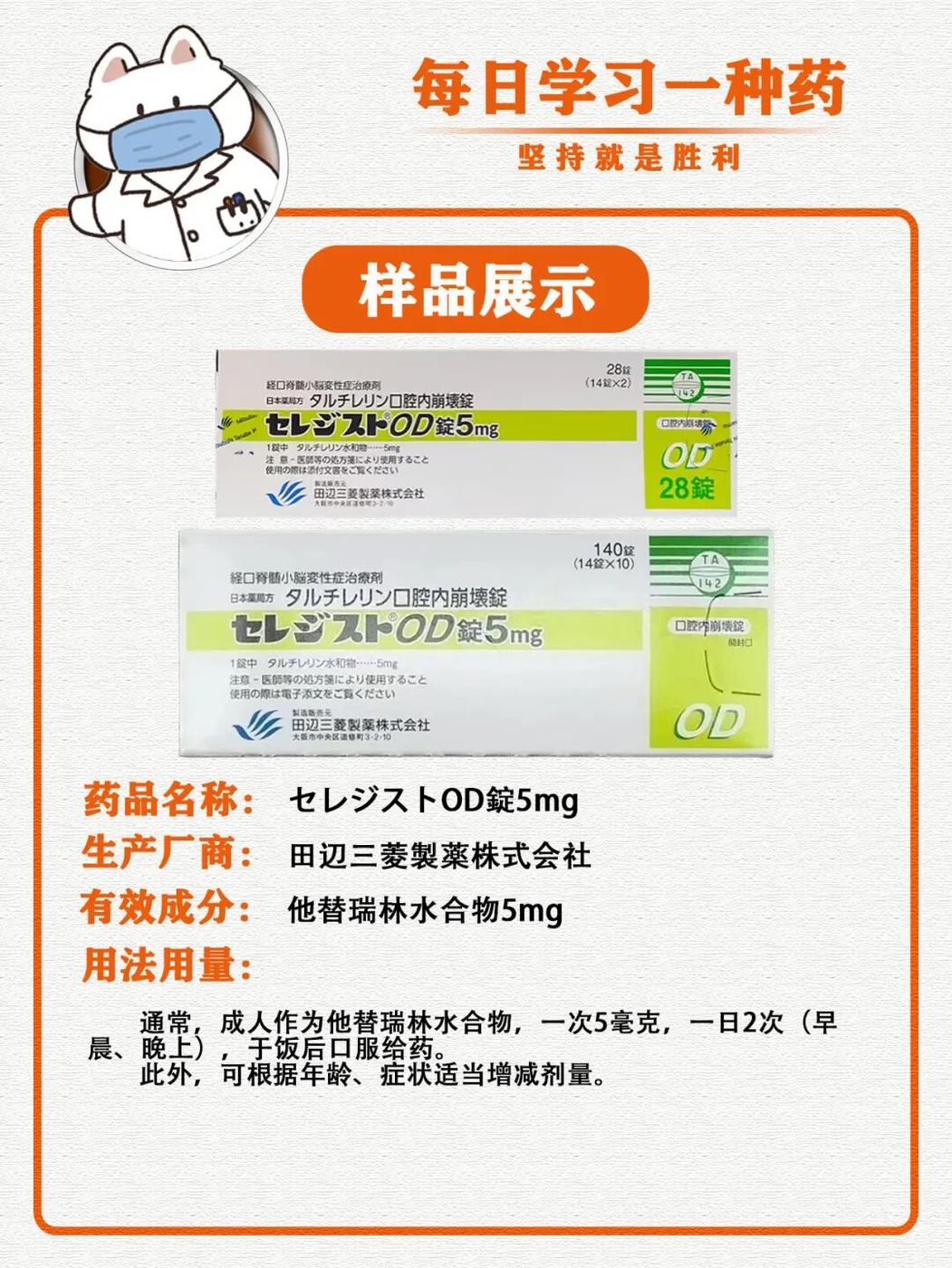
Evening Lutirelinlo Intratranstransceivable Tablets Cesigist 0 tablets 5mg Tanabe Mitsubishi Vegetable Co., Ltd. (14 Promotion ×10) Prescription Tartilerin Intracavitation Tablets If you need to delay, please send the electronic text Dabanshi Central District Daojie Street 3-2-10 Ceresist OD Tablets 5mg Manufacturer: Active ingredients: Tatiraline hydrate 5mg Dosage and administration: Typically, adults take 5 mg of tatirelin hydrate at once, twice daily (morning Morning and evening), take orally after meals. Additionally, dosage can be adjusted appropriately according to age and symptoms.
日 “ 夕ルチレリンロ経内崩壊錠 セしジスト 0 り錠 5mg 田边三菱製菜株式会社 (14促×10) 第 “ 方タルチレリンロ腔内崩壊錠 慢用の際は電子文をこ質ください 大版市中央区道街街3-2-10 セレジスト OD 錠 5mg 生产厂商: 有效成分: 他替瑞林水合物5mg 用法用量: 通常,成人作为他替瑞林水合物,一次5毫克,一日2次(早 晨、晚上),于饭后口服给药。 此外,可根据年龄、症状适当增减剂量。
Evening Lutirelinlo Intratranstransceivable Tablets Cesigist 0 tablets 5mg Tanabe Mitsubishi Vegetable Co., Ltd. (14 Promotion ×10) Prescription Tartilerin Intracavitation Tablets If you nee…
Text in this image machine-read · may contain errors
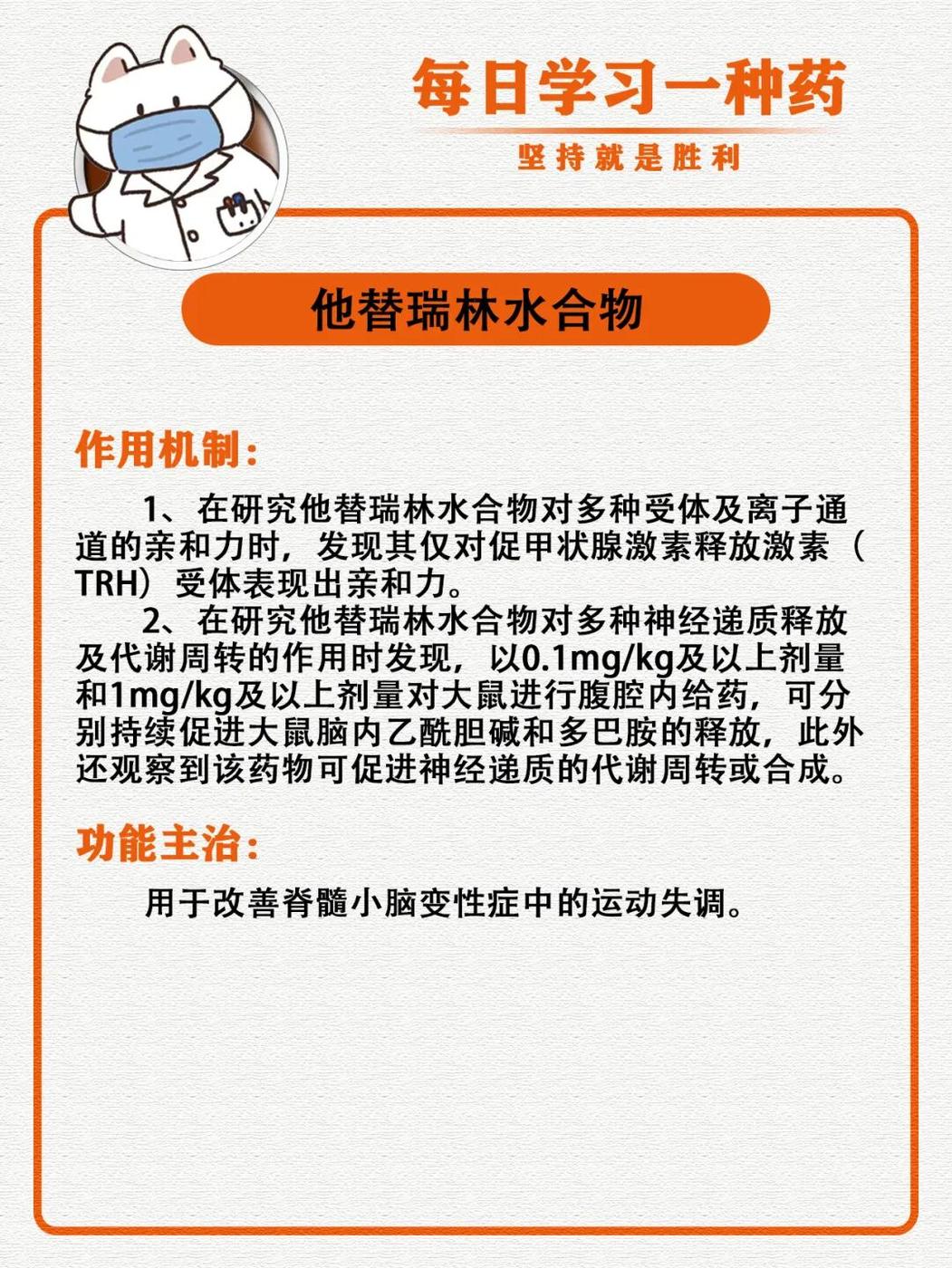
He substitutes for Reihlin hydrate Mechanism of action: 1. Studying the effects of Tatirelin hydrate on multiple receptors and ion passengers It was found that it only affects thyroid-stimulating hormone-releasing hormone ( TRH receptors exhibit affinity. 2. Studying the release of various neurotransmitters by tatirelin hydrate and metabolic turnover, at doses of 0.1 mg/kg or above and intraperitoneal administration at doses of 1mg/kg or above in rats, can be divided into Do not continuously promote the release of acetylcholine and dopamine in the rat's brain, in addition It has also been observed that the drug promotes the metabolic turnover or synthesis of neurotransmitters. Functions and indications: Used to improve motor disorders in spinocerebellar degeneration.
他替瑞林水合物 作用机制: 1、在研究他替瑞林水合物对多种受体及离子通 道的亲和力时,发现其仅对促甲状腺激素释放激素( TRH受体表现出亲和力。 2、在研究他替瑞林水合物对多种神经递质释放 及代谢周转的作用时发现,以0.1mg/kg及以上剂量 和1mg/kg及以上剂量对大鼠进行腹腔内给药,可分 别持续促进大鼠脑内乙酰胆碱和多巴胺的释放,此外 还观察到该药物可促进神经递质的代谢周转或合成。 功能主治: 用于改善脊髓小脑变性症中的运动失调。
He substitutes for Reihlin hydrate Mechanism of action: 1. Studying the effects of Tatirelin hydrate on multiple receptors and ion passengers It was found that it only affects thyroid-stimul…