Respiratory · RESPIRATORY

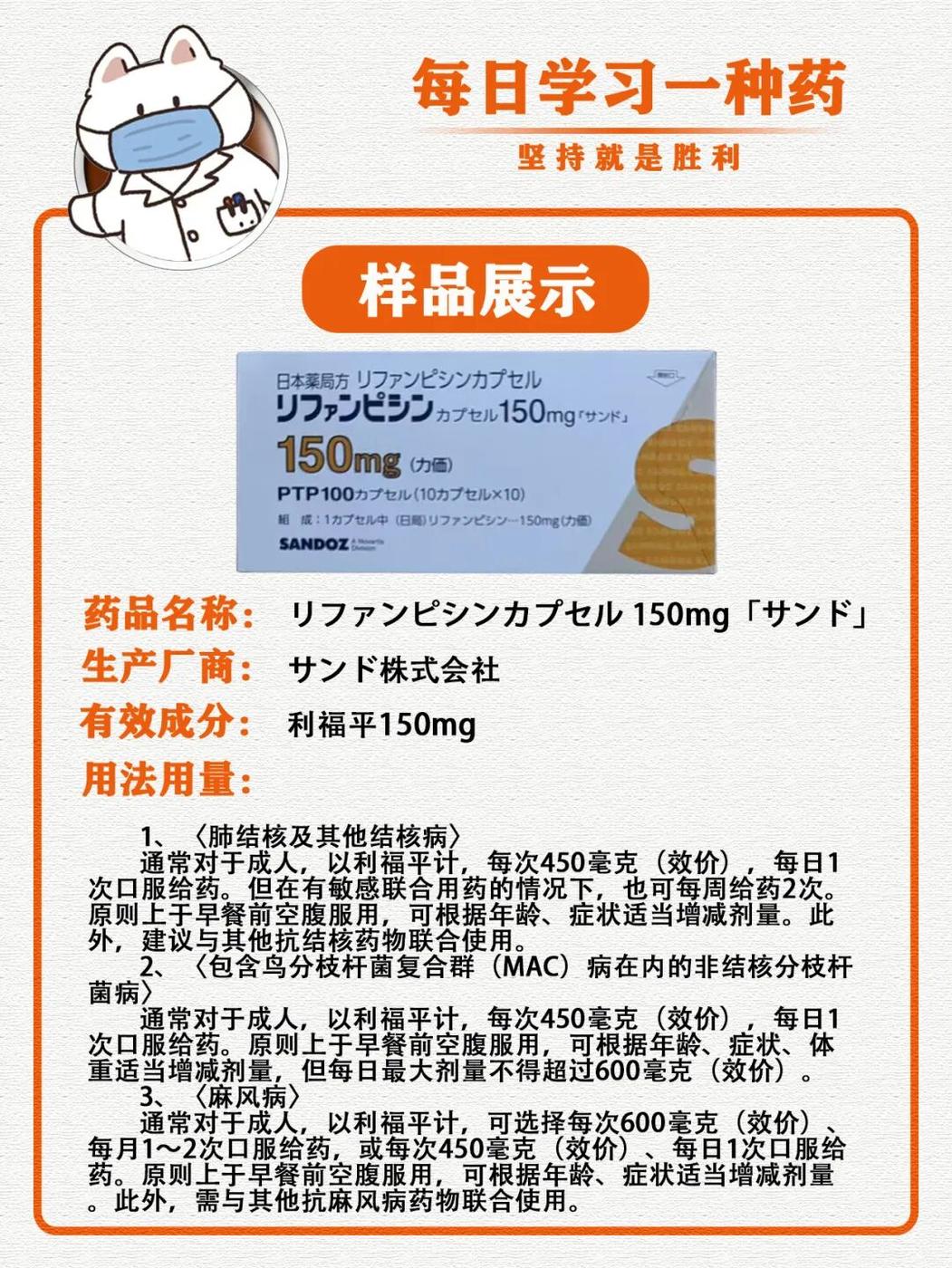
Rifampicin

日本語原題:リファンピシンカプセル 150mg「サンド」

Published2025-11-02 08:01 FormCapsule Content9 sections / 2 images
Ingredients / strength:
In one capsule, 150mg of Nippon Rifampicin (potency).
English translation of the Japanese package insert is the main text; the Japanese original is shown alongside for verification. Use the language menu (top right) to read the page in another language. This site is for reference only — consult a doctor or pharmacist before use.
Section 1 · 01
English translation
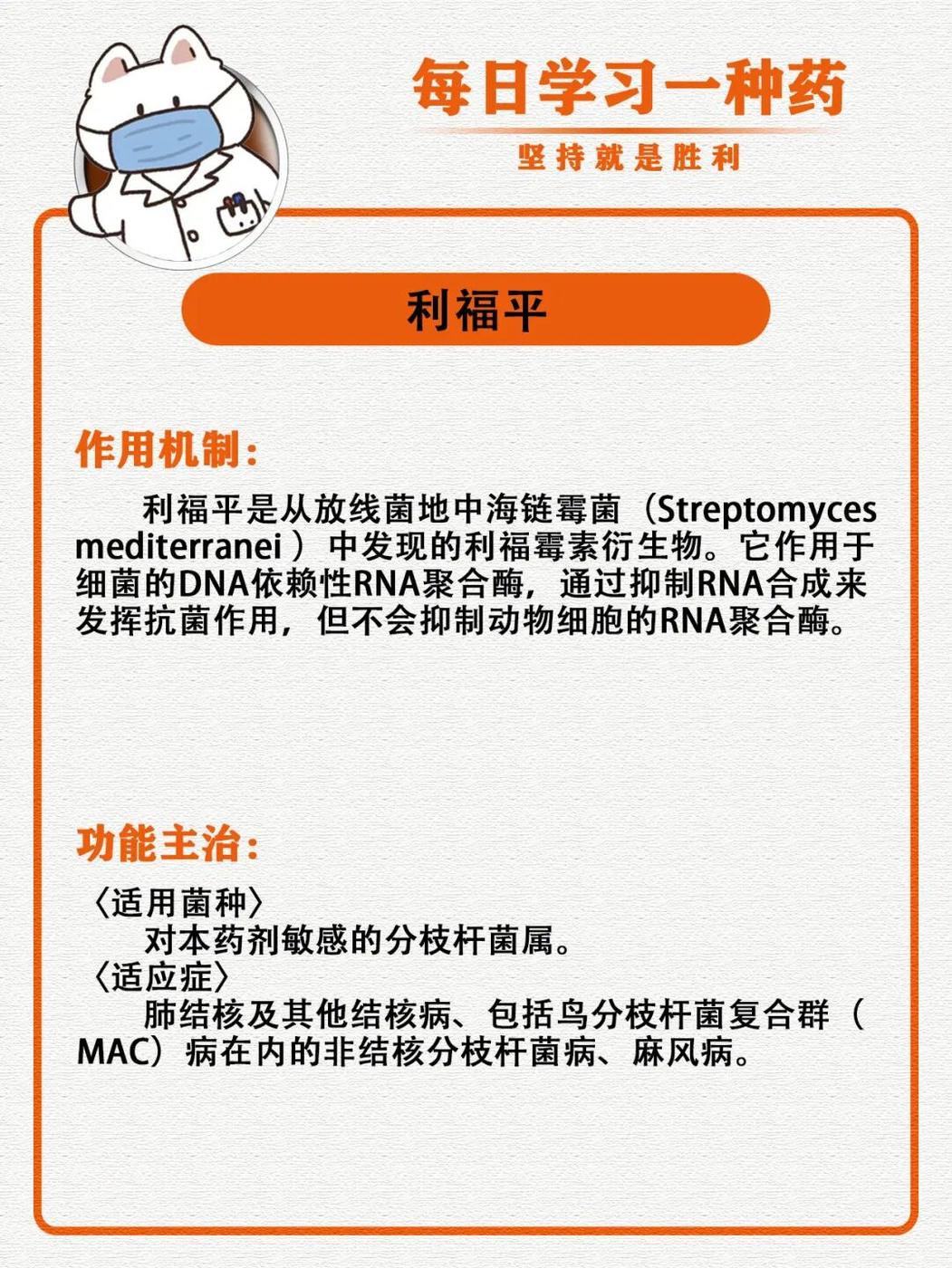
Feature Description Rifampicin is a derivative of Rifamycin discovered from the actinomycete Streptomyces mediterranei. It acts on bacterial DNA-dependent RNA polymerases, inhibiting RNA synthesis and thus exhibiting antibacterial effects, but does not inhibit RNA polymerase in animal cells.
Section 2 · 02
English translation
Specifications 100 capsules [10 capsules (PTP)×10].
Section 3 · 03
English translation
Characteristics 1. Dosage form: Hard capsule form (No. 3) 2. Color tone: (1) Cap: Red opaque. (2) Body: Mostly opaque color. (3) Contents: Orange-red crystalline powder.
Section 4 · 04
English translation
Ingredient Information Active ingredient: 150mg of Nippon Rifampicin (potency) per capsule. Additives: lactose hydrate, crystalline cellulose, carmerose, sodium starch glycholate, talc, magnesium stearate The capsule body contains gelatin, sodium lauryl sulfate, Red No. 3, Yellow No. 5, and titanium oxide.
Section 5 · 05
English translation
Indications 1. Suitable Strain Species Mycobacterium genus is sensitive to this drug. 2. Indications Pulmonary tuberculosis and other tuberculosis diseases, non-tuberculous mycomycetic mycomycelia including Mycobacterium avium complex (MAC) disease, and leprosy.
Section 6 · 06
English translation
Dosage and Administration 1. "Pulmonary Tuberculosis and Other Tuberculosis Diseases" Typically, adults receive 450 mg (potency) orally once daily as rifampicin. However, if sensitizing combination drugs are available, administration twice a week is acceptable. In principle, it should be administered on an empty stomach before breakfast, with adjustments adjusted according to age and symptoms. It is also desirable to use it in combination with other anti-tuberculosis drugs. 2. Non-tuberculous mycobacterial infections including MAC syndrome Typically, adults receive 450 mg (potency) orally once daily as rifampicin. In principle, it should be administered on an empty stomach before breakfast, with adjustments adjusted according to age, symptoms, and body weight, but the maximum daily dose should not exceed 600 mg (potency). 3. Hansen's disease Typically, adults are given 600 mg (potency) as rifampicin orally once a day, 1~2 times a month, or 450 mg (potency) once daily. In principle, it should be administered on an empty stomach before breakfast, with adjustments adjusted according to age and symptoms. Also, use in combination with other anti-Hansen's disease agents.
Section 7 · 07
English translation
Notes 1. "Common Efficacy" (1) Severe liver dysfunction may occur, so regular liver function tests are essential. (2) Intermittent administration or temporary suspension and readministration may cause allergic side effects (shock, anaphylaxis, renal failure, interstitial nephritis, hemolytic anemia). 2. "Pulmonary Tuberculosis and Other Tuberculosis" (1) To prevent the emergence of resistant bacteria, susceptibility should be confirmed in principle, and administration should be limited to the minimum period necessary for disease treatment. (2) Treatment with anti-tuberculosis drugs including this drug may cause paradoxical reactions. If, after starting treatment, exacerbation of existing tuberculosis or new onset of tuberculosis symptoms is observed, the decision should be made based on drug sensitivity testing or similar methods to decide whether to continue administration. 3. Hansen's disease (1) It is desirable to refer to the "Hansen's Disease Diagnosis and Treatment Guidelines" (issued by the Ministry of Health and Welfare and the Fujifu Association). (2) Provide sufficient explanations to patients, including the lack of accumulated scientific data on treatment with this drug, and obtain informed consent.
Section 8 · 08
English translation
Side Effects 1. Severe liver dysfunction such as fulminant hepatitis (frequency unknown) 2. Shock (frequency unknown), anaphylaxis (frequency unknown) Early symptoms: chills, facial flushing, difficulty breathing, etc. 3. Renal failure (frequency unknown), interstitial nephritis (frequency unknown), nephrotic syndrome (frequency unknown) 4. Hemolytic anemia (frequency unknown) 5. Agranulocytosis (frequency unknown), thrombocytopenia (frequency unknown) 6. Severe colitis with bloody stools such as pseudomembranous colitis (frequency unknown) Symptoms: abdominal pain, frequent diarrhea, etc. 7. Toxic epidermal necrolysis (TEN) (frequency unknown), Stevens-Johnson syndrome (frequency unknown), lichen planus rash (frequency unknown), pemphigus-like and pemphigoid rash (frequency unknown), erythroderma (exfoliative dermatitis) (frequency unknown) 8. Interstitial pneumonia (frequency unknown) 9. Other side effects (1) Liver: elevated AST, elevated ALT, etc., jaundice. (2) Hypersensitivity: rash, etc., fever, cold-like syndrome, urticaria, etc. (3) Kidneys: proteinuria, hematuria, etc. (4) Blood: granulocytopenia, bleeding tendency, eosinophils, etc. (5) Gastrointestinal: gastrointestinal disorders (loss of appetite, nausea, vomiting, stomach pain, diarrhea, stomach discomfort, etc.), hemorrhagic erosive gastritis. (6) Nervous system: headache, dizziness, insomnia, irritability, drowsiness, confusion. (7) Endocrine system: menstrual irregularities, hypothyroidism, adrenal insufficiency. (8) Others: Numbness, general fatigue, muscle weakness, finger stiffness, edema, ataxia, staining of urine and stool, etc.
Section 9 · 09
English translation
taboo 1. Patients with biliary obstruction or severe liver dysfunction 2. Lurasidone hydrochloride, tadalafil (Adsilca), macitentan, pemafibrate, ticagrelol, lorratinib, voriconazole, isabconazonium sulfate, phosamprenavir calcium hydrate, atazanavir sulfate, rilpivirin hydrochloride, rilpivirin hydrochloride, tenofovir, alafenamide fumarate, emtricitabine, Dortegravir Sodium Ylpivirin Hydrochloride, Elvitegravir, Covicistat, Emtricitabine, Tenohovir Alafenamide Fumarate, Darnavir Ethanol Adduct, Covicistat Emtricitabine Tenohovir Alafenamide Fumarate, Drabilin, Cabotegravir, Cabotegravir Sodium, Lenakapavir Sodium, Sofosbuvir, Regipavir acetone adduct - Sofosbuvir, Sofosbuvir Belpathasvir, Grecaprevir hydrate - Pibrentasvir, Tenofovir - Alafenamide fumarate, Victeglavir Sodium Emtricitabine Tenofovir Alafenamide Fumarate, Amenamevir, Nirmatrelvir Ritonavir, Encitrevir Fumaric Acid, Patients receiving Artemeter, Lumefantrin, or Praziquantel 3. Patients with a history of hypersensitivity to any component of this drug

Source images

2 images

Need help sourcing Japanese medicines or OEM production?

💬