Urology & Kidney · URINARY

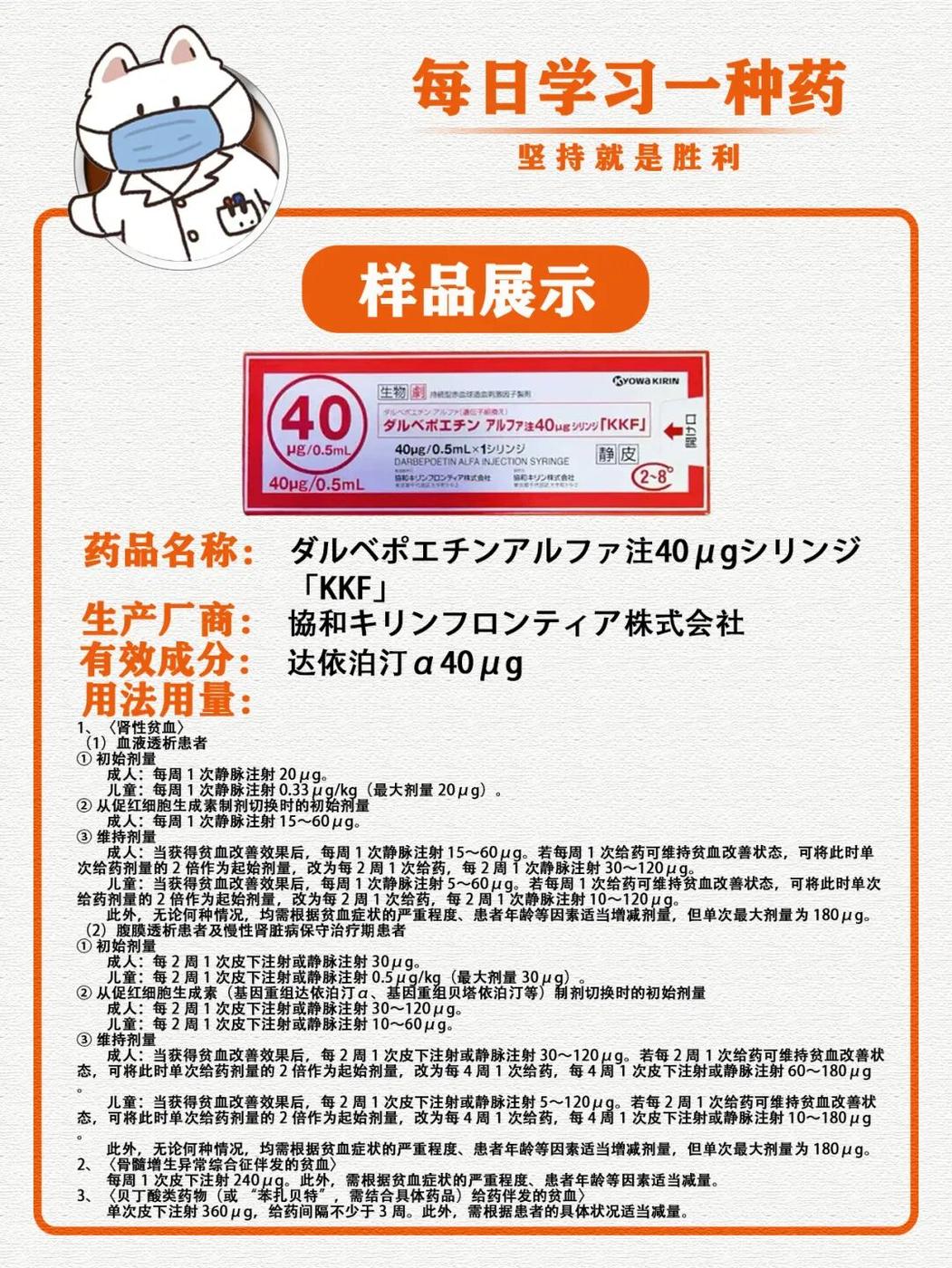
Darbepoetin alfa

日本語原題:ダルベポエチンアルファ注40μgシリンジ「KKF」

Published2025-11-13 09:38 Content9 sections / 2 images
Ingredients / strength:
Dalbepoetin alpha (genetically modified) 40μg.
English translation of the Japanese package insert is the main text; the Japanese original is shown alongside for verification. Use the language menu (top right) to read the page in another language. This site is for reference only — consult a doctor or pharmacist before use.
Section 1 · 01
English translation
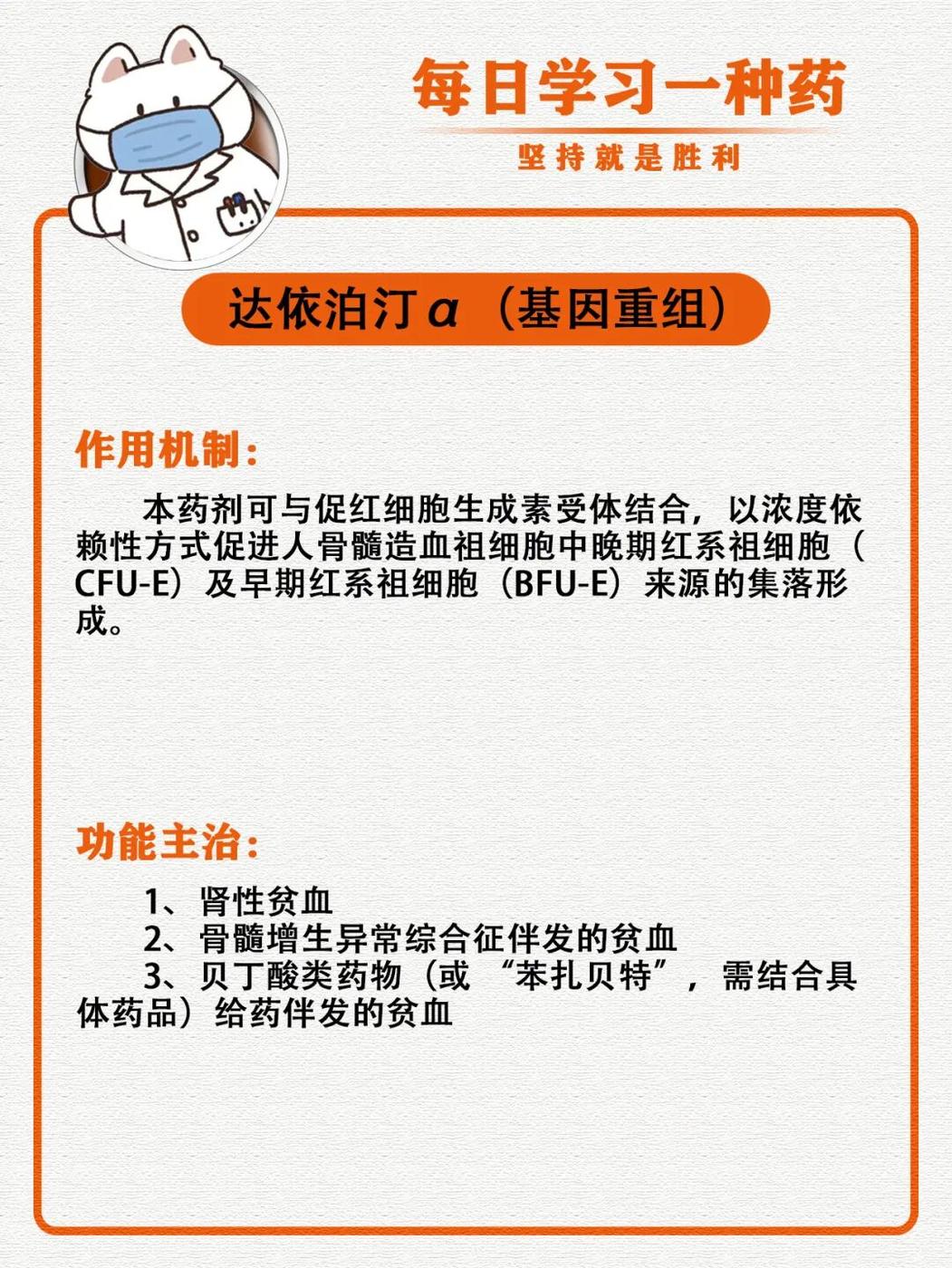
Feature Description This drug binds to the erythropoietin receptor and promotes concentration-dependent colony formation derived from late erythroblastic progenitor cells (CFU-E) and prophase erythroblastic progenitor cells (BFU-E) in human bone marrow hematopoietic progenitor cells.
Section 2 · 02
English translation
Specifications 0.5 mL [1 syringe, 10 syringes].
Section 3 · 03
English translation
Characteristics A colorless, clear liquid.
Section 4 · 04
English translation
Ingredient Information 1. Capacity: 0.5ml per syringe. 2. Active ingredient: 40μg of dalbepoetin alpha (genetically modified). 3. Additives: L-methionine 0.075mg, polysorbate 80 0.025mg, sodium dihydrogen phosphate hydrate 1.19mg, isotonic agent, pH adjuster.
Section 5 · 05
English translation
Indications 1. Renal anemia 2. Anemia associated with myelodysplastic syndrome 3. Anemia associated with verzutifan administration
Section 6 · 06
English translation
Dosage and Administration 1. "Renal Anemia" (2) Hemodialysis patients (1) Initial dosage Adults: Typically, adults receive 20 μg intravenously once a week as dalbepoetin alpha (genetically modified). Children: Typically, children receive intravenous administration of dalbepoetin alpha (genetically modified) once weekly at 0.33 μg/kg (maximum 20 μg). (2) Erythropoietin (Epoitin Alpha (genetically modified E), epoetin beta (genetically modified, etc.) formulations Switching initial dose Adults: Typically, adults receive intravenous administration of 15~60 μg once a week as dalbepoetin alpha (genetically modified). (3) Maintenance dosage Adults: Once anemia improvement is achieved, adults are usually given intravenous doses of 15~60 μg once weekly as dalbepoetin alpha (genetically modified). If anemia improvement is maintained with once-weekly administration, the starting dose can be changed to twice the initial dose and then administered once every two weeks, with 30~120 μg administered intravenously every two weeks. Children: Once anemia improvement is achieved, children are usually given intravenous doses of 5~60 μg once weekly as dalbepoetin alpha (genetically modified). If anemia improvement is maintained with once-weekly dosing, the starting dose can be changed to twice the current dose, then once every two weeks, and intravenous doses of 10~120 μg can be administered once every two weeks. In all cases, the dose may be adjusted appropriately depending on the severity of anemia symptoms, age, etc., but the maximum dose is set at 180 μg per dose. (2) Patients undergoing peritoneal dialysis and patients with conserved-phase chronic kidney disease (1) Initial dosage Adults: Typically, adults receive 30 μg subcutaneously or intravenously once every two weeks as dalbepoetin alpha (genetically modified). Children: Typically, children receive 0.5 μg/kg (up to 30 μg) subcutaneously or intravenously once every two weeks as dalbepoetin alpha (genetically modified). (2) Initial dose for switching from erythropoietin (e.g., Epoetin alpha, e.g. Adults: Typically, adults receive 30~120 μg subcutaneously or intravenously once every two weeks as dalbepoetin alpha (genetically modified). Children: Typically, children receive 10~60 μg subcutaneously or intravenously once every two weeks as dalbepoetin alpha (genetically modified). (3) Maintenance dosage Adults: Once anemia improvement is achieved, adults are usually given 30~120 μg subcutaneously or intravenously once every two weeks as dalbepoetin alpha (genetically modified). If anemia improvement is maintained with once every two weeks, the starting dose can be changed to twice the current dose and then to once every four weeks, and 60~180 μg can be administered subcutaneously or intravenously once every four weeks. Pediatrics: Once anemia improvement is achieved, children are usually given 5~120 μg subcutaneously or intravenously once every two weeks as dalbepoetin alpha (genetically modified). If anemia improvement is maintained with once every two weeks, the starting dose can be changed to twice the initial dose and then to once every four weeks, and 10~180 μg can be administered subcutaneously or intravenously once every four weeks. In all cases, the dose may be adjusted appropriately depending on the severity of anemia symptoms, age, etc., but the maximum dose is set at 180 μg per dose. 2. "Anemia associated with myelodysplastic syndrome" Typically, adults receive 240 μg subcutaneously once a week as dalbepoetin alpha (genetically modified). Dose reduction is appropriate depending on the severity of anemia symptoms, age, and other factors. 3. "Anemia associated with Verzustifan administration" Typically, adults receive 360 μg of dalbepoetin alpha (genetically modified) subcutaneously at intervals of at least three weeks. Dose reduction is adjusted as needed depending on the patient's condition.
Section 7 · 07
English translation
Notes 1. "Common Efficacy" (1) Erythroblastic tuberculosis accompanied by anti-erythropoietin antibody production may occur after administration of this drug; if anemia does not improve or worsens during administration, suspect the disease. (2) The presence of iron is important for the effects of this drug; iron supplements should be administered in cases of iron deficiency. 2. "Renal Anemia" (1) Conduct thorough interviews to predict reactions such as shock. When administering, always be prepared to provide emergency treatment for shock and similar injuries. Also, from the start of administration until the end of treatment, keep the patient at rest and conduct thorough observation. In particular, observe carefully immediately after starting administration. At the start of administration or the first dose after discontinuation, a small amount of this drug should be injected intravenously or intradermally, and after confirming no adverse reactions, the full dose should be administered. (2) During administration of this drug, regularly monitor hemoglobin concentration or hematocrit levels, refer to the latest information such as academic guidelines, and be very careful not to exhibit excessive hematopoietic effects (for hemodialysis patients, hemoglobin concentration should exceed 12 g/dL or hematocrit above 36%) occur. The following clinical trial results have been reported related to hemoglobin concentrations in the treatment of renal anemia. (1) In hemodialysis patients with heart failure or ischemic heart disease, the group maintaining the target hemoglobin concentration at 14 g/dL (hematocrit value 42%) tended to have higher mortality compared to the group maintaining it around 10 g/dL (hematocrit value 30%). (2) Regarding treatment with erythropoietic-stimulating factor preparations for renal anemia in patients with conservative chronic kidney disease, patients with a target hemoglobin concentration of 13.5 g/dL were reported to have significantly higher frequencies of death and cardiovascular damage compared to those with 11.3 g/dL. (3) In patients with type 2 diabetes and renal anemia with chronic chronic kidney disease who were treated with erythropoietic-stimulating factor preparations with a target hemoglobin concentration of 13.0 g/dL, and those who received placebo (when hemoglobin concentration fell below 9.0 g/dL), the results were compared, There have been reports that the incidence of stroke was significantly higher in the erythropoietic-stimulating factor group compared to the placebo group. (3) At the start of administration and at dose changes, check hemoglobin or hematocrit levels about once a week to once every two weeks until the hemoglobin concentration or hematocrit level reaches the target range and stabilizes. If excessive hematopoietic effect is observed, appropriate measures such as discontinuation of medication should be taken. (4) Since elevated blood pressure may be observed with administration of this drug and hypertensive encephalopathy has been reported, administer with close attention to changes in blood pressure, hemoglobin concentration, hematocrit levels, and other factors. In particular, be careful to gradually increase hemoglobin concentration and hematocrit values. Additionally, this drug is a long-acting formulation and has a longer-lasting hematopoietic effect compared to erythropoietin preparations. In clinical trials, cases have been observed where it takes time for hemoglobin or hematocrit levels to decrease even after discontinuation, so it is important to monitor thoroughly until hemoglobin or hematocrit levels recover. (5) Hyperkalemia may occur with administration of this drug, so proper dietary management is essential. (6) In hemodialysis patients, administration of this drug may cause shunt blockage or residual blood inside the hemodialysis machine; therefore, pay close attention to blood flow inside the shunt and hemodialysis machine. In such cases, appropriate measures such as shunt reconstruction and increasing anticoagulant dosage should be taken. (7) When administering this drug to patients with chronic chronic kidney disease in the conserved phase, consider the following points. (1) Since water regulation is difficult, carefully monitor water levels, electrolyte balance, kidney function, blood pressure, and other factors. (2) As chronic kidney disease progresses, the anemia-improving effect of this drug may diminish. Therefore, during administration, monitor serum creatinine concentration and creatinine clearance as appropriate, and take appropriate measures such as increasing the dose or discontinuing administration. 3. Anemia associated with myelodysplastic syndrome (1) This drug should only be administered to patients deemed appropriate for use under the supervision of a physician with sufficient knowledge and experience in treating hematologic disorders. (2) Conduct thorough interviews to predict reactions such as shock. When administering, always be prepared to provide emergency treatment for shock and similar injuries. Also, from the start of administration until the end of treatment, keep the patient at rest and conduct thorough observation. In particular, observe carefully immediately after starting administration. At the start of administration or the first dose after discontinuation, a small amount of this drug should be injected intradermally, and after confirming no adverse reactions, the full dose should be administered. (3) During administration of this drug, regularly monitor hemoglobin concentration and be very careful not to exhibit excessive hematopoietic effects (with hemoglobin concentration exceeding 11 g/dL as a guideline). (4) At the start of administration and when changing doses, check hemoglobin levels about once a week until hemoglobin levels stabilize. If excessive hematopoietic effect is observed, appropriate measures such as discontinuation of medication should be taken. (5) Since increased blood pressure may be observed with administration and hypertensive encephalopathy has been reported, administer with careful attention to changes in blood pressure, hemoglobin levels, and other factors. 4. "Anemia Associated with Verzustifan Administration" (1) Conduct thorough interviews to predict reactions such as shock. When administering, always be prepared to provide emergency treatment for shock and similar injuries. Also, from the start of administration until the end of treatment, keep the patient at rest and conduct thorough observation. In particular, observe carefully immediately after starting administration. At the start of administration, a small amount of this drug should be injected into the skin to confirm no adverse reactions before administering the full dose. (2) During administration of this drug, regularly monitor hemoglobin levels, and if sufficient anemia improvement effect (hemoglobin concentration of 10 g/dL or higher) is observed, discontinue administration. (3) Since this drug may cause increased blood pressure and hypertensive encephalopathy has been reported, administration should be conducted with careful attention to changes in blood pressure, hemoglobin levels, and other factors.
Section 8 · 08
English translation
Side Effects 1. Cerebral infarction (0.8%) 2. Cerebral hemorrhage (0.1%) 3. Liver dysfunction, jaundice (0.1%) Liver dysfunction accompanied by elevated AST, ALT, and γ-GTP, as well as jaundice, may occur. 4. Hypertensive encephalopathy (less than 0.1% (note)) 5. Shock, anaphylaxis (both frequency unknown) Shock and anaphylaxis (such as urticaria, difficulty breathing, lip edema, pharyngeal edema, etc.) may occur. 6. Erythroblastic tuberculosis (frequency unknown) If erythroblastic tuberculosis accompanied by anti-erythropoietin antibody production appears, discontinue administration of this drug and take appropriate measures. Also, avoid switching to erythropoietin preparations. 7. Myocardial infarction and pulmonary infarction (each less than 0.1%) Note: The frequency of occurrence is based on the Specific Usage Performance Survey. 8. Other side effects (1) Cardiovascular system: elevated blood pressure (16.0%), arrhythmia, angina pectoris, myocardial ischemia, hypotension during dialysis, palpitations, occlusive arteriosclerosis. (2) Skin: pruritus, rash. (3) Liver: abnormal liver function (elevated Al-P, elevated γ-G-Tp, elevated AST, elevated ALT, elevated bilirubin), gallbladder polyps. (4) Metabolism: increased serum potassium, increased uric acid, decreased iron stores, increased blood phosphorus, decreased appetite, secondary hyperparathyroidism. (5) Blood: eosinophils, thrombocytopenia, lymphocytes, leukopenia, leukocytosis. (6) Kidneys and urinary system: Decreased kidney function (BUN, increased creatinine, etc.), hematuria. (7) Digestive system: abdominal pain, nausea/vomiting, gastritis, duodenitis. (8) Sensory organs: headache, fatigue, dizziness, insomnia, taste disturbances, sensori-induced hearing loss, vitreous hemorrhage, conjunctivitis. (9) Others: shunt thrombus and occlusion, elevated LDH, residual blood in the dialysis circuit, musculoskeletal pain, shunt site pain, fever, chest discomfort, edema, poor hemostasis, diabetic gangrene heat sensation or flushing.
Section 9 · 09
English translation
taboo Patients with hypersensitivity to any component of this drug or erythropoietin preparations.

Source images

2 images

Need help sourcing Japanese medicines or OEM production?

💬