Baclofen
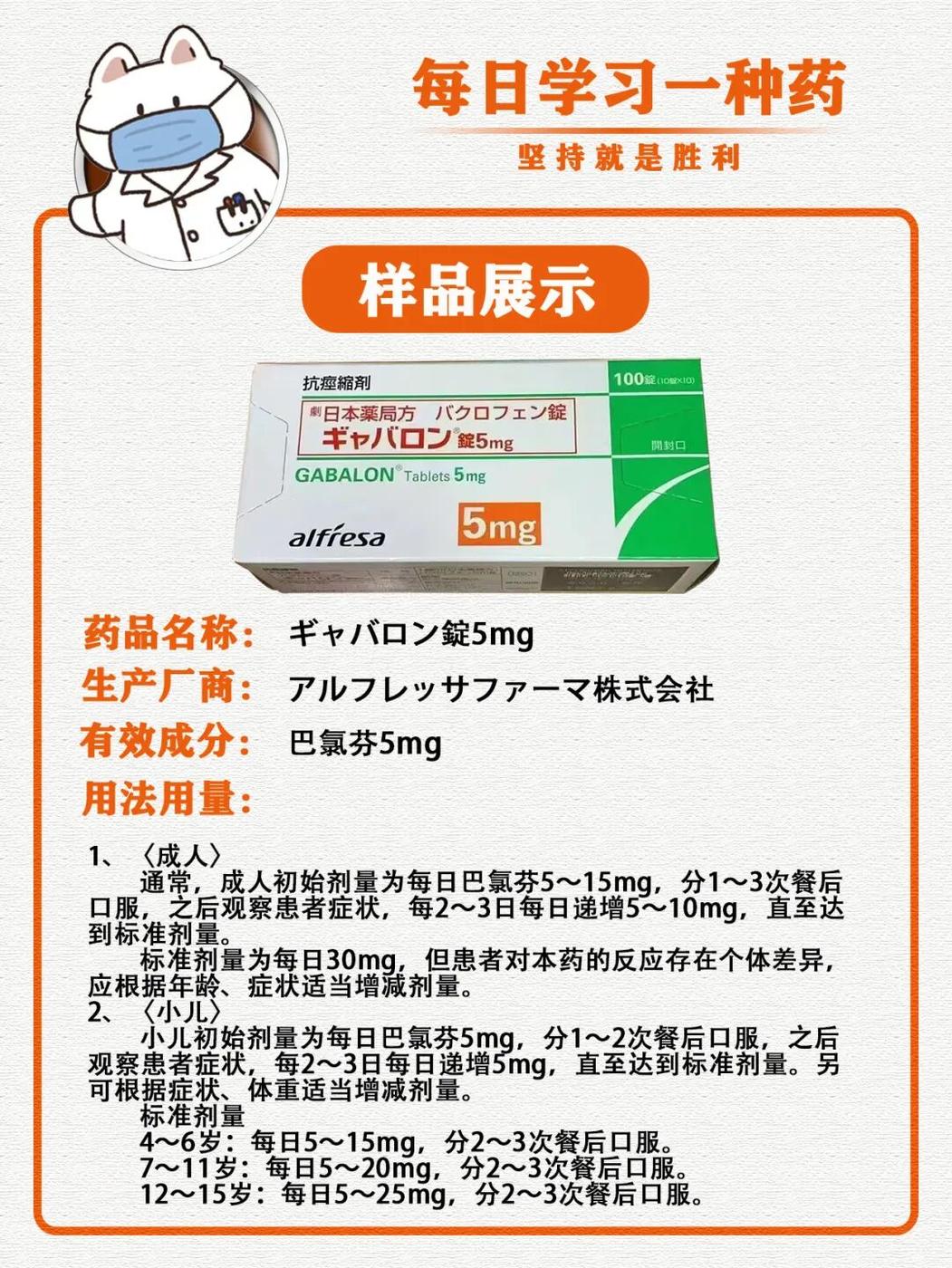
日本語原題:ギャバロン錠5mg
Each tablet contains 5mg of baclofen (Japanese version).
Source images
2 imagesThe artwork keeps its original Japanese/Chinese lettering. Open “Text in this image” under a picture to read what it says in your language (machine-read, may contain errors).
Text in this image machine-read · may contain errors
Extreme Japanese Pharmacopoeia Baclofen Tablets Niu Ba Kou Tablets 5mg GABALONTablets5mg 5mg alffesa Drug name: ≠ + Bakou √ tablets 5mg Manufacturer: Alfresa Pharma Co., Ltd Active ingredients: Baclofen 5mg Dosage and administration: Typically, the initial adult dose is 5~15mg of baclofen per day, divided into 1~3 meals after meals Oral administration, then monitor the patient's symptoms, increasing by 5~10mg daily every 2~3 days until the dose is reached to the standard dose. The standard dose is 30mg per day, but patient responses to this drug vary individually, Dosage should be adjusted appropriately according to age and symptoms. The initial dose for children is 5mg of baclofen daily, taken orally after 1~2 meals, thereafter Monitor the patient's symptoms, increasing by 5mg daily every 2~3 days until the standard dose is reached. Also Dosage can be adjusted appropriately according to symptoms and body weight. Standard dosage Ages 4~6: 5~15mg daily, taken orally after meals in 2~3 doses. Ages 7~11: Take 5~20mg daily, divided into 2~3 doses after meals. Ages 12~15: Take 5~25mg daily, divided into 2~3 doses after meals.
劇日本薬局方バクロフェン錠 牛八口锭5mg GABALONTablets5mg 5mg alffesa 药品名称:≠+八口√锭5mg 生产厂商: アルフレッサファーマ株式会社 有效成分: 巴氯芬5mg 用法用量: 通常,成人初始剂量为每日巴氯芬5~15mg,分1~3次餐后 口服,之后观察患者症状,每2~3日每日递增5~10mg,直至达 到标准剂量。 标准剂量为每日30mg,但患者对本药的反应存在个体差异, 应根据年龄、症状适当增减剂量。 小儿初始剂量为每日巴氯芬5mg,分1~2次餐后口服,之后 观察患者症状,每2~3日每日递增5mg,直至达到标准剂量。另 可根据症状、体重适当增减剂量。 标准剂量 4~6岁:每日5~15mg,分2~3次餐后口服。 7~11岁:每日5~20mg,分2~3次餐后口服。 12~15岁:每日5~25mg,分2~3次餐后口服。
Extreme Japanese Pharmacopoeia Baclofen Tablets Niu Ba Kou Tablets 5mg GABALONTablets5mg 5mg alffesa Drug name: ≠ + Bakou √ tablets 5mg Manufacturer: Alfresa Pharma Co., Ltd Active ingredien…
Text in this image machine-read · may contain errors
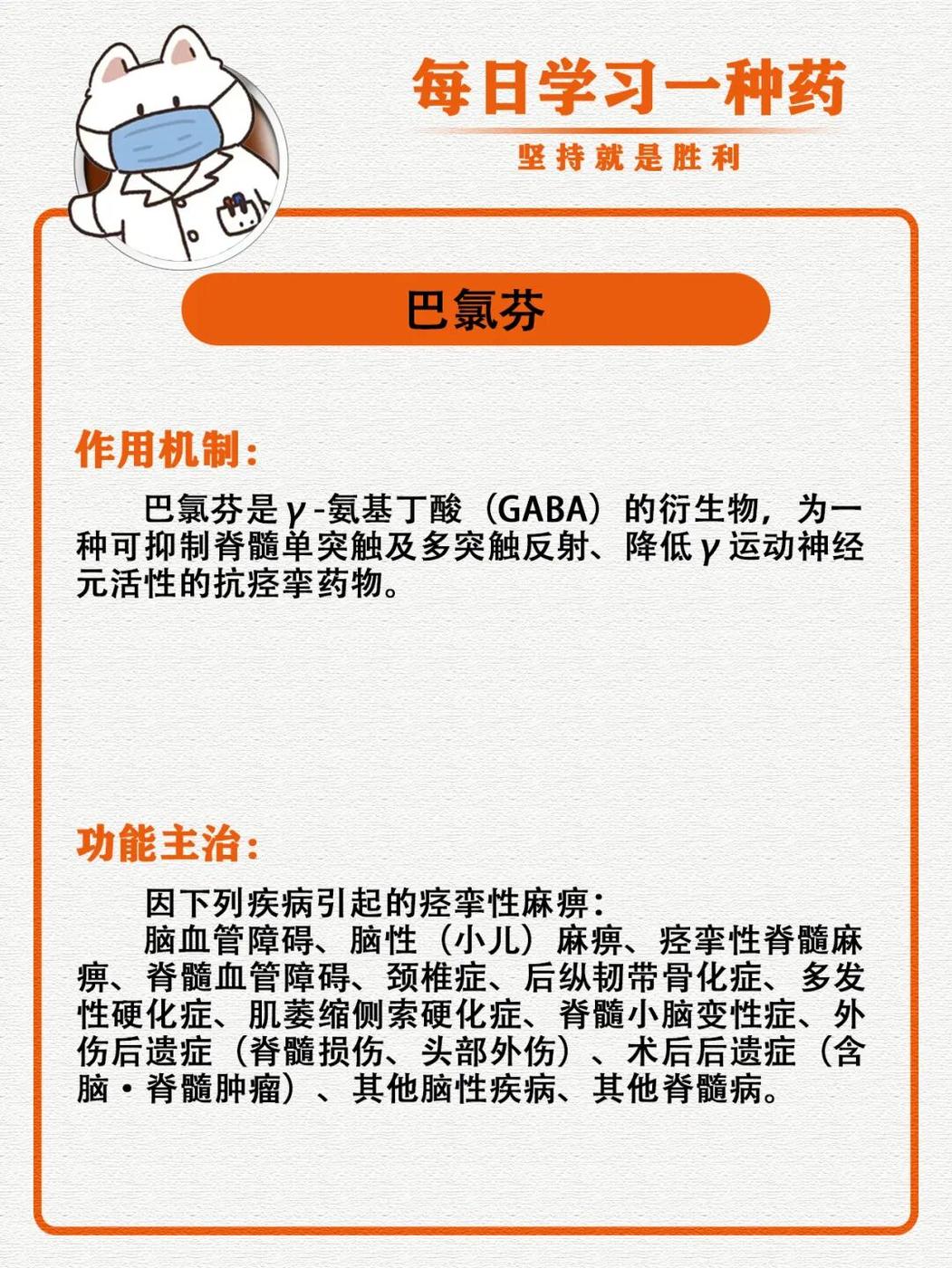
Mechanism of action: Baclofen is a derivative of Y-aminobutyric acid (GABA), consisting of one can inhibit spinal monosynaptic and multisynaptic reflexes and reduce motor nerves A metaactive antispasmodic drug. Functions and indications: Spastic paralysis caused by the following diseases: Cerebrovascular disorders, cerebral (pediatric) palsy, spastic spinal palsy Bi, spinal vascular disorders, cervical spondylosis, ossification of the posterior longitudinal ligament, multiple occurrences Acute sclerosis, amyotrophic lateral sclerosis, spinocerebellar degeneration, and external diseases Post-injury sequelae (spinal cord injury, head trauma), postoperative sequelae (including Brain and spinal cord tumors), other brain diseases, other spinal cord diseases. Baclofen
作用机制: 巴氯芬是Y-氨基丁酸(GABA)的衍生物,为一 种可抑制脊髓单突触及多突触反射、降低运动神经 元活性的抗痉挛药物。 功能主治: 因下列疾病引起的挛性麻痹: 脑血管障碍、脑性(小儿)麻痹、挛性脊髓麻 痹、脊髓血管障碍、颈椎症、后纵韧带骨化症、多发 性硬化症、肌萎缩侧索硬化症、脊髓小脑变性症、外 伤后遗症(脊髓损伤、头部外伤)、术后后遗症(含 脑·脊髓肿瘤)、其他脑性疾病、其他脊髓病。 巴氯芬
Mechanism of action: Baclofen is a derivative of Y-aminobutyric acid (GABA), consisting of one can inhibit spinal monosynaptic and multisynaptic reflexes and reduce motor nerves A metaactive…