Thiamine hydrochloride + pyridoxine hydrochloride + cyanocobalamin
日本語原題:ダイビタミックス注
Source images
4 imagesThe artwork keeps its original Japanese/Chinese lettering. Open “Text in this image” under a picture to read what it says in your language (machine-read, may contain errors).
Text in this image machine-read · may contain errors
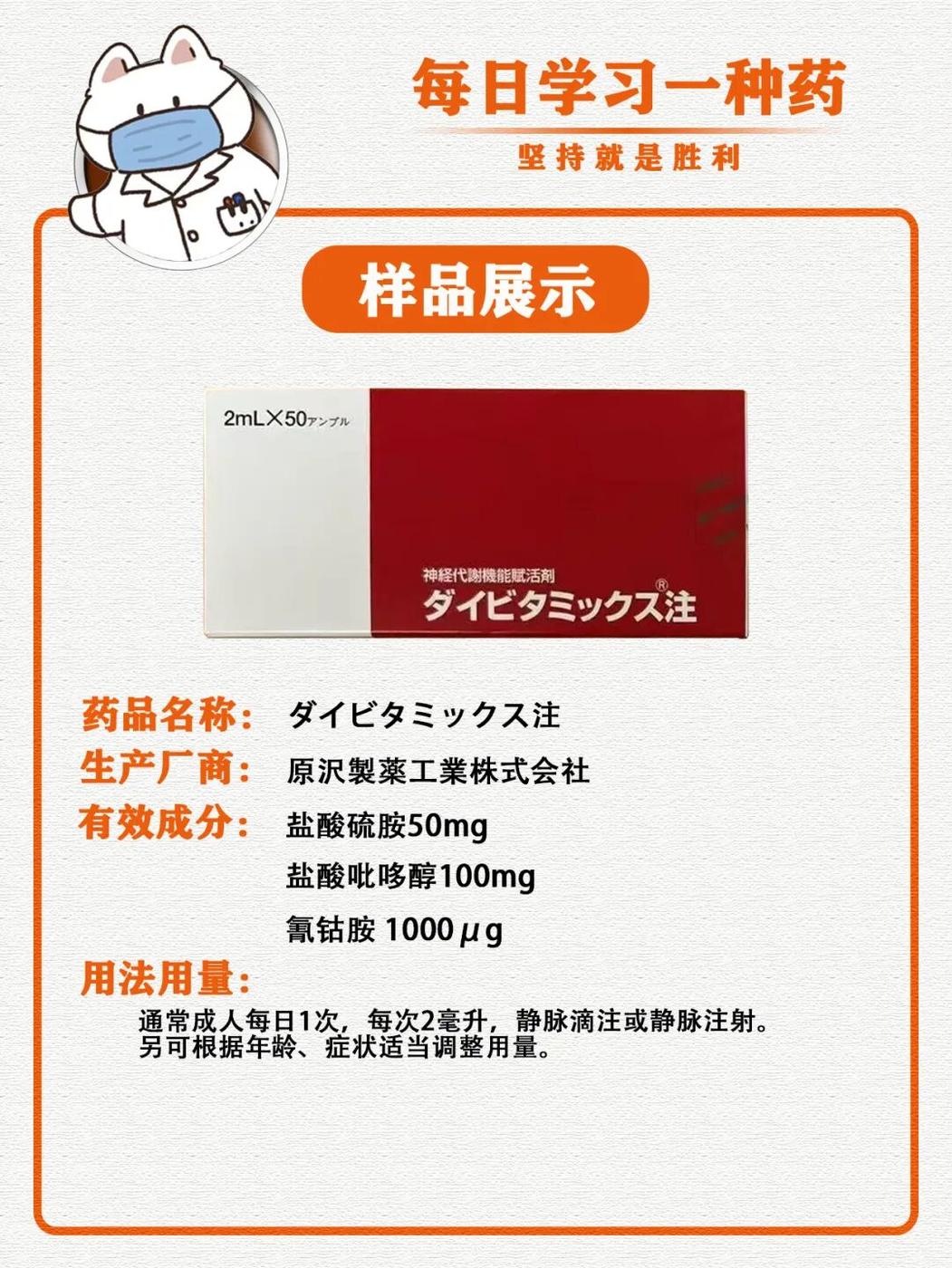
Ampoule Spirit Release Metabolic Function Activator Dive Mix Note Drug Name: Manufacturer: Genkan Seigo Co., Ltd. Active ingredients: Thiamine Hydrochloride 50mg Pyridoxine hydrochloride 100mg Cyanazamin 1000μg Dosage and administration: Usually, adults take 2 ml once daily, intravenous or intravenous injection. Dosage can also be adjusted appropriately according to age and symptoms.
アンプル 神释代谢機能赋活剂 ダイビタミックス注 药品名称: 生产厂商: 原汗製工業株式会社 有效成分: 盐酸硫胺50mg 盐酸吡哆醇100mg 氰钻胺1000μg 用法用量: 通常成人每日1次,每次2毫升,静脉滴注或静脉注射。 另可根据年龄、症状适当调整用量。
Ampoule Spirit Release Metabolic Function Activator Dive Mix Note Drug Name: Manufacturer: Genkan Seigo Co., Ltd. Active ingredients: Thiamine Hydrochloride 50mg Pyridoxine hydrochloride 100…
Text in this image machine-read · may contain errors
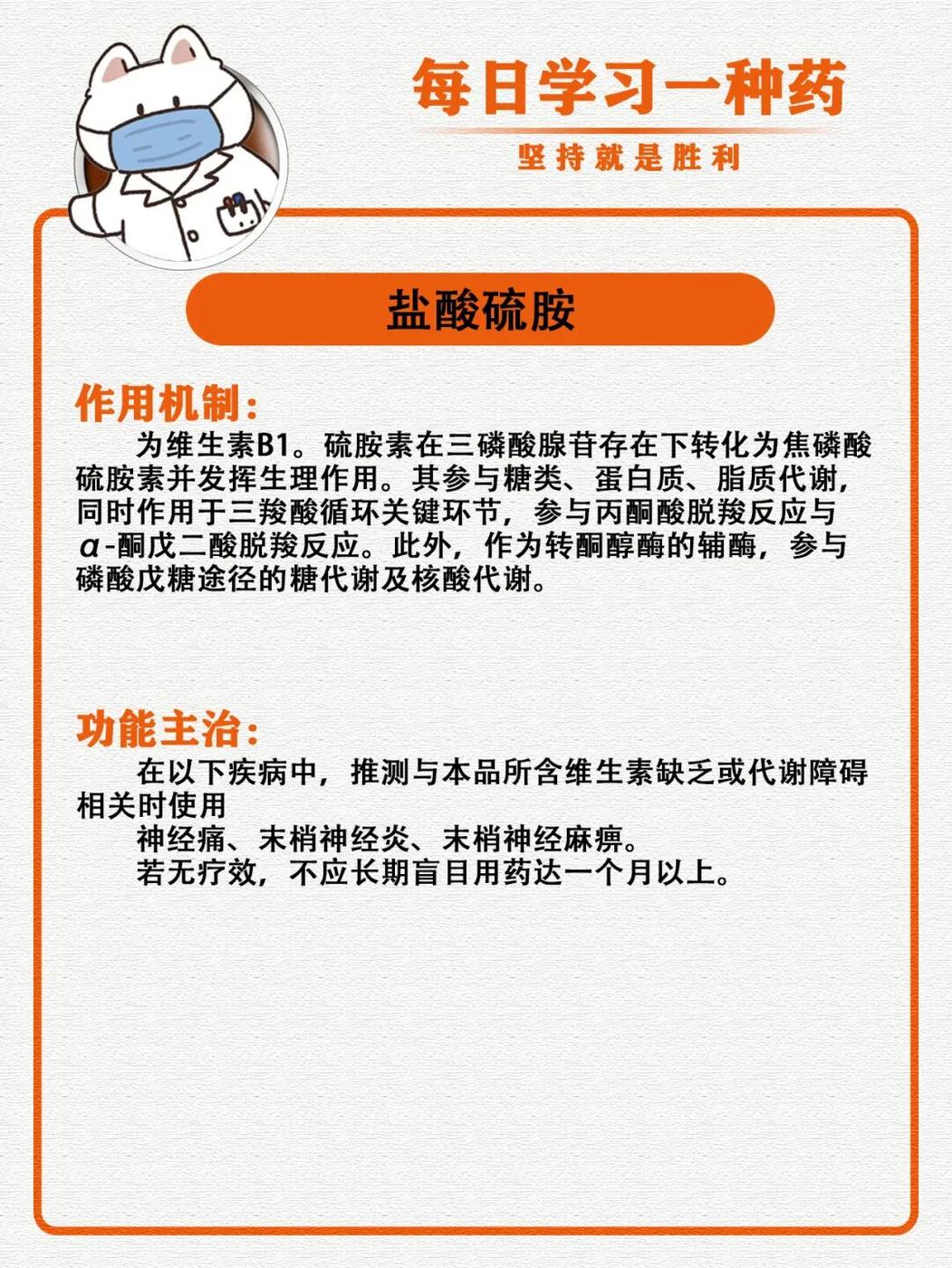
Mechanism of action: It is vitamin B1. Thiamine is converted into pyrophosphate in the presence of adenosine triphosphate Thiamine exerts physiological effects. It participates in the metabolism of carbohydrates, proteins, and lipids At the same time, it acts on key links in the tricarboxylic acid cycle, participating in pyruvate decarboxylation and α-Ketoglutarate decarboxylation reaction. Additionally, as a coenzyme of transketoolases, it participates Glucose metabolism and nucleic acid metabolism via the pentose phosphate pathway. Functions and indications: In the following diseases, it is presumed to be related to vitamin deficiency or metabolic disorders contained in this product Used when relevant Neuralgia, peripheral neuritis, peripheral nerve paralysis If there is no effect, it should not be used blindly for more than one month over a long period. Thiamine hydrochloride
作用机制: 为维生素B1。硫胺素在三磷酸腺苷存在下转化为焦磷酸 硫胺素并发挥生理作用。其参与糖类、蛋白质、脂质代谢 同时作用于三羧酸循环关键环节,参与丙酮酸脱羧反应与 α-酮戊二酸脱羧反应。此外,作为转酮醇酶的辅酶,参与 磷酸戊糖途径的糖代谢及核酸代谢。 功能主治: 在以下疾病中,推测与本品所含维生素缺乏或代谢障碍 相关时使用 神经痛、末梢神经炎、末梢神经麻痹 若无疗效,不应长期盲目用药达一个月以上。 盐酸硫胺
Mechanism of action: It is vitamin B1. Thiamine is converted into pyrophosphate in the presence of adenosine triphosphate Thiamine exerts physiological effects. It participates in the metabo…
Text in this image machine-read · may contain errors
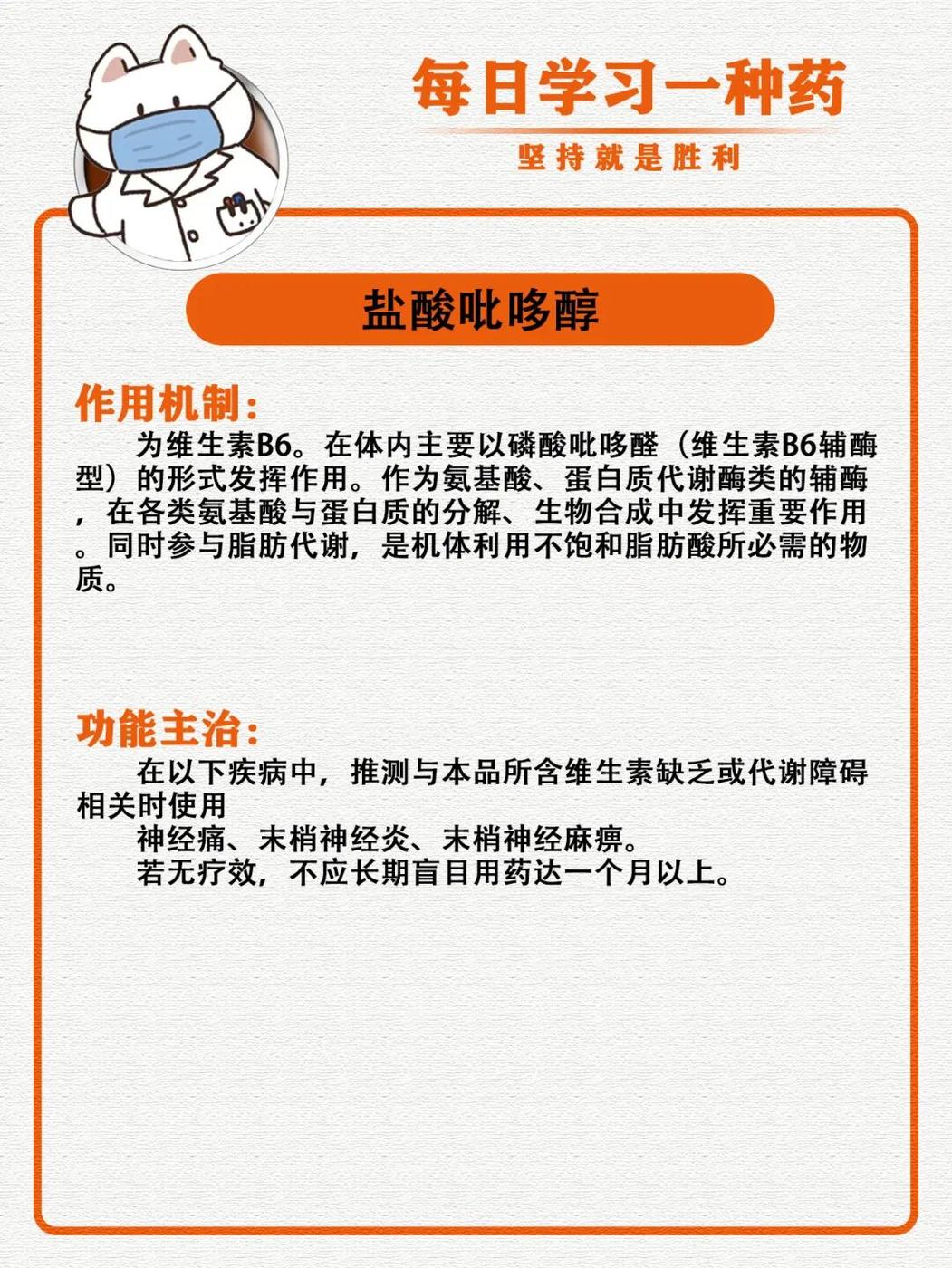
Mechanism of action: It is vitamin B6. In the body, it is mainly used as pyridoxal phosphate (vitamin B6 coenzyme). The form of the type plays a role. It serves as a coenzyme for amino acids and protein metabolism enzymes It plays an important role in the decomposition and biosynthesis of various amino acids and proteins It also participates in fat metabolism and is essential for the body to utilize unsaturated fatty acids Functions and indications: In the following diseases, it is presumed to be related to vitamin deficiency or metabolic disorders contained in this product Used when relevant Neuralgia, sub-terminal neuritis, and sub-terminal nerve paralysis If there is no effect, it should not be used blindly for more than one month over a long period. Pyridoxine hydrochloride
作用机制: 为维生素B6。在体内主要以磷酸吡哆醛(维生素B6辅酶 型)的形式发挥作用。作为氨基酸、蛋白质代谢酶类的辅酶 在各类氨基酸与蛋白质的分解、生物合成中发挥重要作用 同时参与脂肪代谢,是机体利用不饱和脂肪酸所必需的物 功能主治: 在以下疾病中,推测与本品所含维生素缺乏或代谢障碍 相关时使用 神经痛、未梢神经炎、未梢神经麻痹 若无疗效,不应长期盲目用药达一个月以上。 盐酸吡哆醇
Mechanism of action: It is vitamin B6. In the body, it is mainly used as pyridoxal phosphate (vitamin B6 coenzyme). The form of the type plays a role. It serves as a coenzyme for amino acids…
Text in this image machine-read · may contain errors
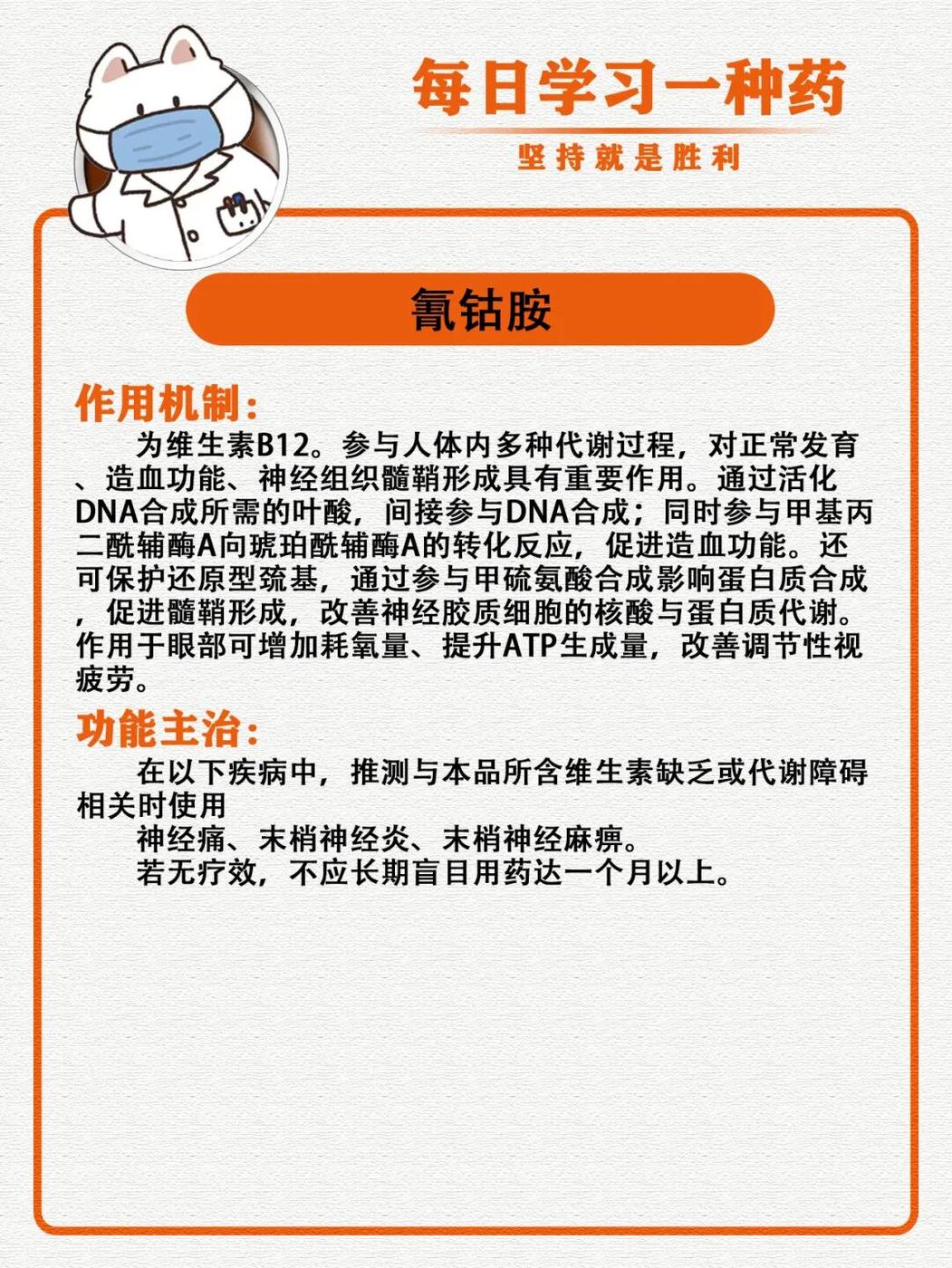
Mechanism of action: It is vitamin B12. It participates in various metabolic processes in the human body and is crucial for normal development Hematopoietic function and myelin formation in nerve tissue play important roles. Through activation Folic acid required for DNA synthesis indirectly participates in DNA synthesis: also involved in methyl propyl The conversion reaction of diacyl-CoA to succinoyl-CoA promotes hematopoietic function. Return It can protect reduced rabic groups and influence protein synthesis by participating in methionine synthesis Promotes myelin formation and improves nucleic acid and protein metabolism in glial cells. Acting on the eyes can increase oxygen consumption, boost ATP production, and improve accommodative vision Fatigue. Functions and indications: In the following diseases, it is presumed to be related to vitamin deficiency or metabolic disorders contained in this product Used when relevant Neuralgia, sub-terminal neuritis, and sub-terminal nerve paralysis If there is no effect, it should not be used blindly for more than one month over a long period.
作用机制: 为维生素B12。参与人体内多种代谢过程,对正常发育 造血功能、神经组织髓鞘形成具有重要作用。通过活化 DNA合成所需的叶酸,间接参与DNA合成:同时参与甲基丙 二酰辅酶A向琥珀酰辅酶A的转化反应,促进造血功能。还 可保护还原型疏基,通过参与甲硫氨酸合成影响蛋白质合成 促进髓鞘形成,改善神经胶质细胞的核酸与蛋白质代谢。 作用于眼部可增加耗氧量、提升ATP生成量,改善调节性视 疲劳。 功能主治: 在以下疾病中,推测与本品所含维生素缺乏或代谢障碍 相关时使用 神经痛、未梢神经炎、未梢神经麻痹 若无疗效,不应长期盲目用药达一个月以上。
Mechanism of action: It is vitamin B12. It participates in various metabolic processes in the human body and is crucial for normal development Hematopoietic function and myelin formation in …