Respiratory · RESPIRATORY

Ethambutol

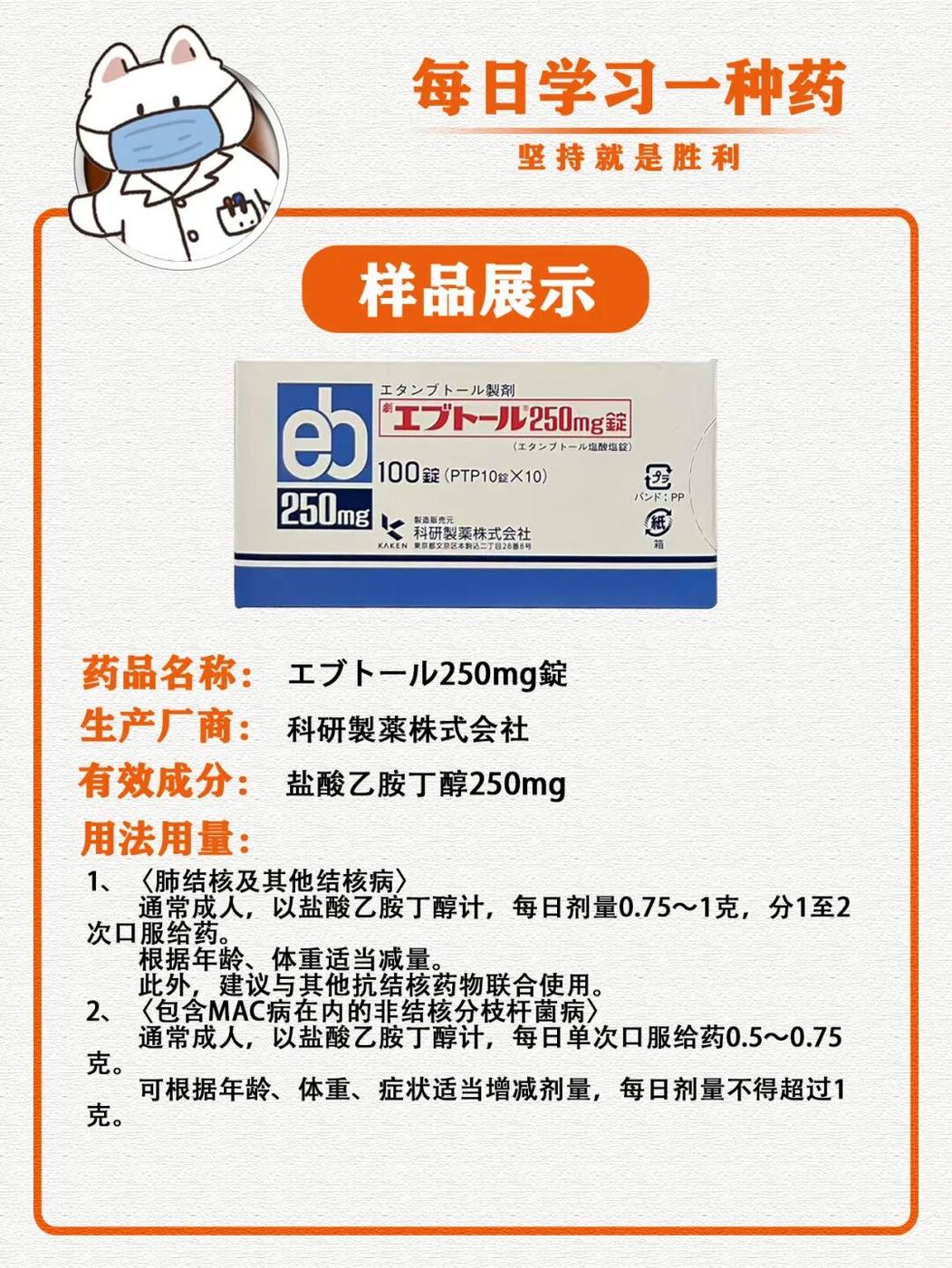
日本語原題:エブトール250mg錠

Published2026-04-28 10:27 FormTablet Content9 sections / 2 images
Ingredients / strength:
1 tablet of China-Japan Pharmaceutical Etambutol Hydrochloride 250mg.
English translation of the Japanese package insert is the main text; the Japanese original is shown alongside for verification. Use the language menu (top right) to read the page in another language. This site is for reference only — consult a doctor or pharmacist before use.
Section 1 · 01
English translation
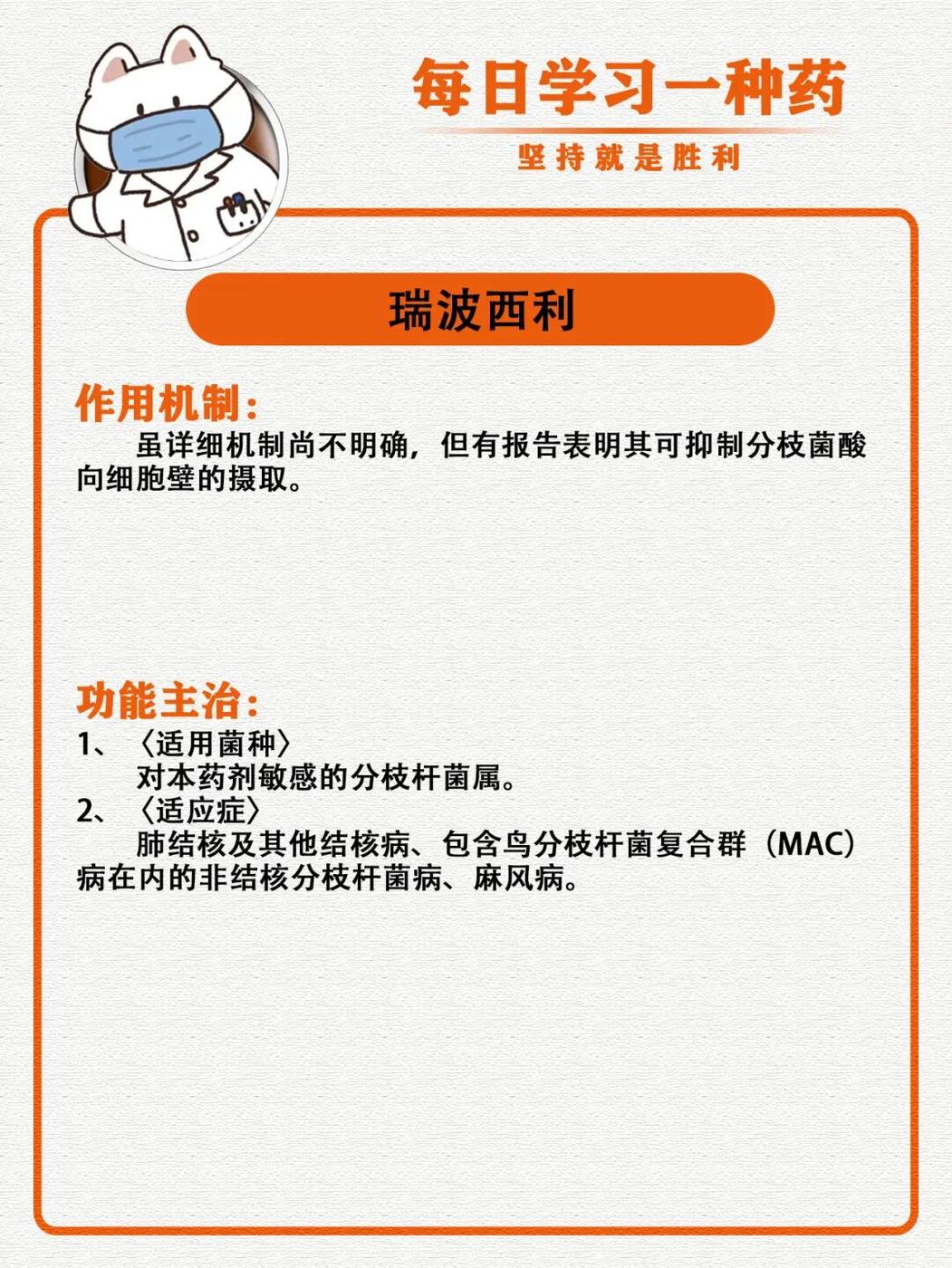
Feature Description Details remain unclear, but there are reports that it inhibits the uptake of mycolic acid into the cell wall.
Section 2 · 02
English translation
100 tablets [10 tablets (aluminum-plastic blister packaging) ×10 boards].
Section 3 · 03
English translation
Characteristics Pale yellow, film-coated tablets.
Section 4 · 04
English translation
Ingredient Information Active ingredient: 1 Chūnichi Pharmaceutical Etambutol Hydrochloride 250mg. Additives: crystalline cellulose, low-substitution hydroxypropyl cells Contains loin, hydroxypropyl cellulose, magnesium stearate, talc, hypromellose, macrogol 6000, and yellow trioxide.
Section 5 · 05
English translation
Indications 1. Suitable Strain Species Mycobacterium genus is sensitive to this drug. 2. Indications Pulmonary tuberculosis and other tuberculosis diseases, non-tuberculous mycomycetic mycomycelia including Mycobacterium avium complex (MAC) disease, and leprosy.
Section 6 · 06
English translation
Dosage and Administration 1. "Pulmonary Tuberculosis and Other Tuberculosis Diseases" Typically, adults are given oral etambutol hydrochloride at a daily dose of 0.75~1g divided into 1~2 doses. Reduce weight appropriately according to age and weight. It is preferable to use it in combination with other anti-tuberculosis drugs. 2. Non-tuberculous mycobacterial infections including MAC syndrome Typically, adults receive 0.5~0.75g of etambutol hydrochloride orally once daily. Adjust the amount appropriately depending on age, weight, and symptoms, but do not exceed 1g per day.
Section 7 · 07
English translation
Notes 1. "Common Efficacy" (1) Since visual impairment may occur, regular vision tests and administration should be performed. (2) When administering this drug, fully explain the visual impairment to the patient. During administration, always observe the patient and take medication Providing sufficient guidance. (3) Severe liver damage can occur, so regular liver function tests should be performed. (4) Since thrombocytopenia may occur, regular blood tests and other monitoring should be conducted carefully. 2. "Pulmonary Tuberculosis and Other Tuberculosis" (1) To prevent the emergence of resistant bacteria, susceptibility should be confirmed in principle, and administration should be limited to the minimum period necessary for disease treatment. (2) Treatment with anti-tuberculosis drugs including this drug may cause paradoxical reactions. If, after starting treatment, exacerbation of existing tuberculosis or new onset of tuberculosis symptoms is observed, the decision should be made based on drug sensitivity testing or similar methods to decide whether to continue administration.
Section 8 · 08
English translation
Side Effects 1. Visual impairment (frequency unknown) Visual impairments such as decreased vision due to optic nerve damage, central scotoma, visual field narrowing, and color vision abnormalities may occur; if detected late, they may become irreversible if severely advanced; therefore, discontinue administration if abnormalities are observed. 2. Severe liver damage (frequency unknown) Severe liver damage such as fulminant hepatitis may occur. 3. Shock, anaphylaxis (both of unknown frequency) If abnormalities such as difficulty breathing, generalized flushing, angioedema (facial edema, laryngeal edema, etc.), urticaria, etc., are observed, discontinue administration and take appropriate measures. 4. Interstitial pneumonia and eosinophilic pneumonia (both with unknown frequency) If fever, cough, difficulty breathing, abnormal chest X-ray, etc. are observed, discontinue administration and take appropriate measures such as administering corticosteroids. 5. Toxic epidermal necrolysis (TEN), Stevens-Johnson syndrome, erythroderma (exfoliative dermatitis) (all frequency unknown) 6. Thrombocytopenia (frequency unknown) 7. Other side effects (1) Central and peripheral nervous system: numbness in the limbs (2) Psychoneurological system: hallucinations, anxiety, insomnia (3) Hypersensitivity: fever, rash, itching (4) Blood: leukopenia, neutropenia, eosinophils increase. (5) Liver: transient elevated AST and ALT (6) Digestive system: loss of appetite, nausea, vomiting, stomach discomfort, stomach pain (7) Others: headache, dizziness, fatigue, hyperuricemia
Section 9 · 09
English translation
taboo Patients with a history of hypersensitivity to any component of this drug.

Source images

2 images

Need help sourcing Japanese medicines or OEM production?

💬