Tamsulosin Hydrochloride
日本語原題:ハルナールD錠0.2mg
Source images
2 imagesThe artwork keeps its original Japanese/Chinese lettering. Open “Text in this image” under a picture to read what it says in your language (machine-read, may contain errors).
Text in this image machine-read · may contain errors
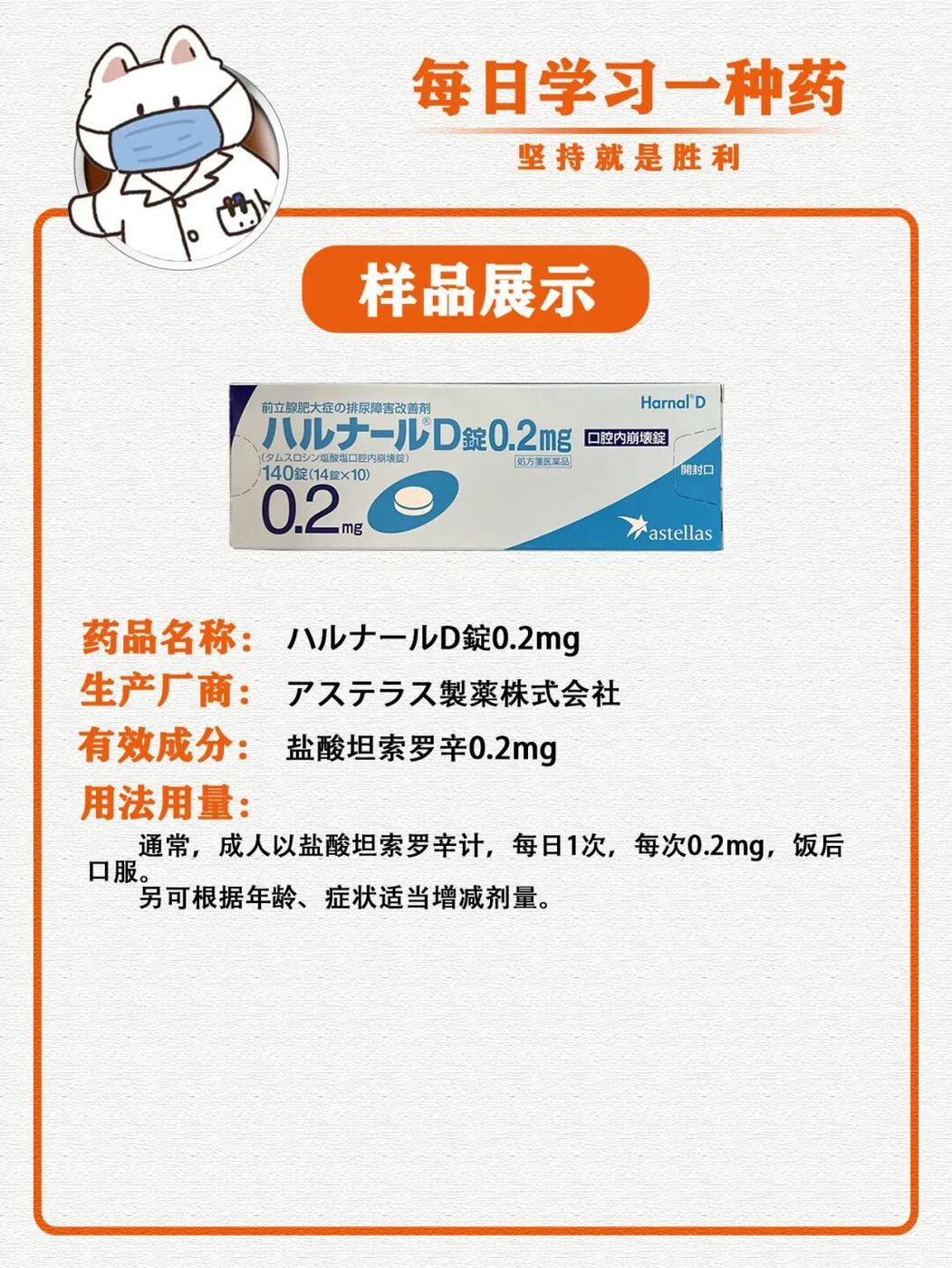
Harnal D Urinary Disorders Improvement Agent for Benign Prostatic Hyperplasia 81'er D Tablets 0.2mg Oral Folding Tablet Tamsu Rosino First Made, Inner Collapse Lower 140 ingots (14 promotions× 10) astellas Drug Name: 8V Eleven D Tablets 0.2mg Manufacturer: Astellas Pharma Corporation Active ingredients: Tamsulocin hydrochloride 0.2mg Dosage and administration: Typically, adults take tamsulocin hydrochloride once daily, 0.2mg each time, after meals. Oral. Dosage can also be adjusted appropriately according to age and symptoms.
Harnal D 前立腺肥大症の排尿障害改善剂 八十一儿D锭0.2mg 口腔内崩壤锭 卩タムスロシノ第製口を内崩ロー 140锭(14促×10) astellas 药品名称:八V十一儿D锭0.2mg 生产厂商: アステラス製薬株式会社 有效成分: 盐酸坦索罗辛0.2mg 用法用量: 通常,成人以盐酸坦索罗辛计,每日1次,每次0.2mg,饭后 口服。 另可根据年龄、症状适当增减剂量。
Harnal D Urinary Disorders Improvement Agent for Benign Prostatic Hyperplasia 81'er D Tablets 0.2mg Oral Folding Tablet Tamsu Rosino First Made, Inner Collapse Lower 140 ingots (14 promotion…
Text in this image machine-read · may contain errors
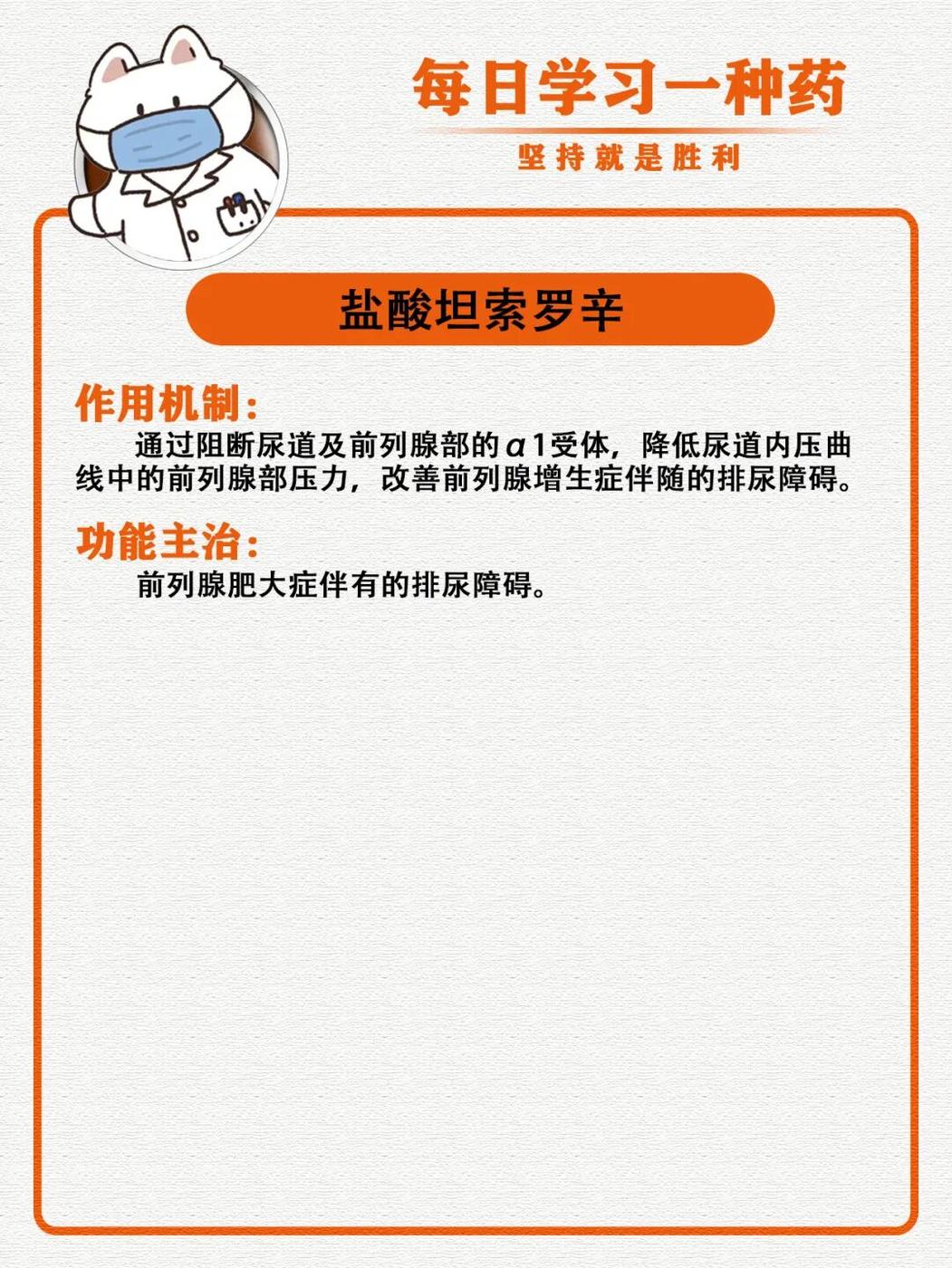
Tansuloxin hydrochloride Mechanism of action: By blocking α1 receptors in the urethra and prostate, it reduces intraurethral pressure Pressure in the prostate area improves urinary difficulties associated with benign prostatic hyperplasia. Functions and indications: Urinary disorders associated with benign prostatic hyperplasia
盐酸坦索罗辛 作用机制: 通过阻断尿道及前列腺部的α1受体,降低尿道内压曲 线中的前列腺部压力,改善前列腺增生症伴随的排尿障碍。 功能主治: 前列腺肥大症伴有的排尿障碍
Tansuloxin hydrochloride Mechanism of action: By blocking α1 receptors in the urethra and prostate, it reduces intraurethral pressure Pressure in the prostate area improves urinary difficult…