Anti-infective · ANTI-INFECTIVE

Water-soluble substances of human placental hydrolysates

日本語原題:ラエンネック

Published2026-07-08 09:37 Content10 sections / 1 images
Ingredients / strength:
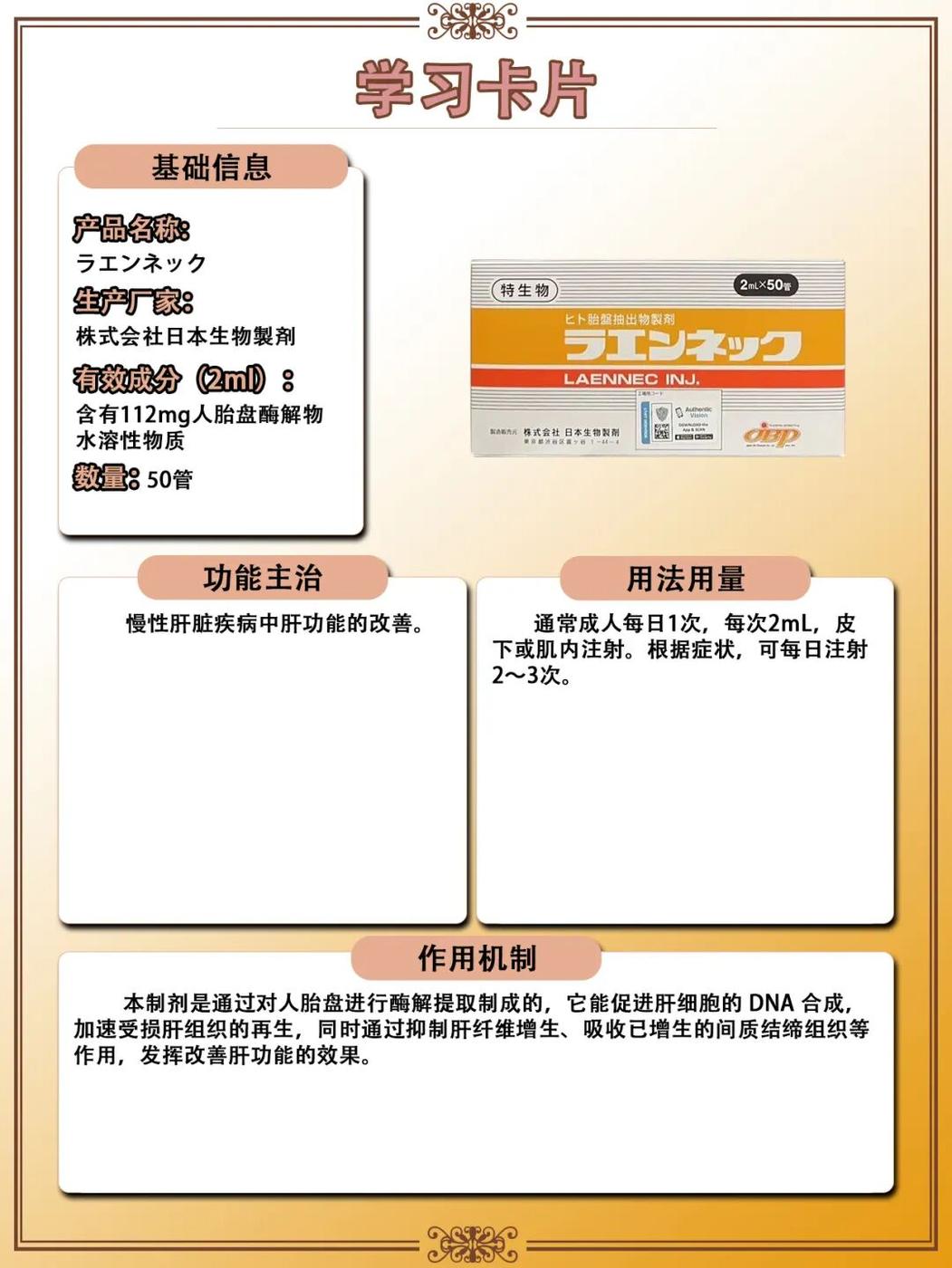
Water-soluble substances of placental enzymatic degradation products (human placenta-derived components): 112 mg.
English translation of the Japanese package insert is the main text; the Japanese original is shown alongside for verification. Use the language menu (top right) to read the page in another language. This site is for reference only — consult a doctor or pharmacist before use.
Section 1 · 01
English translation
Feature Description This drug is extracted by enzymatic degradation of the human placenta, promoting DNA synthesis in hepatocytes, promoting regeneration of damaged liver tissue, and improving liver function by inhibiting liver fibrous proliferation and absorbing proliferated stromal connective tissues.
Section 2 · 02
English translation
1 tube 2 mg × 50 tubes.
Section 3 · 03
English translation
Characteristics A clear liquid with a distinctive odor, pale yellowish-brown~yellow-brown.
Section 4 · 04
English translation
Ingredient Information This drug contains 112 mg of water-soluble substances from human placental enzyme degradation products in 2 mL per tube. Active ingredient: Water-soluble substance of placental enzyme degradation (human placenta-derived component) 112mg. Additives: appropriate amount of pH adjuster.
Section 5 · 05
English translation
Indications Improvement of liver function in chronic liver disease.
Section 6 · 06
English translation
Dosage and Administration Typically, adults inject 2 mL once daily subcutaneously or intramuscularly. Depending on symptoms, injections can be administered 2~3 times a day.
Section 7 · 07
English translation
Notes 1. When using this drug, explain to patients that the necessity of this drug for disease treatment and safety measures are implemented to prevent the spread of infectious diseases during manufacturing; however, it is impossible to completely eliminate the risk of infectious disease transmission due to using human placenta as a raw material, and strive to gain understanding from patients. 2. This drug is manufactured using compliant domestic human placenta from full-term normal delivery after screening each raw material provider for viral or bacterial infections through medical and travel history interviews, serological tests, and other tests. Furthermore, the high-pressure steam sterilization at 121°C for 20 minutes during the manufacturing process of this drug has been confirmed to have inactivation effects against various viruses. Furthermore, in product testing, NAT was performed for HBV-DNA, HCVRNA, HIV-1-RNA, HTLV-I-DNA, and parvovirus B19-DNA, and the results were conformed, but there is always a possibility that viruses below the NAT detection limit may be contaminated. Since the possibility of infection from this drug cannot be ruled out, closely monitor the course after administration. 3. To date, there have been no reports of transmission of mutant Creutzfeldt-Jakob disease (vCJD) or similar cases due to administration of this drug, both domestically and internationally. However, since the theoretical risk of transmission of vCJD and similar conditions cannot be completely eliminated, thorough explanations should be provided to patients during administration, and treatment necessity should be thoroughly considered before administration.
Section 8 · 08
English translation
Side Effects 1. Shock (frequency unknown) 2. Other side effects (1) Injection site: pain, induration. (2) Hypersensitivity: rash, fever, itching, etc. (3) Liver: liver dysfunction (elevated AST, AST, ALT, etc.). (4) Others: gynecomastia, headaches.
Section 9 · 09
English translation
taboo Patients with a history of hypersensitivity to this drug.
Section 10 · 10
English translation
Warning This drug contains human placenta-derived components as active ingredients. When collecting placenta as raw material, medical interviews and infectious disease tests are conducted, and heat treatment is applied during the manufacturing process to prevent the spread of infectious diseases. However, since the risk of infectious disease transmission from using human placenta as a raw material cannot be completely eliminated, Carefully consider the therapeutic needs of the disease and limit usage to the minimum necessary.

Source images

1 images

Need help sourcing Japanese medicines or OEM production?

💬