Urology & Kidney · URINARY

Sildenafil

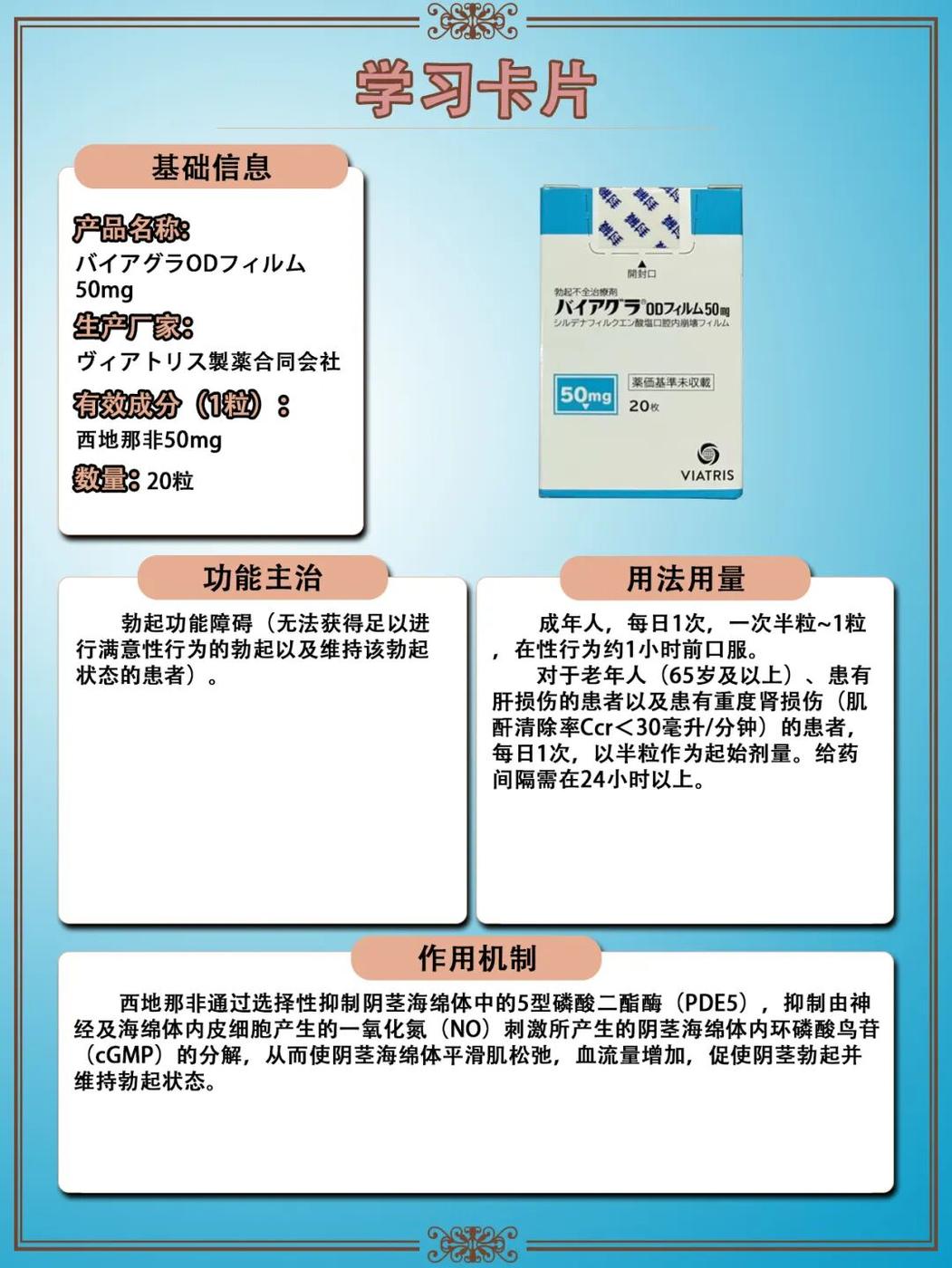
日本語原題:バイアグラODフィルム50mg

Published2026-07-18 13:28 FormTablet Content9 sections / 1 images
Ingredients / strength:
Each tablet contains 70.23 mg sildenafil citrate (50 mg as sildenafil).
English translation of the Japanese package insert is the main text; the Japanese original is shown alongside for verification. Use the language menu (top right) to read the page in another language. This site is for reference only — consult a doctor or pharmacist before use.
Section 1 · 01
English translation
Feature Description Sildenafil selectively inhibits PDE5 in the corpora cavernosa penile, suppressing cGMP degradation produced by NO stimulation from nerves and endothelial cells in the corpus cavernosum, thereby relaxing the smooth muscle of the corpora cavernosa penile, increasing blood flow, and enabling erection and maintenance of the penis.
Section 2 · 02
English translation
20 pieces [10 pieces×2].
Section 3 · 03
English translation
Characteristics A pale red film-like oral disintegration preparation.
Section 4 · 04
English translation
Ingredient Information Active ingredient: 70.23mg sildenafil citrate per tablet (50mg as sildenafil). Additives: Hydroxypropyl cellulose, Macrogol 400, cropovidone, povidone, sucralose, polyvinyl alcohol, polyethylene glycol, graft copolymer, L-menthol, hypromellose, titanium dioxide, ferric trioxide.
Section 5 · 05
English translation
Indications Erectile dysfunction (patients who cannot maintain and maintain an erection sufficient for satisfactory sexual activity).
Section 6 · 06
English translation
Dosage and Administration Typically, adults are given sildenafil orally once daily at doses of 25mg~50mg about one hour before sexual activity. For elderly patients (65 years and older), patients with liver impairment, and patients with severe renal impairment (Ccr<30 mL/min), plasma concentrations of this drug are observed to increase, so the starting dose should be 25 mg. Dosing should be done once a day, with an interval of at least 24 hours.
Section 7 · 07
English translation
Notes 1. Since sexual activity carries risks to the heart, pay attention to your cardiovascular condition before starting treatment for erectile dysfunction. Prolonged erections lasting 2 to 4 hours or more or continuous erections (painful erections lasting more than 6 hours) have been reported as a few post-marketing adverse events abroad. If immediate treatment for priapism is not performed promptly, it can damage the penile tissue or permanently impair erectile function. Therefore, if an erection persists for more than 4 hours, immediately consult a doctor. 3. Clinical trials have confirmed dizziness and visual impairment, so caution should be exercised when driving a vehicle or operating machinery. 4. If a sudden decrease in vision or sudden vision loss occurs after administration with this drug, instruct the patient to stop taking this drug and promptly consult an ophthalmology specialist.
Section 8 · 08
English translation
Side Effects 1. Circulatory: vasodilation (hot flashes, flushing) (5.78%), chest pain, palpitations, tachycardia, hypertension, arrhythmia, incomplete right leg block, peripheral edema, myocardial infarction, hypotension, syncope. 2. Mental and nervous system: headache (3.87%), dizziness, drowsiness, coma, abnormal sensations, lower limb spasms, memory decline, excitement, increased tension, confusion, abnormal thinking, neuritis, nervousness, neurosis, anxiety, insomnia, lethargy. 3. Liver: increased AST, increased ALT, increased LAP, increased LDH, increased blood triglycerides, increased γ-GTP, increased serum phospholipids, increased blood amylase, decreased serum albumin, increased blood bilirubin, decreased total protein. 4. Digestive system: nausea, gastrointestinal disorders, dry mouth, indigestion, abdominal pain, wedges, gastritis, stomach discomfort, diarrhea, dry lips, tongue disorders, white tongue, abdominal bloating, constipation, vomiting, and swallowing difficulties. 5. Urinary and reproductive organs: penile pain, ejaculation disorders, prolonged morning standing, persistent semi-erection, prolonged erection, priapism, urinary tract infections, prostate diseases. 6. Respiratory: rhinitis, respiratory disorders, nasal congestion, pharyngitis, asthma, nosebleeds, airway infections, sinusitis. 7. Muscle and skeletal system: joint pain, muscle pain, bone pain, back pain. 8. Skin: rash, pruritus, eyelid pruritus, alopecia, male hirsutism, sweating, dry skin, skin disorders, erythema. 9. Blood: decreased hematocrit, increased hematocrit, decreased hemoglobin, lymphopenia, lymphocytosis, eosinophilia, polycythemia, polycythemia, leukocytosis. 10. Sensory organs: eye redness, conjunctivitis, chromopia, visual impairment, dry eyes, eye pain, refractive disorders, photopicia, taste disturbances, loss of taste, abnormal tearing, photophobia, blurred vision, decreased vision, retinal hemorrhage, retinal venous occlusion, sudden hearing loss. 11. Others: increased CK, pain, heat, increased BUN, influenza syndrome, lymphadenopathy, decreased blood sodium, increased blood phosphorus, weight gain, increased blood uric acid, positive urobilinogen, positive urine glucose, positive urine red blood cells, positive urine protein, fatigue, asthenia, hypersensitivity reactions, infections.
Section 9 · 09
English translation
taboo 1. Patients with a history of hypersensitivity to any component of this drug. 2. Patients receiving nitric acid agents or nitric oxide (NO) donors (nitroglycerin, amyl nitrite, isosorbide nitrate, nicolangil, etc.). 3. Patients with cardiovascular disorders or other conditions considered inappropriate for sexual activity. 4. Patients with severe liver dysfunction. 5. Patients with hypotension (blood pressure < 90/50 mmHg) or hypertension not managed by treatment (resting systolic blood pressure > 170 mmHg or resting diastolic blood pressure > 100 mmHg). 6. Patients with a history of cerebral infarction, cerebral hemorrhage, or myocardial infarction within the last 6 months 7. Patients with retinitis pigmentosa [A small number of patients with retinitis pigmentosa have genetic disorders of phosphodiesterase. ]。 8. Patients receiving amiodarone hydrochloride (oral). 9. Patients receiving soluble guanylate cyclase (sGC) agonists (liociglat).

Source images

1 images

Need help sourcing Japanese medicines or OEM production?

💬