Carbocisteine
日本語原題:ムコダイン錠250mg
1 tablet of Chunichi Bureau L-Carbocysteine 250mg.
Source images
1 imagesThe artwork keeps its original Japanese/Chinese lettering. Open “Text in this image” under a picture to read what it says in your language (machine-read, may contain errors).
Text in this image machine-read · may contain errors
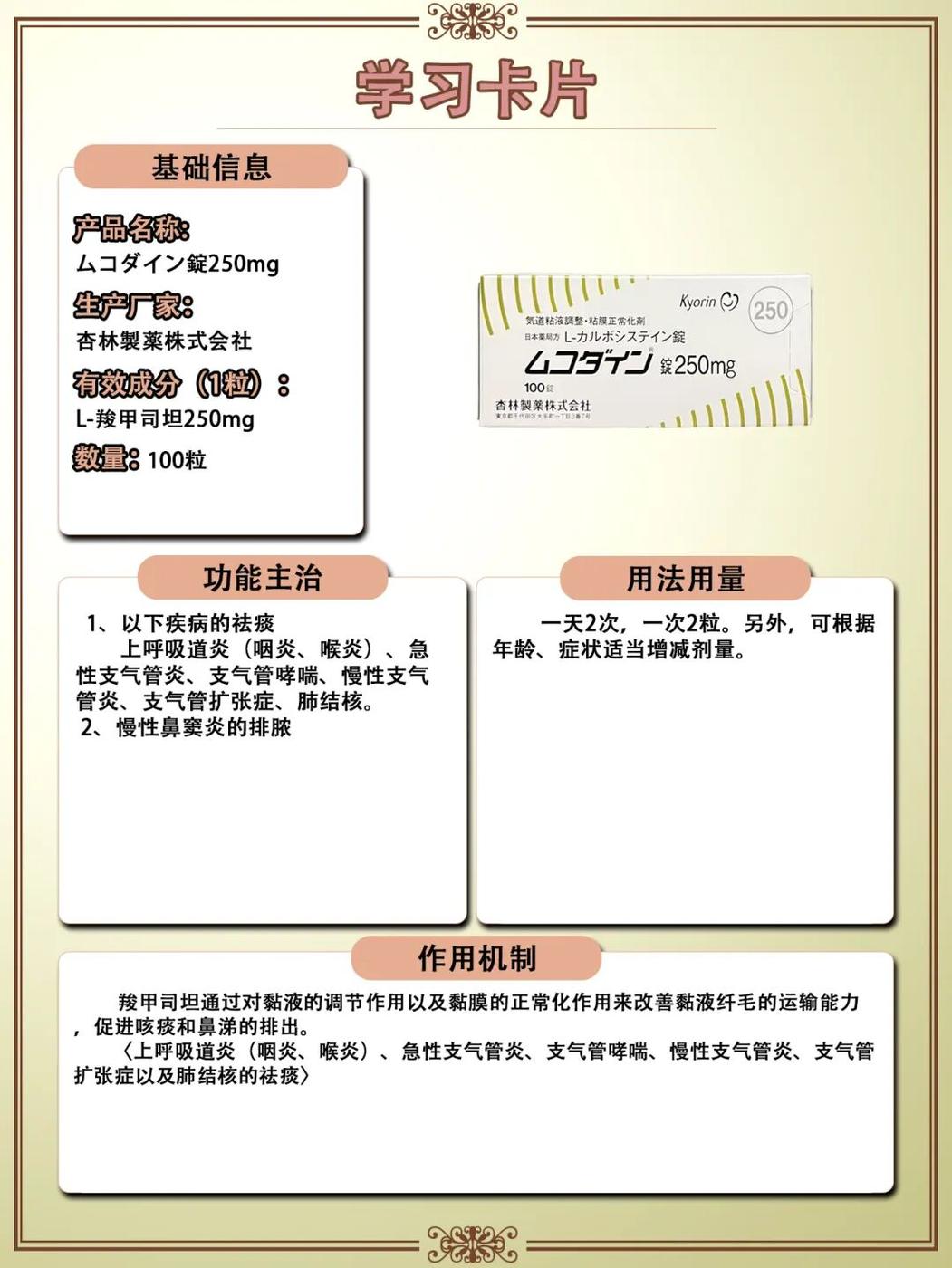
Basic information Product Name: Mucodyne tablets 250mg Manufacturer: Kyorin Ammonia mucus regulation and mucosal normalizer Kyorin Pharmaceutical Co., Ltd Otokotadeko Tablets 250mg Active ingredient (1 capsule): L-carboxymethylstane 250mg Quantity: 100 capsules Functions and indications Usage and dosage 1. Expectorants for the following diseases Take 2 capsules twice a day. Additionally, depending on Upper respiratory tract inflammation (pharyngitis, laryngitis), urgent Adjust the dosage appropriately according to age and symptoms. Chronic bronchitis, bronchial asthma, chronic bronchi Tubitis, bronchiectasis, pulmonary tuberculosis. 2. Drainage of pus in chronic sinusitis Mechanism of action Carbomethylstane improves mucocilia transport capacity by regulating mucus and normalizing mucosa , promoting the expulsion of phlegm and nasal delivery. "Upper respiratory tract inflammation (pharyngitis, laryngitis), acute bronchitis, bronchial asthma, chronic bronchitis, bronchial inflammation Exhalation and expectoration for tuberculosis)
基础信息 产品名称: ムコダイン錠 250mg 生产厂家: Kyorin 氨道粘液调整·粘膜正常化剂 杏林製藥株式会社 乙コタデコ錠 250mg 有效成分(1粒): L-羧甲司坦250mg 数量:100粒 功能主治 用法用量 1、以下疾病的祛痰 一天2次,一次2粒。另外,可根据 上呼吸道炎(咽炎、喉炎)、急 年龄、症状适当增减剂量。 性支气管炎、支气管哮喘、慢性支气 管炎、支气管扩张症、肺结核。 2、慢性鼻窦炎的排脓 作用机制 羧甲司坦通过对黏液的调节作用以及黏膜的正常化作用来改善黏液纤毛的运输能力 ,促进咳痰和鼻递的排出。 《上呼吸道炎(咽炎、喉炎)、急性支气管炎、支气管哮喘、慢性支气管炎、支气管 扩张症以及肺结核的祛痰)
Basic information Product Name: Mucodyne tablets 250mg Manufacturer: Kyorin Ammonia mucus regulation and mucosal normalizer Kyorin Pharmaceutical Co., Ltd Otokotadeko Tablets 250mg Active in…