Neuro & Psychiatric · NERVOUS

Pregabalin

日本語原題:プレガバリンOD錠150mg「武田テバ」

Published2026-09-23 11:21 Maker武田 FormTablet Content9 sections / 1 images
Ingredients / strength:
Each tablet contains 150mg of pregabalin.
English translation of the Japanese package insert is the main text; the Japanese original is shown alongside for verification. Use the language menu (top right) to read the page in another language. This site is for reference only — consult a doctor or pharmacist before use.
Section 1 · 01
English translation
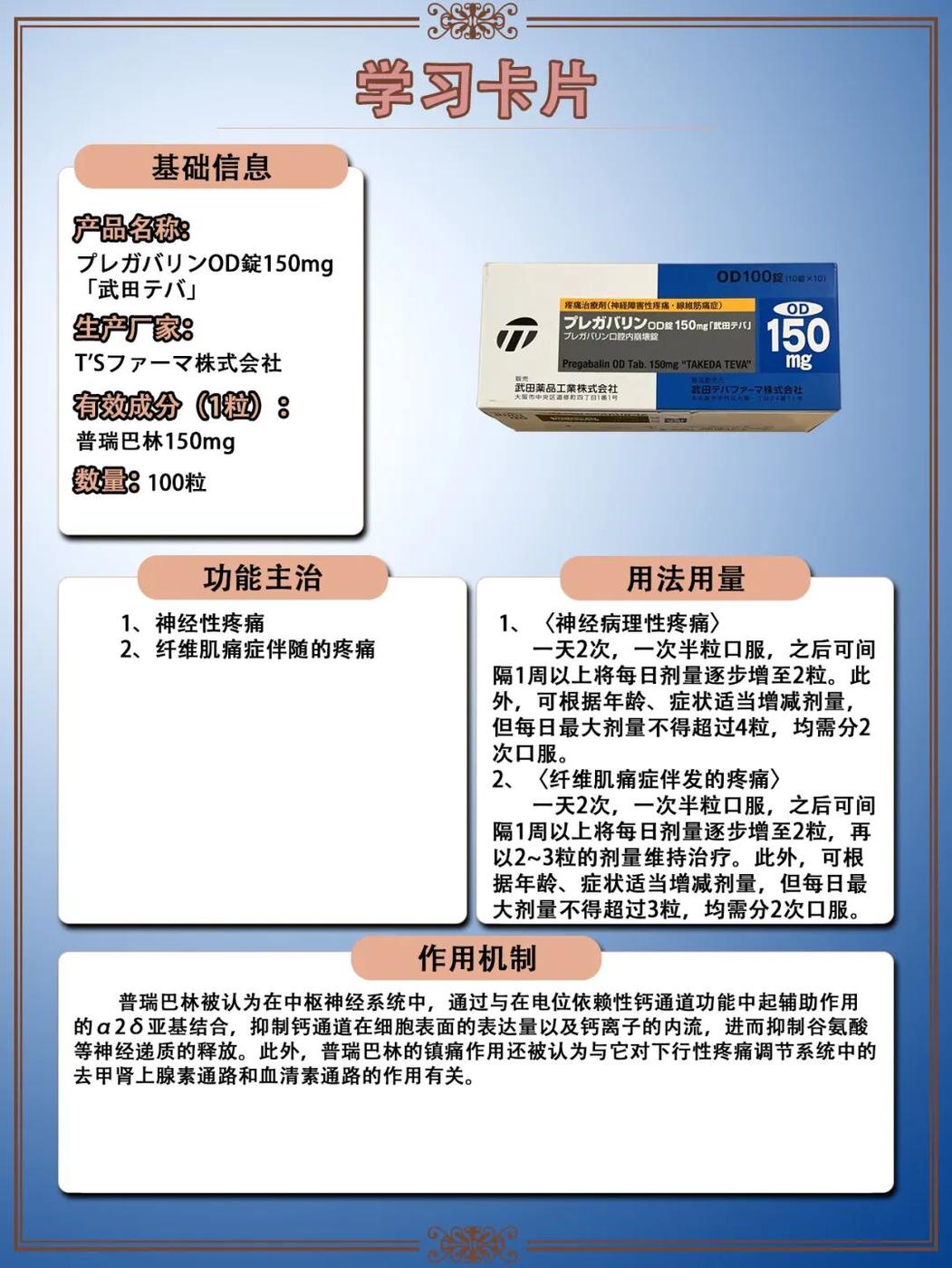
Feature Description Pregabalin is suggested to suppress the expression of calcium channels on the cell surface and calcium influx by binding to the α2δ subunit, which plays an auxiliary role in the function of voltage-dependent calcium channels in the central nervous system, thereby suppressing the release of neurotransmitters such as glutamate. Furthermore, the analgesic effect of pregabalin is also suggested to involve its effects on the noradrenaline and serotonin pathways of the descending pain regulation system.
Section 2 · 02
English translation
100 tablets [10 tablets (PTP aluminum-plastic packaging) ×10 boards].
Section 3 · 03
English translation
Characteristics White oral disintegration tablets.
Section 4 · 04
English translation
Ingredient Information Active ingredient: 150mg of pregabalin per tablet. Additives: D-mannitol, isomal hydrate, acesulfame potassium, D-mannitol corn starch granulation, sucralose, vanillin, fragrance, magnesium stearate.
Section 5 · 05
English translation
Indications 1. Neuropathic pain 2. Pain associated with fibromyalgia
Section 6 · 06
English translation
Dosage and Administration 1. 〈Neurogenic Pain〉 Typically, adults receive an initial dose of 150 mg of pregabalin orally divided into two doses per day, then gradually increased to 300 mg over a week or more. Adjustments may be made according to age and symptoms, but the maximum daily dose should not exceed 600 mg, and both doses should be administered orally twice daily. 2. 〈Pain associated with fibromyalgia〉 Typically, adults receive an initial dose of 150 mg of pregabalin orally divided into two doses per day, then gradually increased to 300 mg over more than a week, maintaining at 300~450 mg. Adjustments may be made according to age and symptoms, but the maximum daily dose should not exceed 450 mg, and both doses should be administered orally twice daily.
Section 7 · 07
English translation
Notes 1. "Common Efficacy" (1) There have been cases where dizziness, drowsiness, and loss of consciousness occurred after administration of this drug, leading to automobile accidents. Therefore, patients receiving this drug should be careful not to engage in operating dangerous machinery such as driving a vehicle. (2) Sudden discontinuation of this drug may cause withdrawal symptoms such as insomnia, nausea, headache, diarrhea, anxiety, and hyperhidrosis; if discontinuation, gradually reduce the dose over at least one week. (3) Weight gain may occur with this drug, so pay attention to obesity and take appropriate measures such as diet and exercise therapy if signs of obesity appear. In particular, since increased dosage or weight gain may occur with long-term administration, regular weight measurement is essential. (4) Administration of this drug may cause eye disorders such as amblyopia, visual abnormalities, blurred vision, or diplopia. Therefore, during examination, conduct a medical interview about eye disorders and take appropriate measures if abnormalities are found. 2. Neurogenic pain Treatment of neuropathic pain with this drug is symptomatic rather than causal; diagnosis and treatment of the underlying disease should be performed together, and this drug should not be administered indiscriminately.
Section 8 · 08
English translation
Side Effects 1. Dizziness (over 20%), drowsiness (over 20%), loss of consciousness (less than 0.3%) There are reports of dizziness, drowsiness, and loss of consciousness, leading to falls and fractures. 2. Heart failure (less than 0.3%), pulmonary edema (frequency unknown) For patients at risk of heart failure, closely monitor and discontinue administration if abnormalities are observed, and provide appropriate treatment. [See 9.1.1] 3. Rhabdomyolysis (frequency unknown) If muscle pain, weakness, increased CK, or increased myoglobin in blood and urine occur, discontinue administration and take appropriate measures. Also, be cautious of the onset of acute kidney damage caused by rhabdomyolysis. 4. Renal failure (less than 0.1%) 5. Angioedema (frequency unknown) Hypersensitivity such as angioedema may appear. 6. Hypoglycemia (less than 0.3%) If hypoglycemia symptoms such as weakness, fatigue, cold sweat, tremor, or impaired consciousness appear, discontinue administration and take appropriate measures. 7. Interstitial pneumonia (frequency unknown) Carefully monitor clinical symptoms such as cough, difficulty breathing, and fever, and if abnormalities are detected, perform chest X-ray, chest CT, and other examinations. If interstitial pneumonia is suspected, discontinue administration and take appropriate measures such as administering corticosteroids. 8. Shock (frequency unknown), anaphylaxis (less than 0.1%) 9. Stevens-Johnson syndrome (frequency unknown), erythema multiforme (frequency unknown) 10. Fulminant hepatitis (frequency unknown), liver dysfunction (0.4%) Liver dysfunction accompanied by elevated hepatitis fulminant, AST, and ALT may occur. 11. Other side effects (1) Blood and lymphatic disorders: neutropenia, leukopenia, thrombocytopenia. (2) Metabolic and nutritional disorders: loss of appetite, increased appetite, hyperlipidemia, hyperglycemia. (3) Mental disorders: insomnia, confusion, disorientation, euphoria, abnormal dreams, hallucinations, depression, restlessness, mood swings, depressed mood, anxiousness, loss of libido, sleep disorders, abnormal thinking, depersonalization, aorgasm, agitation, difficulty evocating, hyperlibido, panic attacks, deinhibition. (4) Nervous system disorders: floating vertigo, headache, balance disorders, ataxia, tremor, attention disturbance, sensory dullness, drowsiness, speech disorders, memory impairment, amnesia, sensory illusions, coordination disorders, sedation, cognitive impairment, myoclonus, loss of reflexes, dyskinesia, psychomotor hyperactivity, postural vertigo, hypersensitivity, sensory hypertaste, burning sensation, fainting, mental dysfunction, speech disorders, coma, olfactory errors, dysgraphia. (5) Eye disorders: foggy vision, double vision, decreased visual acuity, visual impairment, retinal hemorrhage, visual field defects, eye swelling, eye pain, eye fatigue, increased tearing, photoopia, strabismus, dry eyes, nystagmus, eye irritation, pupil dilation, agitated vision, changes in depth perception, visual brightness, keratitis. (6) Ear and labyrinth disorders: rotational vertigo, tinnitus, hyperacus. (7) Cardiac disorders: palpitations, first-degree atrioventricular block, tachycardia, sinus arrhythmia, sinus bradycardia, ventricular premature contractions, sinus tachycardia. (8) Vascular disorders: hypertension, hypotension, hot flashes. (9) Respiratory, thoracic, and mediastinal disorders: difficulty breathing, nasopharyngitis, cough, snoring, nosebleeds, rhinitis, nasal dryness, nasal congestion, throat tightness. (10) Gastrointestinal disorders: constipation, nausea, diarrhea, abdominal pain, vomiting, abdominal bloating, indigestion, bloating, gastritis, stomach discomfort, stomatitis, excessive salivation, gastroesophageal reflux disease, pancreatitis, tongue swelling, ascites, and swallowing difficulties. (11) Skin and subcutaneous tissue disorders: rash, pruritus, eczema, periorbital edema, hyperhidrosis, cold sweats, urticaria, hair loss, papules. (12) Musculoskeletal and connective tissue disorders: muscle weakness, muscle spasticity, joint swelling, limb pain, back pain, muscle pain, heaviness, joint pain, musculoskeletal rigidity. (13) Renal and urinary tract disorders: urinary incontinence, difficulty urinating, urinary retention, oliguria. (14) Reproductive system and breast disorders: breast pain, erectile dysfunction, gynecomastia, delayed ejaculation, sexual dysfunction, amenorrhea, breast discharge, dysmenorrhea, breast hyperplasia. (15) Systemic disorders and administration localities: edema, dry mouth, fatigue, abnormal sensation, gait disturbance, facial edema, weakness, pain, indentation edema, fatigue, chest pain, fever, coldness, chills, irritability, intoxication, chest tightness. (16) Injury, poisoning, and treatment complications: falls or tumbling. (17) Clinical tests: weight gain, increased blood CK, increased ALT, increased AST, increased blood amylase, increased blood creatinine, weight loss, increased blood uric acid, decreased blood potassium.
Section 9 · 09
English translation
taboo Patients with a history of hypersensitivity to any component of this drug.

Source images

1 images

Need help sourcing Japanese medicines or OEM production?

💬