Ezetimibe
日本語原題:エゼチミブ錠10mg「JG」
Source images
1 imagesThe artwork keeps its original Japanese/Chinese lettering. Open “Text in this image” under a picture to read what it says in your language (machine-read, may contain errors).
Text in this image machine-read · may contain errors
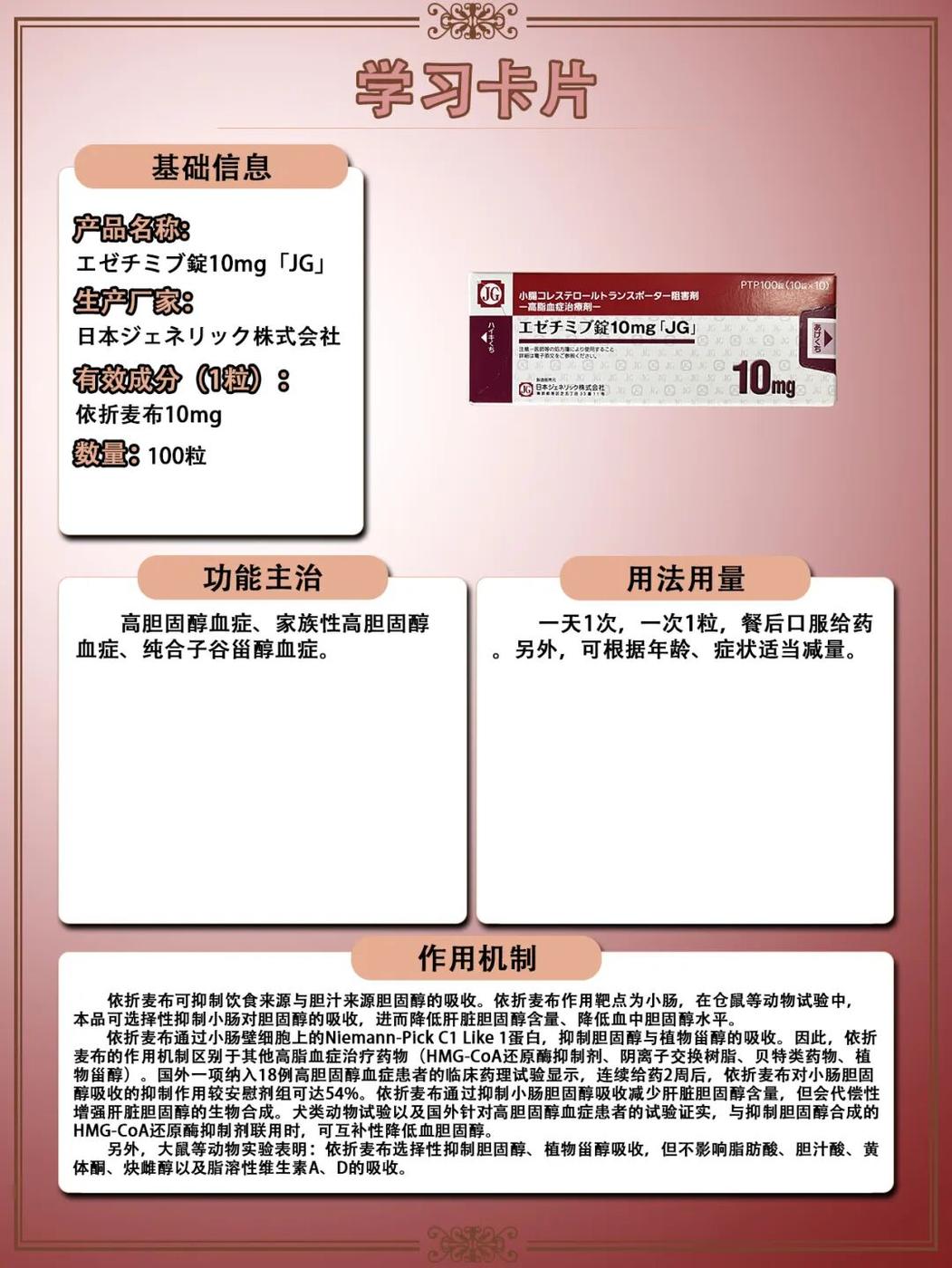
Basic information Product Name: Gozetimibe Tablets 10mg "" G " PTP100(30m Manufacturer: 1. Treatment for hyperlipidemia 1 Kozetimip Tablets 10mg "JG" Japan Generic Co., Ltd 10mg Active ingredient (1 capsule): Ezemib 10mg Quantity: 100 capsules Functions and indications Usage and dosage Hypercholesterolemia, familial hypercholesterolemia Take 1 capsule once daily, orally after meals Hematomia, homozygotic glutotosteremia. 。 Additionally, dosage can be appropriately reduced according to age and symptoms. Mechanism of action Ezetimibe can inhibit the absorption of cholesterol from dietary sources and bile. The target of action for ezremibe is the small intestine. In animal experiments with hamsters and other animals, This product selectively inhibits the absorption of cholesterol in the small intestine, thereby lowering liver cholesterol levels and blood cholesterol levels. Ezetimibe inhibits the absorption of cholesterol and plant detol by using the Niemann-PickC1Like1 protein on small intestinal wall cells. Therefore, according to the fold The mechanism of action of mibe differs from other hyperlipidemia treatments (HMG-CoA reductase inhibitors, anion exchange resins, fibrates, and plant-based drugs). subdiol). A clinical pharmacological trial abroad involving 18 patients with hypercholesterolemia showed that after 2 weeks of continuous administration, ezetimibe was used to reduce small intestinal cholesterol The inhibition of alcohol absorption was up to 54% higher than that of the placebo group. Ezetimibe reduces liver cholesterol levels by inhibiting small intestinal cholesterol absorption, but it is compensatory Enhances the biosynthesis of liver cholesterol. Canine animal trials and foreign trials targeting patients with hypercholesterolemia have confirmed that it inhibits cholesterol synthesis When combined with HMG-CoA reductase inhibitors, they can complementarily lower blood cholesterol. Additionally, animal experiments in rats and other animals have shown that ezetimibe selectively inhibits the absorption of cholesterol and plant diol, but does not affect fatty acids, bile acids, or yellow sulfur absorption of body ketones, estradiol, and fat-soluble vitamins A and D.
基础信息 产品名称: 工ゼチミブ錠 10mg 「」 G 」 PTP100(30m 生产厂家: 一高脂血症治剂一 工ゼチミプ錠 10mg 「 JG 」 日本ジェネリック株式会社 10mg 有效成分(1粒): 依折麦布10mg 数量:100粒 功能主治 用法用量 高胆固醇血症、家族性高胆固醇 一天1次,一次1粒,餐后口服给药 血症、纯合子谷笛醇血症。 。另外,可根据年龄、症状适当减量。 作用机制 依折麦布可抑制饮食来源与胆汁来源胆固醇的吸收。依折麦布作用靶点为小肠,在仓鼠等动物试验中, 本品可选择性抑制小肠对胆固醇的吸收,进而降低肝脏胆固醇含量、降低血中胆固醇水平。 依折麦布通过小肠壁细胞上的Niemann-PickC1Like1蛋白,抑制胆固醇与植物笛醇的吸收。因此,依折 麦布的作用机制区别于其他高脂血症治疗药物(HMG-CoA还原酶抑制剂、阴离子交换树脂、贝特类药物、植 物笛醇)。国外一项纳入18例高胆固醇血症患者的临床药理试验显示,连续给药2周后,依折麦布对小肠胆固 醇吸收的抑制作用较安慰剂组可达54%。依折麦布通过抑制小肠胆固醇吸收减少肝脏胆固醇含量,但会代偿性 增强肝脏胆固醇的生物合成。犬类动物试验以及国外针对高胆固醇血症患者的试验证实,与抑制胆固醇合成的 HMG-CoA还原酶抑制剂联用时,可互补性降低血胆固醇。 另外,大鼠等动物实验表明:依折麦布选择性抑制胆固醇、植物笛醇吸收,但不影响脂肪酸、胆汁酸、黄 体酮、炔雌醇以及脂溶性维生素A、D的吸收。
Basic information Product Name: Gozetimibe Tablets 10mg "" G " PTP100(30m Manufacturer: 1. Treatment for hyperlipidemia 1 Kozetimip Tablets 10mg "JG" Japan Generic Co., Ltd 10mg Active ingre…