Respiratory · RESPIRATORY

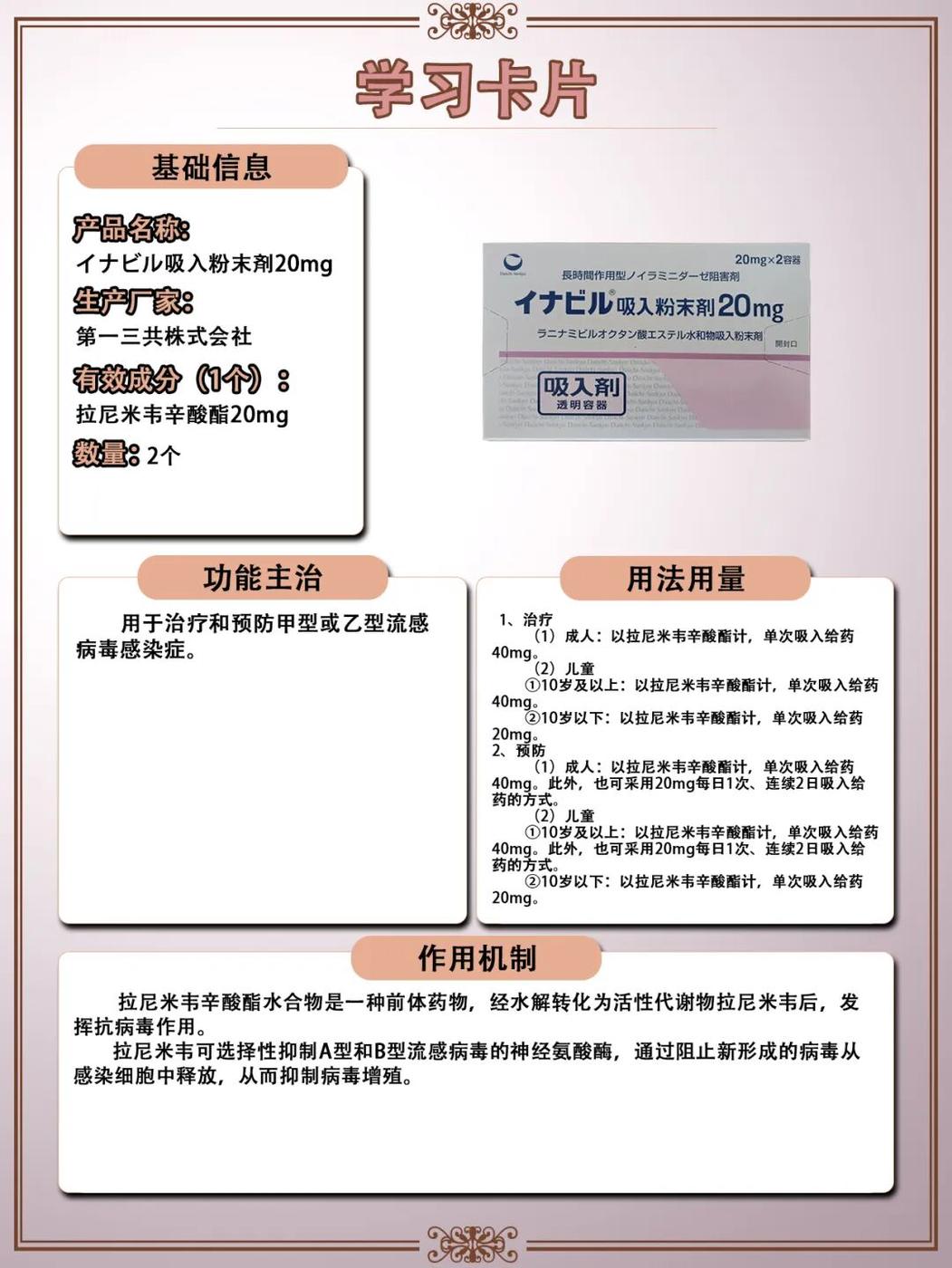
Laninamivir Octanoate

日本語原題:イナビル吸入粉末剤20mg

Published2026-10-13 17:04 Content10 sections / 1 images
Ingredients / strength:
20.76 mg of raninamiviroctanoate hydrate per container (20 mg as raninamiviroctanoate ester).
English translation of the Japanese package insert is the main text; the Japanese original is shown alongside for verification. Use the language menu (top right) to read the page in another language. This site is for reference only — consult a doctor or pharmacist before use.
Section 1 · 01
English translation
Feature Description Laninamivir octanoate hydrate is a prodrug that, after hydrolysis converts it into the active metabolite raninamivir, exhibiting antiviral effects. Laninamivir selectively inhibits neuraminidase of influenza A and B viruses, thereby inhibiting the release of newly formed viruses from infected cells and thereby suppressing viral replication.
Section 2 · 02
English translation
Specifications 2 containers (2 kits).
Section 3 · 03
English translation
Characteristics White powder.
Section 4 · 04
English translation
Ingredient Information Active ingredient: 20.76mg of raninamivir octanoate hydrate per container (20mg as raninamiviroctanoate ester). Additives: lactose hydrate (contains milk protein as an admixture). )。
Section 5 · 05
English translation
Indications Treatment and prevention of influenza A or B influenza virus infections.
Section 6 · 06
English translation
Dosage and Administration 1. Treatment (1) Adults: As raninamivir octanoate ester A single inhalation of 40 mg is administered. (2) Children (1) Ages 10 and up: As raninamivir octanoate ester A single inhalation of 40 mg is administered. (2) Under 10 years old: as raninamivir octanoate ester A single inhalation of 20 mg is administered. 2. Prevention (1) Adults: Administer 40 mg by single inhalation as raninamivir octanoate ester. Additionally, 20 mg can be administered by inhalation once daily for two days. (2) Children (1) Ages 10 and up: As raninamivir octanoate ester A single inhalation of 40 mg is administered. Additionally, 20 mg can be administered by inhalation once daily for two days. (2) Under 10 years old: Administer 20 mg by inhalation as raninamivir octanoic acid ester as a single dose.
Section 7 · 07
English translation
Notes 1. Regardless of whether or not anti-influenza virus medication is being taken, there have been reports of abnormal behavior during influenza infection. As preventive measures to prevent accidents such as falls caused by abnormal behavior, 1) explain to patients and their families the risk of abnormal behavior occurring and, if recuperating at home, guardians and guardians must take preventive measures against falls and similar accidents for at least two days after the fever onset. It is known that severe abnormal behaviors that could lead to accidents such as falls are more frequently reported in children and minor males after entering school, and that symptoms often appear within two days of fever. 2. Bacterial infections can be complicated by influenza virus infection or confused with influenza-like symptoms. In cases of bacterial infection, appropriate measures such as administering antibiotics should be taken. 3. There have been reports of fainting or shock symptoms after administration of this drug. These fainting and shock symptoms may be triggered by worsening general conditions such as fever and dehydration associated with influenza virus infection, as well as strong inhalation or prolonged breath-holding of this drug, as well as possible effects of this drug. Ensure patients fully understand the inhalation instructions and instruct them to inhale in a relaxed state (e.g., seated).
Section 8 · 08
English translation
Side Effects 1. Shock (frequency unknown), anaphylaxis (frequency unknown) may occur, including fainting, difficulty breathing, urticaria, low blood pressure, pale face, and cold sweats. If fainting or shock symptoms appear after administration of this drug, have the patient lie supine, maintain rest, and provide appropriate measures such as fluid replacement. 2. Bronchospasm (frequency unknown), dyspnea (frequency unknown) 3. Abnormal behavior (frequency unknown) Although the causal relationship is unknown, during influenza, abnormal behaviors that may lead to falls (such as suddenly running or wandering) may appear. 4. Stevens-Johnson syndrome (frequency unknown), toxic epidermal necrolysis (TEN) (frequency unknown), erythema multiforme (frequency unknown) 5. Other side effects (1) Hypersensitivity: hives, rash, erythema, itching. (2) Gastrointestinal: Diarrhea, gastroenteritis, nausea, vomiting, abdominal pain, stomatitis, abdominal bloating, loss of appetite, abdominal discomfort. (3) Psychiatric nervous system: dizziness, headache. (4) Respiratory: coughing. (5) Blood: increased white blood cell count. (6) Liver: ALT elevation, abnormal liver function, increased AST, elevated γ-GTP. (7) Urinary system: urinary protein. (8) Others: increased CRP, positive urine glucose.
Section 9 · 09
English translation
taboo Patients with a history of hypersensitivity to any component of this drug.
Section 10 · 10
English translation
Warning When using this drug, carefully consider its necessity. The fundamental prevention of influenza virus infection is vaccination, and the use of this drug does not replace vaccine prevention.

Source images

1 images

Need help sourcing Japanese medicines or OEM production?

💬