Epinastine Hydrochloride
日本語原題:エピナスチン塩酸塩錠20mg「サワイ」
Source images
1 imagesThe artwork keeps its original Japanese/Chinese lettering. Open “Text in this image” under a picture to read what it says in your language (machine-read, may contain errors).
Text in this image machine-read · may contain errors
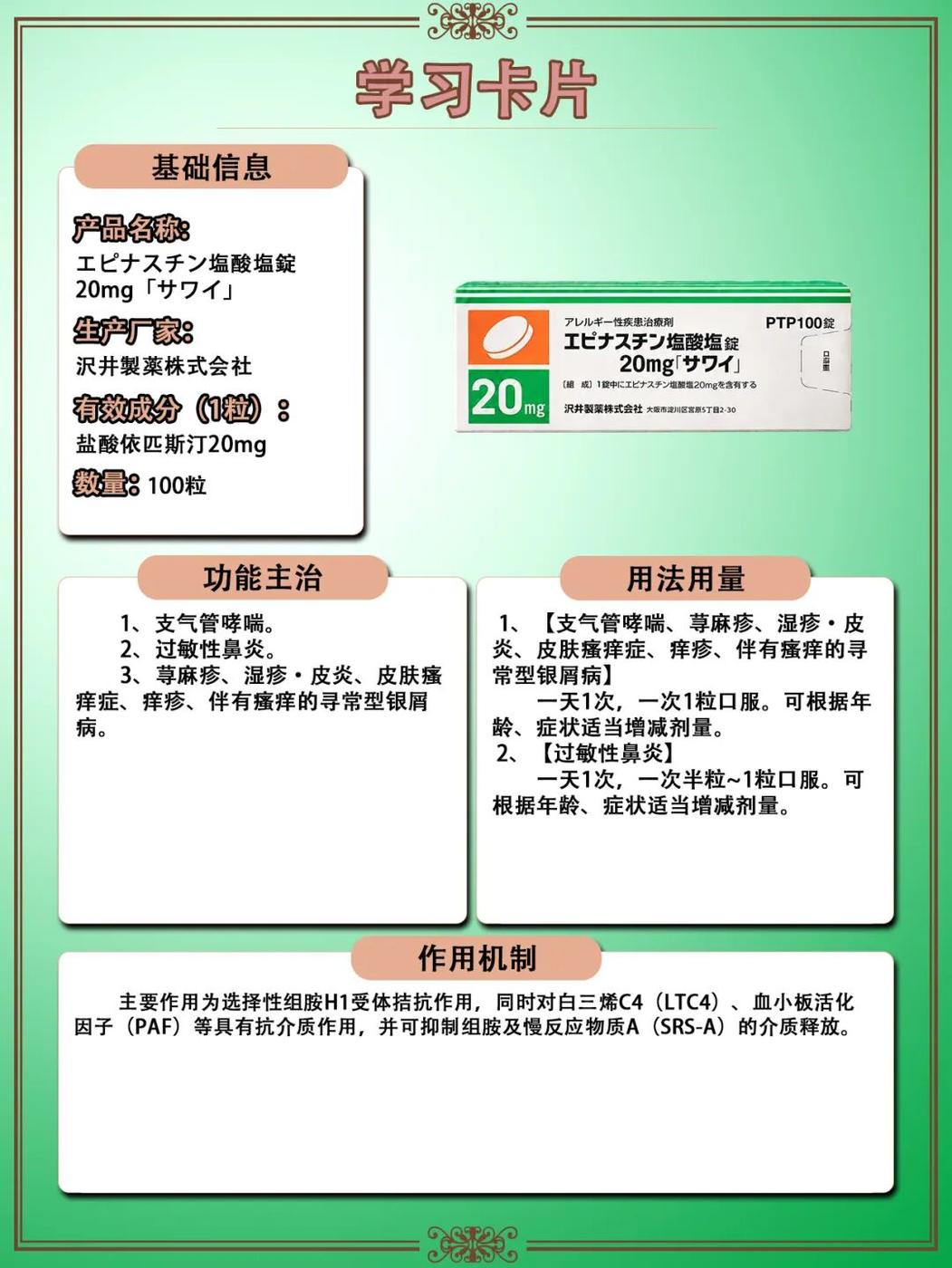
Basic information Product Name: Epinastine hydrochloride tablets 20mg「 Manufacturer: Allergic disease treatment 100 PTP tablets Industrial vinastine hydrochloride tablets 20mg Ii Pharmaceutical Co., Ltd Active ingredient (1 capsule): 20mg of epistine hydrochloride Quantity: 100 capsules Functions and indications Usage and dosage 1. Bronchial asthma. 1. [Bronchial asthma, measles, eczema·skin.] 2. Allergic rhinitis. Inflammation, skin pruritus, prurigo, and itching with itching 3. Urticaria, eczema, dermatitis, skin itching Normal psoriasis] prurigo, prurigo, and common psoriasis with itching Take 1 capsule orally once a day. It can be determined by year Adjust the dosage appropriately for age and symptoms. 2. [Allergic Rhinitis] Take once a day, orally half a capsule~1 capsule each time. Okay Adjust the dosage appropriately according to age and symptoms. Mechanism of action Its main function is selective anti-histamine H1 receptor and activation of leukotriene C4 (LTC4) and platelets Factors such as PAF have anti-mediator effects and can inhibit the release of mediators from histamine and slow-reacting substance A (SRS-A).
基础信息 产品名称: エピナスチン塩酸塩錠 20mg「 生产厂家: アレルギー性疾患治療剤 PTP100锭 工ビナスチン塩酸塩錠 20mg 井製藥株式会社 有效成分(1粒): 盐酸依匹斯汀20mg 数量:100粒 功能主治 用法用量 1、支气管哮喘。 1、【支气管哮喘、尊麻疹、湿疹·皮 2、过敏性鼻炎。 炎、皮肤瘙痒症、痒疹、伴有瘙痒的寻 3、荨麻疹、湿疹·皮炎、皮肤瘙 常型银屑病】 痒症、痒疹、伴有瘙痒的寻常型银屑 一天1次,一次1粒口服。可根据年 龄、症状适当增减剂量。 2、【过敏性鼻炎】 一天1次,一次半粒~1粒口服。可 根据年龄、症状适当增减剂量。 作用机制 主要作用为选择性组胺H1受体抗作用,同时对白三烯C4(LTC4)、血小板活化 因子(PAF)等具有抗介质作用,并可抑制组胺及慢反应物质A(SRS-A)的介质释放。
Basic information Product Name: Epinastine hydrochloride tablets 20mg「 Manufacturer: Allergic disease treatment 100 PTP tablets Industrial vinastine hydrochloride tablets 20mg Ii Pharmaceuti…