Digestive · DIGESTIVE

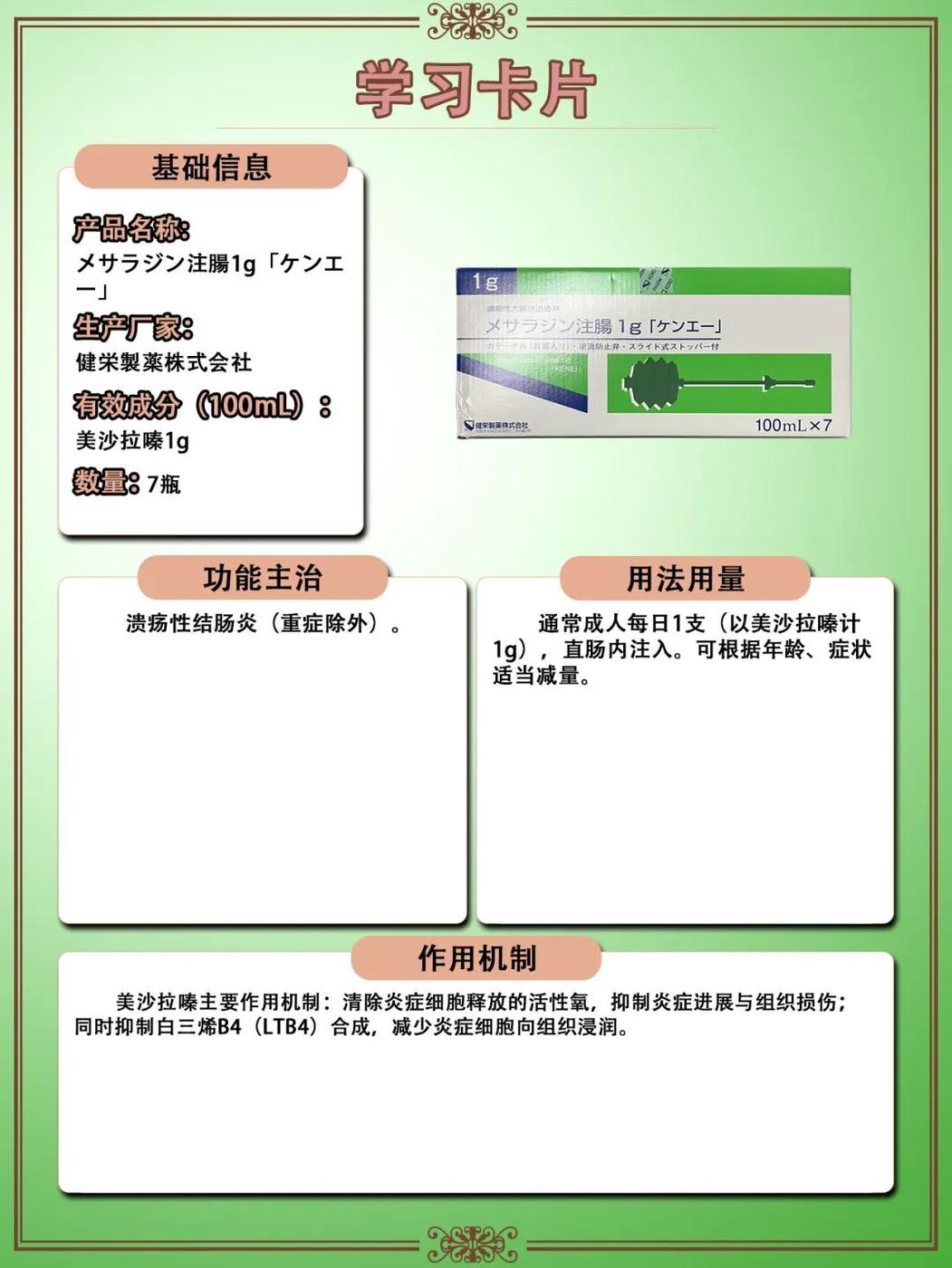
Mesalazine

日本語原題:メサラジン注腸1g「ケンエー」

Published2026-11-24 10:38 FormTablet Content9 sections / 1 images
Ingredients / strength:
1 piece (100mL) contains 1g of Chunichi Bureau mesalazine.
English translation of the Japanese package insert is the main text; the Japanese original is shown alongside for verification. Use the language menu (top right) to read the page in another language. This site is for reference only — consult a doctor or pharmacist before use.
Section 1 · 01
English translation
Feature Description The main mechanism of action of mesaladine is to eliminate reactive oxygen species released from inflammatory cells, suppressing inflammation progression and tissue damage, as well as suppressing the biosynthesis of leukotriene B4 (LTB4) and suppressing the infiltration of inflammatory cells into tissues.
Section 2 · 02
English translation
Specifications 100mL [bottle (oxygen absorber in aluminum bag)] × 7.
Section 3 · 03
English translation
Characteristics It is a white~pale yellow suspension; when left standing, it separates into a white sediment and a colorless ~ pale yellow supernatant; this sediment easily resurfaces when gently shaken.
Section 4 · 04
English translation
Ingredient Information Active ingredient: 1 piece (100mL) 1g of China-Japan Domestique Mesalazine. Additives: sodium acetate hydrate, sodium pyrrosulfite, sodium edetate hydrate, pH adjuster.
Section 5 · 05
English translation
Indications Ulcerative colitis (except severe cases).
Section 6 · 06
English translation
Dosage and Administration Typically, adults receive one tablet per day (1 g as mesalazine) administered rectally. Dose reduction is appropriate according to age and symptoms.
Section 7 · 07
English translation
Notes 1. Mesaladine may cause hypersensitivity symptoms (fever, abdominal pain, diarrhea, eosinophilia, etc.) and may worsen ulcerative colitis. If abnormalities are observed, discontinue administration and take appropriate measures. 2. Since interstitial nephritis has been reported with mesalazine tablets, monitor renal function such as creatinine during administration and closely monitor the patient's condition. 3. Aplastic anemia, pancytopenia, agranulocytosis, and thrombocytopenia may occur, so blood tests and other tests should be performed during the administration period. 4. Since hepatitis, liver dysfunction, and jaundice have been reported with mesalazine tablets, monitor liver function such as AST and ALT during administration and closely observe the patient's condition 5. Pancreatitis may occur, so serum amylase tests and similar tests should be performed during the administration period.
Section 8 · 08
English translation
Side Effects 1. Interstitial lung disease (frequency unknown) Interstitial lung diseases (eosinophilic pneumonia, alveolar inflammation, pneumonitis, interstitial pneumonia, etc.) have been reported, so if fever, cough, difficulty breathing, abnormal chest X-ray, or similar symptoms appear, discontinue administration and take appropriate treatment. 2. Myocarditis, pericarditis, pleurisy (all unknown frequency) If pleural effusion, chest pain, or abnormal ECG occur, appropriate measures such as discontinuing administration should be taken. 3. Interstitial nephritis, nephrotic syndrome, renal impairment, acute kidney injury (all frequency unknown) 4. Aplastic anemia, pancytopenia, agranulocytosis, thrombocytopenia (all frequency unknown) 5. Hepatitis, liver dysfunction, jaundice (frequency unknown) Hepatitis, AST, ALT, liver dysfunction accompanied by elevated γ-GTP, and jaundice may occur. 6. Pancreatitis (frequency unknown) 7. Toxic Epidermal Necrolysis (TEN) (frequency unknown), Stevens-Johnson syndrome (frequency unknown) 8. Drug-induced hypersensitivity syndrome (frequency unknown) Early symptoms include rash and fever, followed by liver dysfunction, lymphadenopathy, increased white blood cells, eosinophilia, and the appearance of atypical lymphocytes, resulting in delayed, severe hypersensitivity symptoms. Note that reactivation of viruses such as human herpesvirus 6 (HHV-6) is often involved, and symptoms such as rash, fever, and liver dysfunction may recur or persist even after discontinuation, so caution is advised. 9. Anti-neutrophil cytoplasmic antibody (ANCA)-associated vasculitis (frequency unknown) Systemic symptoms such as fever, fatigue, joint pain, and muscle pain may appear, as well as organ symptoms like skin (erythema, purpura), lungs (bloody sputum), and kidneys (hematuria, proteinuria). 10. Other side effects (1) Skin: rash, papules, urticaria, erythema, hair loss, itching. (2) Digestive system: diarrhea, abdominal pain, nausea, vomiting, bloody stools, bloody diarrhea, elevated amylase, abdominal bloating, constipation, mucus in stool, loss of appetite, stomatitis, discoloration of stool (such as black). (3) Liver: Abnormalities in liver function such as elevated AST, ALT, γ-GTP, Al-P, and bilirubin. (4) Kidneys: Renal dysfunction such as urine discoloration, increased creatinine, urinary NAG, urinary microglobulin, and urine protein. (5) Blood: leukopenia, anemia, eosinophils. (6) Others: headache, increased CK (high fever index), muscle pain, joint pain, lupus-like syndrome, fever, edema, general fatigue, dizziness, peripheral neuropathy, anal pain, itching in the anal area, discomfort, urgency to defecate, chest pain, neck pain, increased CRP.
Section 9 · 09
English translation
taboo 1. Patients with severe kidney impairment 2. Patients with severe liver impairment 3. Patients with a history of hypersensitivity to any component of this drug 4. Patients with a history of hypersensitivity to salicylic acid esters or salicylates [There is a risk of developing sexual allergy.] ]

Source images

1 images

Need help sourcing Japanese medicines or OEM production?

💬