Cardiovascular · CARDIOVASCULAR

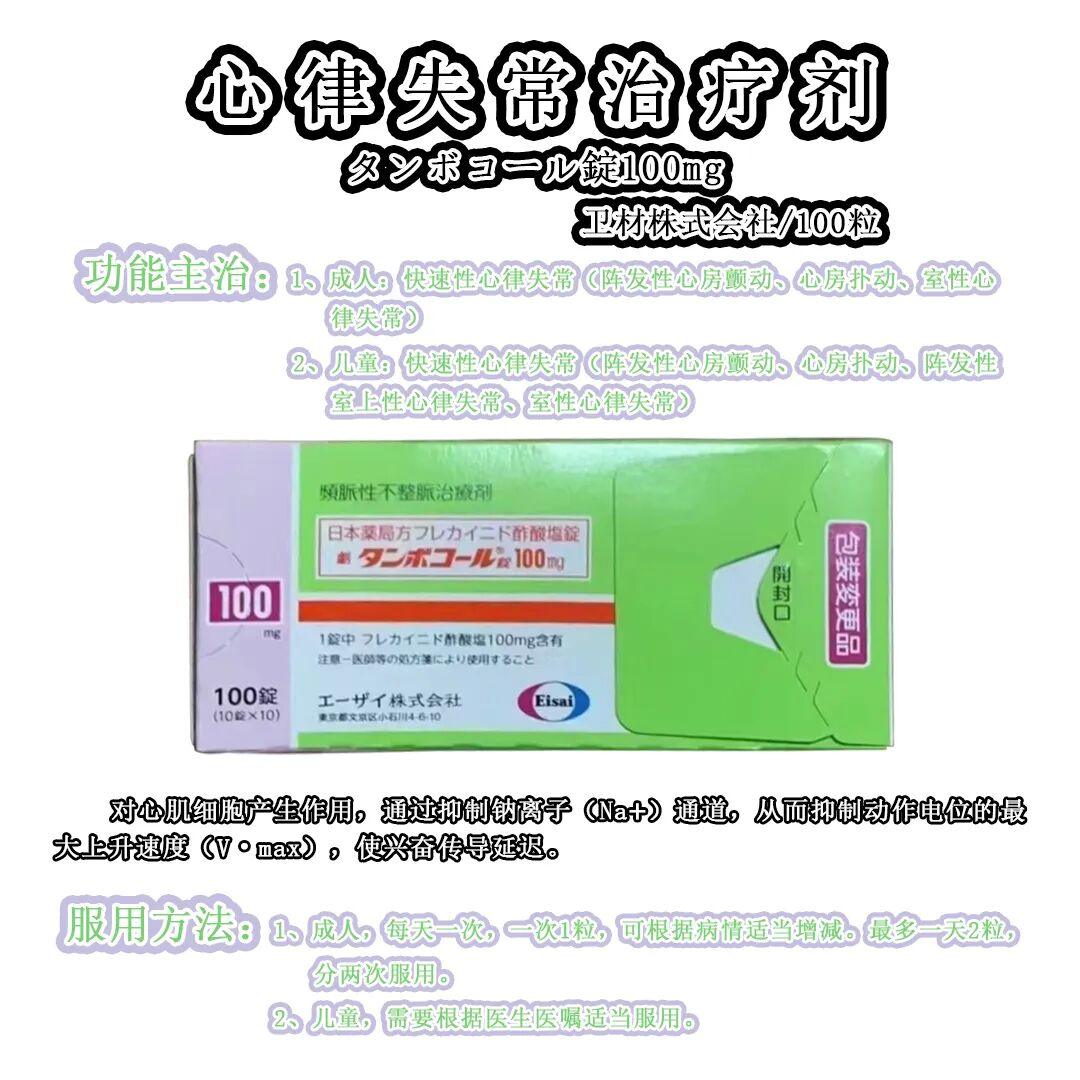
Flecainide Acetate

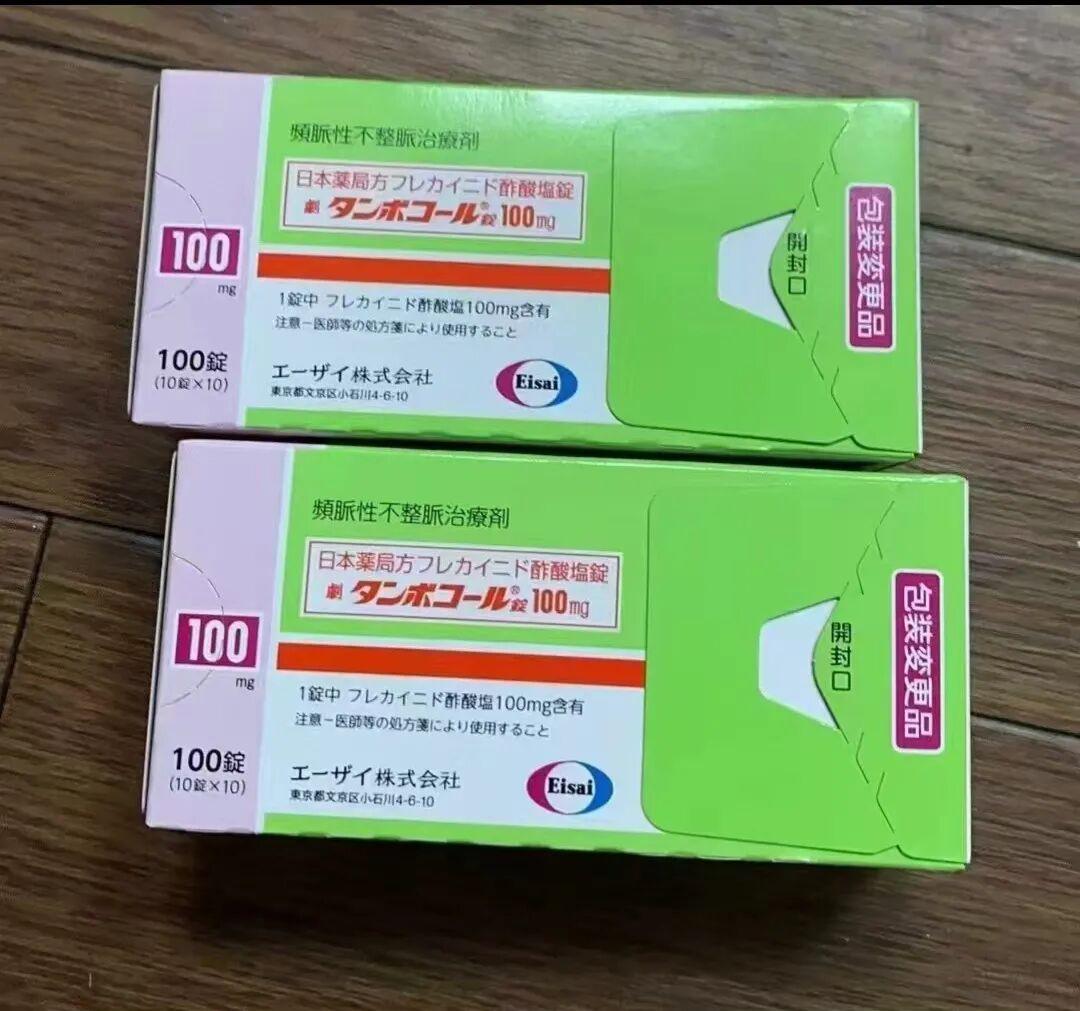
日本語原題:タンボコール錠100mg

Published2025-05-07 13:00 Maker卫材 FormTablet Content9 sections / 2 images
Ingredients / strength:
Active ingredient: 100mg of flecainid acetate per tablet. Additives: sodium croscarmellos, crystalline cellulose, hydrogenated oil, magnesium stearate, partially alpha-starch.
English translation of the Japanese package insert is the main text; the Japanese original is shown alongside for verification. Use the language menu (top right) to read the page in another language. This site is for reference only — consult a doctor or pharmacist before use.
Section 1 · Feature description
English translation
It acts on cardiac muscle cells, suppressing the maximum action potential uprising velocity (V·max) through the inhibition of Na channels, thereby delaying excitation conduction.
Section 2 · Specifications
English translation
100 tablets [10 tablets (PTP)×10].
Section 3 · Characteristics
English translation
White tablets.
Section 4 · Ingredient Description
English translation
Active ingredient: 100mg of flecainid acetate per tablet. Additives: sodium croscarmellos, crystalline cellulose, hydrogenated oil, magnesium stearate, partially alpha-starch.
Section 5 · Functions and indications
English translation
If other antiarrhythmic drugs cannot be used or are ineffective under the following conditions: 1. Adults: Tachyarrhythmia (paroxysmal atrial fibrillation, flutter, ventricular) 2. Pediatrics: Tachyarrhythmia (paroxysmal atrial fibrillation and flutter, paroxysmal supraventricular, ventricular)
Section 6 · Usage and dosage
English translation
1. Adults (1) Tachyarrhythmia (paroxysmal atrial fibrillation and flutter) Typically, adults start with 100 mg of flecainide acetate per day, and if efficacy is insufficient, increase to 200 mg and take orally twice daily. Dose reduction is appropriate according to age and symptoms. (2) Tachyarrhythmia (ventricular) Typically, adults start with 100 mg of flecainide acetate per day, and if efficacy is insufficient, increase to 200 mg and take orally twice daily. Adjust appropriately according to age and symptoms. 2. Children (1) Tachyarrhythmia (paroxysmal atrial fibrillation and flutter, paroxysmal supraventricular, ventricular) Usually, infants aged 6 months and older, infants, and children are given orally as flecainide acetate at 50~100 mg/m2 (body surface area) divided into 2~3 doses per day. Adjust appropriately according to age and symptoms. However, the maximum daily dose is set at 200 mg/m2. Typically, infants under 6 months of age are given orally as flecainide acetate at 50 mg/m2 (body surface area) per day, divided into 2~3 doses per day. Adjust appropriately according to age and symptoms. However, the maximum daily dose is set at 200 mg/m2.
Section 7 · Important notes
English translation
〈Common Effects〉 1. When administering this drug, frequently observe the patient's condition and regularly check ECG, pulse, blood pressure, and cardiothoracic ratio. If abnormal findings such as prolonged PQ, increased QRS width, QT prolongation, bradycardia, or hypotension are observed, immediately reduce the dose or discontinue administration. Administration of this drug has been observed in cases of torsades de pointes and AdamsStokes seizures. 2. When administering doses exceeding 200 mg per day, plasma concentrations may rise beyond expectations, increasing the risk of side effects, so caution is advised. 3. Arrhythmias caused by this drug often appear at the initial stage of administration or during dosage increases, so exercise caution. 4. If symptoms such as dizziness or unsteadiness appear and tend to worsen during administration of this drug, immediately reduce the dose or discontinue administration. 5. There have been reports of ECG changes characteristic of Brugada syndrome (ST elevation in right leg block and right chest induction (V1~V3)) with this drug, so be cautious of associated manifestations such as ventricular fibrillation, ventricular tachycardia, and ventricular extramature contractions. 6. Intake of breast milk and dairy products may inhibit absorption of this medicine and reduce its efficacy; exercise special caution when using on infants and young children. Also, when stopping breast milk and dairy products, be very careful to monitor the increase in blood concentration of this drug. 〈Tachyarrhythmia (paroxysmal atrial fibrillation / flutter)〉 When the seizure stops, the risk of sinus arrest and sinus insufficiency syndrome increases, so be very careful.
Section 8 · Side effects
English translation
1. Ventricular tachycardia (including torsades de pointes) (less than 0.1~5%), ventricular fibrillation (less than 0.1%), atrial flutter (less than 0.1~5%), severe atrioventricular block (less than 0.1~5%), transient cardiac arrest (less than 0.1%), sinus arrest (or sinoatrial block) (less than 0.1~5%), worsening heart failure (less than 0.1~5%), Adams-Stokes attack (less than 0.1%) Ventricular tachycardia (including torsades de pointes), ventricular fibrillation, atrial flutter, severe atrioventricular block, transient cardiac arrest, sinus arrest (or sinoatrial block), worsening of heart failure, and Adams-Stokes attacks may occur. In such cases, discontinue administration of this drug and consider the following treatment methods. (1) Removal of unabsorbed drugs from the digestive system (2) Administration of cardiac stimulants such as dopamine, dobutamine, and isopronaline (3) Supplementary circulation such as IABP (4) Pacing and electrical defibrillation 2. Liver dysfunction (frequency unknown), jaundice (frequency unknown) Liver dysfunction or jaundice accompanied by elevated AST, ALT, and γ-GTP may occur. 3. Circulator Prolongation of PQ, QRS, QT, chest discomfort, palpitations, other bradycardia, atrial fibrillation, increased blood pressure, edema, hypotension, chest pain. 4. Psychiatric and Nervous System Dizziness, dizziness, headache, heaviness in the head, tremors, drowsiness, numbness in the hands and feet, tinnitus. 5. Digestive system Nausea, vomiting, abdominal pain, abdominal bloating, dry mouth, loss of appetite, diarrhea, constipation, indigestion, stomatitis. 6. Respirators Difficulty breathing. 7. Visual Organs Double vision, photophobia, abnormal vision, foggy vision. 8. Liver Increases in AST, ALT, γ-GTP, Al-P, LDH, and total bilirubin levels, etc. 9. Kidneys BUN, elevated serum creatinine levels, etc. 10. Allergies Itching, rash. 11. Blood Leukocytosisis and increased hemoglobin and hematocrit levels. 12. Others Urinary disorders include fatigue, numbness of the tongue, bitterness or taste disturbances, facial flushing, sweating, and frequent urination.
Section 9 · Taboo
English translation
1. Patients with congestive heart failure [This drug has a negative tonotropic effect and may further worsen heart failure symptoms. ] 2. Patients with severe atrioventricular block or advanced sinoatrial block [This drug suppresses atrioventricular and sinoatrial conduction and may further worsen stimulatory conduction. ] 3. Patients with asymptomatic ventricular premature contractions or non-persistent ventricular tachycardia after myocardial infarction [Clinical Trials on Sudden Death (CAST) have reported increased mortality in such patients with this drug. ] 4. Pregnant women or women who may be pregnant 5. Patients receiving ritonavir 6. Patients receiving Mirabegron 7. Patients receiving teraprevir

Source images

2 images

Need help sourcing Japanese medicines or OEM production?

💬