Cardiovascular · CARDIOVASCULAR

Cibenzoline Succinate

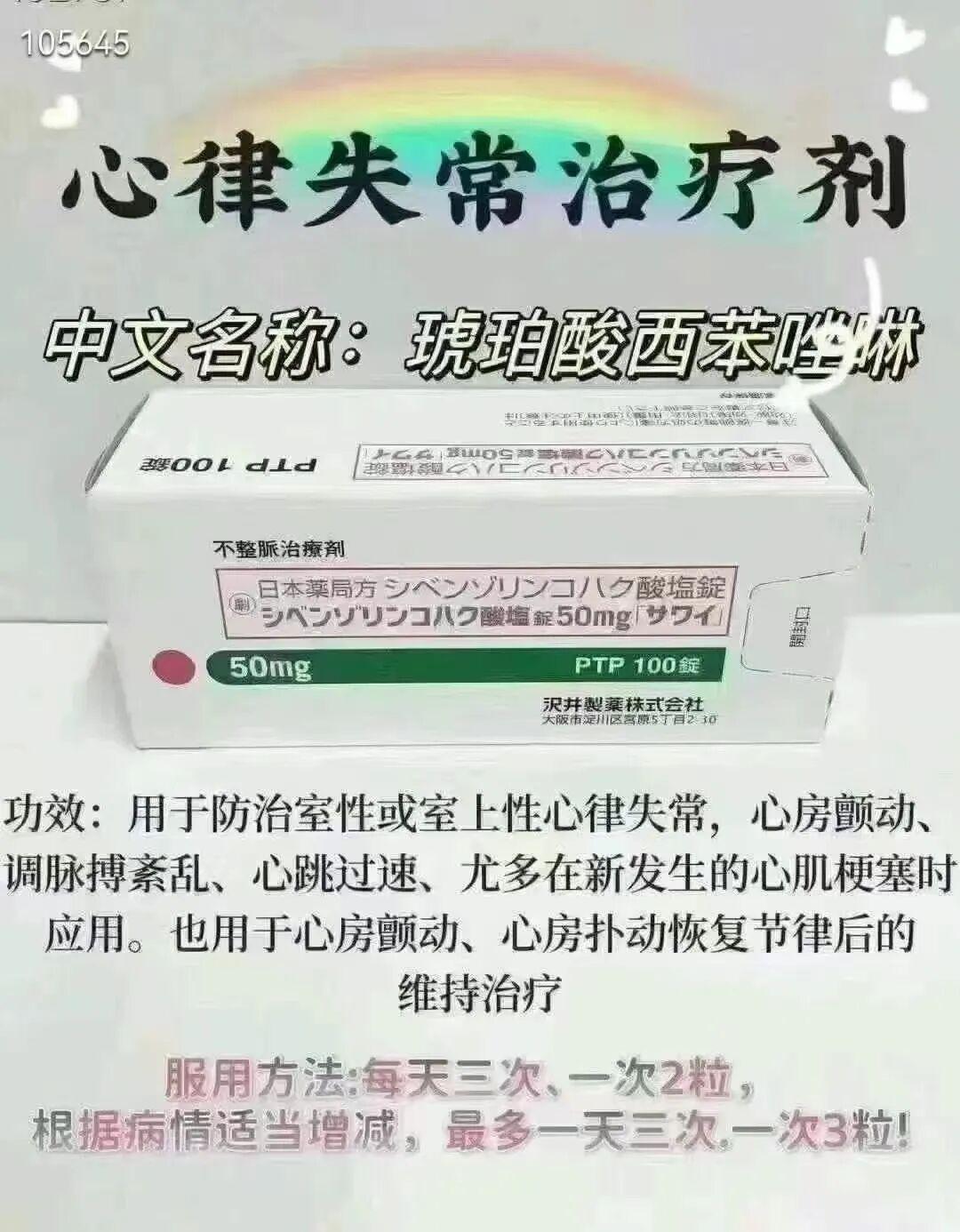
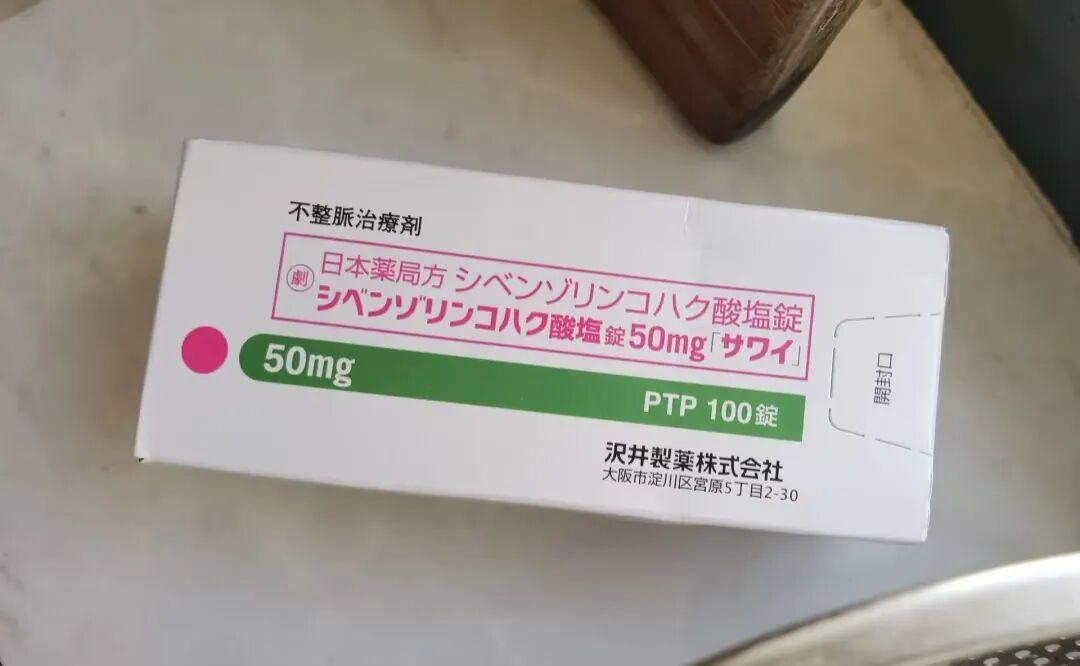
日本語原題:シベンゾリンコハク酸塩錠50mg「サワイ」

Published2025-05-07 13:00 Maker沢井 FormTablet Content9 sections / 2 images
Ingredients / strength:
Active ingredient [per tablet]: Japanese Bureau Cybenzophosphosuccinate 50mg. Additives: alpha starch, carnauba barrow, calcium carmelose, crystalline cellulose, titanium dioxide, magnesium stearate, talc, hypromellose, macrogol 6000.
English translation of the Japanese package insert is the main text; the Japanese original is shown alongside for verification. Use the language menu (top right) to read the page in another language. This site is for reference only — consult a doctor or pharmacist before use.
Section 1 · Feature description
English translation
According to Vaughan Williams' classification, it is a Group I antiarrhythmic drug. By suppressing Na+ channels and suppressing the maximum depolarization velocity of action potentials, it exhibits an antiarrhythmic effect. In subclassification, it belongs to group Ia, with a moderate rate of binding dissociation with Na+ channels, and prolongs the duration of action potentials. In addition to its action as a Group I antiarrhythmic agent, this drug also inhibits Ca2+ channels, especially at high concentrations, providing antiarrhythmic effects for Group IV.
Section 2 · Specifications
English translation
PTP: 100 tablets (10 tablets × 10).
Section 3 · Characteristics
English translation
White, film-coated tablets.
Section 4 · Ingredient Description
English translation
Active ingredient [per tablet]: Japanese Bureau Cybenzophosphosuccinate 50mg. Additives: alpha starch, carnauba barrow, calcium carmelose, crystalline cellulose, titanium dioxide, magnesium stearate, talc, hypromellose, macrogol 6000.
Section 5 · Functions and indications
English translation
If other antiarrhythmic drugs cannot be used or are ineffective under the following conditions: Tachyarrhythmia.
Section 6 · Usage and dosage
English translation
Typically, adults are given as cybenzolin succinate starting at 300 mg per day, and if efficacy is insufficient, the dose is increased to 450 mg and administered orally three times a day. Adjust appropriately according to age and symptoms.
Section 7 · Important notes
English translation
1. When administering this drug, heart failure and cardiogenic shock may occur, so frequently monitor the patient's condition and regularly check ECG, pulse, blood pressure, and cardiothoracic ratio. If abnormal findings such as prolonged PQ, increased QRS width, QT prolongation, bradycardia, or hypotension are observed, immediately reduce the dose or discontinue administration. 2. During administration of this drug, regularly perform clinical tests (blood tests, liver and kidney function tests, blood glucose tests, etc.) and measure the blood concentration of this drug as needed. If abnormalities are detected, appropriate measures such as weight loss or discontinuation should be taken. In particular, in elderly patients and patients with renal impairment, hypoglycemia may occur due to elevated blood levels, and in patients with underlying heart disease, liver and kidney damage may occur due to circulatory failure caused by cardiac dysfunction and arrhythmic effects; in such cases, discontinue administration. 3. This drug may raise the cardiac pacing threshold, so it should be administered with great caution to patients using a permanent pacemaker or temporarily pacing. Also, when administering to patients using pacemakers, measure the pacing threshold at appropriate intervals. If abnormalities are observed, immediately reduce the dose or discontinue administration. 4. This drug has anticholinergic effects, and symptoms such as urinary disorders, dry mouth, blurred vision, and visual accommodation disorders may occur due to these effects; in such cases, reduce the dose or discontinue administration. 5. When administering more than 450mg per day, caution is advised as the risk of side effects may increase. 6. Dizziness, unsteadiness, and hypoglycemia may occur; thus, patients receiving this drug should be careful not to engage in dangerous machinery operation such as driving a vehicle.
Section 8 · Side effects
English translation
1. Promotes arrhythmia Ventricular fibrillation, ventricular tachycardia (including Torsades de Pointes) (both of unknown frequency), and supraventricular arrhythmias (less than 1%) may occur, which can lead to cardiac arrest. If abnormal changes are observed on the ECG, discontinue administration and take appropriate measures such as administering antiarrhythmic drugs. 2. Shock, anaphylaxis (both unknown frequency) If chest distress, cold sweats, difficulty breathing, hypotension, rash, edema, or similar symptoms appear, discontinue administration and provide appropriate treatment. 3. Heart failure, cardiogenic shock (both frequency unknown) If abnormal changes are observed in cardiac function tests, discontinue administration and take appropriate measures such as dopamine administration. 4. Hypoglycemia (less than 1%) If symptoms suspected of hypoglycemia (weakness/fatigue, sweating, coldness, impaired consciousness, confusion, etc.) appear, discontinue administration and administer glucose as needed. 5. Liver damage due to circulatory failure (frequency unknown) Severe liver damage (shock liver characterized by rapid elevation of transaminases and LDH) may occur due to circulatory failure caused by the drug's cardiac and arrhythmic effects. In such cases, discontinue administration and promptly administer dopamine to improve cardiac function, while appropriate measures such as liver protection therapy may be taken as needed. In such cases, kidney damage may also occur. 6. Liver dysfunction and jaundice (both frequency unknown) Liver dysfunction accompanied by elevated levels of AST, ALT, and γ-GTP, as well as jaundice, may occur. 7. Granulocytopenia, leukopenia (each less than 1%), anemia, thrombocytopenia (frequency unknown) 8. Interstitial pneumonia (frequency unknown) Interstitial pneumonia accompanied by fever, cough, difficulty breathing, and abnormal chest X-rays may occur; if such symptoms appear, discontinue administration and take appropriate measures such as adrenal corticosteroids. 9. Circulator PQ prolongation, QRS width prolongation, QTc prolongation, atrioventricular block, palpitations, leg block, sinosinus tuberosity dysfunction, bradycardia, hypotension. 10. Liver AST rises, ALT rises, Al-P rises. 11. Urinary System Urinary disorders such as urinary retention and difficulty urinating. 12. Kidneys BUN increased, creatinine increased. 13. Eyes Visual accommodation disorders such as photopicia and fog-sightedness. 14. Allergies Rash, erythema, itching. 15. Psychiatric and Nervous System Dizziness, headache, head heaviness, dizziness, drowsiness, tremors, lightheadedness, hallucinations. 16. Digestive system Dry mouth, nausea, loss of appetite, constipation, vomiting, stomatitis, abdominal pain, abdominal discomfort. 17. Others Weakness, fatigue, cold sweats, chest tightness, shortness of breath, joint pain, dry nose, impotence.
Section 9 · Taboo
English translation
1. Patients with advanced atrioventricular block or advanced sinoatrial block [There is a risk of cardiac arrest. ] 2. Patients with congestive heart failure [Due to its cardiac function suppression and arrhythmic effects, there is a risk of worsening heart failure. Additionally, there is a risk of liver and kidney damage due to circulatory failure. ] 3. Patients undergoing dialysis 4. Patients with angle-closure glaucoma [Anticholinergic effects may increase intraocular pressure and worsen symptoms. ] 5. Patients with a tendency toward urinary retention [Due to its anticholinergic effects, it may worsen urinary retention. ] 6. Patients with a history of hypersensitivity to any component of this drug 7. Patients receiving vardenafil hydrochloride hydrate, moxifloxacin hydrochloride, lascuboxacin hydrochloride (injection), tremifen citrate, fingolimod hydrochloride, ciponimod fumaric acid, or eriglustat tartrate

Source images

2 images

Need help sourcing Japanese medicines or OEM production?

💬