Cardiovascular · CARDIOVASCULAR

Tamoxifen

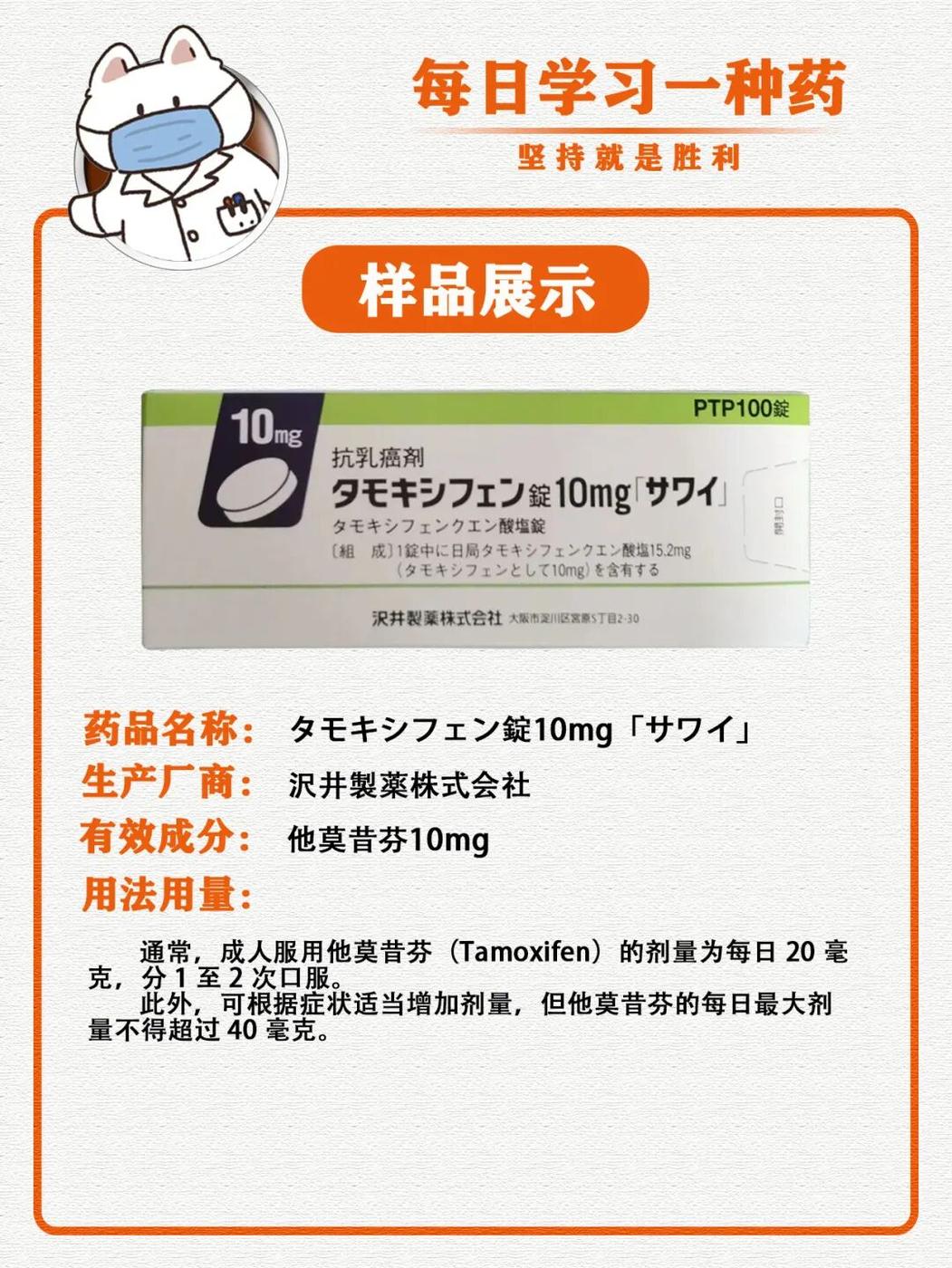
日本語原題:タモキシフェン錠10mg「サワイ」

Published2025-09-13 13:31 Maker沢井 FormTablet Content9 sections / 2 images
English translation of the Japanese package insert is the main text; the Japanese original is shown alongside for verification. Use the language menu (top right) to read the page in another language. This site is for reference only — consult a doctor or pharmacist before use.
Section 1 · 01
English translation
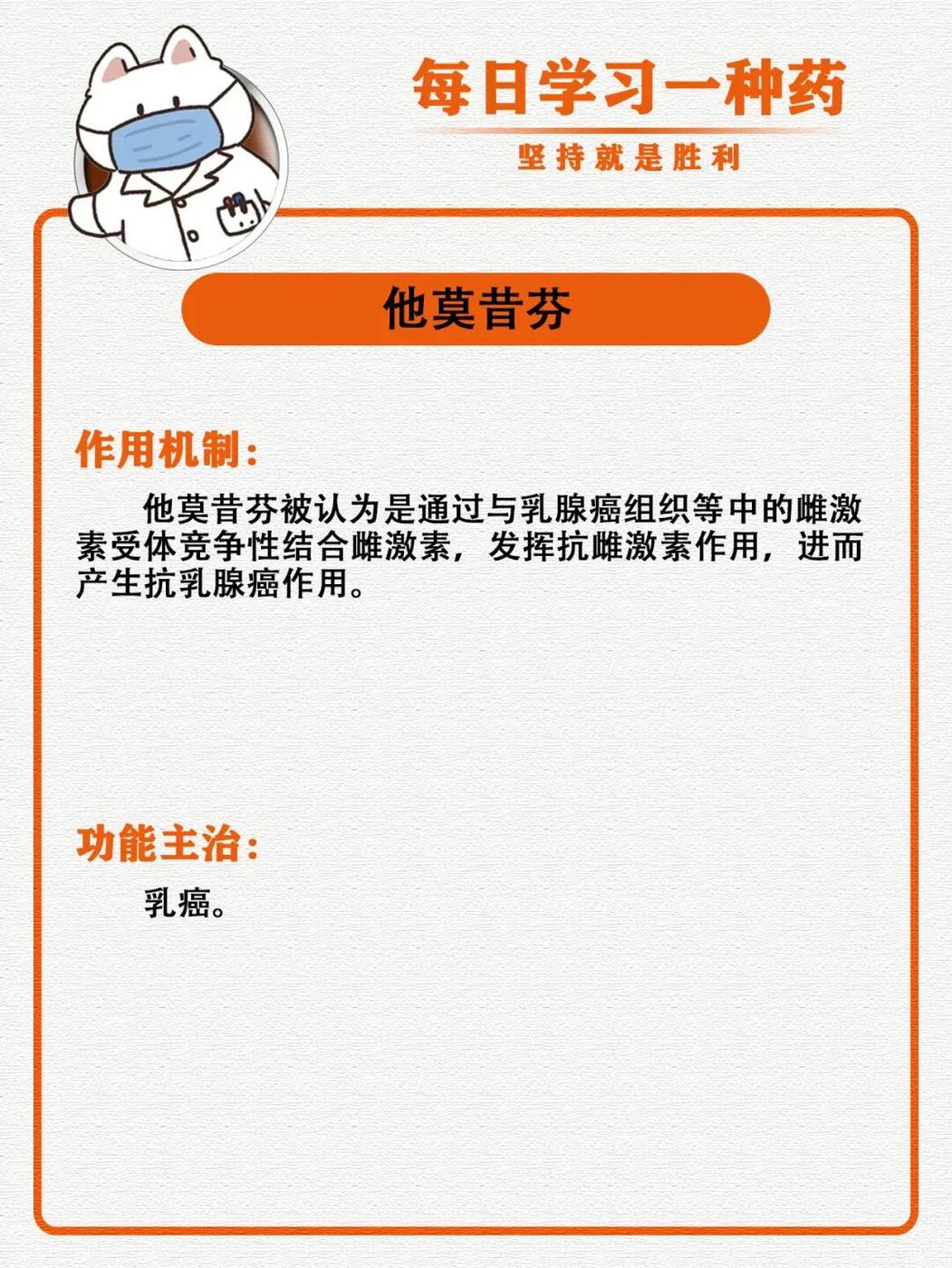
Feature Description Tamoxifen is thought to exert anti-cancer effects by competitively binding to estrogen receptors in breast cancer tissues and exhibiting anti-estrogen effects.
Section 2 · 02
English translation
Packaging Specifications (PTP): 100 tablets (10 tablets × 10 blisters).
Section 3 · 03
English translation
White plain tablet.
Section 4 · 04
English translation
Ingredient Information Active ingredient [per tablet]: Nippon Tak tamoxifen citrate 15.2mg (equivalent to tamoxifen 10mg). Additives: Carmellose calcium, crystalline cellulose, magnesium stearate, lactose, povidone.
Section 5 · 05
English translation
Functions and indications Breast cancer.
Section 6 · 06
English translation
Dosage and Administration Typically, adults are given 20 mg of tamoxifen orally in divided doses of 1~2 doses. The dose can be increased as needed depending on symptoms, but the maximum daily dose is limited to 40 mg as tamoxifen.
Section 7 · 07
English translation
Notes 1. This drug is an endocrine therapy agent, and it should only be used in patients who are deemed appropriate for treatment with this drug under the supervision of a physician with sufficient knowledge and experience in drug therapy for cancer. 2. Since administration of this drug may cause endometrial cancer, uterine sarcoma, endometrial polyps, endometrial hyperplasia, and endometriosis, it is advisable for patients to undergo regular examinations during and after administration.
Section 8 · 08
English translation
Side Effects 1. Agranulocytosis, leukopenia, neutropenia, anemia, thrombocytopenia (all frequency unknown) 2. Visual impairment (0.4%), visual impairment (frequency unknown) Visual abnormalities, corneal changes, cataracts, retinopathy, retinal atrophy, optic neuropathy, optic neuritis, optic nerve atrophy, and other visual impairments may occur. Therefore, if vision loss or blurred vision occurs, an ophthalmic examination should be performed, and administration should be discontinued if abnormalities are found. 3. Thromboembolism and phlebitis (both of unknown frequency) Administration of this drug may cause pulmonary embolism, lower limb venous thrombosis, cerebral thrombosis, lower limb thrombophlebitis, and other thromboembolic and phlebitis. Note that concomitant use with cytotoxic anticancer drugs may increase the risk of thromboembolism, so careful monitoring is required before administration. 4. Fulminant hepatitis, hepatitis, cholestasis, liver failure (all frequency unknown) Severe liver damage such as fulminant hepatitis, hepatitis disease, and cholestasis may occur. It can also lead to liver failure. 5. Hypercalcemia (frequency unknown) Patients with bone metastases may experience hypercalcemia early at the start of administration. 6. Uterine fibroids, endometrial polyps, endometrial hyperplasia, endometriosis (all frequency unknown) If abnormal gynecological symptoms such as abnormal bleeding are observed, immediately perform examinations and take appropriate measures. 7. Interstitial pneumonia (frequency unknown) 8. Anaphylaxis, angioedema (both unknown frequency) Hypersensitivity symptoms such as anaphylaxis and angioedema may appear. 9. Stevens-Johnson Syndrome (frequency unknown) 10. Bullous Pemphigoid (frequency unknown) 11. Pancreatitis (frequency unknown) Pancreatitis may occur, suspected to be caused by elevated serum triglycerides. 12. Other side effects (1) Liver: liver dysfunction, fatty liver (including non-alcoholic steatohepatitis). (2) Genital organs: amenorrhea, genital bleeding, menstrual abnormalities, vaginal discharge, ovarian cysts, ovarian cysts, genital itching, cervical polyps, vaginal polyps. (3) Digestive system: Nausea, vomiting, loss of appetite, diarrhea, abdominal pain. (4) Neuropsychiatric system: headache, dizziness/dizziness, insomnia, depressive states, sensory disturbances (including sensory illusions and taste disturbances). (5) Skin: rash, sweating, hair loss, cutaneous vasculitis, cutaneous lupus erythematosus, late-onset cutaneous porphyria, radiation recall reaction. (6) Muscle and skeletal system: muscle pain. (7) Others: hot flashes and flushing, weight gain, edema, bone pain, pain or redness at tumor sites, fatigue, frequent urination, hypertriglyceridemia, lower limb spasms.
Section 9 · 09
English translation
taboo 1. Pregnant women or women who may be pregnant 2. Patients with a history of hypersensitivity to any component of this drug

Source images

2 images

Need help sourcing Japanese medicines or OEM production?

💬