Digestive · DIGESTIVE

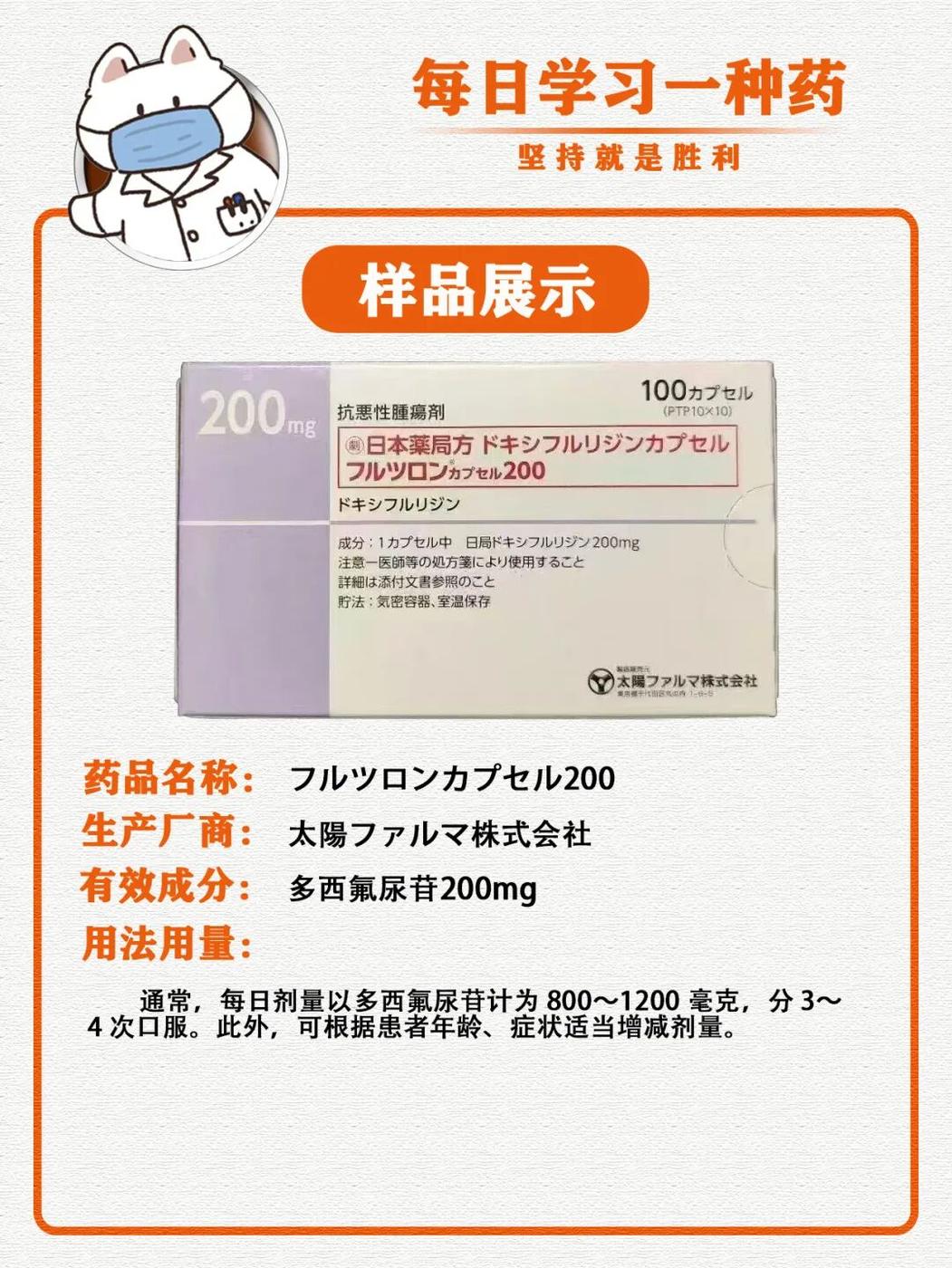
Doxifluridine

日本語原題:フルツロンカプセル200

Published2025-09-15 09:49 FormCapsule Content10 sections / 2 images
Ingredients / strength:
Per capsule, Japanese prescription doxyfluridine 200mg.
English translation of the Japanese package insert is the main text; the Japanese original is shown alongside for verification. Use the language menu (top right) to read the page in another language. This site is for reference only — consult a doctor or pharmacist before use.
Section 1 · 01
English translation
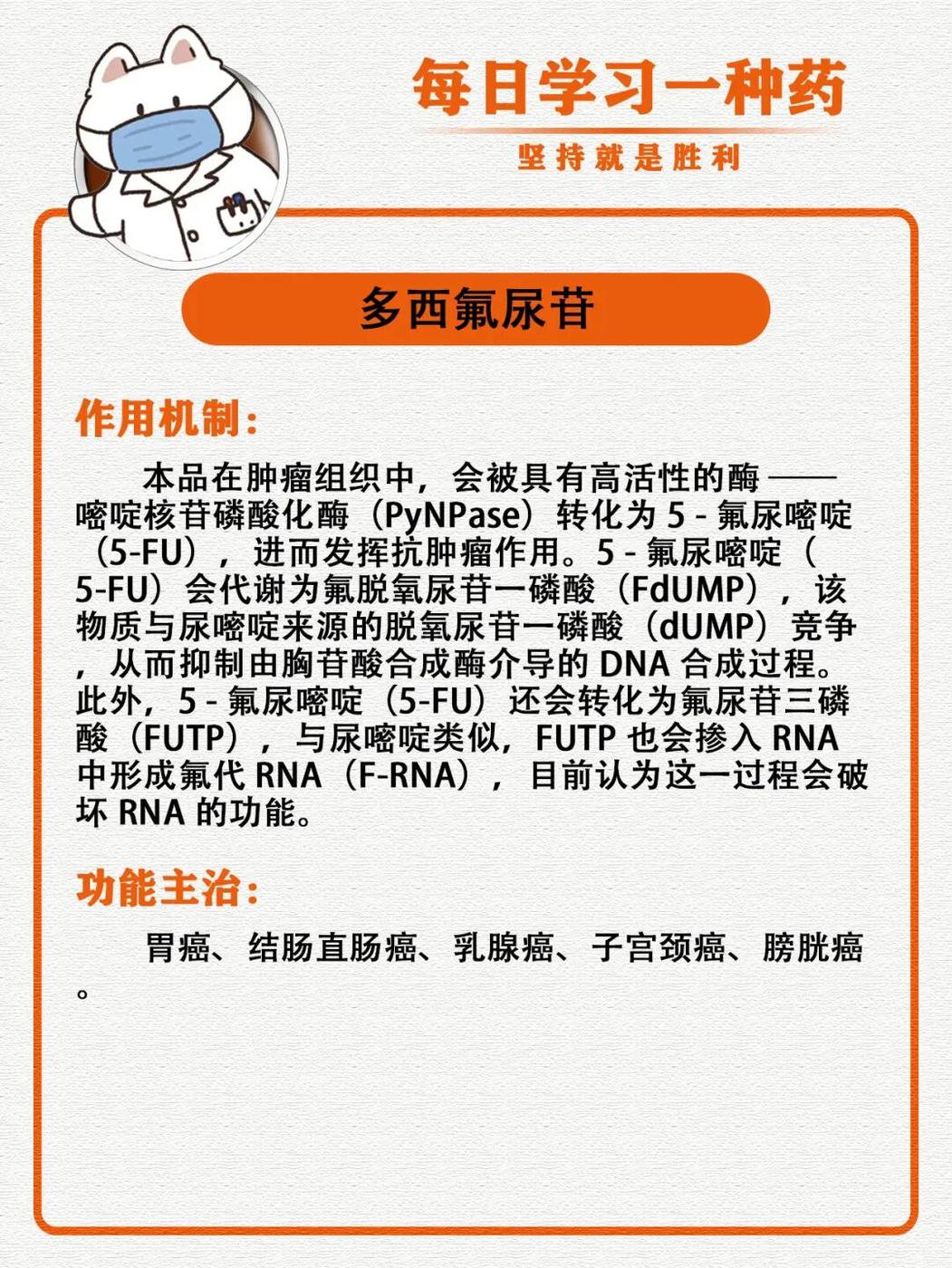
Feature Description This drug is converted into 5-FU by the enzyme pyrimidine nucleoside phosphorylase (PyNPase), which has high activity in tumor tissues, exerting antitumor effects. 5-FU is metabolized to FdUMP, antagonizes uracil-derived dUMP, and inhibits the DNA synthesis pathway induced by thymidylate synthase. Additionally, 5-FU is converted to FUTP and, like uracil, is incorporated into RNA to produce F-RNA, which is thought to impair RNA function.
Section 2 · 02
English translation
Specifications 100 capsules (PTP10 capsules ×10).
Section 3 · 03
English translation
Characteristics Cap: pale reddish-white. Body: White. Dosage form: Hard capsules (No. 2).
Section 4 · 04
English translation
Ingredient Information 1. Active ingredient: 200mg of Japanese doxyfluridine per capsule. 2. Additives: (1) Contents: lactose hydrate, corn starch, talc, magnesium stearate. (2) Capsules: titanium oxide, ferric oxide, sodium lauryl sulfate, gelatin.
Section 5 · 05
English translation
Indications Stomach cancer, colon/rectal cancer, breast cancer, cervical cancer, bladder cancer.
Section 6 · 06
English translation
Dosage and Administration Typically, a daily dose of 800~1200 mg doxyfluridine is administered orally in 3~4 divided doses. Adjust appropriately according to age and symptoms.
Section 7 · 07
English translation
Notes 1. Serious side effects such as bone marrow suppression may occur, so regularly (especially frequently during the initial stages of administration) should be performed through clinical tests (blood tests, liver and kidney function tests, etc.) to closely monitor the patient's condition. 2. Be very cautious about the onset or worsening of infection or bleeding tendencies.
Section 8 · 08
English translation
Side Effects 1. Dehydration symptoms (frequency unknown) Severe diarrhea (initial symptoms: abdominal pain, frequent loose stools, etc.) may appear and may even lead to dehydration. If such symptoms appear, discontinue administration and provide appropriate fluids or other treatments. 2. Acute renal failure (frequency unknown) Severe diarrhea, dehydration, and other conditions can lead to circulatory failure that can lead to ischemic acute renal failure. If severe diarrhea, dehydration, or similar symptoms occur, discontinue administration and provide appropriate treatment such as infusion. 3. Bone marrow suppression and hemolytic anemia (both frequency unknown) Pancytopenia, leukopenia, thrombocytopenia, anemia, and other bone marrow function suppression and hemolytic anemia may occur. 4. Severe enteritis (frequency unknown) Hemorrhagic enteritis, ischemic enteritis, necrotizing enteritis, etc. (initial symptoms include abdominal pain, frequent soft stools, diarrhea, etc.) may occur. If severe abdominal pain or diarrhea occurs, discontinue administration and take appropriate measures. 5. Severe neuropsychiatric disorders (such as leukoencephalopathy) Amnesia, gait disturbances, sensory disturbances, extrapyramidal symptoms, mouth tangling, tongue tangling, consciousness disturbances, paralysis, and urinary incontinence (all of unknown frequency) may occur, but impaired guidance skills and articulation disorders (all less than 0.1%) may occur. Additionally, the above symptoms may appear as early signs of leukoencephalopathy. 6. Interstitial pneumonia (frequency unknown) Interstitial pneumonia (early symptoms: cough, shortness of breath, difficulty breathing, fever, etc.) may occur. 7. Heart failure (frequency unknown) 8. Liver damage, jaundice (both frequency unknown) Severe liver damage such as fulminant hepatitis and jaundice may occur. 9. Acute pancreatitis (frequency unknown) If abnormalities such as elevated serum amylase or abdominal pain are observed, appropriate measures such as discontinuing administration should be taken. 10. Loss of smell (frequency unknown) Olfactory disorders may appear, sometimes leading to loss of smell. 11. Toxic Epidermal Necrolysis (TEN), Stevens-Johnson Syndrome (both unknown frequencies) 12. Cirrhosis (during long-term administration) (frequency unknown) 13. Resting angina, myocardial infarction, arrhythmias (including ventricular tachycardia, etc.) (all frequency unknown) 14. Nephrotic syndrome (frequency unknown) 15. Shock, anaphylaxis (both of unknown frequency) 16. Other side effects (1) Liver: Increased bilirubin, increased AST, ALT, and ALP levels (2) Kidneys: increased BUN, hematuria, proteinuria, frequent urination (3) Gastrointestinal: diarrhea (25.3%), loss of appetite (11.4%), nausea and vomiting (12.6%), abdominal pain, paralytic ileus, stomatitis, abdominal bloating, epigastric pain, dry mouth, cheilitis, constipation, gastrointestinal bleeding, glossitis, angular cheilitis, gastric ulcers, heartburn (4) Neuropsychiatric system: fatigue, dizziness, drowsiness, headache, taste disturbances, tongue numbness, tinnitus.
Section 9 · 09
English translation
taboo 1. Patients with a history of severe hypersensitivity to any component of this drug 2. Patients currently receiving Tegafur, Gimeracil, and Oteracil potassium combination drugs, and those within 7 days after discontinuation
Section 10 · 10
English translation
Warning Concurrent use with Tegafur, Gimeracil, and Oteracil potassium combination drugs may cause serious blood disorders or other side effects; do not use concomitantly.

Source images

2 images

Need help sourcing Japanese medicines or OEM production?

💬